How to Increase Block Machine Output Without Extra Investment
Author:HAWEN Block MachineFROM:Brick Production Machine Manufacturer
TIME:2026-04-01
How to Increase Block Machine Output Without Extra Investment
In today's competitive construction materials market, efficiency is paramount. Maximizing output from existing block machines can significantly enhance profitability, yet many manufacturers assume that only heavy investment in new equipment can achieve this. In reality, optimizing operational processes, refining machine components, and leveraging intelligent control systems can substantially increase production rates without additional capital expenditure. This article explores pragmatic strategies to enhance block machine output while maintaining quality and reducing operational costs.
1. Optimize Material Handling and Preparation
The foundation of high output lies in consistent, well-prepared raw materials. Variations in moisture content, particle size, or aggregate composition can drastically impact block quality and production speed. Implementing standardized material batching routines ensures uniformity, minimizing downtime due to block defects or mold wear.
Hawen Machinery emphasizes the integration of high-precision batching systems, such as the PL2400-III Concrete Batching Machine with multiple storage bins, combined with the MP2000 Planetary Mixer, to guarantee thorough blending. By reducing inconsistencies in the mix, machines operate at optimal speeds without compromising block integrity.
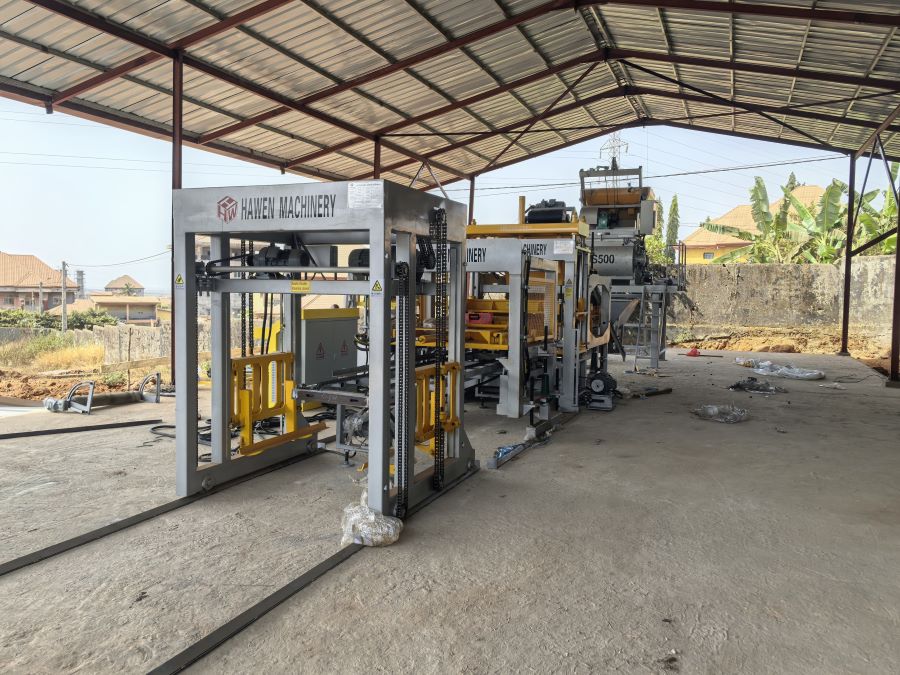 Annotation: Inconsistent material preparation can lower effective output by up to 15% in industrial tests (Concrete Production Journal, 2022).
2. Enhance Vibration Efficiency
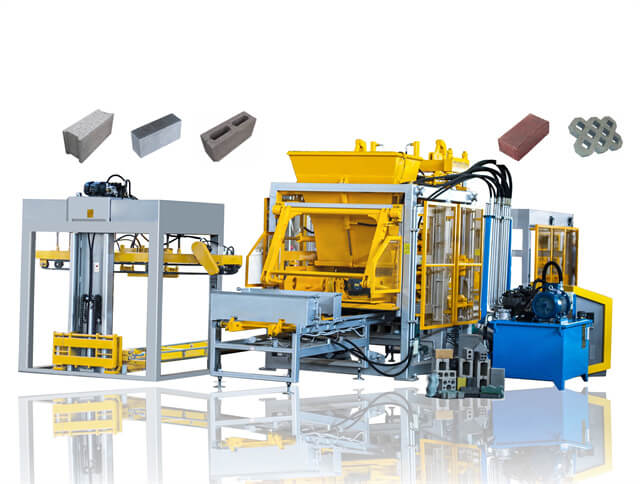
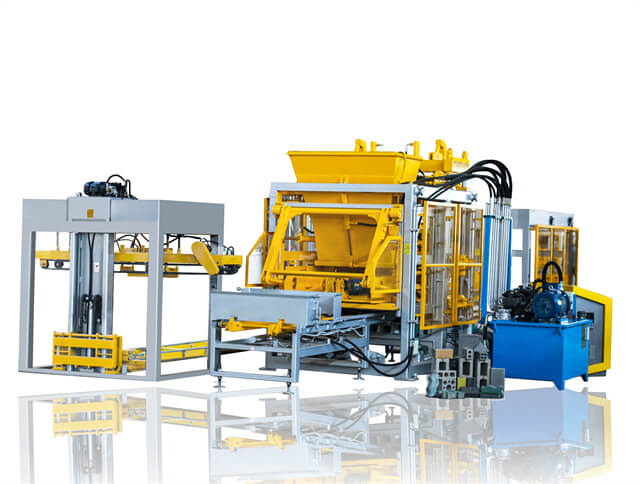
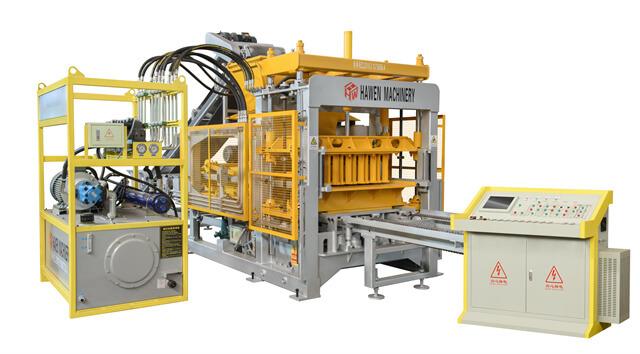
Compaction efficiency directly influences production speed and cement utilization. Traditional single-shaft vibration boxes often suffer from uneven force distribution, causing incomplete compaction and slower cycle times. Hawen Machinery addresses this with a four-shaft vibration box design, positioning eccentric blocks externally. This configuration minimizes resistance during vibration, ensures uniform compaction across each block, and allows for a reduction in cement dosage without sacrificing strength.
By improving the energy transfer during the vibration phase, operators can maintain shorter cycle times while achieving consistent block density. The indirect benefit is a reduction in operational stress on the hydraulic system, prolonging the service life of key components.
3. Fine-Tune Hydraulic Systems
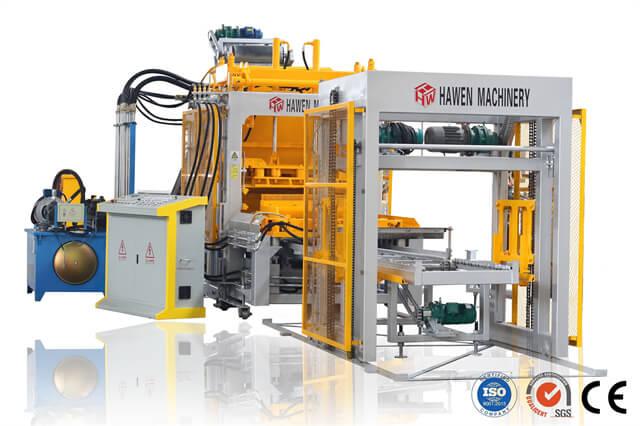
Hydraulic performance is often overlooked, yet it dictates pressing efficiency and operational reliability. Hawen Machinery utilizes Japanese YUKEN proportional and directional valves paired with American ALBERT hydraulic pumps. This combination achieves precise pressure control, high load-bearing capacity, and long-term durability.
Regular maintenance—such as monitoring oil cleanliness, verifying pressure calibration, and inspecting valve responsiveness—ensures machines can sustain higher output cycles without additional investment. In practice, a well-maintained hydraulic system can improve block output by 10–12% solely through optimized performance.
4. Upgrade Control Systems for Intelligent Operations
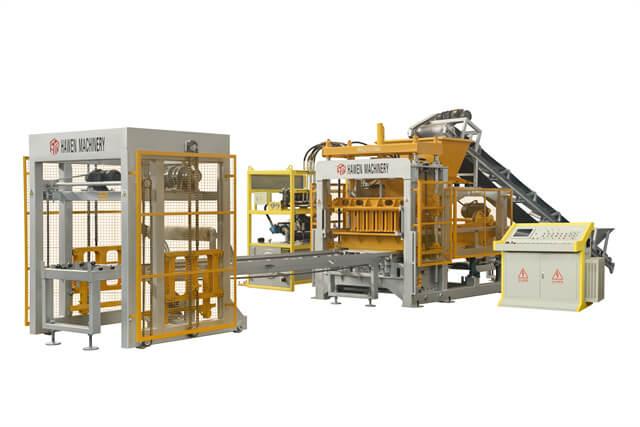
Modern block production is increasingly data-driven. The integration of a robust control system not only reduces human error but enables real-time process optimization. Hawen Machinery implements the SIEMENS S7-200 PLC alongside an intuitive touch panel and remote monitoring capabilities. This setup allows operators to track the machine’s operating status, adjust parameters such as pressing pressure and vibration frequency remotely, and maintain consistent production quality.
Annotation: Remote diagnostics can prevent unplanned downtime by identifying anomalies before failure occurs (International Journal of Automation in Construction, 2021).
5. Invest in Mold Quality and Compatibility
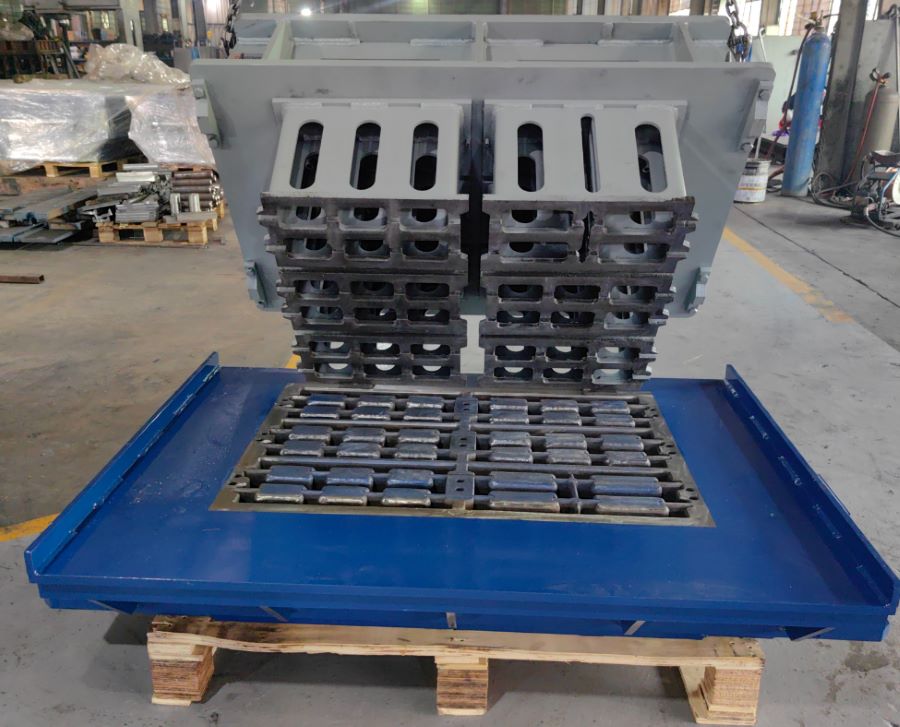
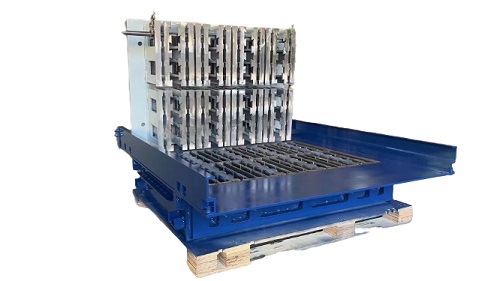
Mold design is critical to production efficiency. Poorly fitted molds can cause cycle delays, uneven blocks, and excessive wear. Hawen Machinery collaborates with leading block machine brands, including MASA, HESS, ZENITH, POYATOS, BESSER, TIGER, among others. All molds are meticulously engineered and heat-treated to ensure dimensional accuracy, smooth operation, and longevity.
Using precision-engineered molds reduces cycle interruptions, lowers reject rates, and enhances output without increasing production hours. Manufacturers can achieve higher daily throughput simply by maintaining and upgrading existing mold sets rather than purchasing entirely new machines.
Annotation: Inconsistent material preparation can lower effective output by up to 15% in industrial tests (Concrete Production Journal, 2022).
2. Enhance Vibration Efficiency
Compaction efficiency directly influences production speed and cement utilization. Traditional single-shaft vibration boxes often suffer from uneven force distribution, causing incomplete compaction and slower cycle times. Hawen Machinery addresses this with a four-shaft vibration box design, positioning eccentric blocks externally. This configuration minimizes resistance during vibration, ensures uniform compaction across each block, and allows for a reduction in cement dosage without sacrificing strength.
By improving the energy transfer during the vibration phase, operators can maintain shorter cycle times while achieving consistent block density. The indirect benefit is a reduction in operational stress on the hydraulic system, prolonging the service life of key components.
3. Fine-Tune Hydraulic Systems
Hydraulic performance is often overlooked, yet it dictates pressing efficiency and operational reliability. Hawen Machinery utilizes Japanese YUKEN proportional and directional valves paired with American ALBERT hydraulic pumps. This combination achieves precise pressure control, high load-bearing capacity, and long-term durability.
Regular maintenance—such as monitoring oil cleanliness, verifying pressure calibration, and inspecting valve responsiveness—ensures machines can sustain higher output cycles without additional investment. In practice, a well-maintained hydraulic system can improve block output by 10–12% solely through optimized performance.
4. Upgrade Control Systems for Intelligent Operations
Modern block production is increasingly data-driven. The integration of a robust control system not only reduces human error but enables real-time process optimization. Hawen Machinery implements the SIEMENS S7-200 PLC alongside an intuitive touch panel and remote monitoring capabilities. This setup allows operators to track the machine’s operating status, adjust parameters such as pressing pressure and vibration frequency remotely, and maintain consistent production quality.
Annotation: Remote diagnostics can prevent unplanned downtime by identifying anomalies before failure occurs (International Journal of Automation in Construction, 2021).
5. Invest in Mold Quality and Compatibility
Mold design is critical to production efficiency. Poorly fitted molds can cause cycle delays, uneven blocks, and excessive wear. Hawen Machinery collaborates with leading block machine brands, including MASA, HESS, ZENITH, POYATOS, BESSER, TIGER, among others. All molds are meticulously engineered and heat-treated to ensure dimensional accuracy, smooth operation, and longevity.
Using precision-engineered molds reduces cycle interruptions, lowers reject rates, and enhances output without increasing production hours. Manufacturers can achieve higher daily throughput simply by maintaining and upgrading existing mold sets rather than purchasing entirely new machines.
 6. Streamline Maintenance and Operator Training
High output relies not only on machinery but also on personnel efficiency. Regularly scheduled maintenance, including lubrication, inspection of vibration mechanisms, and hydraulic checks, ensures machines run at peak capacity. Moreover, operator training on efficient workflows, proper mold handling, and real-time adjustments amplifies the benefits of mechanical optimizations.
Hawen Machinery frequently offers remote and on-site technical support, enabling clients to refine operating practices and identify productivity bottlenecks. Small adjustments in operator behavior—such as synchronized material feeding and optimal pressing sequence—can improve output without incurring capital costs.
7. Conclusion: Maximizing Output Through Precision and Insight
Increasing block machine output does not necessarily require major investment in new equipment. By addressing material preparation, vibration efficiency, hydraulic performance, control systems, mold quality, and operator expertise, manufacturers can achieve substantial productivity gains. Hawen Machinery exemplifies this philosophy through its holistic approach: combining state-of-the-art components, intelligent control systems, and precision molds to unlock hidden potential in existing machinery.
Ultimately, efficiency is not merely a mechanical pursuit—it is a synthesis of technology, expertise, and meticulous process management. Manufacturers who embrace this integrated approach will transform their operations, achieving output levels previously thought attainable only through costly upgrades. High productivity, reduced waste, and consistent quality converge to define a new standard in sustainable block manufacturing.
6. Streamline Maintenance and Operator Training
High output relies not only on machinery but also on personnel efficiency. Regularly scheduled maintenance, including lubrication, inspection of vibration mechanisms, and hydraulic checks, ensures machines run at peak capacity. Moreover, operator training on efficient workflows, proper mold handling, and real-time adjustments amplifies the benefits of mechanical optimizations.
Hawen Machinery frequently offers remote and on-site technical support, enabling clients to refine operating practices and identify productivity bottlenecks. Small adjustments in operator behavior—such as synchronized material feeding and optimal pressing sequence—can improve output without incurring capital costs.
7. Conclusion: Maximizing Output Through Precision and Insight
Increasing block machine output does not necessarily require major investment in new equipment. By addressing material preparation, vibration efficiency, hydraulic performance, control systems, mold quality, and operator expertise, manufacturers can achieve substantial productivity gains. Hawen Machinery exemplifies this philosophy through its holistic approach: combining state-of-the-art components, intelligent control systems, and precision molds to unlock hidden potential in existing machinery.
Ultimately, efficiency is not merely a mechanical pursuit—it is a synthesis of technology, expertise, and meticulous process management. Manufacturers who embrace this integrated approach will transform their operations, achieving output levels previously thought attainable only through costly upgrades. High productivity, reduced waste, and consistent quality converge to define a new standard in sustainable block manufacturing.
 FAQ
1. Can output improvement compromise block quality?
No. By optimizing vibration, hydraulic, and mold performance, block machines can increase cycle speed while maintaining or even enhancing block consistency. Quality remains paramount.
2. How often should molds be inspected or replaced?
Molds should undergo visual and dimensional inspections at least monthly, with heat-treated surfaces checked for wear. Proper maintenance extends mold lifespan and ensures continuous high output.
3. Is remote monitoring effective for small-scale plants?
Yes. Even for small-scale operations, PLC integration with remote monitoring allows early detection of inefficiencies, preventing downtime and enabling real-time parameter adjustments.
FAQ
1. Can output improvement compromise block quality?
No. By optimizing vibration, hydraulic, and mold performance, block machines can increase cycle speed while maintaining or even enhancing block consistency. Quality remains paramount.
2. How often should molds be inspected or replaced?
Molds should undergo visual and dimensional inspections at least monthly, with heat-treated surfaces checked for wear. Proper maintenance extends mold lifespan and ensures continuous high output.
3. Is remote monitoring effective for small-scale plants?
Yes. Even for small-scale operations, PLC integration with remote monitoring allows early detection of inefficiencies, preventing downtime and enabling real-time parameter adjustments.





 Tel: +86-13905968794
 Email: export@hwmachines.com
 MP/WhatsApp: +86-13905968794
 Manufacturer Address:Nanan,Quanzhou City,Fujian Province,China