Why Cured Block Inspection Before Cubing Reduces Shipping Damage
The forming machine receives much of a block plant's attention, but the product can still be damaged after it leaves the curing area. A block or paver that looks acceptable on its production pallet may chip during gripping, crack under the weight of upper layers, or move inside a strapped package. Problems discovered at the customer's site are often attributed to transport, although their origin can be an earlier decision to cube units before they were ready or to stack a pattern that concentrates load on weak edges.
This article looks at the handoff from cured product to a shipping unit. The goal is to help producers decide what to inspect before cubing and how the chosen stacking pattern, gripping action and strapping affect damage risk. An automatic cuber improves repeatability and reduces manual handling, but it works best when product condition and package design have been defined. The same principles apply to an offline cuber and to manual packing, with the inspection and handling points adjusted for the equipment used.
The Handling Stage After Curing
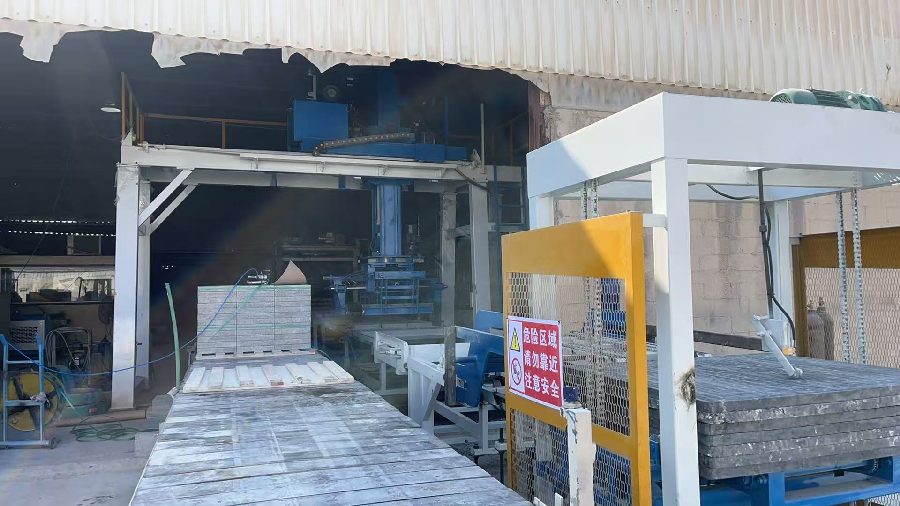
A typical production route moves green units on a pallet away from the block machine, holds them during curing, then sends cured units to a lowerator or pallet entry conveyor. A cuber grips or collects the units, forms layers and places them on a shipping pallet or suitable base. A strapping operation may follow. Each transfer adds contact, acceleration and support changes. The product must tolerate those stresses at the age when it is actually handled, not only at its eventual specified test age.
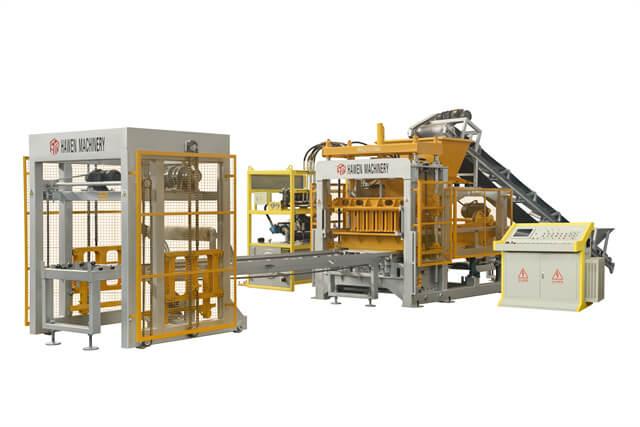
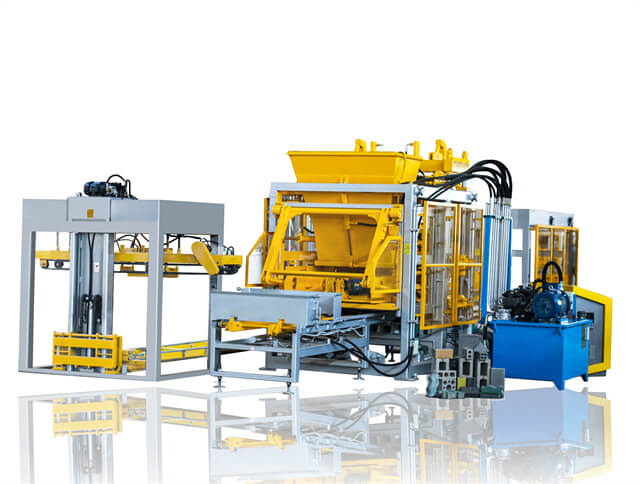
The route differs by factory. Some plants take pallets directly from a curing rack, while an offline cuber receives forklift-delivered pallets from a storage area. HAWEN's offline cuber example illustrates a pallet entry, destacking, cubing and strapping sequence. The specific control points depend on the plant layout, yet the general question remains: will every unit in the layer be sufficiently strong, dry and dimensionally consistent for the next handling step?
When Blocks Are Ready for Cubing
A curing time stated in hours is only an operating schedule. The actual handling condition depends on mix design, cement, temperature, humidity, product geometry and the stresses applied by the cuber. A dense paver may tolerate a particular grip sooner than a thin-walled hollow block made in the same plant. The plant should establish a release condition for each product family through trials and relevant tests, then confirm that daily curing conditions remain within the range used for those trials.
Early-age handling strength matters even when final compressive strength is satisfactory. If blocks are gripped while their corners are still fragile, the first visible loss may be small flakes rather than a broken unit. Those flakes accumulate during stacking and shipment. Check whether the surface is sufficiently firm, whether units separate cleanly from their production pallet and whether a sample survives the actual gripping and stacking sequence. A laboratory compressive test at a later age does not capture all of these handling risks.
A wet or unevenly cured batch can make an established cuber setting appear faulty. Review the curing record before increasing grip force. More force may hold a slipping layer, but it may also crush edges. Conversely, very gentle gripping can allow units to shift during acceleration. Set the release condition first, then tune the machine for the product. The block production blog contains related discussions of forming and curing; the cubing stage should be treated as the final part of that quality chain.
What to Inspect Before Stacking
Inspection should include more than a quick look at the top of the pallet. Check several locations and cavities, including units at the edges where handling damage is more likely. Look for cracked webs, broken corners, lamination, surface scaling, large height differences and units stuck together by paste. Remove visibly defective pieces before the cuber places them in a shipment. A crack hidden inside a stack is difficult to trace later and may propagate under load.
Measure sample height and width when the product has tight dimensional requirements. A few tall units in one layer can carry disproportionate weight from upper layers and create point contact. Uneven faces can also prevent strapping from tightening evenly. For hollow blocks, inspect the integrity of webs and the orientation used for stacking. For pavers, inspect edges and visible face surfaces, especially when the face mix is the customer's primary acceptance feature.
Inspect the production pallet and the shipping base too. Warped or contaminated pallets can make a sound layer sit unevenly. A damaged shipping pallet may create overhang or leave one side unsupported. A package that leans at the plant gate is unlikely to improve during road or sea transport. Correct the support before strapping, rather than asking the straps to straighten a misbuilt cube.
Keep defect categories simple and consistent. Record broken corners, visible cracks, height outliers and surface damage separately. If the defect rate rises, identify the earliest point in the line where it appears. Damage already visible before the cuber points toward forming, curing or previous transport. Damage appearing immediately after a grip or transfer points toward handling settings, contact pads or layer movement.
Stacking Patterns and Load Paths
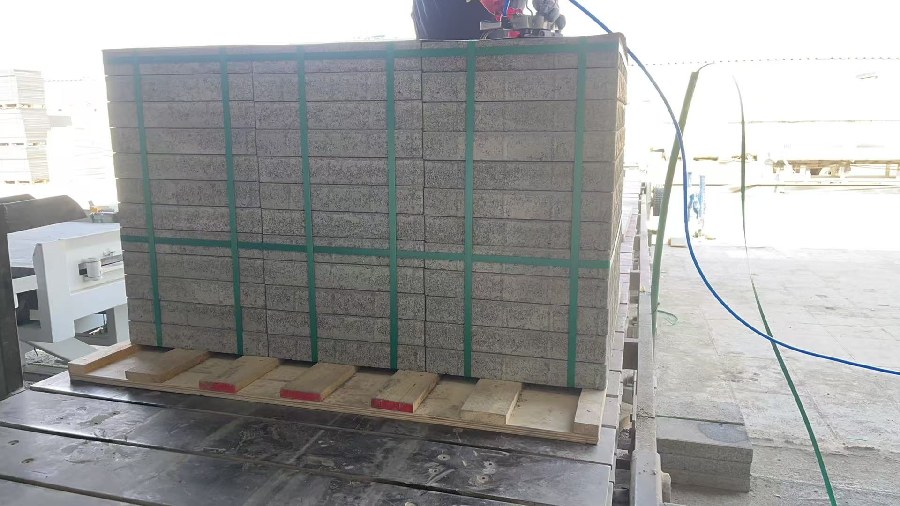
A stable cube directs vertical weight through areas that can support it. With hollow blocks, place units so supported shells and webs bear the load as intended; avoid patterns that concentrate an upper block's weight on a thin unsupported edge below. With pavers, consider contact area, texture and face protection. The correct pattern depends on product dimensions and the shipping method. Validate it with actual handling and transport conditions rather than adopting a pattern solely because it uses the fewest shipping pallets.
Interlocking or staggered layers can resist lateral movement, but they may introduce overhang or uneven support for some products. A straight stack may distribute weight well but need stronger containment against sideways movement. Layer sheets or separators can improve surface protection for selected products; they also add cost and can change friction between layers. Test the complete package, including its base, wrapping or strapping, before choosing a universal pattern.
Overhang deserves special attention. Units extending beyond the shipping pallet edge are exposed to forklift contact and lack full support. Even a small overhang repeated across upper layers may produce a leaning cube. The total cube height should suit the pallet capacity, product handling strength, forklift stability and transport limits. More units per package do not necessarily lower delivered cost if breakage or rework increases.
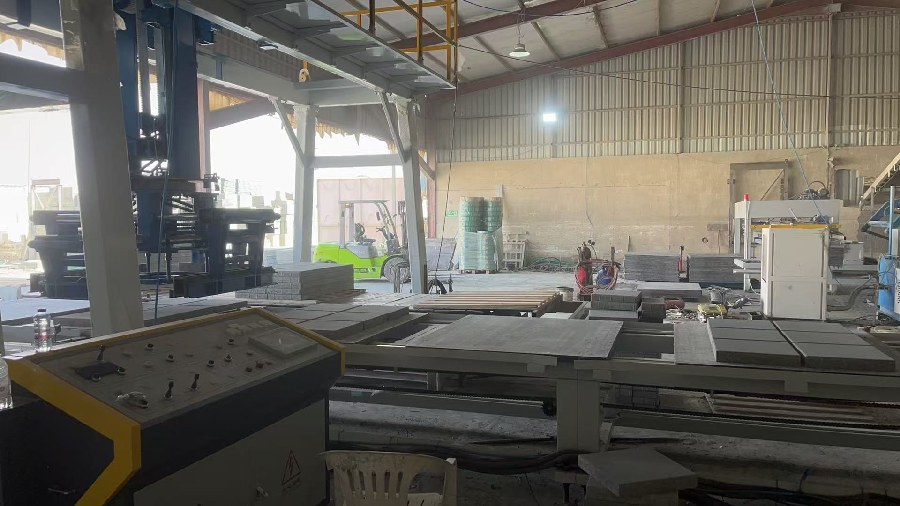
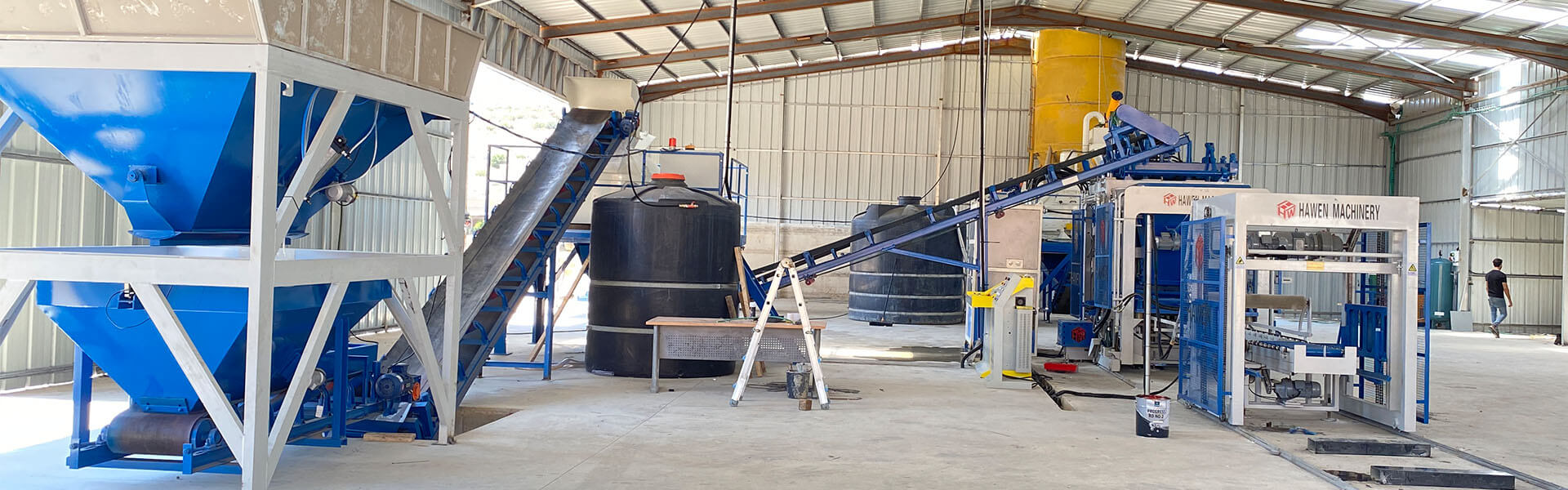
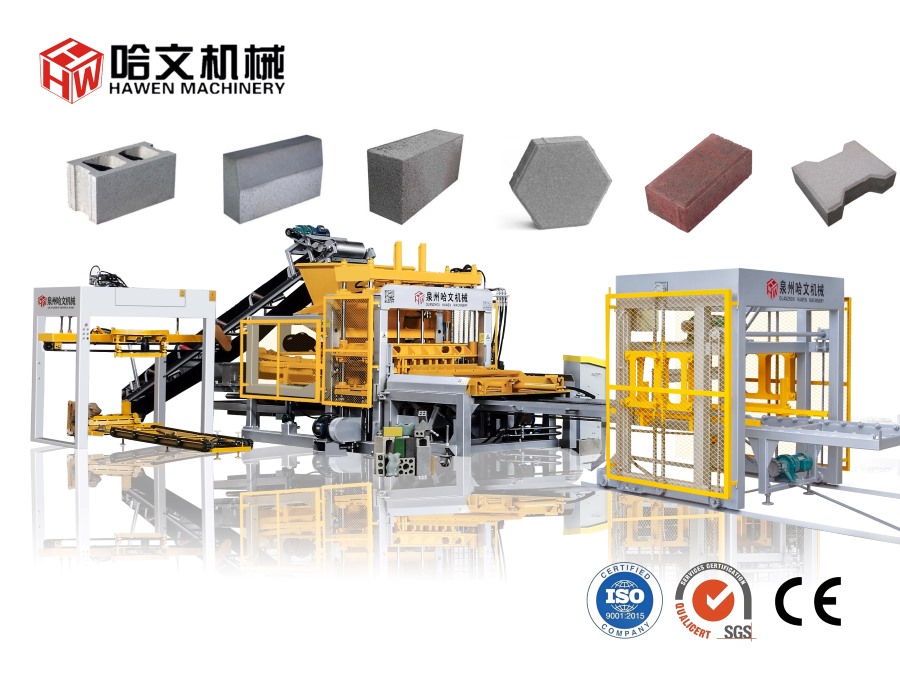
Use product-specific settings in the cuber controller. A hollow block layer, a paver layer and a curbstone layer should not automatically share grip pressure, transfer acceleration or placement height. HAWEN's automatic line example shows the cuber as part of a longer production sequence; its pattern must match the units delivered by that sequence. When a new mould is introduced, include cubing trials in the product changeover plan.
Cuber Settings and Package Stability
Gripper pads should contact the intended faces with even pressure. Worn or contaminated pads can slip, prompting operators to increase force and thereby create edge damage. Inspect pad condition and parallelism before changing pressure. Confirm that conveyors and stops position each layer repeatably. A layer entering off center may be gripped unevenly or placed with a lateral offset that grows through the cube.
Acceleration, deceleration and placement height matter. A fast motion may be mechanically possible but still cause a weak layer to slide. Lower the layer close to its final support position before release, within the equipment manufacturer's limits. Watch a complete cycle from pallet entry through final placement, not only the gripping moment. A collision with a guide or a stop can create damage that becomes visible only after several subsequent transfers.
Strapping holds the package together; it does not correct a weak block or an unstable stacking pattern. Too little tension allows movement, while excessive tension can mark edges or crush the top course. Use edge protectors or separators where trials show a need. Verify strap placement, tension and seal quality, then inspect the package after a normal forklift lift and set-down. A package that shifts during this basic handling check needs correction before dispatch.
A Practical Inspection Routine
Define a release checklist for each product: minimum curing condition, visible defect limits, dimensional checks, allowed production pallet condition and a sample handling check. Record the product, mould, batch and curing lot so that any rejected package can be traced back. At startup, inspect the first completed cube and repeat after a product change, a gripper adjustment or a curing schedule change.
During normal production, sample a fixed number of units from the entry pallet and inspect a finished package at defined intervals. Record the defect location. If chipped corners cluster on one side, inspect gripper alignment and entry position. If lower layers crack under stack weight, review pattern and release condition. If damage appears after transport, compare loading photographs, strap condition and package position with the pre-dispatch record.
| Check point | Typical evidence | Possible action |
|---|
| Before pallet entry | Cure record and sample unit condition | Hold undercured or damaged lots |
| After first grip | Fresh edge marks or slipping | Inspect pads, pressure and alignment |
| After cube formation | Layer offset, overhang or tilt | Revise pattern and placement |
| After strapping and forklift move | Strap marks or package shift | Adjust containment and support |
The inspection plan should be proportionate to the product and shipment risk. A new block size or export package deserves more checking than a stable, repeated local order. Build a record of defects per thousand units and package condition after delivery. That evidence helps the plant decide whether its limiting factor is curing, handling or transport rather than relying on impressions from a few damaged blocks.
When planning an upgrade, evaluate the whole downstream route. An offline cuber installation may reduce labor at the stacking point, but its benefits depend on suitable pallet entry, product release, package handling and site space. The cuber is a precision handling tool within a production system, so define the products and shipping units it must handle before specifying its capacity.
FAQ
Does reaching the scheduled curing time mean blocks are ready to cube? The schedule is a starting point. Confirm product handling condition under actual temperature, humidity and mix conditions, then validate it with the real cubing process.
Can higher grip pressure prevent a layer from slipping? It may reduce slip, but excessive pressure can damage edges. Check pad condition, alignment and product strength first.
Why do lower blocks crack while upper blocks remain intact? Possible causes include an unstable load path, excessive stack height, uneven unit height or insufficient handling strength. Inspect the stacking pattern and curing record together.
Is strapping enough to make an unstable cube safe for shipping? No. The base, layer arrangement and support must already be stable. Strapping contains a sound package during handling.
Conclusion
Quality control does not end when the block leaves the curing area. Confirm readiness for handling, reject defective units before they disappear inside a package, and validate the stack under the loads it will experience. A consistent inspection and cubing procedure reduces avoidable breakage and gives the plant useful evidence when shipping damage occurs.





 Tel: +86-13905968794
 Email: export@hwmachines.com
 MP/WhatsApp: +86-13905968794
 Manufacturer Address:Nanan,Quanzhou City,Fujian Province,China