Land size is one of the first practical checks before buying a concrete block making plant. Machine model and rated output matter, but the site must also hold raw materials, batching equipment, mixer, host machine, pallet feeder, stacker, curing yard, forklift routes, finished block storage, truck loading area, and maintenance access. If the land is too small or poorly arranged, the machine cannot use its rated capacity.
This guide is for buyers who are comparing machine quotations and want to confirm that the real site can support the production route. Land planning should be reviewed together with the selected machine model, product type, daily output target, curing time, pallet quantity, and finished block delivery method.
Key principle: plan the whole production route, not just the machine footprint. A plant making standard hollow blocks may need a different yard plan from a plant making pavers or kerbstones, so the layout should be checked against the actual product mix and land boundary before the equipment configuration is confirmed.
Why land size affects block plant output
A concrete block plant needs more space than the machine footprint. The host machine is only one part of the system. Aggregates must be stored near the batching machine, cement must be delivered safely, mixed concrete must move to the hopper, green blocks must be stacked for curing, and cured blocks must be moved for loading or packing.
If the curing yard is too small, production stops even when the machine is ready. If forklift routes are narrow, movement becomes slow and unsafe. If raw material storage is too close to finished block loading, vehicles may block each other. These layout problems reduce daily output without changing the machine model.
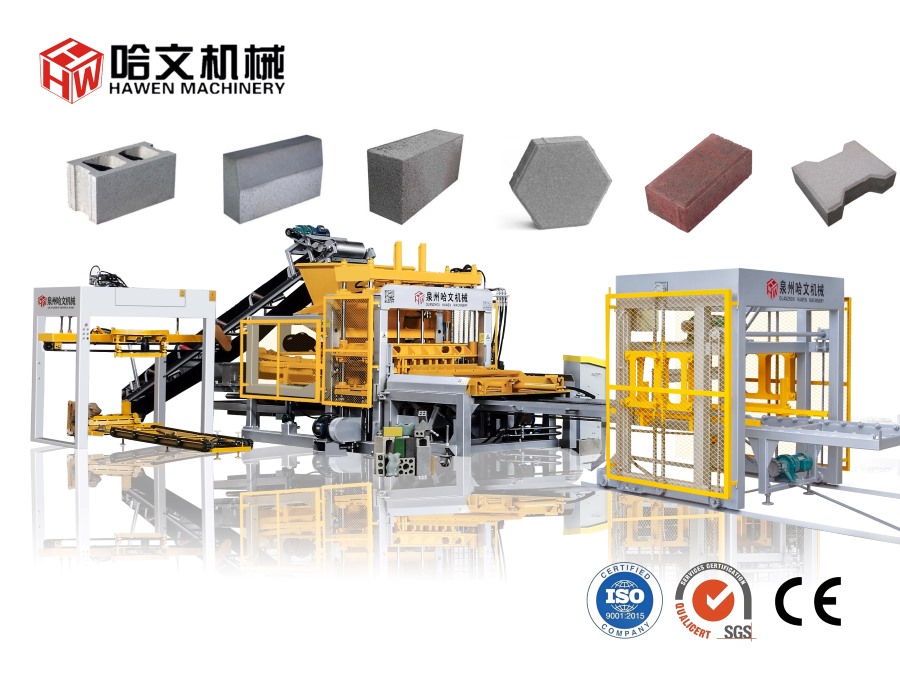
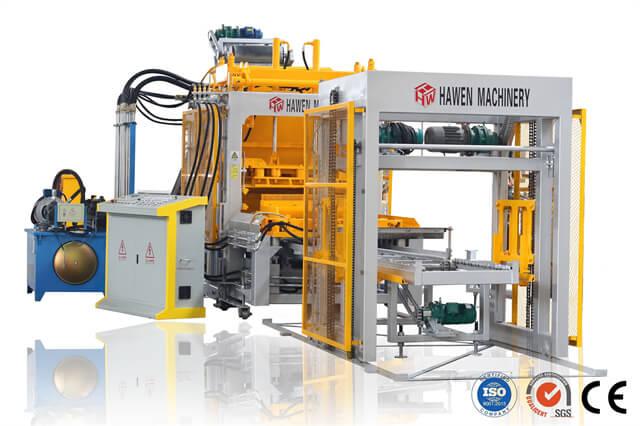
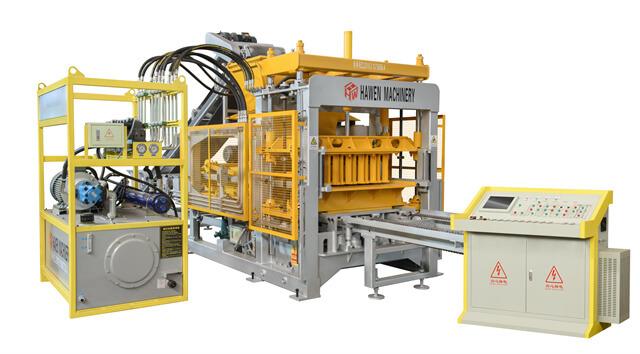
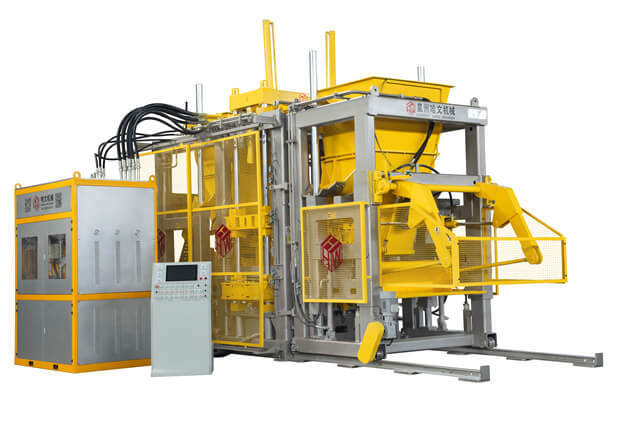
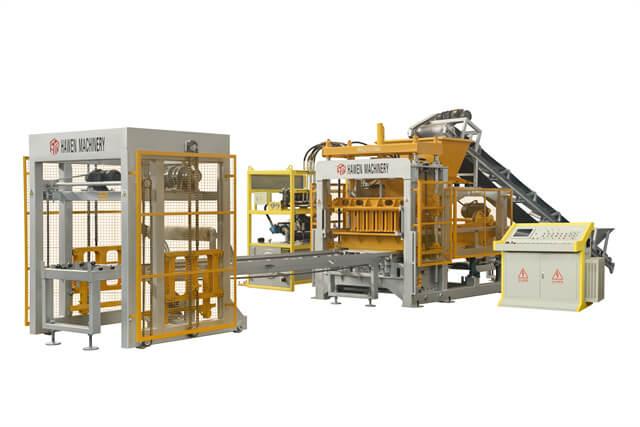
When reviewing a QT8 automatic concrete paver fly ash brick making machine, buyers should ask for a layout suggestion based on the actual land size, not only a machine quotation. The same applies to any other model: the layout drawing should match the site, not a generic template.
Raw material storage and machine layout
Raw material storage should allow loader access without crossing finished block loading routes. Sand, stone powder, crushed stone, and other aggregates should be separated clearly. Cement silo position should consider truck access, foundation, screw conveyor angle, and maintenance space.
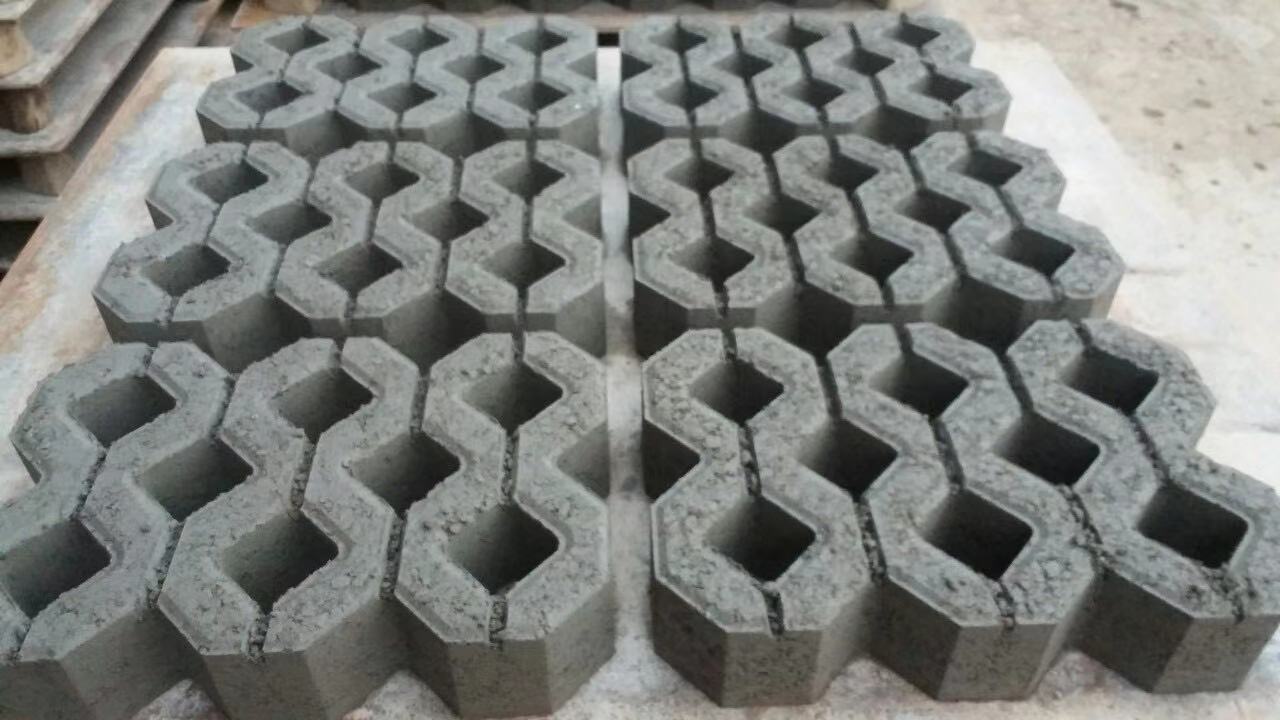
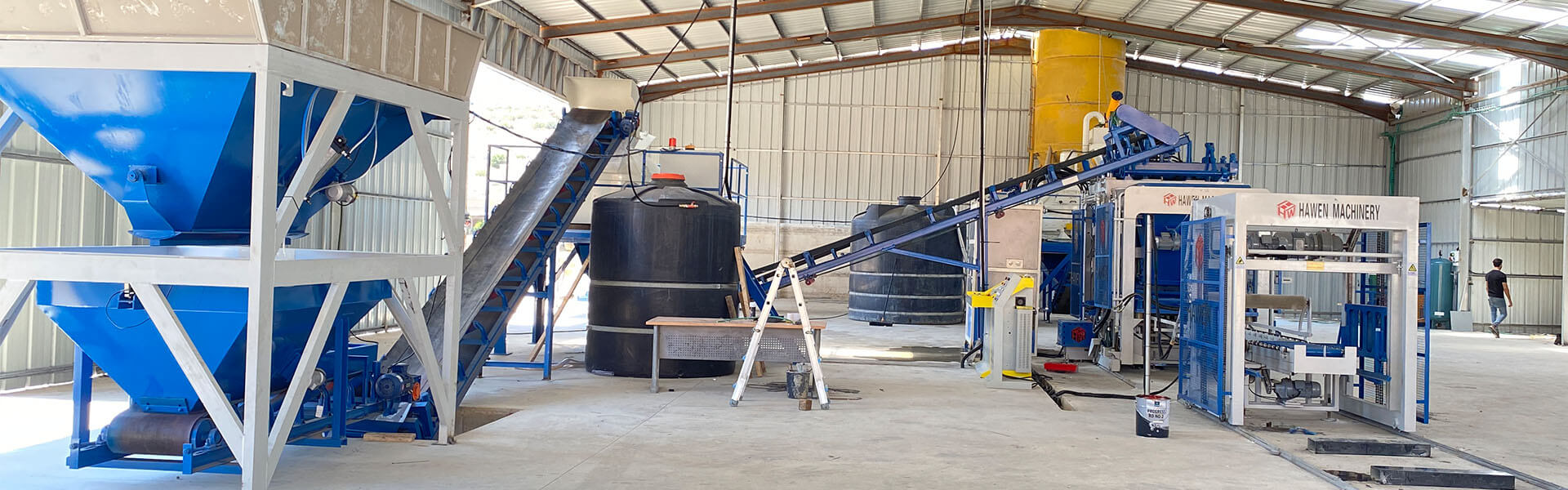
The machine layout should include batching machine, mixer platform, belt conveyor, host block machine, control cabinet, pallet feeder, block conveyor, and stacker. The buyer should leave service space around equipment for mould change, cleaning, hydraulic inspection, electrical maintenance, and daily operation. A compact drawing may look efficient, but it can create maintenance problems later.
Raw material area
Reserve aggregate storage, loader access, cement silo, and batching machine. Keep material feeding stable and organized, and separate different aggregates clearly.
Machine area
Reserve mixer, conveyor, host machine, pallet feeder, stacker, and control cabinet. Allow production and maintenance without crowding.
Curing yard
Reserve green block storage, stack height, pallet circulation, and forklift path. Prevent machine stoppage after forming.
Loading area
Reserve finished block storage, truck access, packing area, and shipment route. Support delivery without blocking production.
Curing yard, forklift, and loading space
The curing yard usually takes the largest part of the site. Every fresh block leaves the machine on a pallet and needs curing space. Pallet quantity, stack height, curing time, product type, and daily output all affect yard size. Higher output machines require more serious curing yard planning.
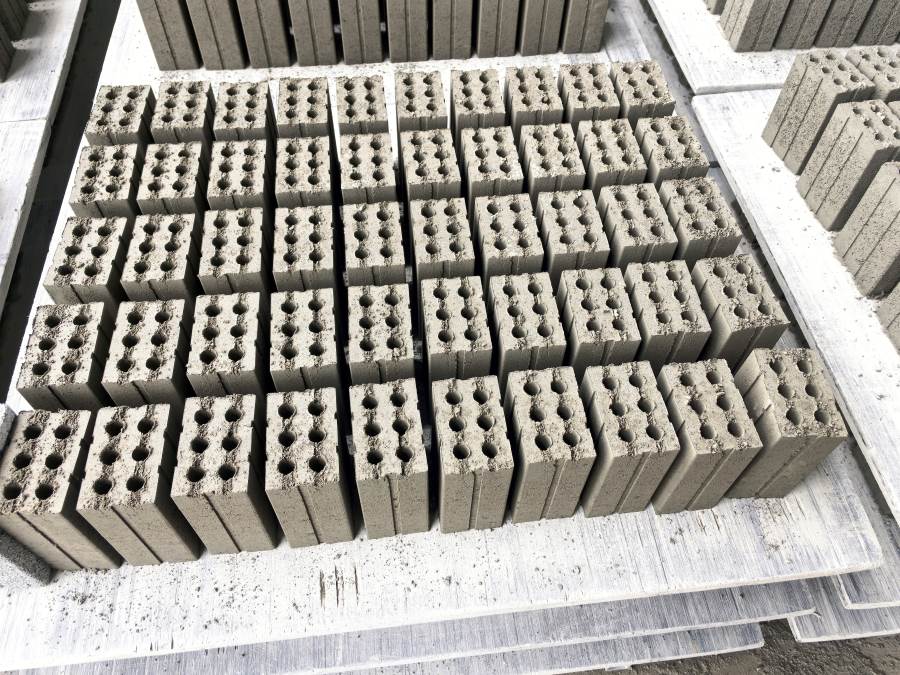
Forklift routes should connect the stacker, curing yard, empty pallet return, finished block storage, and truck loading area. A practical site observation is that one forklift may need to handle several tasks. If routes overlap too much, the plant loses time. Buyers should draw traffic routes before civil work begins.
Note: Curing yard size, pallet quantity, and forklift requirements depend on the specific product, curing method, and local climate. These figures should be confirmed with the supplier and the site engineering team before civil work is finalized.
Land size review table
| Area | What to reserve | Why it matters |
|---|
| Raw material area | Aggregate storage, loader access, cement silo, and batching machine. | Keeps material feeding stable and organized. |
| Machine area | Mixer, conveyor, host machine, pallet feeder, stacker, and control cabinet. | Allows production and maintenance without crowding. |
| Curing yard | Green block storage, stack height, pallet circulation, and forklift path. | Prevents machine stoppage after forming. |
| Loading area | Finished block storage, truck access, packing area, and shipment route. | Supports delivery without blocking production. |
FAQ
Can a block plant work on limited land?
Yes, but the buyer may need a lower output plan, careful pallet circulation, compact storage, and efficient forklift routes. Land limitation should be discussed before selecting the model.
Which area usually needs the most space?
The curing yard often needs the most space because green blocks must stay on pallets until they gain enough strength for handling.
Should land planning be finished before ordering?
Yes. The buyer should review land size, layout drawing, foundation, curing yard, and forklift routes before finalizing equipment configuration.
Conclusion
Land size planning helps buyers decide whether a concrete block making plant can operate at the expected output. Buyers should reserve space for raw materials, batching, mixing, host machine, stacker, curing yard, pallet return, forklift movement, and finished block loading. The next step is to compare the supplier layout with the real site before confirming the machine model.
Before requesting a quotation, prepare your site dimensions, target product types, expected daily output, curing method, and available pallet quantity. Sharing these details with the supplier allows a layout suggestion that matches your land, rather than a generic machine quotation. You can also review the concrete block machine layout drawing review checklist to organize your site information before the technical discussion.





 Tel: +86-13905968794
 Email: export@hwmachines.com
 MP/WhatsApp: +86-13905968794
 Manufacturer Address:Nanan,Quanzhou City,Fujian Province,China