Concrete Block Machine Projects in Kenya, Guinea, and Egypt: What Different Markets Require
The demand for concrete blocks continues to grow across many developing regions as governments invest in housing, commercial buildings, public infrastructure, and urban development. Although concrete blocks may appear similar from one country to another, production requirements often differ significantly according to local construction standards, available raw materials, labor costs, and market demand.
For investors planning to establish or expand a concrete block manufacturing business, selecting an appropriate automatic concrete block machine involves much more than comparing production capacity. Machine configuration, mold selection, automation level, raw material handling, and after-sales technical support should all be evaluated according to the conditions of the local market.
One practical way to understand these differences is by studying real overseas installation projects. Every production line reflects a combination of customer requirements, local building practices, available investment, and expected production output. While the equipment may share similar manufacturing principles, the final configuration is often customized to suit each project's objectives.
In this article, we examine three overseas concrete block machine projects located in Kenya, Guinea, and Egypt. Rather than simply presenting the equipment itself, we explore why different customers selected different production solutions and what future buyers can learn from these projects before making their own investment decisions.
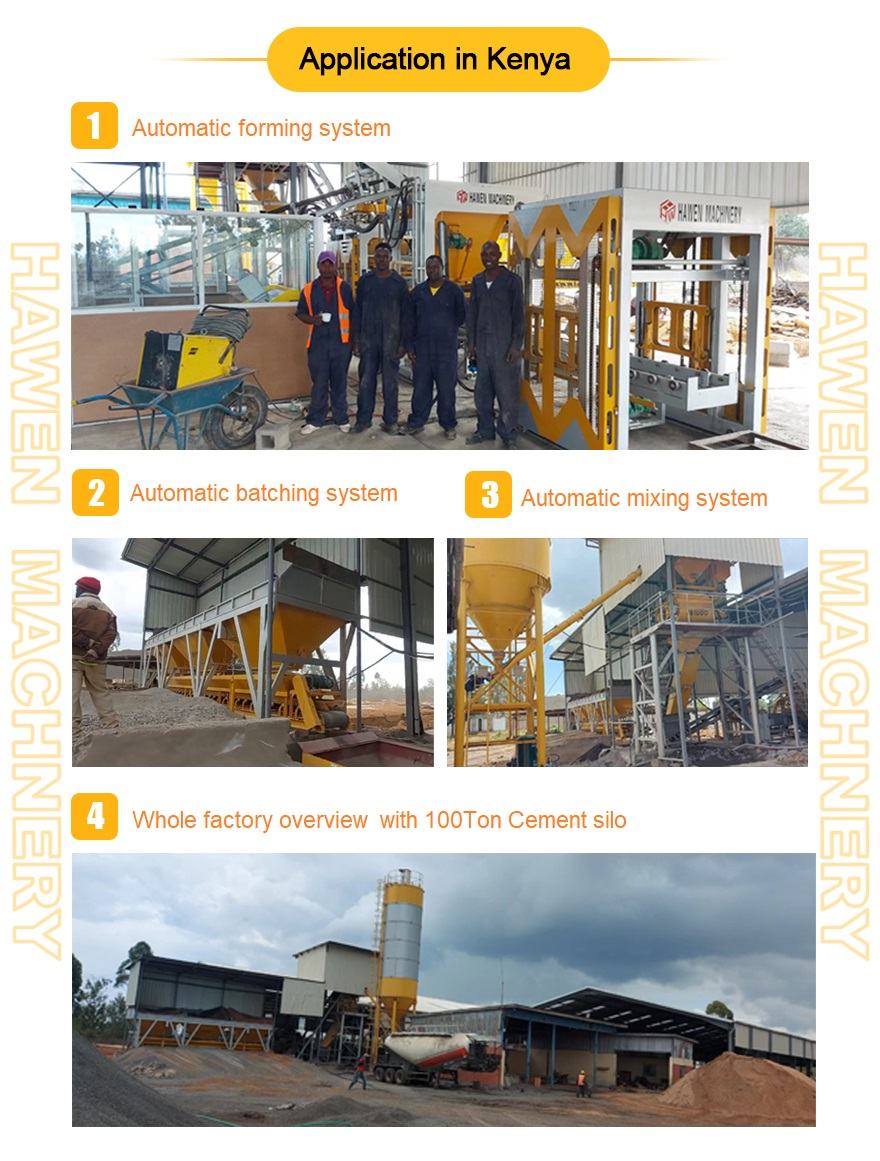
Kenya Project: Building Capacity for a Growing Construction Market
Kenya has experienced steady growth in residential construction, commercial development, and public infrastructure over recent years. As urban populations continue to expand, demand for affordable and durable building materials has increased accordingly. Concrete blocks have become one of the preferred construction materials because they offer good structural performance, relatively low production costs, and efficient installation on construction sites.
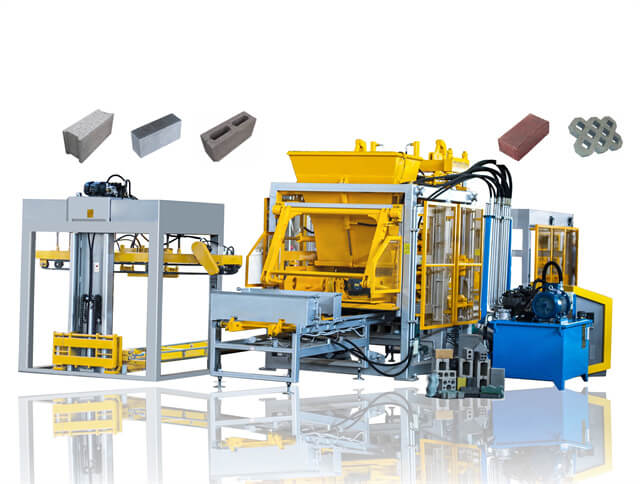
For block manufacturers in Kenya, production efficiency is important, but flexibility is equally valuable. Many producers supply several different products—including hollow concrete blocks, solid bricks, paving blocks, and kerbstones—to serve contractors working on housing projects, municipal infrastructure, and private developments. This means the production line should allow convenient mold replacement while maintaining consistent product quality across different block types.
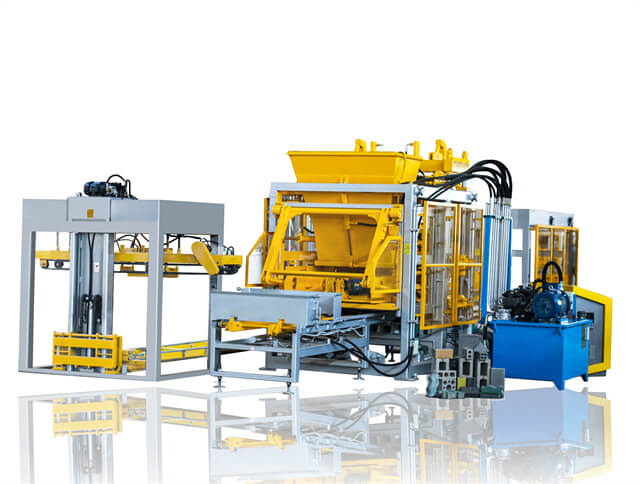
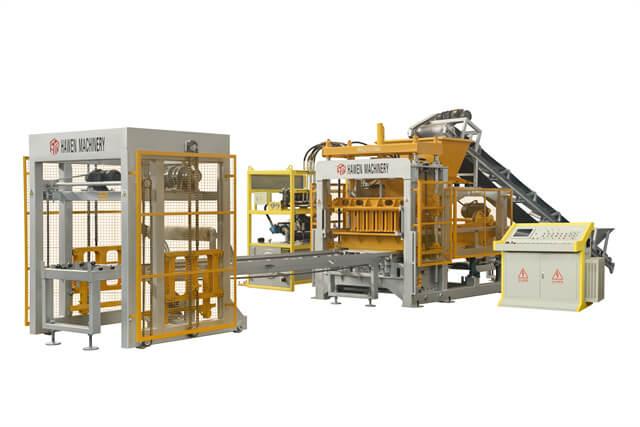
The production line shown above was configured according to the customer's manufacturing objectives and local operating conditions. Rather than selecting equipment based solely on maximum hourly output, attention was given to overall production stability, equipment reliability, and ease of daily operation. These factors are particularly important for manufacturers planning continuous production over many years.
Another consideration for projects in Kenya is the availability and consistency of raw materials. Aggregate grading, sand quality, cement supply, and moisture content may vary between regions. A properly configured batching, mixing, and vibration system helps maintain stable block quality even when minor variations occur in raw materials. This reduces production waste and improves the consistency of finished products delivered to customers.
From a business perspective, many investors entering the concrete block industry focus primarily on the purchase price of the machine. However, experienced producers generally evaluate the complete production process, including equipment reliability, spare parts availability, maintenance convenience, energy consumption, and technical support. These factors often have a greater influence on long-term operating costs than the initial equipment investment.
Another lesson demonstrated by this project is the importance of planning for future expansion. Many successful block manufacturers begin with a production line that matches their current market demand while leaving sufficient room for additional molds, pallet circulation systems, or downstream handling equipment as production increases. Designing the factory with future growth in mind can reduce reconstruction costs and improve operational efficiency later.
For buyers comparing different suppliers, projects such as this provide useful practical references. Instead of asking only how many blocks a machine can produce per hour, it is often more valuable to understand how the production line performs under real operating conditions, how easily it can adapt to changing product requirements, and whether it can continue producing consistent, high-quality concrete blocks over an extended service life.
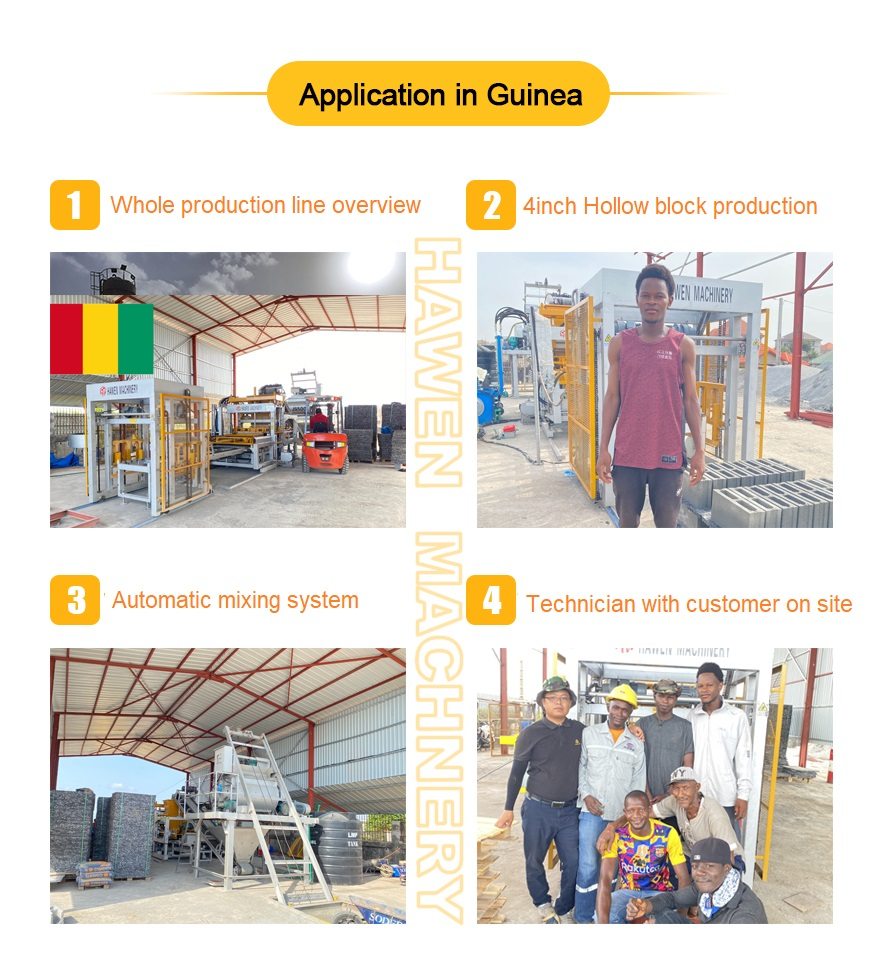
Guinea Project: Reliable Production Under Local Operating Conditions
Like many developing construction markets in West Africa, Guinea has experienced increasing demand for concrete building materials as residential construction, commercial projects, and public infrastructure continue to expand. For block manufacturers, producing concrete blocks with consistent dimensions and reliable compressive strength is essential for meeting the expectations of contractors and distributors.
Unlike projects that focus primarily on achieving the highest possible production capacity, many manufacturers in Guinea place greater emphasis on equipment reliability and operational simplicity. Since production may take place under varying environmental conditions, the machine must be capable of maintaining stable performance during long working hours while remaining easy to operate and maintain.
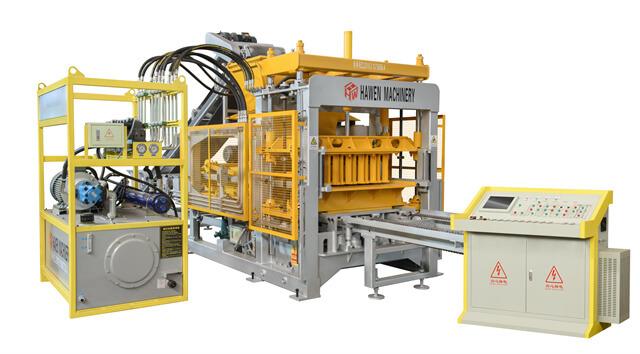
The production line installed for this project was selected according to the customer's production objectives, available factory space, and expected product range. Rather than adding unnecessary equipment, the configuration focused on providing a balanced production process from material batching and concrete mixing to block forming and pallet handling. A well-balanced production line often delivers better long-term efficiency than simply selecting the largest available machine.
Another important consideration in Guinea is the quality of locally available raw materials. Aggregate particle size, sand cleanliness, moisture content, and cement quality may vary from one region to another. For this reason, stable hydraulic pressure, efficient vibration, and accurate batching become essential for maintaining consistent block quality throughout continuous production.
From an engineering perspective, successful production depends on the coordination of the entire manufacturing process rather than the performance of a single machine. Material preparation, mixing time, mold filling, vibration, demoulding, pallet transfer, curing, and finished product handling all contribute to the final quality of the concrete blocks.
One observation commonly made during overseas installation is that production efficiency is influenced not only by the block machine itself but also by factory layout. Sufficient storage space for aggregates, clear forklift routes, organized pallet circulation, and proper curing areas help reduce unnecessary interruptions during production. Careful planning before installation often improves productivity without increasing equipment investment.
Another lesson from this project is the value of operator training. Even highly automated equipment performs best when operators understand material moisture control, routine maintenance, mold replacement procedures, and hydraulic system inspection. Regular preventive maintenance can significantly reduce unexpected downtime and extend the service life of both the machine and the molds.
For buyers evaluating similar projects, the Guinea installation demonstrates that selecting equipment should involve more than comparing technical specifications. Understanding local production conditions, raw material characteristics, and long-term maintenance requirements often leads to more sustainable investment decisions.
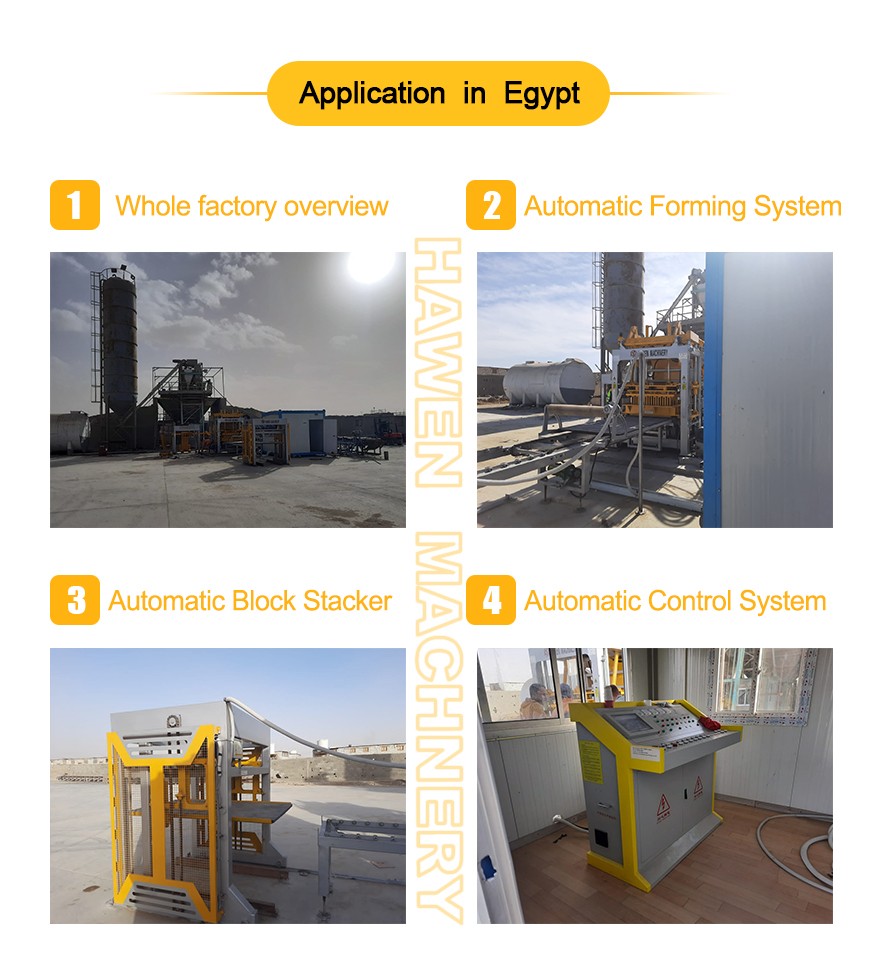
Egypt Project: Higher Automation for Continuous Production
Egypt has one of the largest construction industries in North Africa, with continuous demand for residential housing, commercial developments, industrial facilities, and public infrastructure. As production volumes increase, many concrete block manufacturers place greater emphasis on automation, production consistency, and efficient material handling.
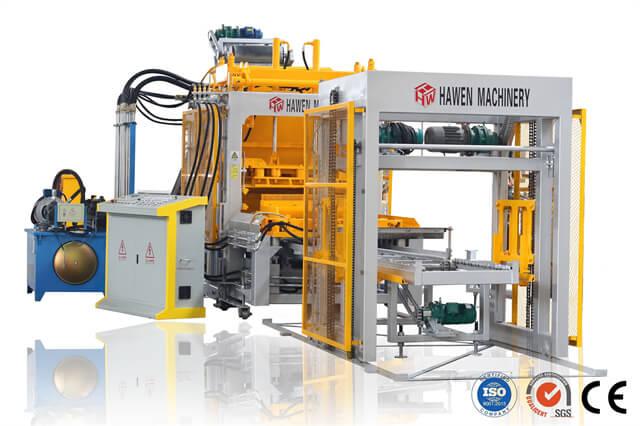
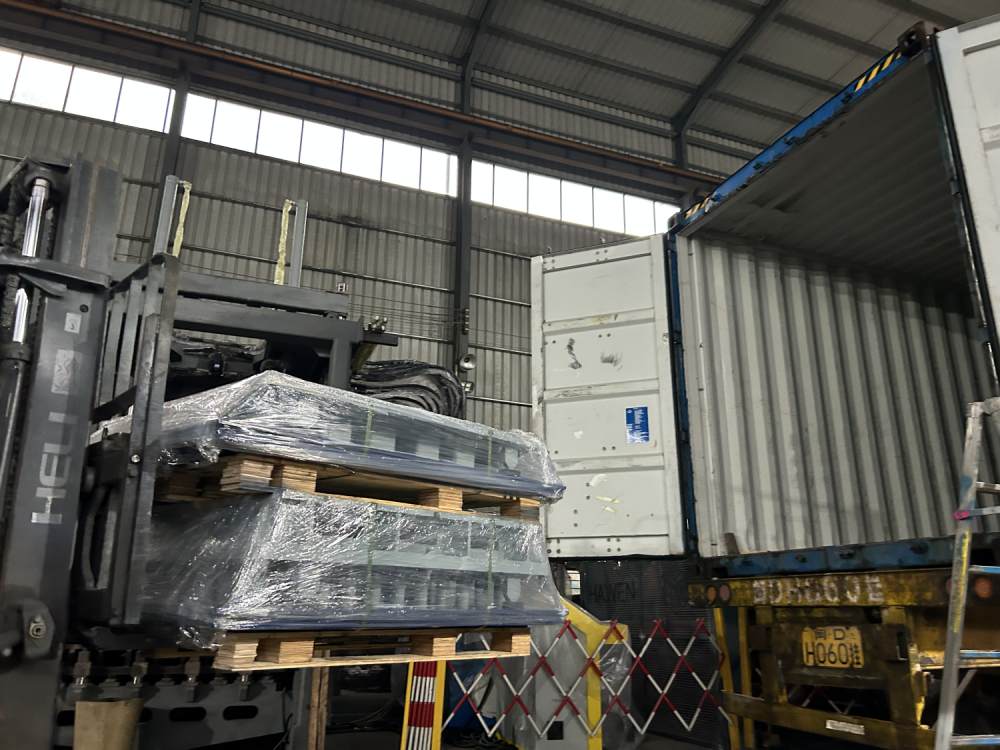
The project shown above illustrates how automation can improve production efficiency without changing the basic manufacturing principle of concrete block production. Automatic material feeding, hydraulic control, vibration systems, and pallet conveying work together to reduce manual intervention while maintaining consistent production cycles throughout the working day.
For manufacturers supplying large quantities of concrete blocks, production consistency is often as important as production speed. Stable cycle times help simplify production planning, improve pallet circulation, and reduce unnecessary interruptions caused by manual operation. Consistency also contributes to more predictable curing schedules and finished product inventory management.
Another important aspect of higher automation is quality repeatability. Automated control systems help maintain consistent vibration duration, hydraulic pressure, and material feeding sequences during every production cycle. This reduces variations between individual blocks and helps improve dimensional accuracy across different production batches.
Although highly automated production lines generally require a larger initial investment, many manufacturers consider the long-term operational advantages equally important. Reduced labor requirements, improved production efficiency, and more consistent product quality can contribute to lower production costs over the lifetime of the equipment, particularly when production demand remains stable over many years.
Factory planning is also closely related to automation level. Projects with higher production capacity usually require more pallets, larger curing areas, smoother internal transportation routes, and sufficient space for maintenance activities. Considering these factors during the planning stage helps ensure that every part of the production line operates efficiently as an integrated system rather than as individual machines.
Comparing the projects in Kenya, Guinea, and Egypt demonstrates that there is no universal configuration suitable for every market. Equipment selection should always be based on production objectives, available investment, local construction demand, raw material conditions, and future business development plans. Understanding these practical differences allows buyers to make more informed decisions before selecting a concrete block production line.
Comparing Different Overseas Project Requirements
Although the projects in Kenya, Guinea, and Egypt all produce concrete blocks, the production priorities differ according to local construction demand, factory planning, and investment objectives. Comparing these projects illustrates an important principle: selecting the right block machine depends on matching the equipment to the production environment rather than simply choosing the largest available model.
| Project Item | Kenya | Guinea | Egypt |
|---|
| Primary Focus | Balanced production capacity and product flexibility | Reliable operation and simple maintenance | Higher automation and continuous production |
| Typical Products | Hollow blocks, paving blocks, solid bricks | Concrete masonry units and hollow blocks | Large-volume concrete blocks and paving products |
| Production Planning | Flexible mold replacement | Stable daily operation | Continuous automated production |
| Factory Consideration | Future production expansion | Efficient layout and operator training | Material handling and pallet circulation |
| Key Lesson | Choose equipment according to product diversity. | Reliable production depends on the complete production process. | Automation should match long-term production demand. |
What Buyers Can Learn Before Choosing a Block Machine
These overseas projects demonstrate that successful investment decisions are rarely based on production capacity alone. A complete evaluation should include market demand, product types, factory layout, raw material characteristics, labor availability, maintenance capability, and future business development plans.
Before requesting quotations, buyers are encouraged to clearly define the products they intend to manufacture. Hollow blocks, solid bricks, interlocking pavers, kerbstones, and other concrete products often require different molds and may influence the recommended machine configuration. Understanding the target market helps avoid unnecessary equipment investment while ensuring sufficient production flexibility.
It is also advisable to review the entire production workflow rather than focusing only on the host machine. Aggregate batching, concrete mixing, hydraulic forming, pallet handling, curing, and finished product storage should operate as one coordinated system. A balanced production line generally achieves higher overall efficiency than equipment selected solely on the basis of hourly output.
Another practical recommendation is to request factory testing before shipment. Observing the production process allows buyers to evaluate block dimensions, surface quality, hydraulic stability, vibration performance, and equipment coordination under actual operating conditions. This provides more useful information than technical specifications alone.
Finally, buyers should consider long-term service requirements. Preventive maintenance, operator training, spare parts availability, and technical support all contribute to reliable production throughout the equipment's service life. Selecting equipment that can be maintained efficiently is often just as important as selecting equipment with higher production capacity.
FAQ
Can the same block machine configuration be used in every country?
Not always. Although the basic production principle remains the same, machine configuration should be adapted to local market demand, product types, available raw materials, factory layout, and production objectives.
Why are overseas project cases useful for buyers?
Real project examples help buyers understand how equipment performs under practical operating conditions and demonstrate how different production requirements influence machine selection.
Is higher automation always the best choice?
Automation should match production demand and investment planning. For manufacturers with stable, high-volume production, increased automation may improve efficiency. For other projects, a balanced configuration may provide better overall value.
What should be checked before placing an order?
Buyers should confirm product dimensions, mold requirements, pallet size, factory layout, electrical supply, raw material conditions, production targets, and future expansion plans before selecting a machine configuration.
Why is factory testing recommended before shipment?
Factory testing allows buyers to verify machine operation, hydraulic performance, vibration consistency, finished block quality, and the coordination of the complete production line before delivery.
Conclusion
The projects in Kenya, Guinea, and Egypt show that successful concrete block production depends on understanding local requirements rather than applying a single equipment solution to every market. Differences in construction demand, production planning, factory conditions, and automation requirements all influence the most suitable machine configuration.
For buyers planning a new concrete block production facility, reviewing completed overseas projects provides valuable practical insights beyond technical specifications. By comparing production objectives, factory layouts, and equipment configurations, investors can better understand which solutions are most appropriate for their own businesses.
A successful concrete block production line is built on careful planning, appropriate equipment selection, and reliable long-term operation. Evaluating the complete production process—from raw material preparation and block forming to curing and finished product handling—helps ensure that the investment continues to support efficient production as business requirements evolve over time.
Every market presents different opportunities and challenges. Rather than searching for a universal solution, buyers are encouraged to identify equipment that matches their production goals, product range, and local operating conditions. Learning from real overseas projects is one of the most practical ways to make informed investment decisions and build a sustainable concrete block manufacturing business.






 Tel: +86-13905968794
 Email: export@hwmachines.com
 MP/WhatsApp: +86-13905968794
 Manufacturer Address:Nanan,Quanzhou City,Fujian Province,China