A concrete block machine plant naturally creates noise and vibration. The machine feeds material, presses, vibrates, demoulds, moves pallets, and transfers fresh products. Some vibration is necessary for compaction, but uncontrolled noise and ground vibration can affect operators, nearby workshops, foundations, sensors, and long-term machine stability. A professional block machine plant should control vibration energy instead of simply tolerating it.
This guide explains practical ways to reduce unnecessary noise and ground vibration while keeping the compaction strength needed for high-quality blocks and pavers.
Why noise and vibration need control
Noise and vibration are not only comfort issues. Excessive vibration can loosen bolts, accelerate wear, affect sensor reliability, and disturb nearby equipment. Excessive noise can make communication difficult and may require hearing protection according to local safety rules. When a brick machine plant is located near offices, residential areas, or other production lines, control becomes even more important.
The goal is not to remove vibration. The goal is to make useful vibration happen inside the mold, where it compacts concrete, while reducing wasted vibration that travels into the floor, frame, and surrounding structures.
Identify the source
Start by separating normal production sound from abnormal sound. Normal sound comes from vibration, hydraulic movement, material feeding, conveyors, and pallet transfer. Abnormal sound may come from loose guards, worn bearings, dry rollers, misaligned conveyors, damaged pallets, or mold impact.
Walk around the line during production and note where the strongest noise occurs. Check the batching machine, mixer discharge, conveyor rollers, main machine, pallet provider, and palletizing area. A simple inspection often finds problems such as loose panels, worn rubber pads, uneven pallets, or material buildup.
Foundation and layout
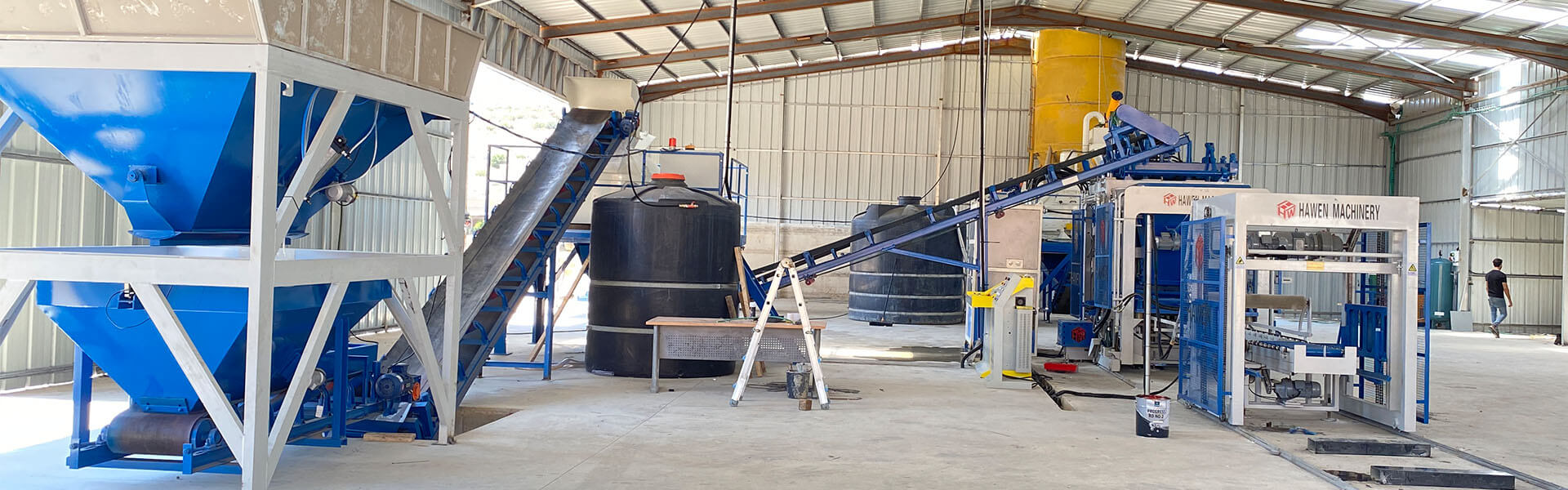
The foundation must match the machine. A weak or uneven foundation can amplify vibration and create long-term alignment problems. Before installation, the buyer should prepare concrete foundation, anchor points, drainage, and machine access according to supplier requirements. Do not place sensitive equipment directly against the main vibration source unless the layout has been reviewed.
Material flow should also be planned. If the concrete mixer, belts, and main hopper are placed awkwardly, operators may accept long transfer drops, sharp material impact, and repeated cleaning. These create additional noise and maintenance load. A compact and logical layout is usually quieter than a forced layout.
Pallets matter more than many buyers expect. A flat GMT pallet supports fresh products and reduces rattling during transfer. Damaged pallets can create impact noise and affect bottom quality.
Machine settings and maintenance
Do not increase vibration time or force without checking mix quality and mold condition. If the mix is too dry or aggregate grading is poor, operators may try to solve compaction by adding vibration. That can increase noise while failing to solve the root cause. Review moisture, aggregate grading, mold filling, and material feeding first.
Mold fit is also important. A worn hollow block mould, loose tamper head, or poorly fixed interlocking paver mould may create impact noise during each cycle. Hawen Machinery designs molds compatible with Masa, Hess, Zenith, Poyatos, Besser, Tiger, Columbia, Quadra, Omag, and other platforms. Heat treatment and HRC59-61 hardness testing help maintain wear resistance and precise fit.
Check bolts, guards, rollers, bearings, hydraulic hoses, vibration box mounting, and lubrication points. A small loose component can become a loud repeated noise under automatic production. Good maintenance turns noise control into daily discipline rather than emergency repair.
Operator and neighbor protection
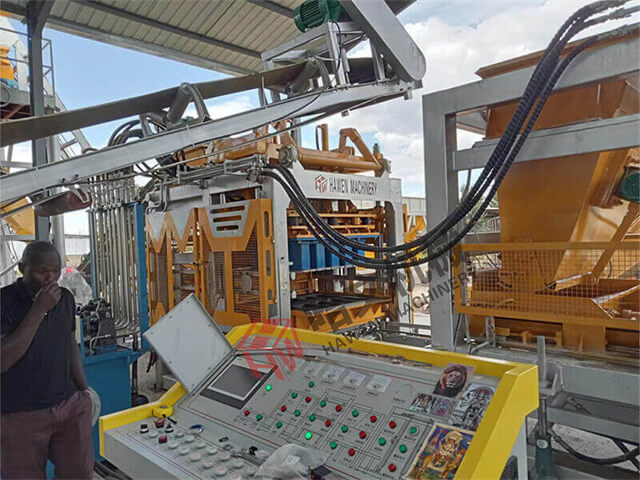
Follow local requirements for hearing protection, signage, machine guarding, and working distance. If the plant is near other workshops or neighbors, consider building layout, enclosure, working hours, and material routes. Noise control is easier when planned before installation than after complaints begin.
Training is part of the solution. Operators should know which sounds are normal and which sounds need attention. A sudden change in sound often appears before a mechanical failure. Recording abnormal noise with the machine status can help maintenance staff locate the cause faster.
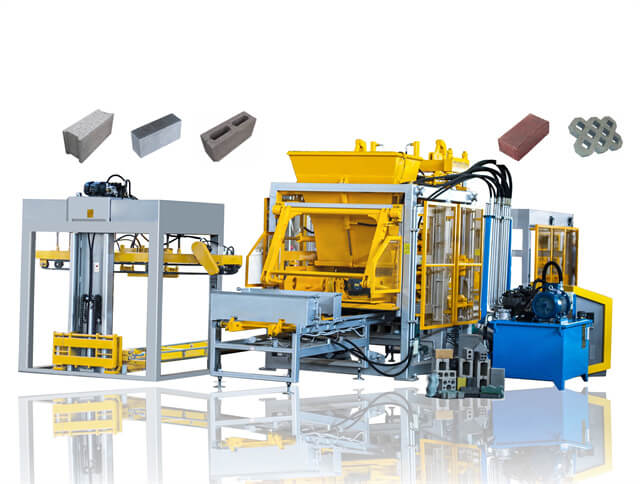
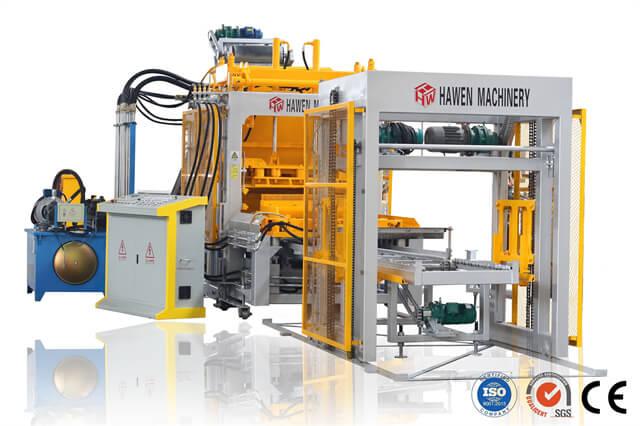
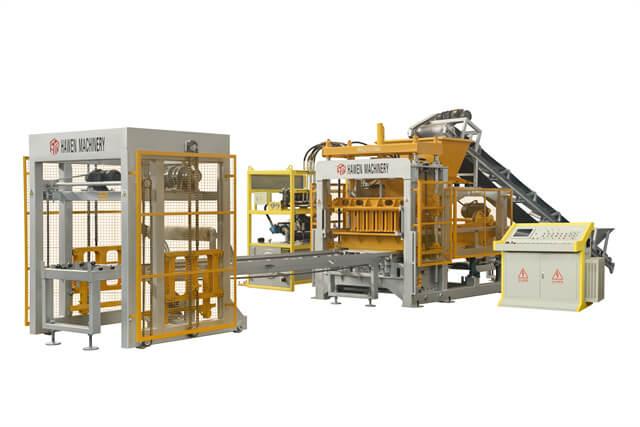
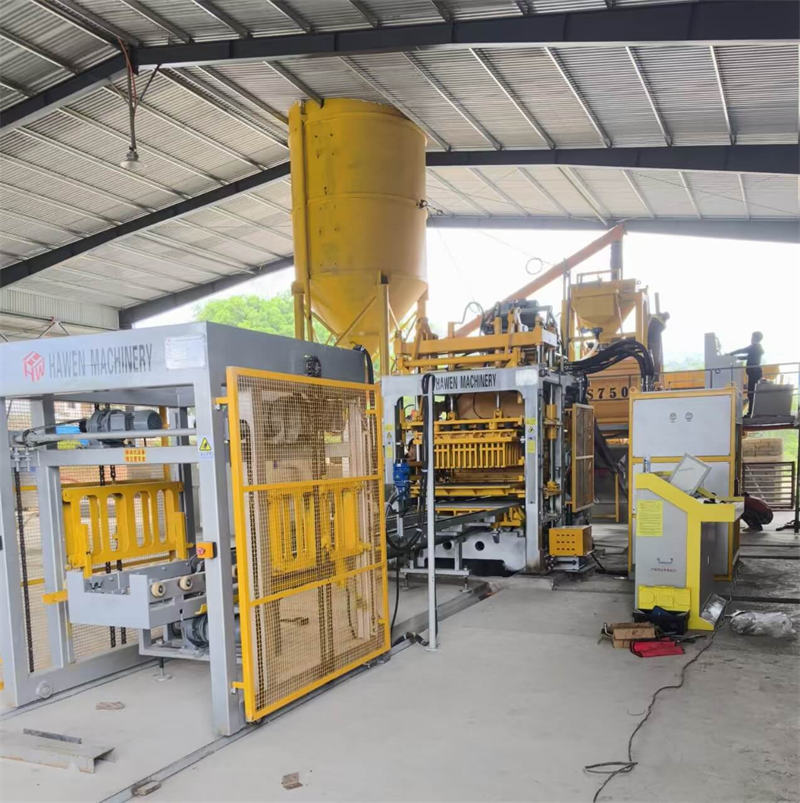
Plants with higher automation should also review pallet supply and downstream handling. An automatic pallet provider can reduce sudden manual impact, while an automatic offline palletizing system can make cured product movement more predictable. For larger lines, a brick machine layout should be checked together with the cement silo, transfer belts, and curing route.
Hawen Machinery design
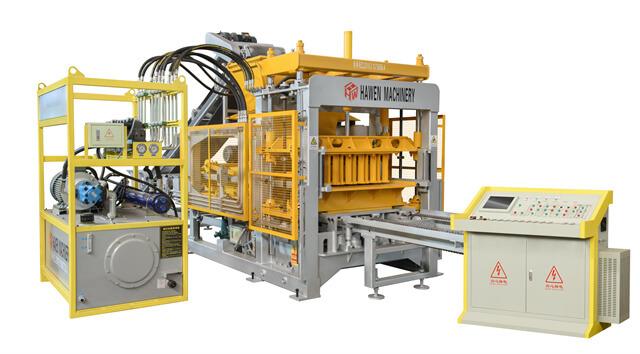
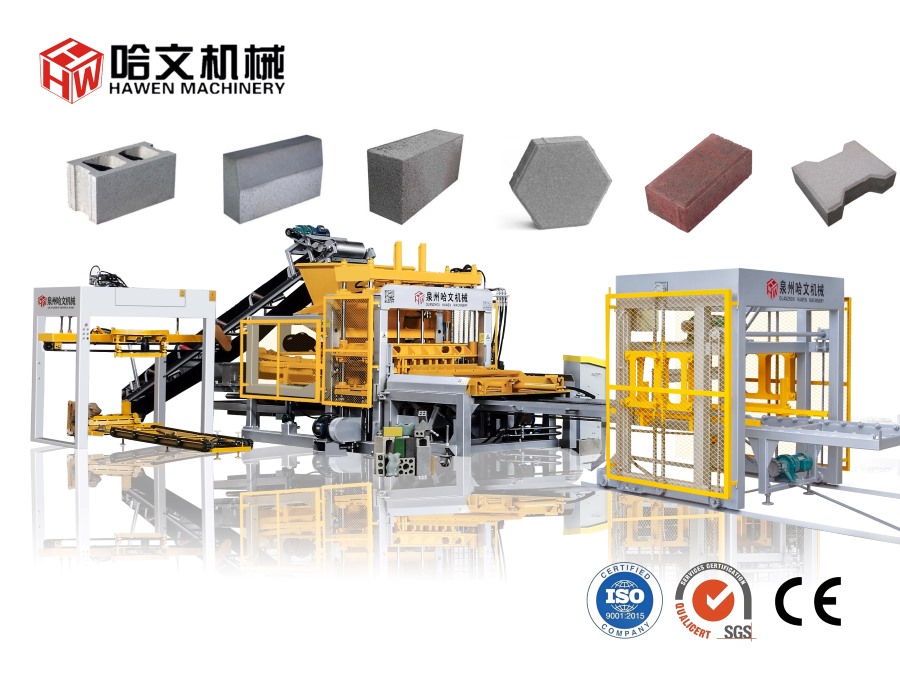
Hawen Machinery adopts a four-shaft vibration box design with eccentric blocks arranged outside the housing. This reduces vibration resistance and supports uniform compaction in the mold. The aim is efficient vibration, not uncontrolled shaking. When material feeding and mold fit are correct, the block making machine and brick making machine configurations can produce dense products with less wasted energy.
The hydraulic station uses Japanese YUKEN proportional and directional valves together with an American ALBERT hydraulic pump, supporting smooth and precise movement. The SIEMENS S7-200 PLC with touch panel and remote monitoring helps review machine status and parameters when production behavior changes.
Good vibration control is a sign of engineering maturity. The factory still has the power needed to compact concrete, but that power is guided, measured, and kept where it belongs. A quieter, steadier plant is not only more comfortable. It is more disciplined, more durable, and more ready for long-term production.
FAQ
Can a block machine plant be completely quiet?
No. Vibration and material movement create normal production noise. The goal is to reduce unnecessary noise and abnormal vibration.
Why did noise increase after changing a mold?
The mold may not be fixed correctly, the tamper head may need adjustment, or the product may require different vibration parameters.
Does more vibration always make stronger blocks?
No. Excess vibration can increase noise and may cause segregation. Mix quality, feeding, mold design, and vibration setting must work together.
Can foundation quality affect machine noise?
Yes. Weak or uneven foundation can amplify vibration and create alignment problems.
What should operators do when the sound suddenly changes?
Stop or slow the line according to plant procedure, then check bolts, guards, rollers, pallets, mold fixing, and bearings.
Can Hawen help review vibration settings?
Yes. Hawen can review product type, mix condition, mold layout, vibration parameters, and machine status to improve compaction control.





 Tel: +86-13905968794
 Email: export@hwmachines.com
 MP/WhatsApp: +86-13905968794
 Manufacturer Address:Nanan,Quanzhou City,Fujian Province,China