The vibration box is one of the most important forming components in a concrete block machine. It converts motor rotation into controlled vibration force, transfers that force through the vibration table, pallet, mould, and concrete mix, and helps low-slump concrete become dense enough to stand after demoulding. Without a stable vibration system, block height, density, surface texture, corner strength, and compressive strength can all become inconsistent.
In recent years, many buyers have also heard the phrase servo vibration. This creates a common question: if a block machine uses servo vibration, does it still have a vibration box? The correct answer is: it depends on the machine design. Some servo vibration machines still use a vibration box. Some use servo motors to drive eccentric vibration units without a traditional enclosed box. Some use a hybrid arrangement where servo control improves a mechanical vibration structure. The word servo describes the control and motor technology; it does not automatically describe the whole mechanical layout.
For buyers comparing an automatic block making machine, understanding these differences is important. A supplier may say four-shaft vibration box, servo vibration motor, Italian servo vibrator, direct servo vibration, or no vibration box. These terms are related but not identical. A professional comparison should ask how vibration force is generated, synchronized, transmitted, adjusted, cooled, lubricated, and maintained.
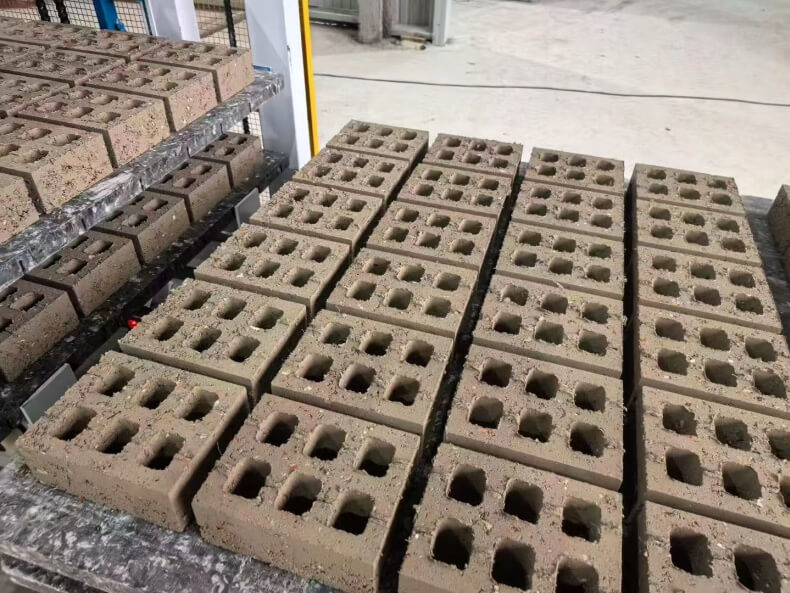
Vibration box role in block machines
A vibration box is a mechanical assembly that usually contains shafts, bearings, eccentric masses, gears, couplings, lubrication parts, or related transmission components. Its job is to organize rotating eccentric force into a useful vibration pattern. In block production, the desired force is normally concentrated toward the vibration table and mould area so the concrete mix can rearrange, reduce voids, and compact under the tamper head.
The vibration box is not only about strength. It is about direction, balance, and repeatability. If eccentric forces are not synchronized correctly, the machine may shake sideways, waste energy in the frame, create noise, loosen bolts, or compact blocks unevenly. A good vibration box helps cancel unwanted force components and direct useful force into the forming zone.
For high-output machines, the vibration box must also respond quickly. A block machine cycle is short, so vibration must reach the target condition during the limited forming window. If the vibration takes too long to build or stop, the effective compaction time becomes unstable. This is one reason modern machines pay close attention to motor control, eccentric layout, shaft count, and vibration transmission efficiency.
How a traditional vibration box works
A traditional vibration box uses one or more motors to rotate eccentric shafts. When an eccentric mass rotates, it creates centrifugal force. By arranging two, four, or more shafts with suitable direction and phase, the machine can reduce unwanted horizontal force and reinforce useful vertical or table-directed vibration. The vibration box supports the shafts and keeps the rotating parts in the correct mechanical relationship.
In a two-shaft system, two counter-rotating shafts are often used to balance force and create a controlled vibration pattern. In a four-shaft vibration box, more excitation points can be arranged across a larger table. This can help distribute energy more evenly for larger pallets, multi-cavity moulds, pavers, kerbstones, or high-capacity production. Hawen frequently describes a four-shaft vibration box design with eccentric blocks positioned outside the housing, which is intended to reduce mechanical resistance and improve vibration transmission.
The advantage of a traditional vibration box is mechanical robustness and predictable synchronization when built well. The limitation is that the system has rotating mass, bearings, lubrication demand, mechanical inertia, and wear points. It may not start or stop as sharply as a servo-controlled system, and parameter adjustment may rely more on eccentric settings, motor speed, vibration time, and operator experience.
What servo vibration really means
Servo vibration means that the vibration source is controlled by servo motors and servo drives rather than only ordinary motors or simple frequency conversion. A servo drive can control speed, acceleration, deceleration, torque response, and sometimes phase relationship with higher precision. This allows the machine to use programmed vibration curves for feeding, compacting, and stopping.
Servo vibration does not mean vibration appears without eccentric force. The machine still needs a physical method to create vibration, usually through eccentric masses, vibration motors, or eccentric vibration units. The difference is how accurately the motor movement is commanded and synchronized. Servo control can make vibration more repeatable from cycle to cycle and more adjustable for different products.
This is why the phrase servo vibration should always be followed by a layout question. Where are the servo motors mounted? Do they drive a vibration box? Do they drive separate eccentric units? Are there four servo motors, two servo motors, or another arrangement? Is synchronization mechanical, electronic, or hybrid? These questions are more useful than asking only whether the machine has servo vibration.
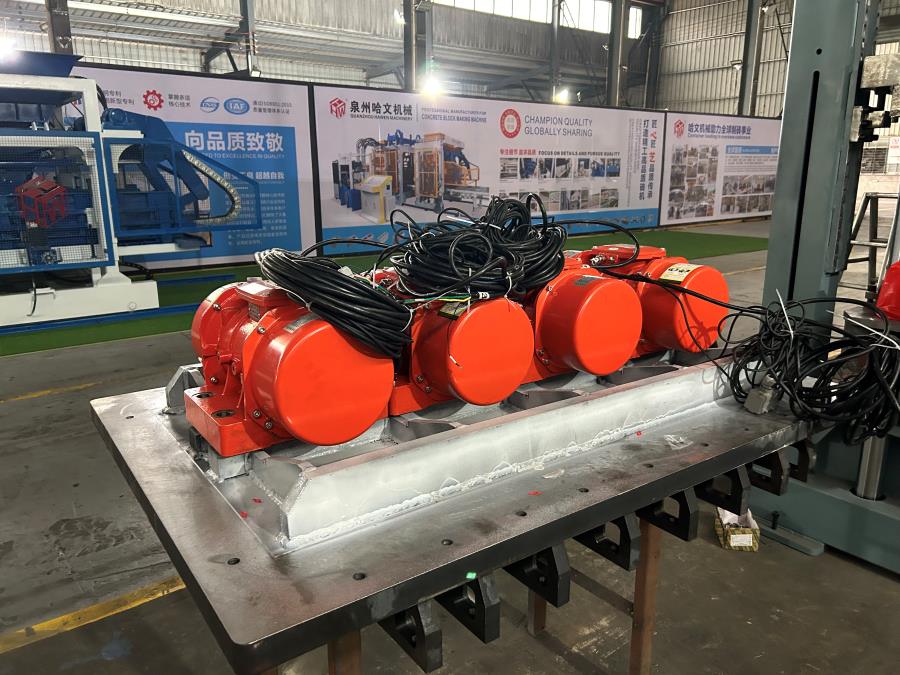
Four common vibration configuration types
The first common type is an ordinary motor plus traditional vibration box. This design uses standard motors, belts, couplings, gears, and eccentric shafts. It is widely used because it is familiar, strong, and easier for many maintenance teams to understand. It can produce good blocks when the vibration box is well designed and the machine is matched with suitable moulds and pallets, as seen in many practical machines such as a QT6 cement paver brick production machine.
The second type is a frequency-controlled motor plus vibration box. In this design, an inverter adjusts motor speed, so the vibration frequency can be changed within a suitable range. It gives more control than fixed-speed operation but still depends heavily on the mechanical vibration box for synchronization and force distribution. It is a practical intermediate solution for many production lines.
The third type is servo motor plus vibration box. This means the machine still has a mechanical vibration box, but the driving motor system is servo-controlled. The servo motor improves response, speed control, and repeatability, while the vibration box still carries shafts, eccentric masses, bearings, and mechanical force distribution. Many buyers misunderstand this arrangement and assume servo means no box, but that is not always true.
The fourth type is direct servo eccentric vibration without a traditional enclosed vibration box. In this layout, servo motors may drive eccentric vibration units mounted closer to the vibration table or forming area. Electronic control handles part of the synchronization that a traditional box would normally provide. This can reduce some shafts, gears, or lubrication points, but it still requires a strong frame, correct eccentric design, bearing protection, and accurate electronic synchronization.
Why servo vibration may still use a box
A machine builder may keep the vibration box in a servo system because the box remains useful for mechanical force organization. Large pallets and heavy moulds need energy distribution across a wide forming area. A four-shaft vibration box can provide multiple excitation points and stable mechanical geometry. Servo motors can then improve how quickly and accurately the shafts reach the target speed.
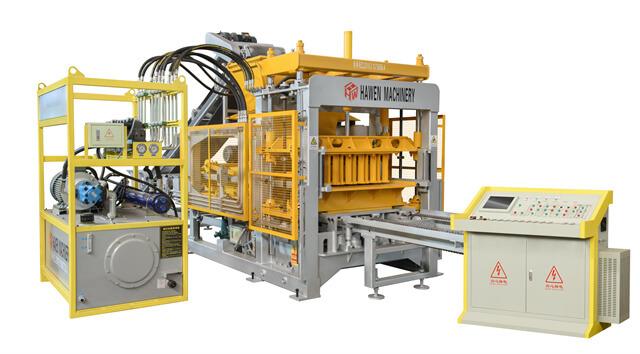
This arrangement can be suitable for high-capacity machines such as a QT15 automatic concrete paver block machine, where large moulds, many cavities, and demanding products need strong and consistent compaction. The servo part improves control; the box part preserves robust force distribution. The result depends on how well both systems are matched.
The maintenance scope remains partly mechanical. Bearings, eccentric blocks, couplings, lubrication, seals, mounting bolts, and shaft synchronization still need inspection. Servo control cannot compensate for worn bearings, loose mounts, or misaligned shafts. Buyers should therefore ask for both servo control details and vibration box maintenance requirements.
Why some servo systems remove the traditional box
Some servo vibration designs remove the traditional enclosed vibration box because electronic synchronization can replace part of the mechanical synchronization function. Servo motors can be controlled to rotate at precise speed and phase. If eccentric units are mounted in suitable positions, the machine can generate a controlled vibration pattern without using a large shaft-and-gear box.
The practical benefits may include faster start-stop response, fewer internal gears, fewer long transmission parts, less oil-bath maintenance, and a shorter energy path from vibration source to table. This can be attractive where recipe switching, energy control, and clean mechanical layout are priorities. It can also help reduce delayed vibration after the compaction stage.
However, no-box servo vibration is not automatically better. It must be judged by frame stiffness, motor capacity, bearing life, eccentric mass design, cable protection, heat management, and control reliability. A direct servo system with poor structure can still lose useful energy through frame movement. Buyers should ask for test results with real material, not only an empty-machine demonstration.

Comparison table for buyers
| Configuration | How vibration is organized | Main buyer concern |
|---|
| Ordinary motor with vibration box | Mechanical shafts, eccentric masses, and box structure create synchronized vibration. | Check shaft count, bearing quality, lubrication, eccentric adjustment, and compaction uniformity. |
| Inverter motor with vibration box | Mechanical box remains, while inverter adjusts motor speed and frequency range. | Check usable frequency range, acceleration time, motor load, and vibration recipe settings. |
| Servo motor with vibration box | Servo drive controls motor response, while the box still distributes eccentric force mechanically. | Check both servo parameters and mechanical box alignment, bearings, and synchronization. |
| Direct servo eccentric system | Servo motors drive eccentric units near the forming area without a traditional enclosed box. | Check electronic synchronization, frame rigidity, bearing protection, and loaded test results. |
| Hybrid servo vibrator layout | Servo vibrator units work together with a mechanical table or partial vibration structure. | Ask which parts are mechanical, which are electronic, and how maintenance is divided. |
Supplier questions before ordering
Before buying a machine, ask the supplier to draw or explain the vibration layout. The answer should show where the motors are installed, where the eccentric masses are located, whether there is a vibration box, how many shafts or vibration units are used, and how force reaches the mould. A vague answer such as "servo vibration is better" is not enough for a technical purchase.
Ask whether synchronization is mechanical, electronic, or hybrid. Mechanical synchronization depends on shaft and gear relationships. Electronic synchronization depends on servo drives, feedback, and control parameters. Hybrid systems use both. Each method can work, but each has different maintenance requirements and failure modes.
Buyers should also review how vibration settings are adjusted for different products. Hollow blocks, pavers, kerbstones, grass blocks, and slope protection blocks may need different vibration curves. The vibration box shaft count article explains that shaft number alone does not decide density. In the same way, servo labeling alone does not decide quality. Loaded tests with actual moulds, pallets, and material are more meaningful.
Finally, ask for spare parts and maintenance details. For a vibration box, this includes bearings, seals, lubrication, eccentric blocks, couplings, and shaft alignment. For direct servo vibration, this includes servo motors, drives, encoders, cables, eccentric units, bearings, and cooling or protection arrangements. A clear spare parts list helps the buyer understand the real long-term cost.
FAQ
Does servo vibration always mean there is no vibration box?
No. Some servo vibration machines still use a vibration box. The servo motor controls the drive, while the box still organizes shafts and eccentric force. Other designs may remove the traditional box and use direct servo eccentric units.
Can a machine have both servo vibration and a four-shaft vibration box?
Yes. This is a common source of confusion. A machine can use servo motors for control and still use a four-shaft vibration box for mechanical force distribution.
Is no-box servo vibration always better?
No. It can offer fast response and fewer mechanical transmission parts, but the result depends on frame stiffness, electronic synchronization, bearing protection, motor capacity, and real loaded compaction tests.
What should I check if two machines both claim servo vibration?
Check motor quantity, motor power, eccentric layout, whether a vibration box exists, synchronization method, frequency range, maintenance points, and sample block density across the pallet.
Conclusion
A vibration box is the mechanical heart of many concrete block machine vibration systems. It organizes eccentric force, balances unwanted movement, and transfers compaction energy into the mould and pallet. Servo vibration is a control technology that can improve motor response, speed accuracy, and repeatability, but it does not automatically mean the machine has no vibration box.
There are several real configurations: ordinary motor with vibration box, inverter motor with vibration box, servo motor with vibration box, direct servo eccentric vibration without a traditional enclosed box, and hybrid servo vibrator layouts. For buyers, the next step is to ask for the actual vibration structure, synchronization method, maintenance scope, and loaded production results. When the vibration system, mould, pallet, material, hydraulic pressing, and control logic are matched correctly, the block machine can produce denser blocks with more stable height, surface quality, and daily output.





 Tel: +86-13905968794
 Email: export@hwmachines.com
 MP/WhatsApp: +86-13905968794
 Manufacturer Address:Nanan,Quanzhou City,Fujian Province,China