The hydraulic system of a concrete block machine works under repeated high-pressure cycles. It drives the press head, mould lifting, material feeding actions, pallet movement, and other forming-related functions. During every cycle, hydraulic oil transfers power from the motor and pump to valves and cylinders. At the same time, part of the input energy becomes heat because of pump losses, pressure throttling, valve resistance, internal leakage, friction, and continuous circulation through hoses and manifolds.
If the heat is not removed, hydraulic oil temperature will keep rising during long production shifts. The machine may still run at first, but the oil becomes thinner, sealing performance becomes weaker, pump efficiency drops, and valves may respond less consistently. For an automatic block making machine, this can affect pressing stability, cylinder speed, mould movement, and the repeatability of block height. This is why hydraulic cooling should be treated as a production stability issue, not only as an accessory.
There are several ways to cool hydraulic oil, including tank radiation, water cooling, air cooling, and independent oil coolers. In many block plants, the debate is often between a simple water-cooled heat exchanger and a dedicated oil cooler unit. Water cooling can remove heat, but in practical factory conditions an oil cooler is usually easier to control, more independent from water quality, and more stable across seasons and shifts.
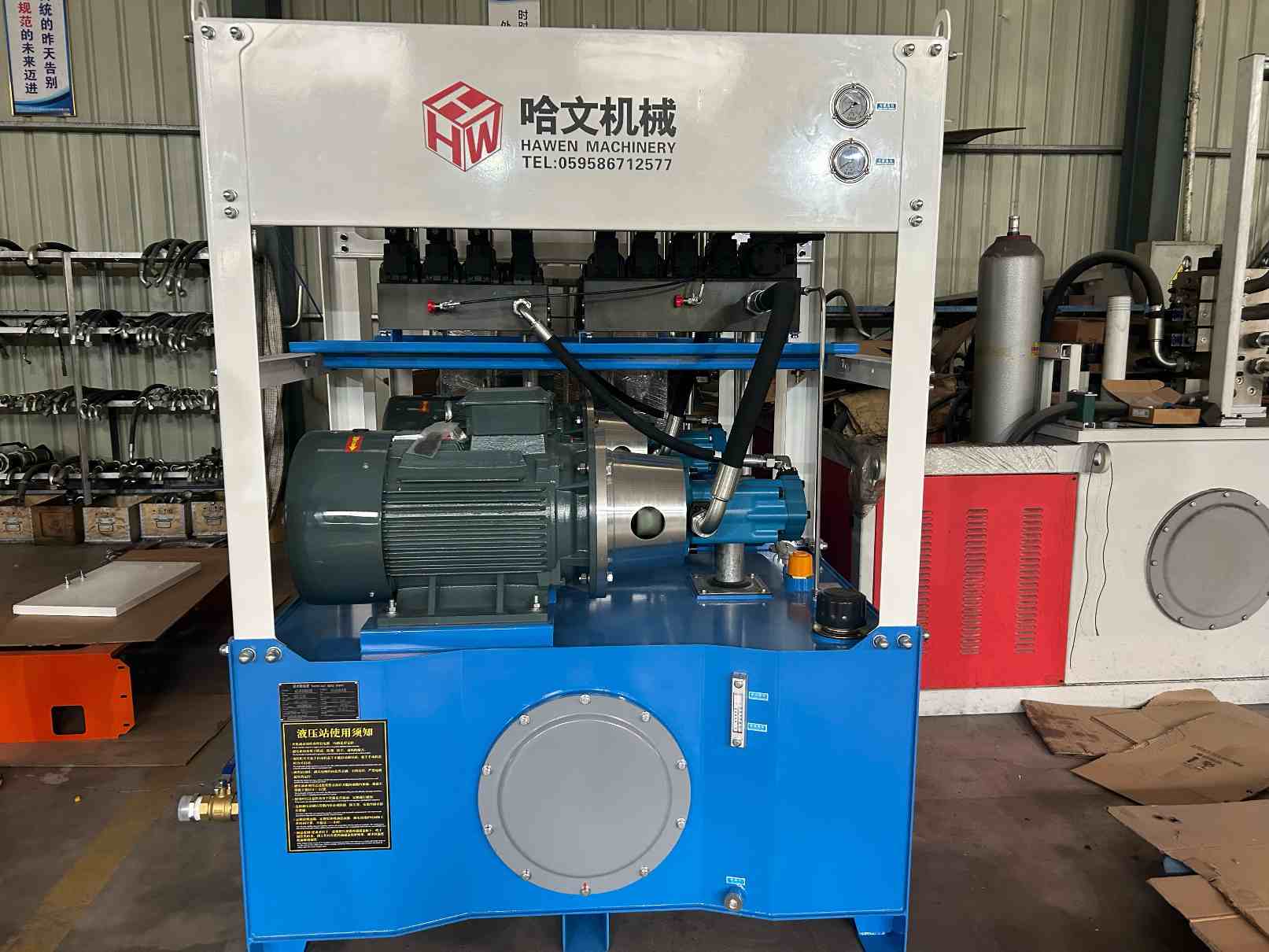
Hydraulic oil temperature in block machine operation
Hydraulic oil has an ideal working temperature range. The exact value depends on oil grade, pump type, seal material, ambient temperature, and machine design, but many block machine hydraulic stations are commonly monitored around a moderate working range rather than allowed to become excessively hot. When oil is too cold, viscosity is high and the pump may work harder. When oil is too hot, viscosity falls and the system loses part of its pressure-holding and lubrication ability.
In block production, temperature rise follows the production load. A machine producing dense pavers or kerbstones may use strong pressing force, frequent cylinder movement, and short cycle time. Hot climates, poor ventilation around the hydraulic station, undersized oil tanks, dirty filters, and incorrect pressure settings can all accelerate overheating.
Oil temperature also affects adjustment accuracy. If the first hour runs with cool oil and the fourth hour runs with hot oil, cylinder speed and pressure response may change. Operators may think the material mix or mould has changed, but the real cause can be oil viscosity loss.
Why hydraulic systems need a cooling system
The first reason is viscosity control. Hydraulic oil must be thick enough to lubricate pumps and seal small internal gaps, but fluid enough to pass through valves and hoses without excessive resistance. Overheated oil becomes too thin. Thin oil increases internal leakage inside pumps, valves, and cylinders. The result may be slower pressing, unstable cylinder position, weaker pressure holding, or higher pump workload.
The second reason is component protection. Hydraulic pumps, proportional valves, solenoid valves, seals, hoses, and cylinders are designed to work within a temperature range. Excessive heat hardens seals, ages hoses, oxidizes oil, and can increase pump wear.
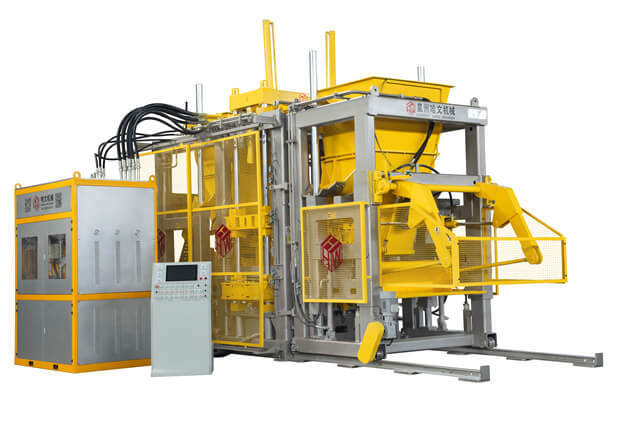
The third reason is production consistency. Block quality depends on repeatable pressure, stroke timing, and demoulding movement. If oil temperature rises during the day, the hydraulic system may no longer behave exactly like it did during morning adjustment. Cooling reduces this drift. For high-output equipment such as a QT15 automatic concrete paver block machine, small cycle changes can quickly become many pallets of blocks with different height or density.
The fourth reason is oil life. High temperature accelerates oxidation and additive breakdown. Oil that becomes dark, burnt-smelling, foamy, or contaminated will reduce system reliability. Cooling cannot replace filtration and oil maintenance, but it helps slow temperature-related degradation. A cleaner, cooler oil environment supports longer service life for pumps, valves, and seals.
Why simple water cooling has practical limitations
Water cooling usually uses a heat exchanger where hydraulic oil and cooling water pass through separate channels. Heat moves from the oil to the water. The idea is straightforward, and under controlled conditions water has strong heat absorption ability. However, the actual performance depends heavily on water quality, water flow, inlet water temperature, installation method, and maintenance.
The first limitation is water quality. In many block plants, available water may contain minerals, sediment, or rust. Scale can build inside heat exchanger passages and reduce heat transfer. If the plant uses hard water, the cooling effect may decline gradually, and the operator may not notice until oil temperature becomes unstable.
The second limitation is water supply stability. A water cooler depends on continuous water flow. If water pressure drops, a valve is partially closed, or inlet water temperature rises in summer, cooling capacity changes. The hydraulic system then depends on a utility condition outside the machine itself.
The third limitation is leakage risk. A damaged heat exchanger can allow water and oil to mix. Water contamination reduces lubrication, causes rust, increases foaming, and may damage precision valves. This is one reason many buyers prefer a cooling method that keeps water away from the oil circuit.
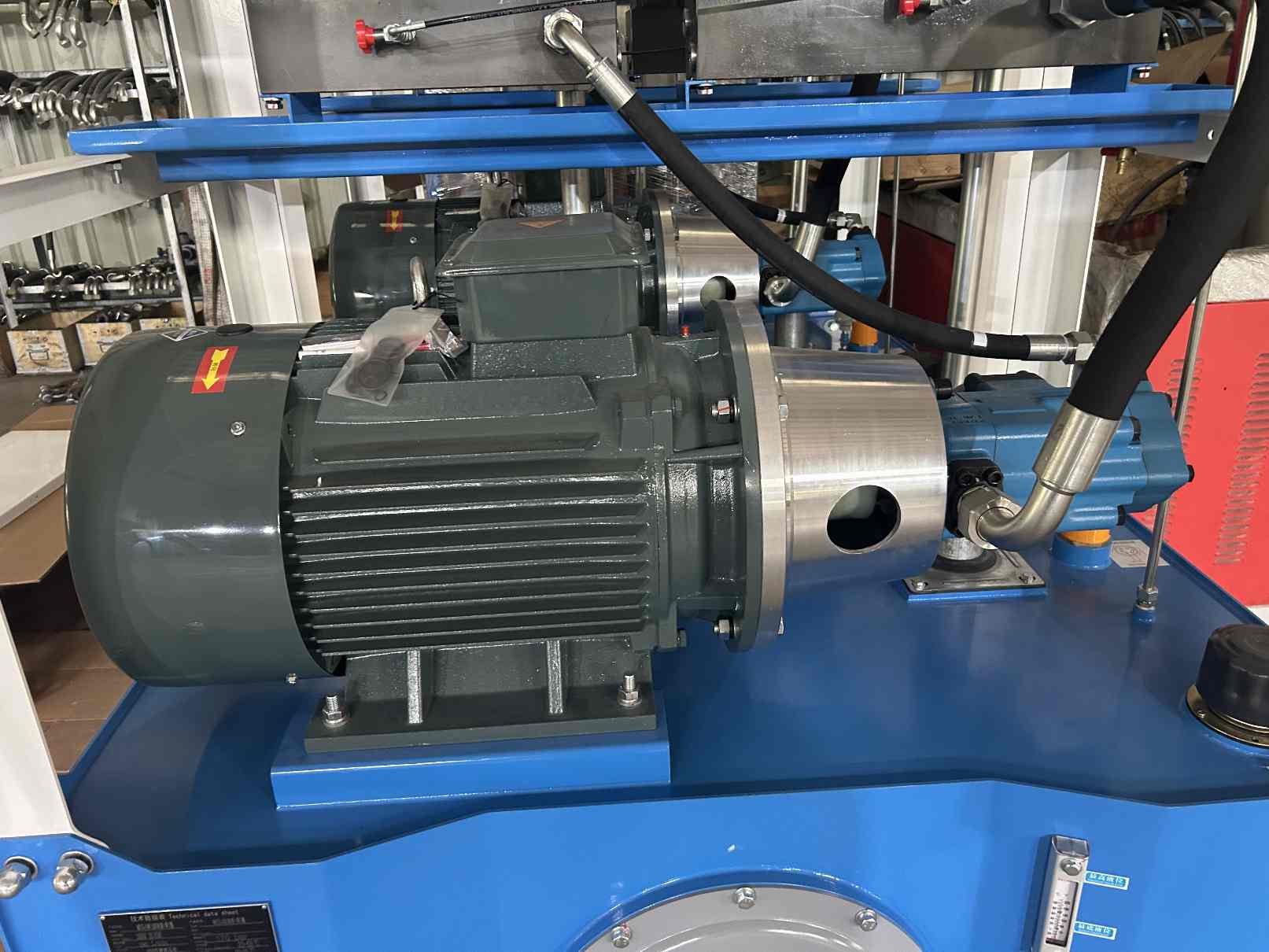
Why an oil cooler gives more stable temperature control
A dedicated oil cooler, often called an oil cooling machine or oil chiller in factory language, is designed to control oil temperature more independently. Depending on configuration, it may use a refrigeration circuit or controlled air-cooling structure with a thermostat, circulation pump, fan, compressor, heat exchanger, and temperature controller.
The strongest advantage is temperature precision. An oil cooler can maintain oil temperature within a target range. When temperature rises, the cooling unit starts or increases output. When the temperature falls to the set point, it reduces operation. This closed control is more predictable than simple water cooling.
The second advantage is independence from water quality. A dedicated oil cooler does not rely on hard or dirty plant water passing through a narrow exchanger. This reduces scale-related efficiency loss and avoids hidden maintenance where operators must descale water passages before cooling returns to normal.
The third advantage is lower contamination risk. Since the cooling system can be arranged without plant water entering a water-oil exchanger, the chance of water mixing into hydraulic oil is reduced. For a hydraulic station using precision valves, this is important. A small amount of water may be enough to create rust, foaming, or sticky valve movement after repeated cycles.
The fourth advantage is easier monitoring. Many oil cooler units have temperature displays, alarms, set points, and fault indicators. Operators can see whether the cooling system is working rather than guessing from the hydraulic tank surface temperature.
Temperature effects on pumps, valves, and seals
The pump is usually the first component affected by poor oil temperature control. When oil becomes too thin, internal leakage increases and the pump may need to work harder to maintain pressure. This can create more heat, which further reduces viscosity. The cycle becomes self-reinforcing: hot oil causes leakage, leakage causes energy loss, and energy loss creates more heat.
Valves are also sensitive. Proportional valves and directional valves rely on clean oil, correct viscosity, and stable pressure. If hot oil thins and carries degraded additives or particles, valve response can become inconsistent. In a block machine, this may appear as irregular press head motion, mould lifting delay, or small cycle-to-cycle speed differences.
Seals and hoses suffer from heat aging. High temperature can harden rubber, reduce elasticity, and increase leakage risk. Once leakage appears, the plant may tighten fittings repeatedly, but the underlying problem may be heat-stressed seals. Good cooling reduces this stress and helps maintenance teams separate normal wear from temperature-related failure.
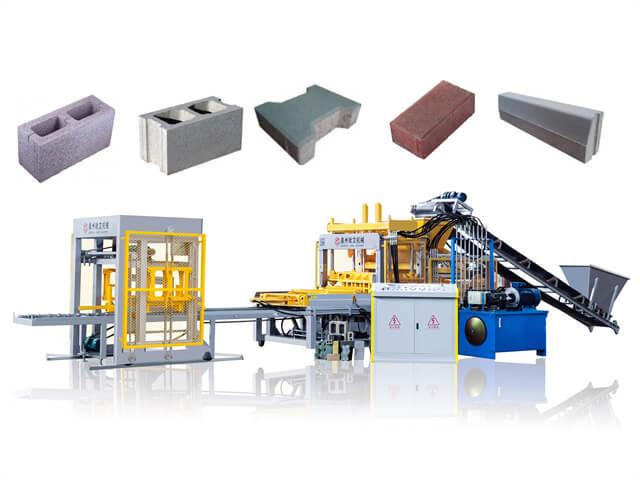
Comparison table for cooling methods
| Evaluation point | Simple water cooling | Dedicated oil cooler |
|---|
| Temperature control | Depends on water flow, inlet water temperature, and exchanger condition. | Uses temperature control logic to maintain a more stable oil temperature range. |
| Water quality impact | Hard water, sediment, and scale can reduce cooling efficiency. | Less dependent on plant water quality, reducing scale-related performance loss. |
| Oil contamination risk | Heat exchanger failure may allow water to contaminate hydraulic oil. | Lower water contamination risk when the system is arranged without plant water contact. |
| Maintenance focus | Water passages, scale removal, flow valves, leakage checks, and water supply stability. | Filters, condenser or radiator cleaning, fans, pump operation, thermostat, and alarm checks. |
| Best application | Plants with clean, stable cooling water and moderate hydraulic heat load. | Long shifts, hot climates, high-pressure production, and factories needing stable hydraulic response. |
Buyer checkpoints for oil cooling configuration
Before ordering a block machine, buyers should ask the supplier how hydraulic oil temperature is controlled under continuous production. It is not enough to see a hydraulic station in the machine layout. Ask whether the cooling device is standard or optional, what type of cooler is used, what oil temperature range is expected, and whether the cooler capacity matches the pump power and duty cycle.
Buyers should also ask where the oil cooler is installed. It should have enough air circulation and should not be placed where cement dust, aggregate dust, or high ambient heat blocks the cooling surface. If the unit is installed too close to a wall, its real cooling capacity may be lower than its rated capacity.
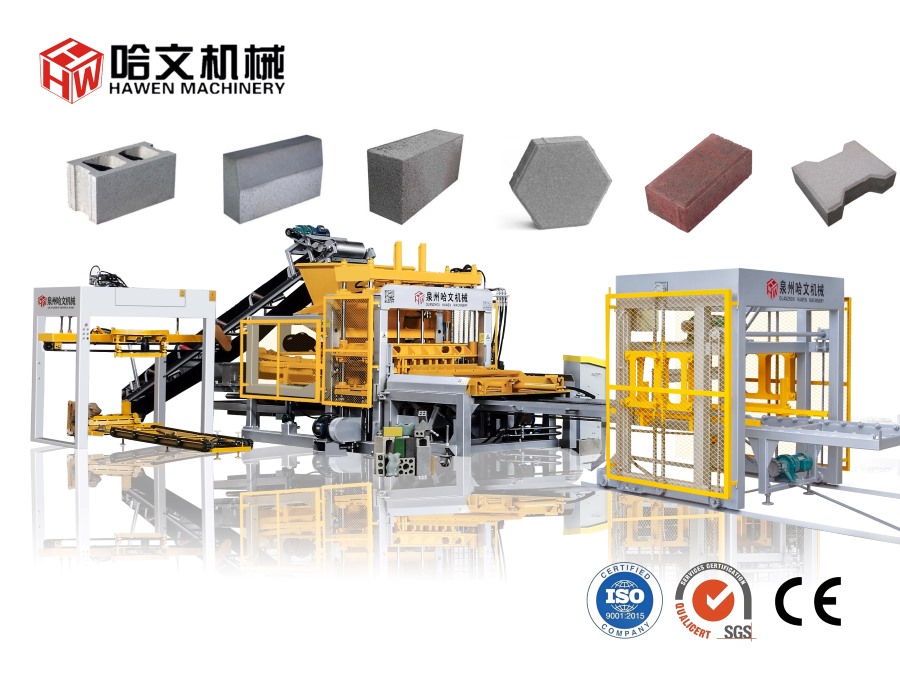
The cooling plan should match the full line. A QT6 cement paver brick production machine working in moderate production may not generate the same heat load as a larger machine running kerbstones continuously. Product type, cycle time, hydraulic pressure, ambient temperature, oil tank volume, and operator schedule all affect cooling demand. For a complete plant, the buyer should review hydraulic cooling together with mixing, batching, vibration, pallet supply, and curing capacity.
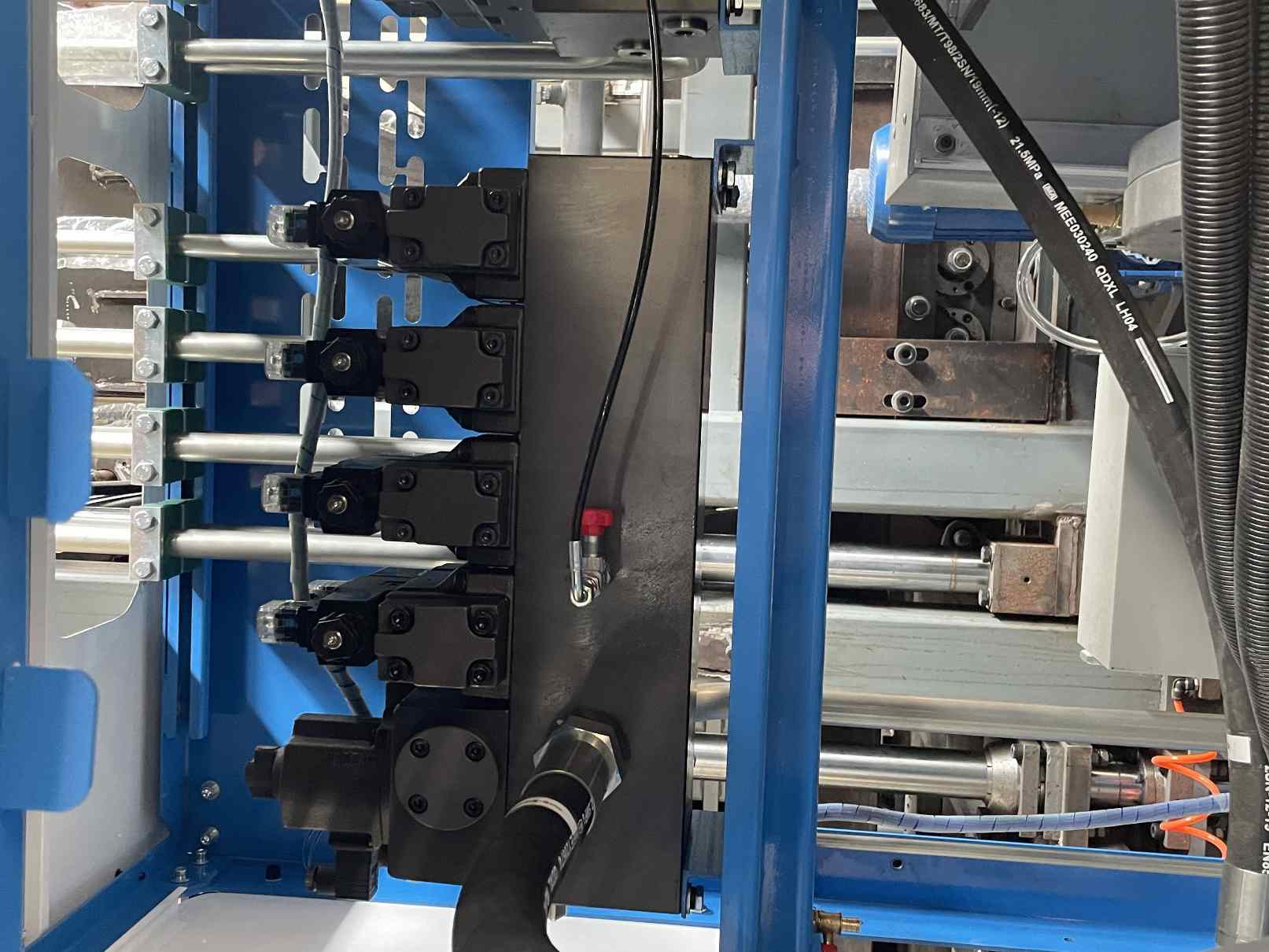
Maintenance routine for the cooling system
A cooling system only works well when it is maintained. Operators should record hydraulic oil temperature during production, especially after the machine has run for several hours. If the temperature gradually rises beyond normal range, check the cooler, filters, oil level, ventilation, pressure settings, and pump noise before adjusting production parameters.
For an oil cooler, keep the air side clean. Cement dust can cover fins and reduce heat transfer. Fans should rotate normally, alarms should be tested, and temperature sensors should be kept reliable. If the unit uses a circulation pump, check for abnormal sound and flow restriction. The cooler should not be bypassed casually, because temporary bypassing often becomes a hidden long-term overheating problem.
Hydraulic oil maintenance is still required. Cooling slows heat damage, but it does not remove particles, water, or oxidation products by itself. Follow oil replacement intervals, clean or replace filters, inspect the tank breather, and use the correct oil grade. The existing guide on hydraulic station maintenance for block making machines is a useful reference point for routine oil level, leakage, filter, and temperature checks.
FAQ
Why does hydraulic oil get hot in a block machine?
Oil heats up because part of the motor and pump energy is lost through pressure throttling, internal leakage, valve resistance, friction, and continuous circulation during repeated forming cycles.
Is water cooling always worse than an oil cooler?
No. Water cooling can work well when water is clean, cool, and stable. The problem is that many factories have hard water, changing water pressure, or poor maintenance, so the cooling result becomes less predictable than a dedicated oil cooler.
Can an oil cooler solve all hydraulic overheating problems?
No. If the pressure setting is wrong, filters are blocked, the pump is worn, the oil tank is too small, or the machine room has poor ventilation, overheating may continue. The oil cooler is one important part of temperature control, not the only cause to check.
What happens if hydraulic oil temperature stays too high?
The oil becomes thinner, internal leakage increases, seals age faster, pump wear may accelerate, valve response can become unstable, and block machine pressing or demoulding movement may become less repeatable.
Conclusion
Hydraulic oil cooling is important because a block machine depends on stable pressure, predictable cylinder motion, and reliable valve response. Without cooling, heat accumulation can reduce oil viscosity, shorten seal life, accelerate oil aging, and create production drift during long shifts. This affects not only hydraulic components but also block height, density consistency, and demoulding stability.
Water cooling can remove heat, but its real effect depends strongly on water quality, flow, inlet temperature, and exchanger cleanliness. A dedicated oil cooler is usually more stable because it controls temperature directly, reduces dependence on plant water, lowers water contamination risk, and gives operators clearer monitoring. When comparing machine quotations, buyers should ask for the cooling method, cooler capacity, installation position, temperature control range, and maintenance requirements. A well-selected oil cooling system protects the hydraulic station and keeps the block production line more consistent through the whole working day.





 Tel: +86-13905968794
 Email: export@hwmachines.com
 MP/WhatsApp: +86-13905968794
 Manufacturer Address:Nanan,Quanzhou City,Fujian Province,China