Reducing cement consumption in concrete block production is not the same as simply lowering the cement ratio. If a factory cuts cement without improving batching, mixing, compaction, mould accuracy, curing, and process control, the result may be weak blocks, chipped edges, high rejection rates, and unhappy project customers. The real goal is smarter cement use: every kilogram of cement should contribute to strength, density, surface quality, and stable demoulding.
This article explains how a block machine plant can reduce unnecessary cement waste without sacrificing product performance. It is written for buyers, plant managers, and operators who produce hollow blocks, solid bricks, pavers, kerbstones, and other dry-cast concrete products with a block making machine or brick making machine line.
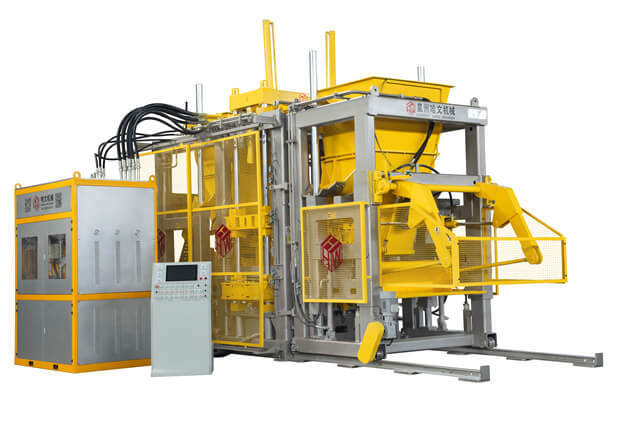
Cement Reduction Is a System Problem
Cement saving starts with process control
Cement is usually one of the most expensive raw materials in block production, so it is natural for factories to look for savings. However, cement reduction should never begin with guesswork. It should begin with process stability. If raw material moisture changes every hour, if aggregate grading is inconsistent, if vibration is weak, or if curing is uncontrolled, the factory may add extra cement only to cover process problems.
A well-planned solid cement block machine line should produce consistent density and demoulding behavior before the mix is adjusted downward. If the plant already has high breakage, rough surfaces, low green strength, or large weight variation, reducing cement first can make the problem worse.
Reference note: In dry-cast concrete production, strength is not controlled by cement alone. Aggregate packing, water control, compaction energy, curing conditions, and mould accuracy all influence the final result.
Check aggregate grading before changing cement
Aggregate grading affects how tightly the material packs inside the mould. If the mix contains too much coarse material, cavities may not fill well. If it contains too much fine material, water demand can rise and the surface may become sticky. Poor grading often forces the factory to use more cement than necessary because the structure of the mix is not efficient.
Before changing the cement content, check the sand, stone powder, crushed stone, fly ash, slag, or other local materials used in the plant. The goal is a stable particle distribution that fills voids and allows the block machine to compact the material evenly. A fly ash brick paver making machine can work with different material sources, but the recipe still needs to match the actual aggregate behavior.
Factories should also watch contamination. Clay, excessive dust, organic matter, or unstable recycled material can increase water demand and reduce product consistency. In that situation, adding more cement may hide the problem for a short time, but it does not solve the material issue.
Control moisture and batching accuracy
Moisture control is one of the most practical ways to reduce cement waste. If the mix is too dry, it may not compact fully. If it is too wet, it may stick to the mould, deform after demoulding, or produce surface defects. Both conditions can push operators to increase cement because the real cause is not obvious.
The batching machine in block making should feed materials consistently. Cement, aggregate, water, and admixture dosing should be repeatable enough that the operator does not need to correct the recipe by feel. A stable cement silo in block making also matters because poor cement discharge can create batch-to-batch variation.
Water should be treated as a control parameter, not as a casual adjustment. When operators add water only by visual judgment, the brick machine may produce blocks that look acceptable in the moment but vary in weight, density, and early strength. Stable moisture makes cement reduction safer because the factory can compare results more honestly.
| Control point | Why it affects cement use | Practical action |
|---|
| Aggregate grading | Better packing can reduce voids and improve density. | Check local materials before changing the cement ratio. |
| Moisture consistency | Stable water content improves compaction and demoulding. | Record water adjustment by material condition, not by habit. |
| Batching accuracy | Repeatable dosing prevents hidden strength variation. | Inspect weighing, discharge gates, and feeding sequence. |
| Compaction | Dense products need less safety compensation from cement. | Optimize vibration and pressure before reducing cement. |
Mixing and Compaction Decide How Cement Works
A poor mix can waste cement even when the recipe looks correct on paper. If cement is not distributed evenly, some blocks may be rich while others are weak. Operators may respond by raising the cement content for the whole batch, even though the real issue is mixing uniformity.
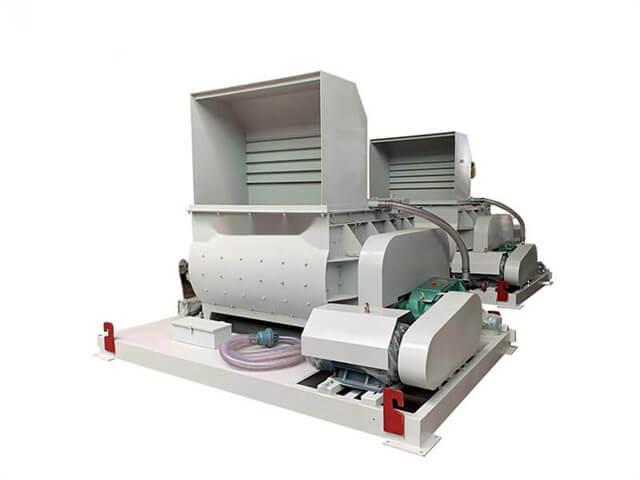
A suitable concrete mixer should match the material type, batch volume, and production rhythm. For pavers, kerbstones, and products with a demanding surface, a planetary concrete mixer can support uniform mixing and better distribution of fine materials. For higher-output block production, a twin-shaft concrete mixer may be selected according to capacity and layout.
Mixing time should be long enough to distribute cement and moisture, but not so long that production flow becomes inefficient. The better method is to establish a stable mixing sequence, then evaluate block weight, surface, demoulding behavior, and strength results. Cement reduction should follow stable mixing, not replace it.
Optimize vibration and compaction
Vibration is one of the strongest tools for using cement efficiently. If the mould is filled evenly and the vibration system compacts the material properly, the product can reach better density without relying only on extra cement. If vibration is weak, unstable, or poorly timed, the factory may compensate with richer mix designs.
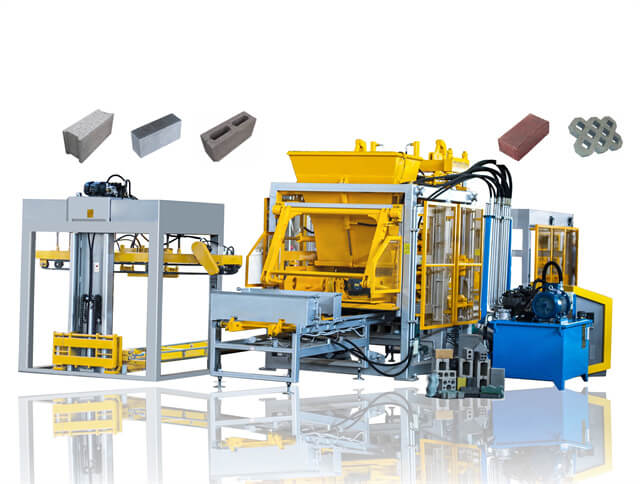
HAWEN Machinery adopts a four-shaft vibration box design with eccentric blocks positioned outside the housing. This design reduces resistance during vibration, supports uniform compaction, and helps lower unnecessary cement compensation while improving overall efficiency. For hollow blocks, pavers, solid bricks, and kerbstones, this can make the production process more stable.
The operator should adjust vibration time, feeding time, and pressure according to the product. A tall hollow block, a dense paver, and a heavy curb stone do not behave the same way. A good block making machine should allow practical adjustment, while the factory records which settings produce the best combination of surface quality, green strength, and final performance.
Match hydraulic pressure with demoulding stability
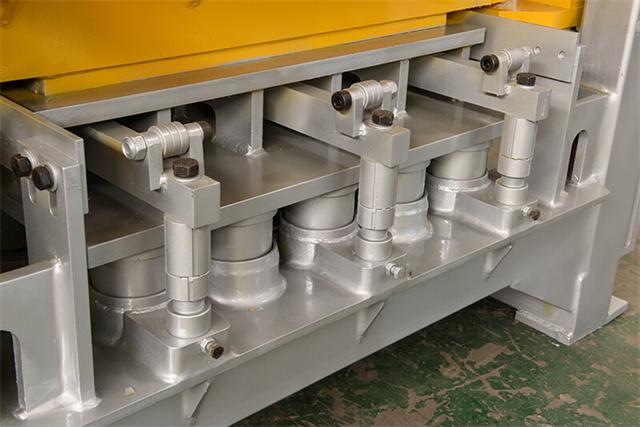
Hydraulic pressure supports pressing, mould movement, and demoulding. Stable hydraulic control helps the brick making machine form products with repeatable height and density. If pressure fluctuates, if demoulding is rough, or if the cylinder movement is not smooth, operators may increase cement to improve green strength, while the root cause remains mechanical or hydraulic.
HAWEN Machinery configures the hydraulic station with Japanese YUKEN proportional and directional valves and an American ALBERT hydraulic pump. The system is designed to support precise movement, stable load response, and long-term production reliability. For cement-saving work, the value is practical: consistent pressure and smooth demoulding reduce the need for over-rich recipes used only to survive machine movement.
Before reducing cement, inspect oil level, oil temperature, filters, leakage, cylinder travel, and pressure response. If products crack during release, the issue may be demoulding movement, pallet support, mould wear, or mix moisture. Adding cement may reduce symptoms, but it can also increase cost without fixing the process.
Mould, Curing, and Product Quality
Mould condition and product geometry
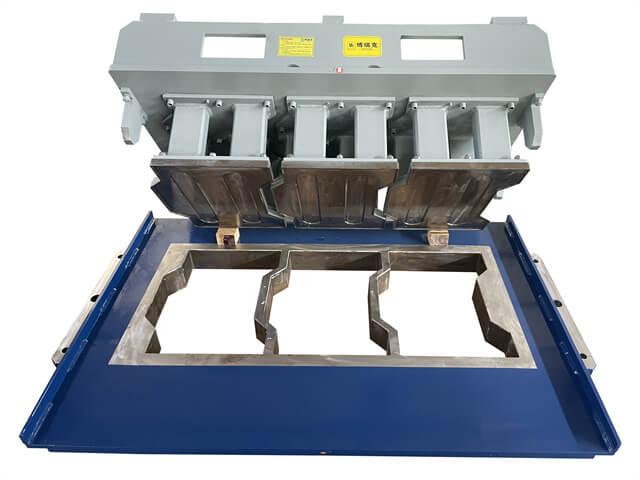
Mould accuracy affects cement use more than many buyers expect. A worn mould can create poor edges, uneven height, rough surfaces, and difficult demoulding. Operators may use extra cement to strengthen weak corners or reduce breakage, but the better solution may be mould repair, mould replacement, or better mould matching.
HAWEN Machinery designs moulds compatible with leading block machine brands, including Masa, Hess, Zenith, Poyatos, Besser, Tiger, Columbia, Quadra, and Omag. These moulds follow original specifications for precise fit, smooth operation, and consistent product quality. They are heat-treated to improve wear resistance, and hardness is checked at HRC 59-61.
A hollow block mould, concrete block mould, or interlocking paver mould should be checked together with the product drawing. If the product shape changes because of wear, cement reduction becomes risky because the factory no longer has a stable product baseline.
Curing control and early strength
Curing determines how cement hydration develops after the product leaves the block machine. If fresh blocks dry too quickly, strength development may suffer and surface quality may decline. If products are moved too early, corners may chip and operators may blame the mix. Better curing can allow a factory to use cement more efficiently because the cement has the right conditions to work.
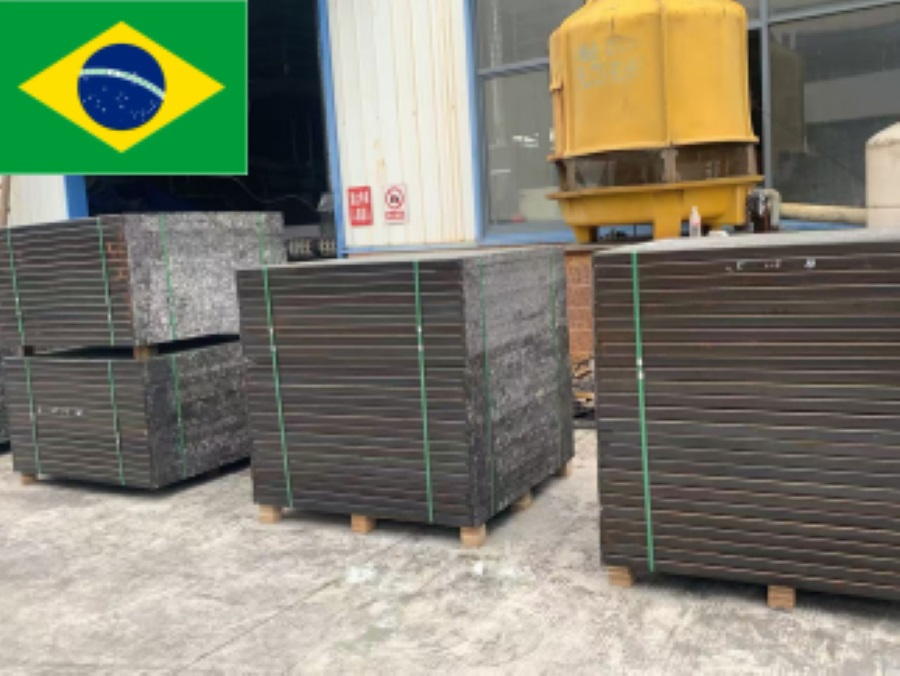
Production pallets and yard flow are part of this control. A stable GMT pallet helps support fresh blocks during transfer and curing. An automatic pallet provider can keep pallet feeding more consistent, while an automatic offline palletizing system may reduce manual handling after products are ready for stacking.
Production observation: Many factories try to solve early breakage by adding cement. Sometimes the better answer is to improve curing protection, handling timing, pallet flatness, and demoulding smoothness.
HAWEN Line Control and Factory Checklist
How HAWEN Machinery supports stable cement use
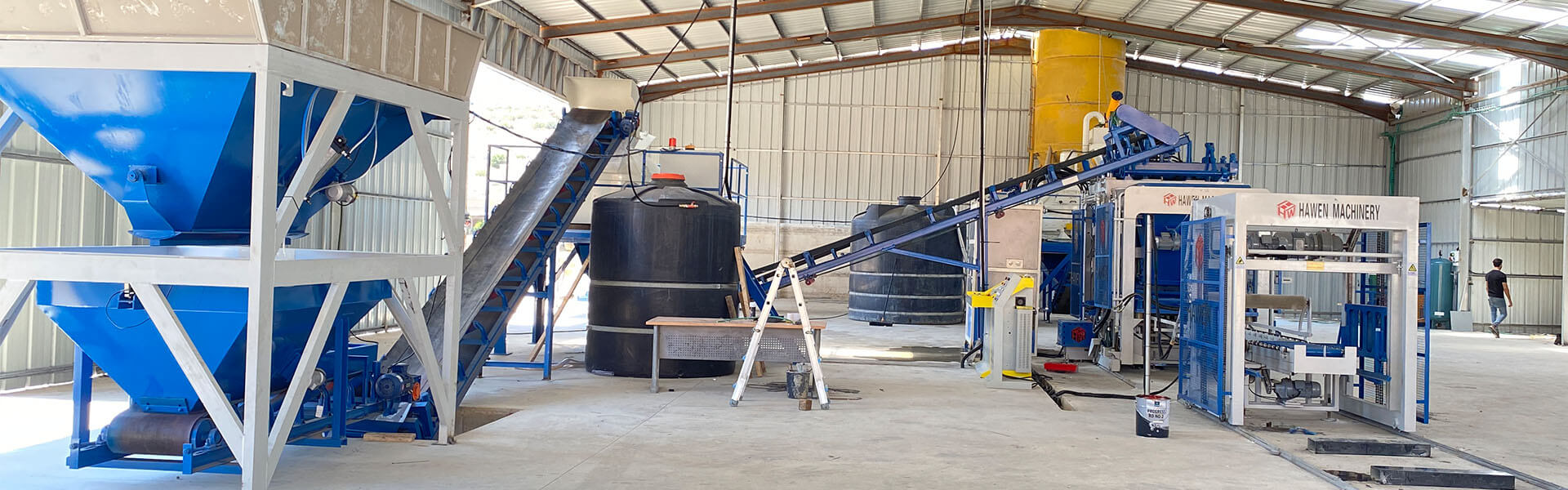
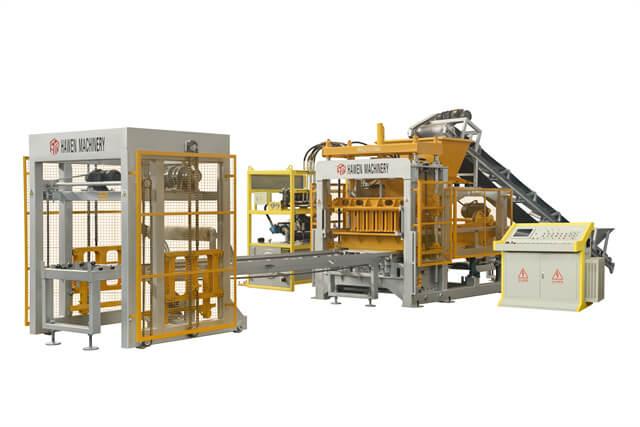
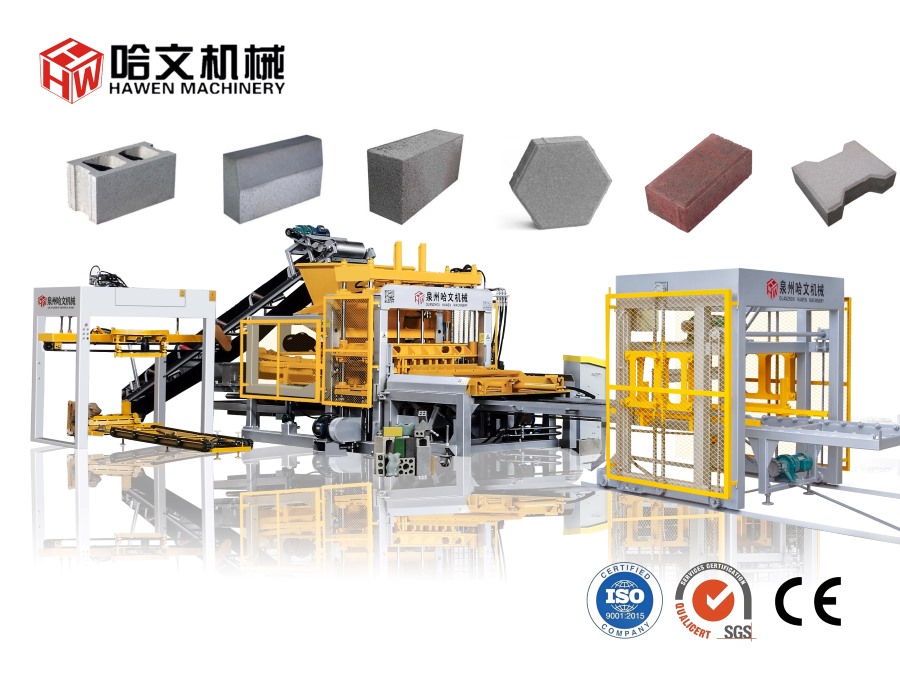
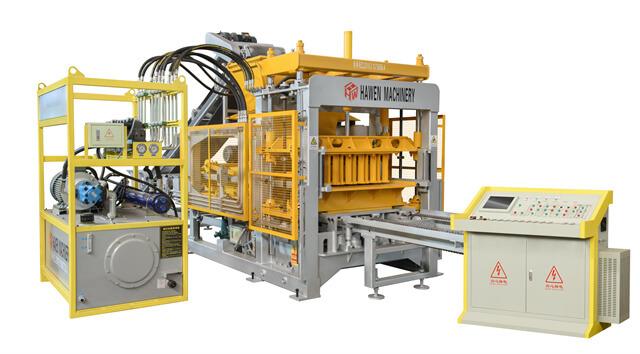
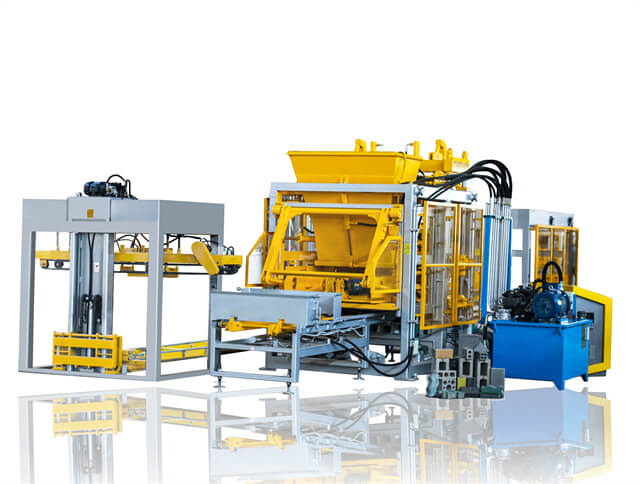
HAWEN Machinery treats cement saving as a production-system issue. The main block machine, batching section, mixer, hydraulic station, vibration box, mould, pallets, and downstream handling must work together. If one section is unstable, the factory may consume more cement to cover the weakness.
The control system in HAWEN block machines uses a Siemens S7-200 PLC with a touch panel and remote monitoring capability. Through this system, the operating status of the brick machine can be tracked in real time, and operating parameters can be optimized remotely when support is needed. This helps factories keep recipes, cycle settings, and production quality more consistent.
A larger automatic line such as a cement paver brick production machine or an automatic interlocking paver brick machine should still be selected according to product mix, site space, labor skill, and market demand. Cement saving is easier when the plant is correctly sized and operators are not forced to rush unstable production.
Factory checklist for cement reduction
Before reducing cement, run a controlled check. Do not change several variables at once. Keep product type, mould, pallet, vibration setting, curing method, and material source stable while adjusting one factor. Record the results. Check product weight, height, surface, demoulding condition, breakage, and strength test results according to the buyer's required standard.
| Checklist item | What to verify | Why it protects strength |
|---|
| Raw materials |






 Tel: +86-13905968794
 Email: export@hwmachines.com
 MP/WhatsApp: +86-13905968794
 Manufacturer Address:Nanan,Quanzhou City,Fujian Province,China