Curing pallets and curing-yard flow determine whether a concrete block plant can run continuously after the block machine starts producing. Many buyers calculate the forming machine output first, but forget that every fresh block must remain on a pallet or in a controlled handling path until it can be safely moved, stacked, or cubed. If the curing area is undersized, the plant stops even when the brick machine has enough capacity.
A practical curing plan connects daily output, pieces per pallet, pallet return time, curing duration, forklift routes, stack height, weather protection, and downstream handling. This article explains how to estimate pallet quantity and curing-yard flow for hollow blocks, solid bricks, pavers, and kerbstones without using unrealistic one-size-fits-all numbers.
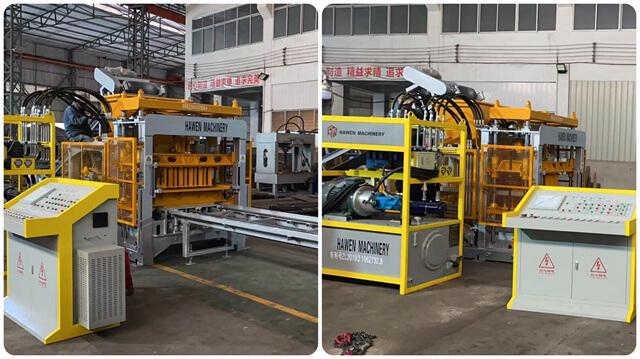
Curing Flow and Pallet Calculation
Curing flow after demoulding
The curing flow begins when the mould lifts and the fresh product remains on the pallet. At this moment, the block has shape but limited handling strength. The pallet must support the product during transfer, early curing, storage, and return. If this flow is interrupted, the block making machine may need to slow down or stop.
The first question is not only “How many blocks per day?” It is also “How many loaded pallets are created per hour, and how long do they stay out of circulation?” This distinction matters because a high-output line can consume available pallets very quickly.
A cement paver brick production machine, a larger automatic concrete paver block machine, and a compact interlocking paver brick making machine may all need different pallet circulation plans even when the final products look similar.
Layout review observation: In factory layout reviews, the curing-yard bottleneck often appears after the buyer has already selected the main block machine. The earlier the pallet route is drawn, the easier it is to avoid forklift conflicts, wet-product damage, and blocked return paths.
The basic calculation starts with loaded pallets created per hour. This depends on machine cycles, pieces per pallet, and whether the plant uses single-board transfer, rack curing, or direct stacking. Pallet quantity should cover production, curing, transport, reserve, and damaged or cleaning pallets.
Method note: Required production pallets = loaded pallets produced per hour x pallet return time in hours + operating reserve.
Pallet return time includes forming, wet transfer, curing, unloading, cleaning, storage, and return to the pallet feeder. If a pallet stays in the curing yard for a long time, the plant needs more pallets. If early handling and cubing are well organized, the return cycle can be shorter.
| Calculation item | What to measure | Why it matters |
|---|
| Loaded pallets per hour | Machine cycle, products per pallet, and effective running time | Defines how fast the curing area fills |
| Return time | Time from forming to pallet availability again | Controls total pallet quantity needed |
| Reserve factor | Cleaning, damage, product changes, and temporary delays | Prevents small interruptions from stopping production |
| Curing-yard capacity | Number of loaded pallets the yard can hold safely | Determines whether the machine can run for a full shift |
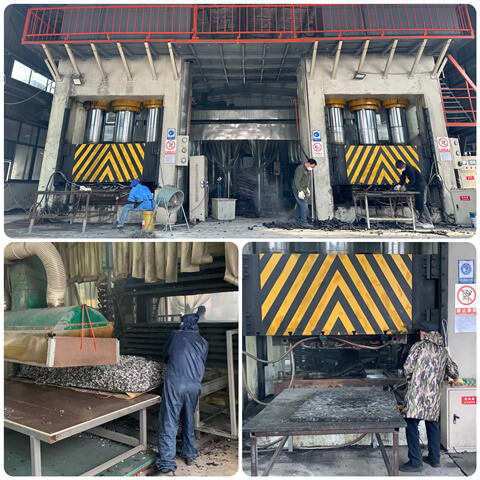
Curing time and product strength limits
Curing time should be based on safe handling and product requirements, not only on the desire to return pallets quickly. Fresh blocks need enough early strength before they are stacked, cubed, or loaded. Weather, cement type, mixture moisture, product shape, and curing method all affect the safe handling point.
Hollow blocks, solid bricks, pavers, and kerbstones may not share the same handling schedule. Larger or heavier products need more careful movement. Pavers with visible surfaces may require better protection from uneven drying, water marks, and dirt.
A buyer using a fly ash brick paver making machine should also check whether fly ash content changes early handling behavior. The curing flow should be validated with local materials rather than copied from another market.
Yard Layout and Handling Decisions
Yard layout and forklift routes
The curing yard should allow loaded pallets to move without crossing raw-material delivery, cement feeding, forklift loading, or finished-product dispatch routes. A compact site can work if the routes are clear. A large site can still fail if the forklift path is inefficient or unsafe.
Plan the yard as a flow map. Mark where wet pallets enter, where they cure, where they are unloaded or cubed, where empty pallets are cleaned, and where they return. This map should be checked before foundations, conveyors, and curing racks are fixed.
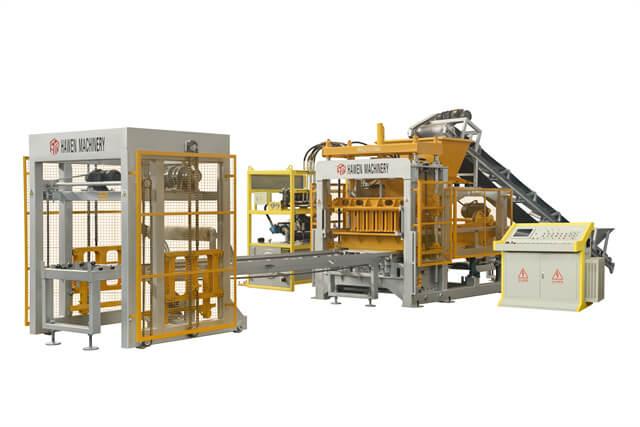
When an automatic pallet provider is used, the empty-pallet return path becomes more important. The feeder cannot supply the brick machine if empty pallets are delayed by poor stacking, cleaning, or forklift congestion.
Pallet material and support stability
Production pallets must stay flat under wet product weight. Bending, twisting, or surface damage can create cracks, uneven block height, bottom marks, and unstable stacking. Pallet material should be selected according to product weight, vibration intensity, curing moisture, and handling method.
GMT pallets, bamboo boards, plastic boards, wooden boards, and steel pallets all have different cost and handling behavior. A stable GMT pallet can support moisture resistance and repeated circulation, but the final selection still needs to match the machine, product, and yard method.
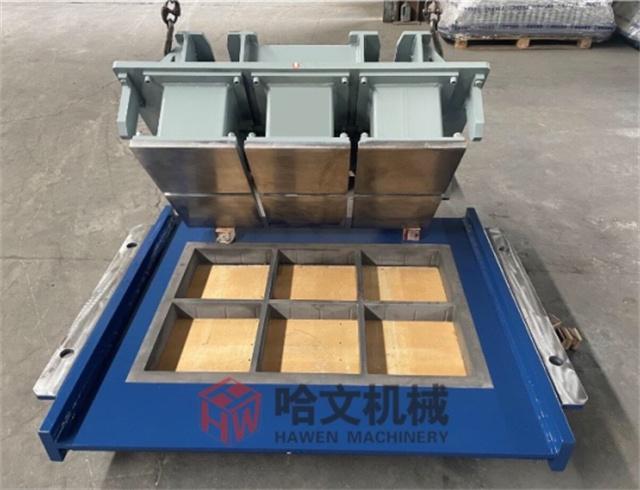
The mould and pallet work as a pair. An accurate hollow block mould, concrete block mould, or interlocking paver mould creates product geometry. The pallet supports that geometry after demoulding. If either part is unstable, product quality can drift.
Manual stacking vs automatic palletizing
Manual stacking can work in small plants, but it depends on labor availability, worker skill, product weight, and handling discipline. Manual movement can also introduce more variation in timing and damage risk. Automatic systems reduce some manual handling but require clearer pallet dimensions, product stability, and layout coordination.
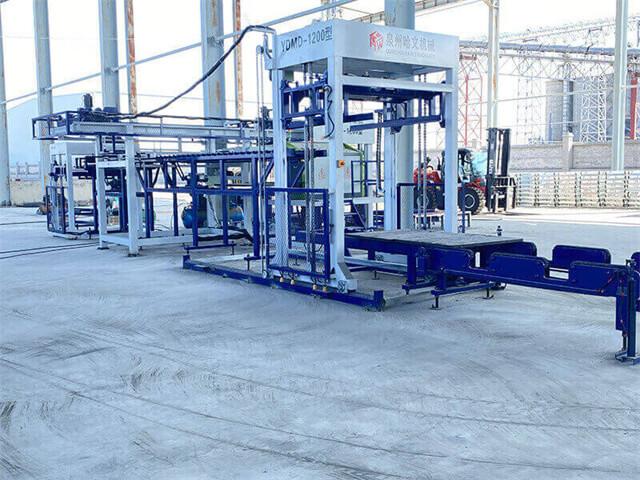
An automatic offline palletizing system can help separate forming from final stacking when production volume justifies automation. The buyer should calculate how this system changes pallet return time, forklift routes, and finished-product storage.
HAWEN Line Matching and Buyer Checks
HAWEN Machinery line matching
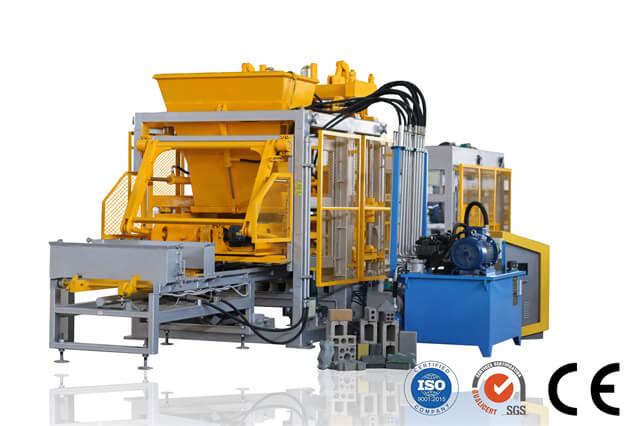
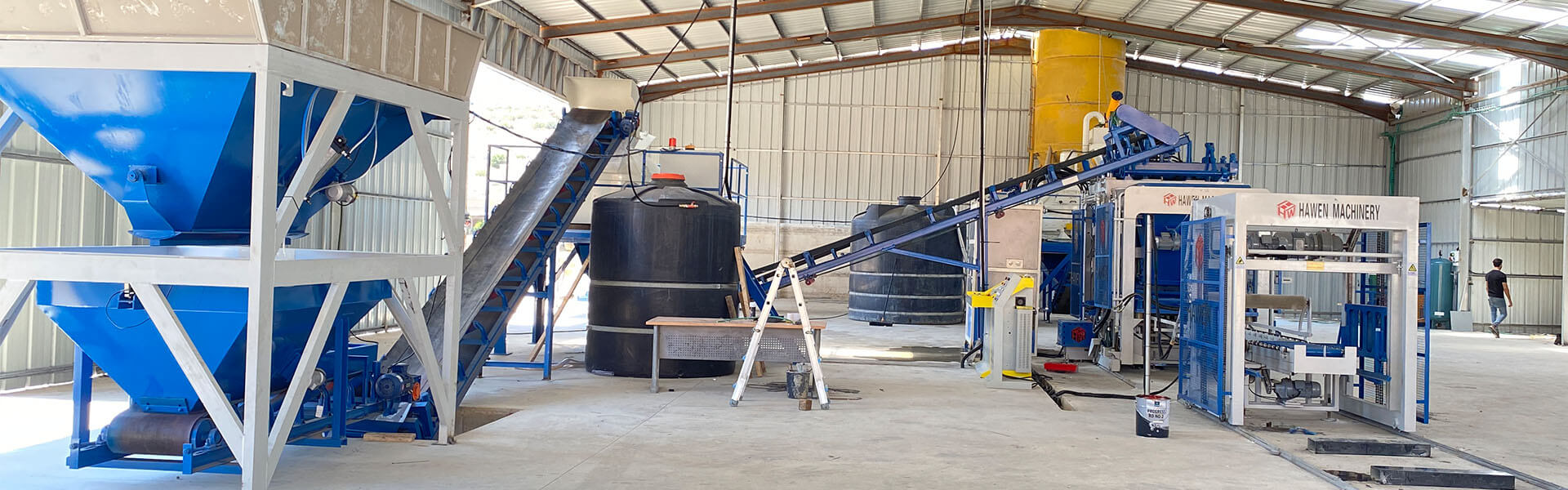
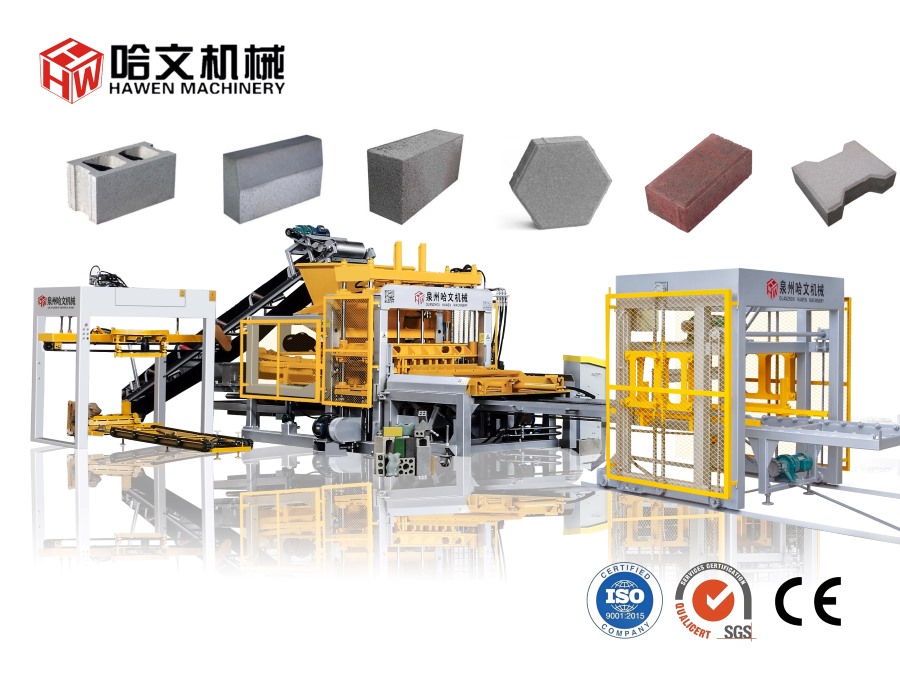
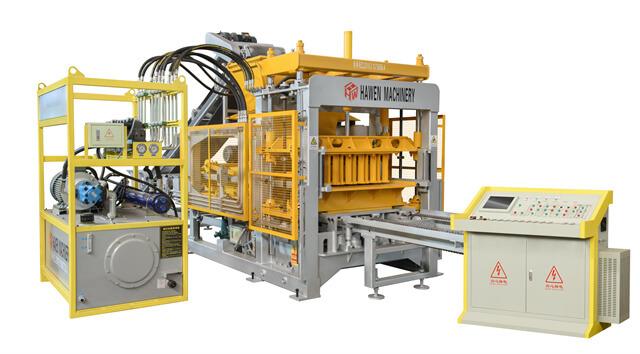
HAWEN Machinery reviews curing flow as part of the complete block production system. The curing plan should match the concrete mixer, batching machine, forming machine, mould layout, pallet size, hydraulic movement, vibration setting, and downstream handling.
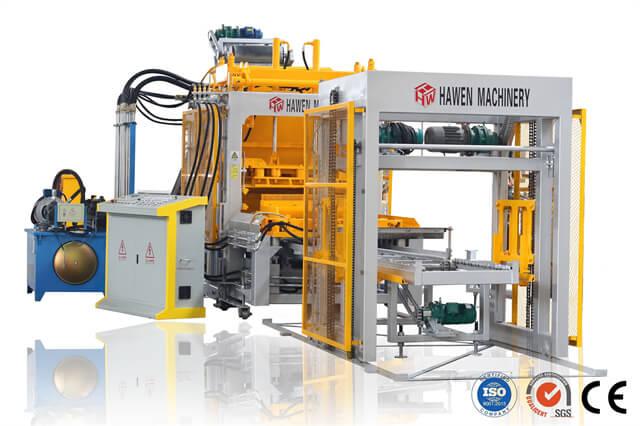
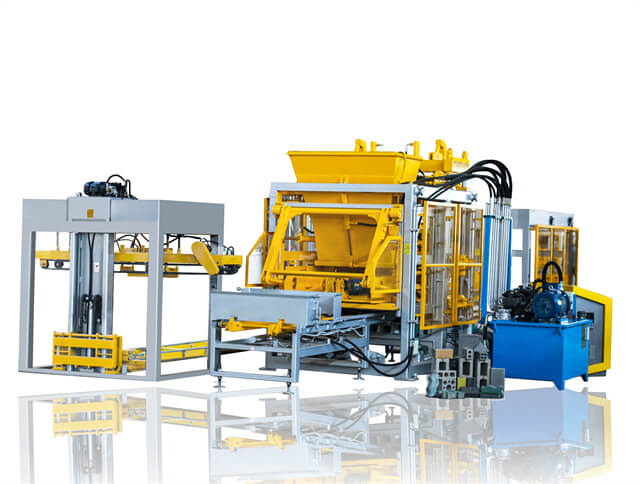
HAWEN block machines use a four-shaft vibration box design with eccentric blocks positioned outside the housing. This helps reduce vibration resistance and supports uniform compaction. Good compaction helps produce fresh blocks that can enter curing with more consistent shape, density, and handling behavior.
The hydraulic station uses Japanese YUKEN proportional and directional valves with an American ALBERT hydraulic pump. This combination supports controlled movement and stable load response during repeated pressing and demoulding. Smooth demoulding helps reduce early damage before the pallet enters the curing route.
The control system uses Siemens S7-200 PLC logic with a touch panel and remote monitoring capability. HAWEN can review real-time operating status and help optimize operating parameters remotely. For curing-yard planning, stable cycle timing makes pallet flow easier to calculate and manage.
HAWEN also designs moulds compatible with major block machine brands including Masa, Hess, Zenith, Poyatos, Besser, Tiger, Columbia, Quadra, and Omag. Mould parts are heat-treated for wear resistance and verified at HRC 59-61. Consistent mould dimensions make pallet-based curing and stacking more predictable.
Buyer checklist for curing-yard planning
Before ordering a line, ask for the expected loaded pallets per hour, recommended pallet size, curing method, stacking method, pallet return path, and minimum working yard area. The supplier should explain assumptions instead of only giving a machine output number.
Also check the local site. Consider drainage, roof or shade, rain protection, temperature variation, forklift turning radius, empty pallet storage, and finished-product loading access. A curing yard that looks sufficient on paper can become congested when trucks, forklifts, and operators share the same path.
| Checklist item | Question to verify | Risk if ignored |
|---|
| Loaded pallets per hour | How many pallets leave the machine during normal production? | Curing area fills faster than expected |
| Safe handling time | When can each product be moved, stacked, or cubed? | Cracking, chipped edges, or collapsed stacks |
| Pallet return path | How do empty pallets return to the feeder? | Machine stops while waiting for boards |
| Forklift route | Can forklifts move without crossing wet-product flow? | Safety risk and handling damage |
| Weather protection | Are fresh products protected from rain, sun, and ground moisture? | Surface defects and uneven curing |
A buyer comparing a large automatic concrete paver block machine with a smaller line should not compare machine output alone. The curing yard, pallet count, and downstream handling must grow with the production plan.
Conclusion
Curing pallets and curing-yard flow are central to continuous concrete block production. The correct plan starts with loaded pallets per hour, pallet return time, curing duration, product weight, yard layout, forklift routes, and handling method. A block machine can only maintain its rated rhythm when the curing system can absorb and return pallets at the same rhythm.
For the buyer, the next step is to ask for a pallet-flow calculation before confirming the plant layout. Review the product mix, pallet size, curing method, return path, and automation level together. A well-planned curing yard is not merely empty space behind the machine. It is where fresh concrete becomes dependable building material, where production speed becomes stable delivery, and where the discipline of a factory quietly turns wet blocks into the roads, walls, courtyards, and public spaces that hold everyday life together.
FAQ
How do I know how many curing pallets a block plant needs?
Calculate loaded pallets per hour and multiply by the time each pallet stays out of circulation. Add reserve for cleaning, damage, delays, and product changes.
Can I reduce pallet quantity by moving blocks earlier?
Only if the blocks have enough early strength for safe handling. Moving too early can cause cracks, chipped edges, deformation, or unstable stacking.
Does curing-yard size depend on the block machine model?
Partly, but it also depends on product type, pieces per pallet, curing time, pallet return method, forklift route, and stacking method.
Are GMT pallets suitable for curing-yard circulation?
GMT pallets can be suitable when their size, stiffness, surface, and load capacity match the machine and product. They should still be tested through the real handling route.
Should pavers and hollow blocks use the same curing plan?
Not automatically. Pavers, hollow blocks, solid bricks, and kerbstones differ in weight, surface sensitivity, handling strength, and stacking behavior.
Can automatic palletizing reduce curing-yard pressure?
It can improve downstream organization when product strength and layout support automation. It does not eliminate the need for correct early curing time.
What information should I send HAWEN for curing-flow planning?
Send product drawings, target output, pallet size, curing method, site layout, forklift plan, automation preference, and local climate conditions. These details allow the line and curing yard to be planned together.





 Tel: +86-13905968794
 Email: export@hwmachines.com
 MP/WhatsApp: +86-13905968794
 Manufacturer Address:Nanan,Quanzhou City,Fujian Province,China