A block machine factory acceptance test, commonly called a FAT, is a structured inspection performed before equipment leaves the manufacturer's facility. Its purpose is to confirm that the agreed machine configuration has been assembled, documented, operated, and tested against the purchase specification. A proper FAT reduces uncertainty before packing and shipping, when corrections are usually easier than they are after installation.
The test should evaluate more than whether the machine starts. Buyers need evidence for equipment identity, mechanical assembly, electrical control, hydraulic behavior, vibration, safety functions, mould fit, material flow, sample-product quality, and delivery scope. This checklist provides a practical framework for inspecting a brick making machine without relying on a short promotional demonstration.
Planning the Factory Acceptance Test
FAT Scope and Responsibilities
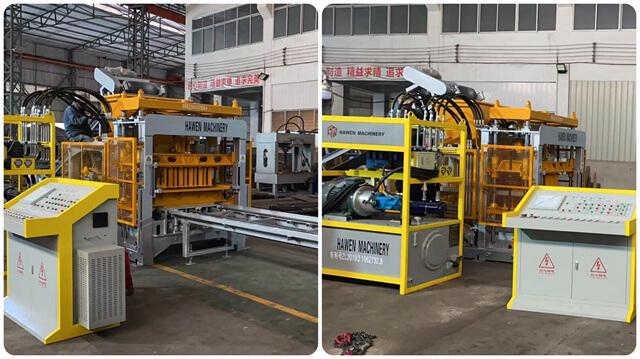
The FAT scope should be agreed before the inspection date. It must identify the equipment included, test materials, product mould, utilities, test duration, inspection points, acceptance criteria, and documents to be delivered. If the buyer cannot attend, the parties should agree on live video, recorded evidence, third-party inspection, or a combination of methods.
| Party | Typical FAT responsibility |
|---|
| Manufacturer | Prepare the agreed equipment, utilities, operators, documents, measuring tools, and safe test area. |
| Buyer | Confirm the specification, nominate witnesses, provide product requirements, and review deviations. |
| Third-party inspector | Witness agreed points, verify records, and report findings independently when appointed. |
| Technical operator | Run the system under controlled conditions and explain operating and maintenance procedures. |
Scope note: FAT does not replace site acceptance testing. Factory testing confirms the equipment before shipment. Site testing confirms installation, local utilities, foundations, material behavior, and integrated production after commissioning.
Document Review Before Testing
Begin with the purchase contract, technical agreement, final equipment list, line layout, electrical information, utility requirements, and approved mould drawings. Check model names and serial identification against the physical equipment.
Review the operating manual, preventive-maintenance schedule, lubrication points, recommended spare-parts list, electrical drawings, hydraulic diagram, PLC backup arrangements, and packing list. Documents should match the delivered configuration rather than a generic machine family.
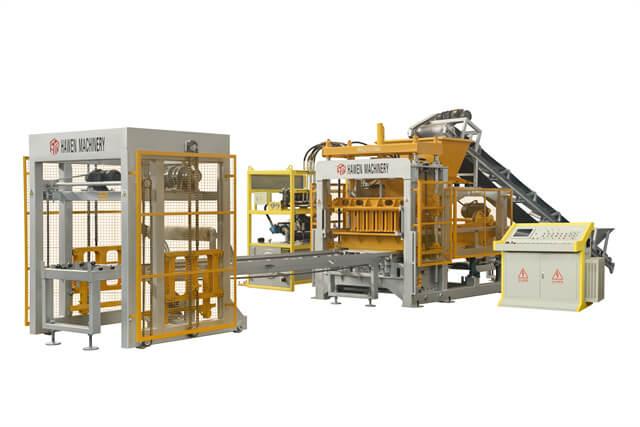
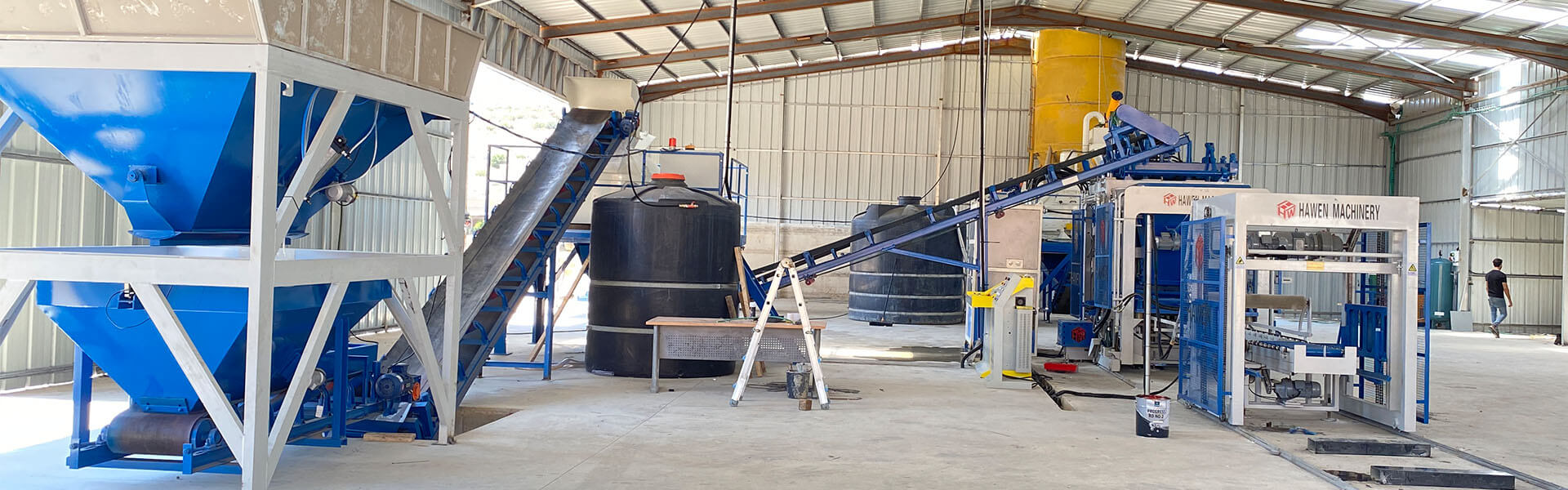
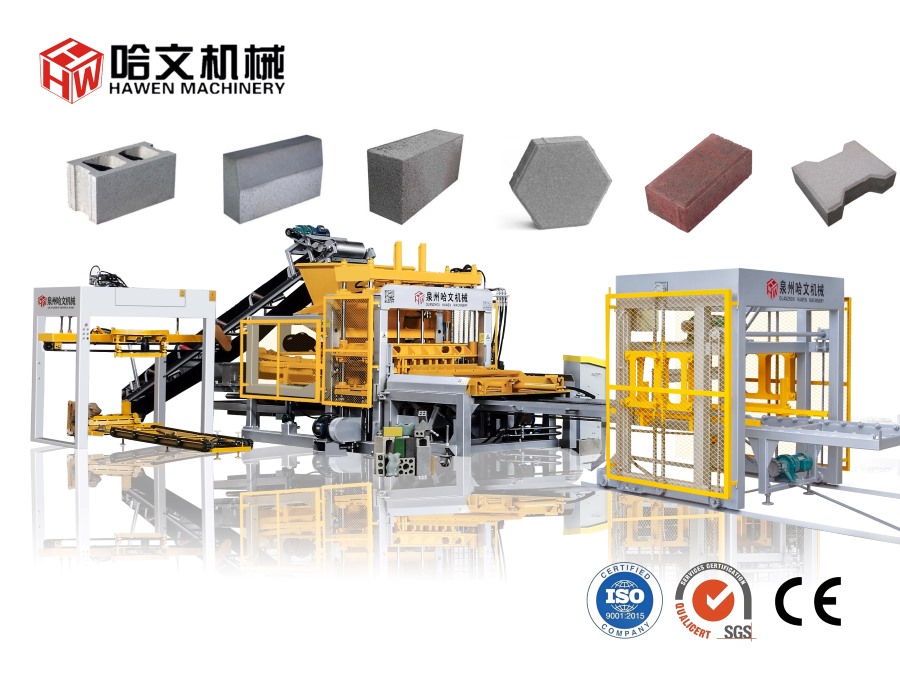
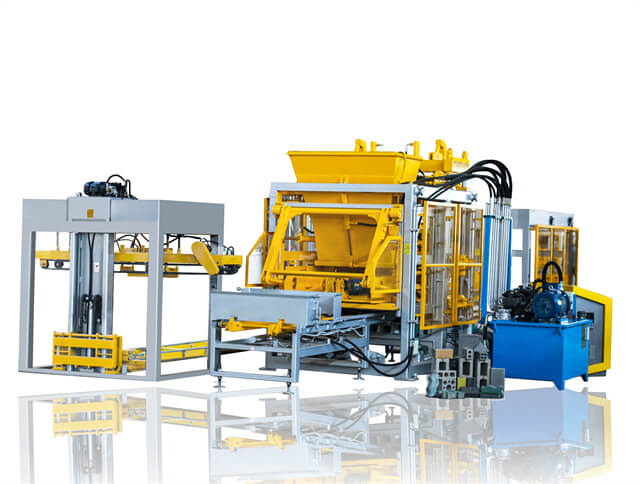
For a complete plant, confirm every auxiliary item. These may include the batching machine, concrete mixer, cement scale, conveyors, pallet feeder, stacker, cuber, compressors, and safety fencing. Missing auxiliaries can delay commissioning even when the main block machine is complete.
Mechanical and Visual Inspection
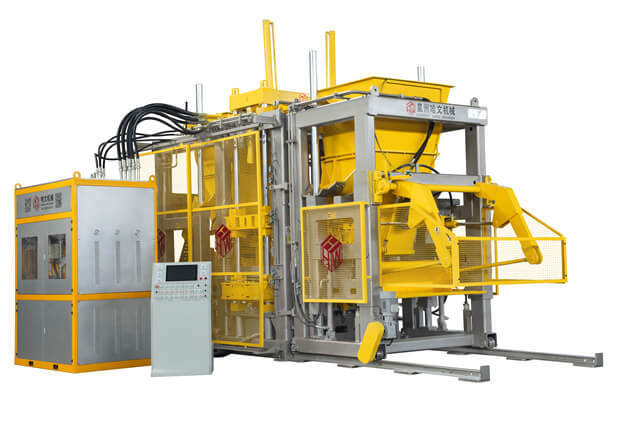
Inspect the frame, welds, fasteners, guards, platforms, access points, hoses, cables, sensors, motors, gearboxes, cylinders, and lubrication lines. Look for transport vulnerabilities, sharp edges, interference, leaks, loose fittings, incomplete paint, and inaccessible service points.
Confirm that identification plates and warning labels are present. Verify cable marking against the drawings. Check that hose routing avoids abrasion, excessive bending, and hot surfaces. Maintenance access should permit routine inspection without unsafe improvisation.
Inspect the cement silo and feeding equipment where included. Confirm the filter, level indication, discharge arrangement, and connection interfaces. Material equipment should be inspected as part of the line, not treated as unrelated accessories.
Functional Testing and Product Evidence
No-Load Functional Test
A no-load test checks movement and sequence before concrete enters the system. Operate conveyors, mixer discharge, feeder travel, pallet supply, mould lifting, tamper movement, stacker, and return mechanisms. Observe direction, speed changes, stopping positions, sensor response, noise, and interference.
Test normal start and stop procedures. Activate emergency stops and confirm that the intended hazardous movements cease. Check guard switches, alarms, low-level signals, and fault messages. Restart behavior should follow the agreed logic and should not create unexpected movement.
An automatic pallet provider should feed boards consistently without double feeding, skewing, or impact. A suitable GMT pallet should move smoothly through the transport path and remain compatible with clamps, guides, and product loads.
Material Trial and Continuous Run
The material trial should use an agreed product and a representative concrete mixture. Record raw materials, moisture observations, batch quantities, mixing sequence, machine program, mould identity, pallet count, cycle observations, interruptions, and rejected units.
One successful cycle proves little. Run enough consecutive cycles to observe feeding consistency, sensor stability, temperature behavior, pallet flow, operator interaction, and repeatability. The agreed duration should reflect the line complexity and FAT scope rather than an arbitrary universal number.
Observe whether concrete reaches all mould cavities evenly. Check material buildup and spillage. Confirm stable demoulding and green-product handling. A QT4 paver brick machine and a large QT8 concrete products machine require different trial plans, but both need traceable evidence.
Where downstream automation is included, test the offline palletizing system with representative product arrangements. Confirm clamp or transfer behavior, layer pattern, stability, and interface signals.
Sample Block Quality Checks
Sample products should be identified by cycle and mould position. Measure length, width, height, visible edge quality, surface texture, cavities, and unit mass. Compare multiple mould positions to identify filling or compaction differences.
FAT samples are green or young products. They can demonstrate forming repeatability, but they cannot replace all later laboratory tests. Strength, absorption-related performance, and long-term appearance require the agreed curing and test methods.
| Check | What it can reveal | Record |
|---|
| Dimensions by mould position | Mould fit, filling, pressing, and demoulding consistency | Measured values and cavity position |
| Green unit mass | Material distribution and density variation | Weight, cycle, and position |
| Edges and corners | Moisture, grading, compaction, mould release, or handling issues | Photographs and defect count |
| Surface consistency | Feeding, vibration, face-mix, or material segregation | Dry and wet observations where relevant |
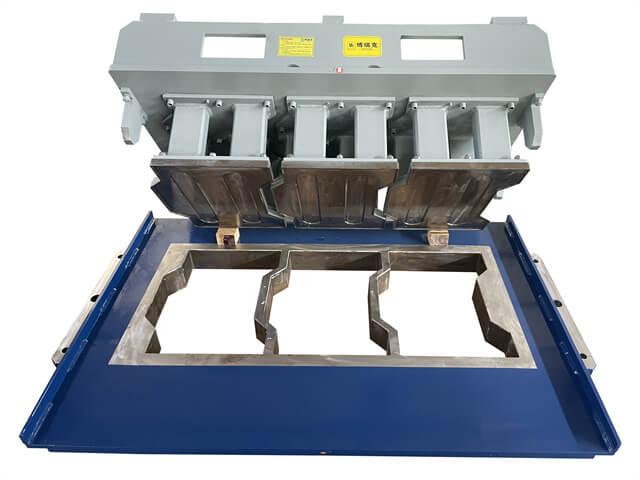
A precision hollow block mould must match the approved drawing and machine interface. Confirm product layout, cavity geometry, fastening, tamper clearance, and identification before the trial.
Hydraulic, Vibration, and Control Verification
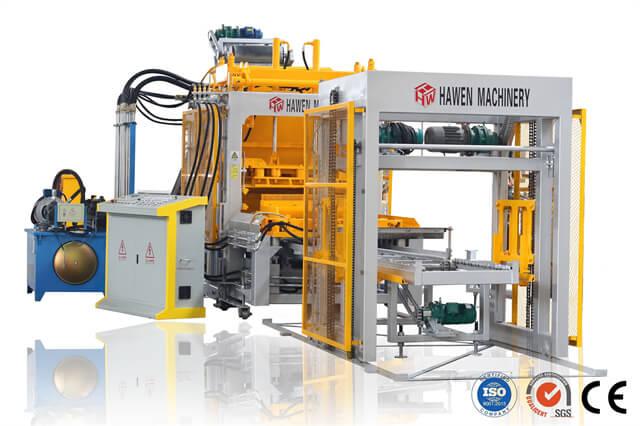
Inspect the hydraulic tank, filters, pump, valves, cylinders, accumulators where fitted, pressure indication, hose routing, and cooling arrangement. Observe leakage, abnormal noise, temperature trend, pressure stability, and movement repeatability during the run.
HAWEN hydraulic stations use Japanese YUKEN proportional and directional valves with an American ALBERT pump. The combination is selected to provide controlled motion, dependable pressure delivery, and durability under repeated forming cycles. During FAT, the buyer should verify actual response and leak-free operation rather than relying on component names alone.
For vibration, HAWEN uses a four-shaft box with eccentric blocks installed outside the housing. This layout lowers internal resistance and supports uniform energy transfer across the mould. FAT observations should include starting behavior, synchronization, fastening, noise, and product consistency.
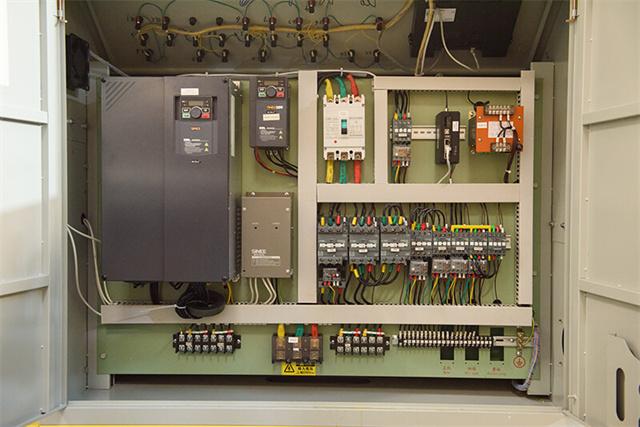
The control system uses a Siemens S7-200 PLC, touch panel, and remote monitoring functions. Test manual and automatic modes, recipe access, sensor states, alarms, interlocks, counters, and fault recovery. Remote support should be demonstrated under an agreed secure connection when it is part of the supply.
A QT6 brick production line may have fewer integrated stations than a highly automated plant. The control checklist should follow the purchased configuration and every actual interface.
Acceptance, Records, and Delivery Readiness
Defects, Retesting, and Acceptance Record
Classify findings by their effect on safety, function, quality, documentation, or appearance. Every item should state the observation, responsible party, corrective action, evidence required, due date, and retest status.
Acceptance may be unconditional, conditional on documented minor corrections, or withheld pending retest. The contract should define these categories. Never close a technical finding through a verbal promise alone.
Retesting should reproduce the failed condition. If a sensor fault occurred during automatic operation, showing the sensor in manual mode is not equivalent evidence. If weight varied across the mould, repeat position-based sampling after correction.
| FAT record | Minimum content |
|---|
| Equipment register | Model, quantity, identification, and checked status |
| Test log | Date, participants, conditions, sequence, duration, and interruptions |
| Product inspection | Sample identity, dimensions, mass, appearance, and photographs |
| Punch list | Finding, owner, action, evidence, due date, and closure |
| Software record | Program version, backups, access method, and approved changes |
HAWEN Machinery FAT Approach
HAWEN Machinery can organize testing around the buyer's actual products, automation scope, and delivery configuration. The process should begin with approved drawings and a clear witness plan. It should end with traceable records, resolved findings, protected software backups, and an accurate packing list.
HAWEN also manufactures moulds compatible with Masa, Hess, Zenith, Poyatos, Besser, Tiger, Columbia, Quadra, Omag, and other major block machine platforms. Mould components are heat-treated for wear resistance and hardness-tested at HRC 59-61. During FAT, fit, clearance, fastening, and sample geometry should still be verified on the supplied machine.
A FAT is strongest when it teaches as well as tests. Buyer operators should observe startup, shutdown, recipe selection, mould change principles, daily inspection, lubrication, fault review, and safe cleaning. This knowledge shortens the path from delivery to controlled production.
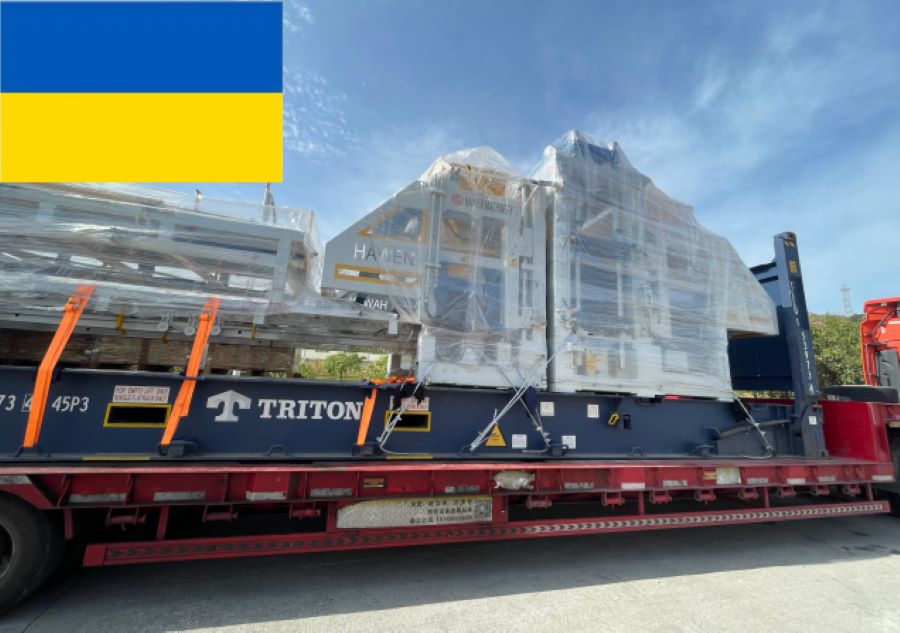
Before dismantling begins, record important mechanical positions, sensor locations, cable labels, hose connections, and approved parameter screens. Photograph the assembled line from several directions. Mark components that will be separated for transport and connect each mark to the packing list. Moisture-sensitive electrical parts, machined surfaces, hydraulic ports, and loose accessories need suitable protection. These records give the installation team a reliable reference after the containers arrive.
The buyer should also confirm the handover route for technical questions. Identify who will support mechanical installation, electrical connection, PLC review, trial production, and operator training. Clear responsibility prevents a minor commissioning question from becoming avoidable downtime.
Conclusion
A block machine factory acceptance test should verify the purchased system through documents, visual inspection, no-load operation, material trials, sample-product checks, safety functions, and recorded defect closure. It is not a ceremonial machine startup.
When buyer and manufacturer treat FAT as a shared engineering review, the result reaches beyond one shipment. Drawings become working knowledge, test data become commissioning guidance, and observed details become safeguards against future downtime. A carefully accepted brick making machine is therefore more than equipment ready for a container. It is the beginning of a production system whose reliability, safety, and quality can support businesses, workers, and the built environment for years to come.
FAQ
Is a FAT necessary for every block making machine?
The scope may vary with complexity and risk, but pre-shipment verification is valuable for both simple machines and complete automated lines.
How is FAT different from site acceptance testing?
FAT occurs at the manufacturer before shipment. Site testing follows installation and verifies foundations, utilities, local materials, integration, and commissioning.
Should the buyer provide raw materials for FAT?
The parties should agree on representative materials and responsibility in advance. Local materials may behave differently, so later site trials remain necessary.
Can a buyer witness FAT remotely?
Yes, when live views, measurements, records, sample identification, and retesting evidence are planned clearly. Third-party inspection can add independent verification.
What happens if the machine fails one FAT item?
Record the finding, correction, responsible party, and retest method. Acceptance depends on the contractual category and successful closure evidence.
Does a successful FAT guarantee final block strength?
No. FAT can verify forming consistency with test materials. Final performance depends on local materials, curing, operation, and testing after installation.
Which files should be secured before shipment?
Retain the signed test report, punch-list closure, drawings, manuals, software backups, parameter records, spare-parts list, packing list, and training evidence.





 Tel: +86-13905968794
 Email: export@hwmachines.com
 MP/WhatsApp: +86-13905968794
 Manufacturer Address:Nanan,Quanzhou City,Fujian Province,China