White deposits on concrete pavers are usually associated with efflorescence: soluble salts move with moisture through the concrete, reach the surface, and crystallize as the water evaporates. The result may appear as a pale haze, irregular streaks, or a powdery film. It is often most visible on dark or colored paving units, although it can occur on gray blocks as well.
Efflorescence is primarily a moisture-and-salt transport phenomenon. It is not automatically proof that a paver has lost structural strength. However, persistent or uneven whitening can reduce visual quality, trigger customer complaints, and reveal weaknesses in material control, compaction, curing, storage, or drainage. This guide explains how manufacturers can identify the cause, distinguish efflorescence from other surface defects, and reduce the risk through disciplined production.

Understanding the Surface Phenomenon
What Efflorescence Is
Efflorescence is a crystalline deposit formed when water-soluble compounds are transported to a porous material's surface. In cement-based products, the visible material often contains calcium compounds or salts contributed by cement, aggregates, mixing water, admixtures, soil, or external water. The exact chemistry can vary. The practical mechanism remains consistent: soluble material, moving moisture, and evaporation must occur together.
| Term | Practical definition | Why it matters |
|---|
| Primary efflorescence | Deposit associated with moisture movement during early curing, storage, or initial exposure. | Often linked to young products, uneven drying, or excessive available moisture. |
| Secondary efflorescence | Deposit that develops after installation when external water repeatedly enters the paving system. | May indicate drainage, joint, bedding, irrigation, or de-icing salt conditions. |
| Carbonate deposit | A more persistent calcium-rich surface residue that may become less soluble over time. | Cleaning method and timing require greater care. |
| Surface haze | A general visual description, not a confirmed diagnosis. | The haze could also be cement film, sealer blush, dust, or abrasion. |
Industry reference note: Concrete masonry guidance commonly describes efflorescence as a deposit created by the interaction of soluble materials, water migration, and evaporation. This definition is more useful than treating every white mark as one defect with one remedy.
The process begins when water dissolves mobile compounds inside a paver or enters from an external source. Capillary pores then provide a route toward an exposed face. At the surface, evaporation removes the water while the dissolved material remains. Repeated wetting and drying can continue the transport cycle.
Four conditions influence the visible result:
- Available salts: Cement hydration products and soluble constituents in raw materials provide the source.
- Mobile water: Mixing water, curing moisture, rain, irrigation, groundwater, or washing water acts as the carrier.
- Connected pores: The pore network governs how easily moisture moves through the unit.
- An evaporation surface: Drying concentrates the transported material on the exposed face.
A dense paver can still show temporary efflorescence. Density reduces transport pathways but does not eliminate every soluble compound or every moisture route. For this reason, the goal of a well-managed paver plant is risk reduction and consistency, not an unrealistic promise that whitening can never occur under any climate or installation condition.
Technical annotation: Weather changes the appearance. Cool, damp conditions allow water to remain in the product longer. Warm, dry air increases evaporation. A production batch may therefore look different across seasons even when the recipe is unchanged.
Efflorescence or Another Surface Defect?
Correct diagnosis comes before cleaning. A powdery deposit that can be brushed away differs from a hard cement-rich film. A milky layer beneath a coating may be trapped moisture or sealer blush. Pale aggregate exposed by abrasion is not efflorescence at all.
| Observation | Possible explanation | Verification step |
|---|
| Loose white powder | Early efflorescence | Test a small dry area with a clean, stiff brush. |
| Hard pale crust | Older carbonate deposit or cementitious residue | Compare protected and exposed faces; seek specialist advice before chemical treatment. |
| Milky appearance after sealing | Moisture trapped beneath or within the sealer | Review substrate moisture, application conditions, and sealer compatibility. |
| White marks concentrated at edges | Moisture path, packaging exposure, or local drying difference | Inspect pallet wrapping, stack ventilation, and contact points. |
| Color loss on high points | Abrasion or insufficient surface-layer durability | Check texture, face-mix depth, handling, and wear pattern. |
Manufacturers should retain dated samples and production records. Comparison samples help determine whether a complaint began in the factory, developed during transport, or emerged after installation. Photographs should record dry and wet appearances because water can temporarily conceal a surface deposit.
Manufacturing Causes and Equipment Control
Factory Causes and Process Variables
Excess or inconsistent water: More water can increase capillary connectivity and lengthen drying. The correct moisture level depends on aggregate grading, cementitious materials, product geometry, and compaction energy. Operators should control moisture by measurement and repeatable observation rather than by visual guess alone.
Variable aggregate moisture: Rain-exposed sand may carry far more water than dry stock. If the batching system does not correct for this difference, the effective water content changes from batch to batch. A stable hydraulic block production line still depends on consistent material entering the mixer.
Poor dispersion: Incomplete mixing can create local differences in cement, pigment, water, and admixture concentration. Adequate mixing time must be paired with the correct loading sequence. Excessive mixing should also be avoided when it causes temperature rise, moisture loss, or unnecessary delay.
Low or uneven compaction: Nonuniform density produces different moisture paths across the paver face. Some zones dry faster, while others retain water. This can create patchy color and irregular salt movement. Compaction should therefore be evaluated by unit mass, dimensions, surface texture, edge quality, and strength-related testing rather than by cycle time alone.
Unbalanced curing: Rapid surface drying can create color variation and incomplete early hydration. Excess condensation can leave surfaces continuously wet. Good curing provides controlled moisture and temperature while avoiding direct water flow over young units.
Storage and packaging: Pavers wrapped while visibly wet may trap moisture. Open stacks exposed to rain may become saturated. Uneven airflow across a pallet can produce a visible pattern after drying. Storage practice is part of product quality, not merely logistics.
External contamination: Saline water, dirty pallets, recycled process water, soil contact, and some de-icing materials can introduce additional soluble compounds. A root-cause review should examine every material and contact surface, not only cement.
How Production Equipment Influences Risk
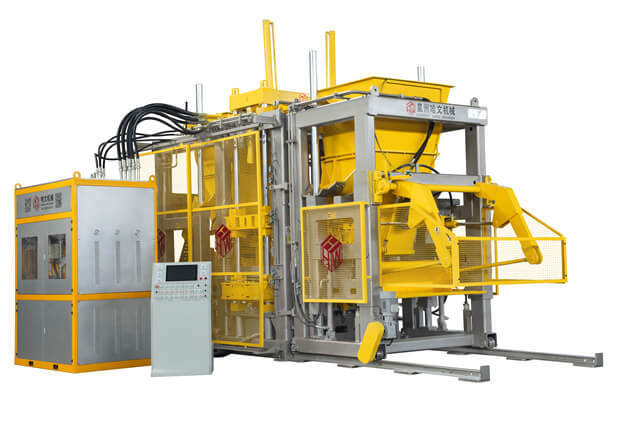
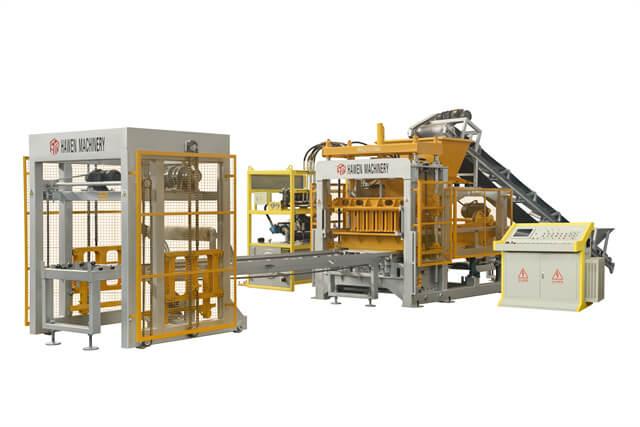
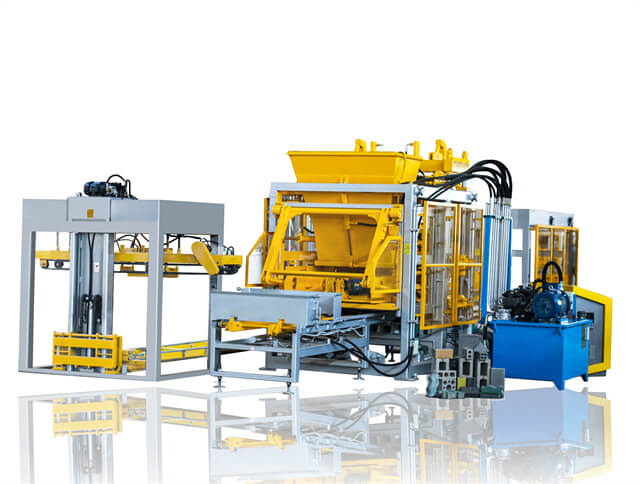
A concrete block machine cannot change the chemistry of every raw material, but it can improve repeatability. Stable filling, vibration, pressure, mould alignment, and cycle control help produce a more uniform pore structure. This reduces local density differences that make surface appearance unpredictable.
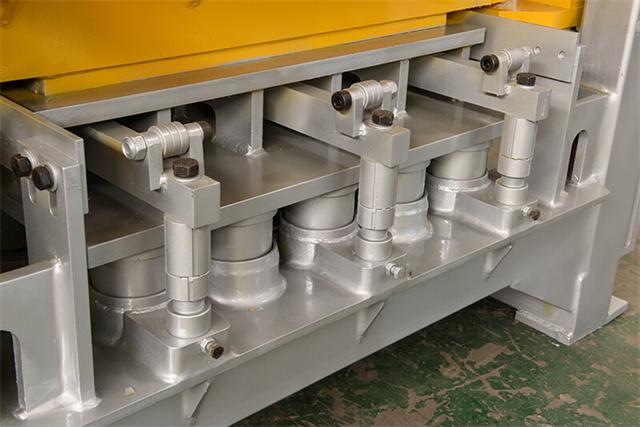
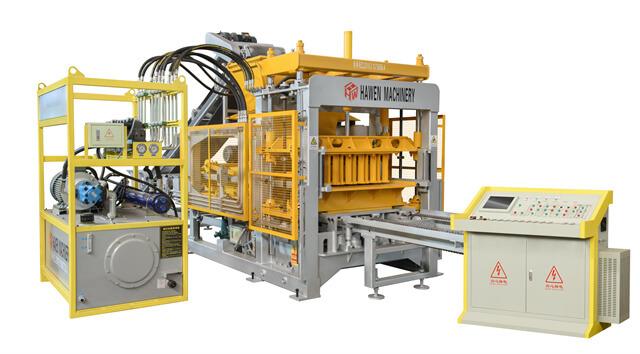
For vibration, HAWEN Machinery uses a four-shaft vibration box with the eccentric blocks arranged outside the housing. The external arrangement reduces internal movement resistance and supports even energy transfer across the mould. More uniform compaction can improve density consistency, reduce avoidable cement demand, and help the block making machine maintain efficient production without relying on excessive vibration time.
Cycle consistency also depends on the control platform. HAWEN integrates a Siemens S7-200 PLC with a clear touch interface and remote monitoring functions. Operating status can be reviewed in real time. Process settings can be analyzed and adjusted remotely when appropriate. For paver producers, this supports repeatable feeding and vibration parameters instead of uncontrolled operator-to-operator variation.
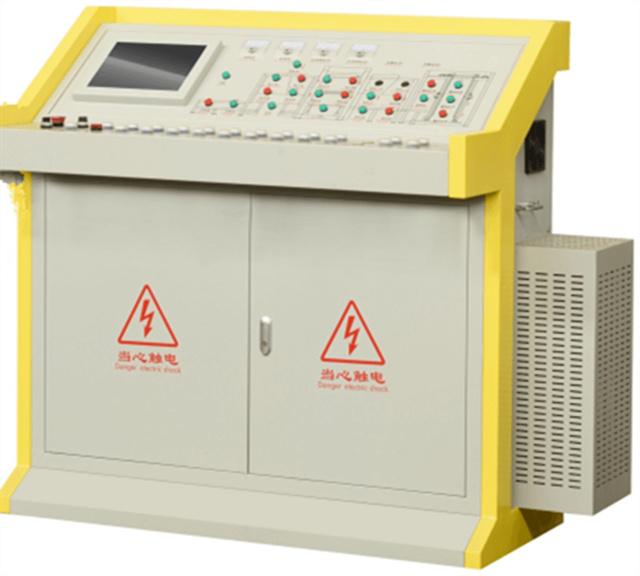
Process note: Automation does not replace material testing. A well-programmed brick machine repeats the selected settings accurately. Those settings must still be established through recipe trials, moisture control, dimensional inspection, density checks, and curing observation.
The mould shapes the visible surface and controls dimensional repeatability. HAWEN produces moulds to fit major block machine platforms, including Masa, Hess, Zenith, Poyatos, Besser, Tiger, Columbia, Quadar, and Omag. Manufacturing follows the relevant original interface specifications for accurate installation and stable operation. Wear surfaces receive heat treatment, followed by hardness verification in the HRC 60-62 range. This treatment supports wear resistance and helps preserve consistent product geometry over the mould's working life.
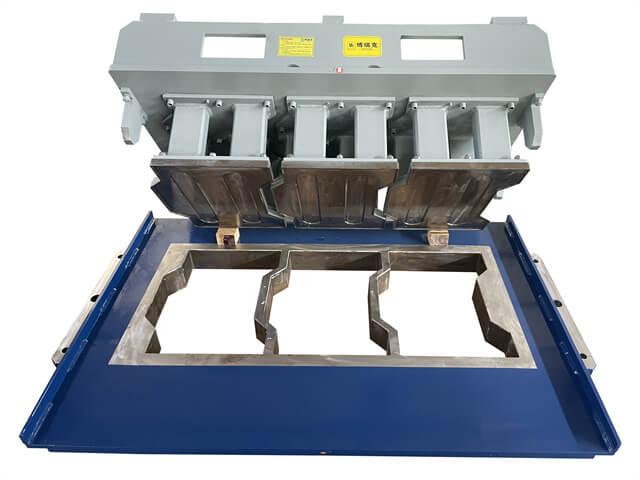
Mould quality does not directly eliminate salts. Its contribution is dimensional and compaction consistency. Worn shoes, damaged cavities, loose mounting, or uneven filling can create density variation and rough surfaces where deposits appear more visible.
Prevention, Cleaning, and Buyer Decisions
Prevention Framework
A prevention plan should control sources, transport paths, and drying conditions together. No single admixture, machine setting, or cleaning product can compensate for an unstable process.
| Control stage | Recommended action | Record to retain |
|---|
| Incoming materials | Check aggregate grading, moisture, visible contamination, water source, and cement consistency. | Supplier batch, moisture reading, delivery date, and test result |
| Batching and mixing | Apply moisture correction and maintain a defined loading sequence and mixing time. | Recipe version, batch weights, water adjustment, and operator |
| Forming | Monitor fill consistency, unit mass, vibration settings, height, and edge quality. | Machine program, mould ID, sample mass, and dimensions |
| Curing | Maintain controlled moisture and temperature without direct runoff across young products. | Entry time, curing cycle, temperature, humidity, and exit time |
| Storage | Allow appropriate drying, protect from rain and ground moisture, and avoid unevenly trapped condensation. | Pallet date, wrapping condition, storage zone, and dispatch date |
Before changing the full recipe, run controlled trials. Change one factor at a time, such as moisture target, compaction setting, curing profile, or packaging delay. Keep reference samples from each trial. Multiple simultaneous changes may improve appearance, but they make the actual cause impossible to identify.
For colored pavers, compare units under consistent lighting and at the same moisture condition. Pigment dosage should be measured accurately. Surface appearance should be evaluated only after the agreed curing age because young pavers can change visibly as moisture leaves the unit.
Cleaning and Corrective Action
Begin with the least aggressive method. Allow the surface to dry, then test dry brushing on a small area. Some temporary deposits diminish through normal weathering. If further treatment is necessary, use a cleaner intended for the specific paving material and follow its technical instructions.
Always test an inconspicuous area before full application. Confirm dilution, contact time, agitation method, rinsing requirements, environmental controls, and personal protection. Strong acids or unsuitable pressure washing can alter color, expose aggregate, damage joints, or create a more obvious patch than the original deposit.
Evidence note: Industry maintenance guidance commonly recommends sample-area testing because paver composition, pigment, surface finish, deposit age, and previous sealing all affect the result. The cleaning method should follow the diagnosed condition, not merely the color white.
For factory complaints, corrective action should include a retained-sample review, batch-record check, production-date comparison, curing and storage inspection, and installation history. If whitening appears only after installation, investigate drainage, bedding moisture, irrigation, jointing materials, and external salt exposure before changing the manufacturing recipe.
HAWEN Machinery in Quality-Controlled Production
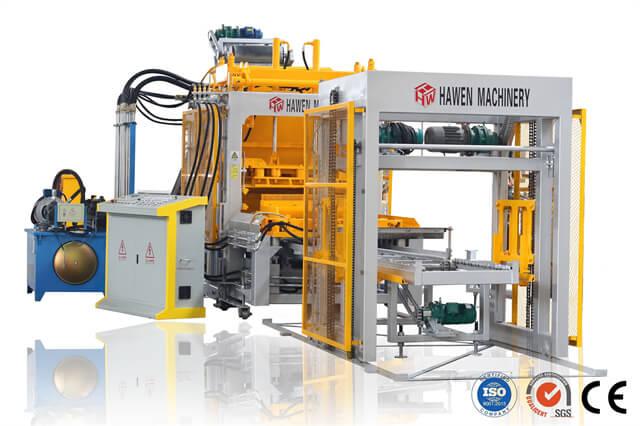
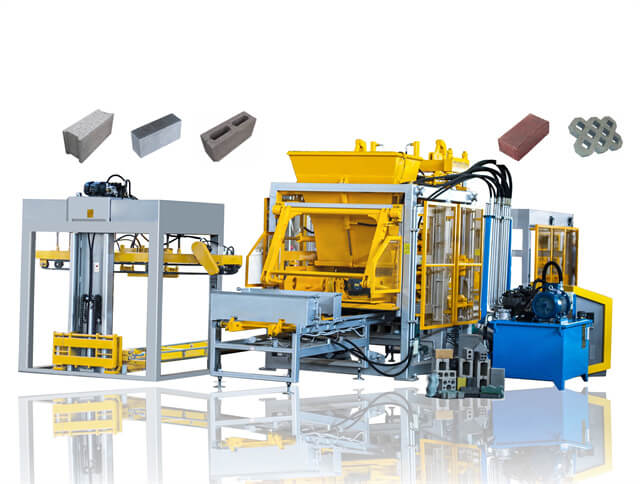
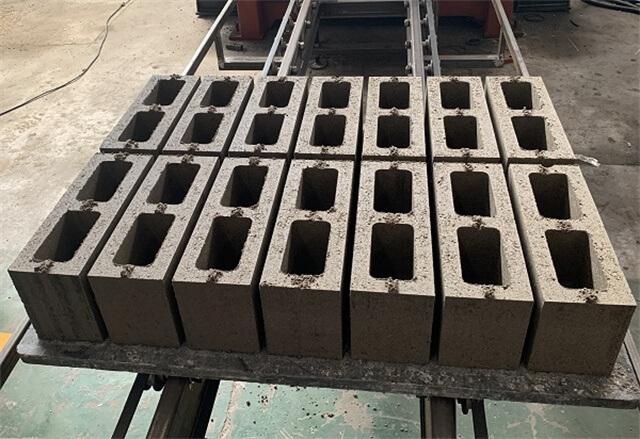
HAWEN Machinery develops concrete product equipment for hollow blocks, solid bricks, interlocking pavers, and kerbstones. The company's role in efflorescence control is practical: provide stable forming hardware, repeatable vibration, traceable control parameters, accurate mould interfaces, and remote technical support. These functions help producers hold density and dimensions within a controlled range.
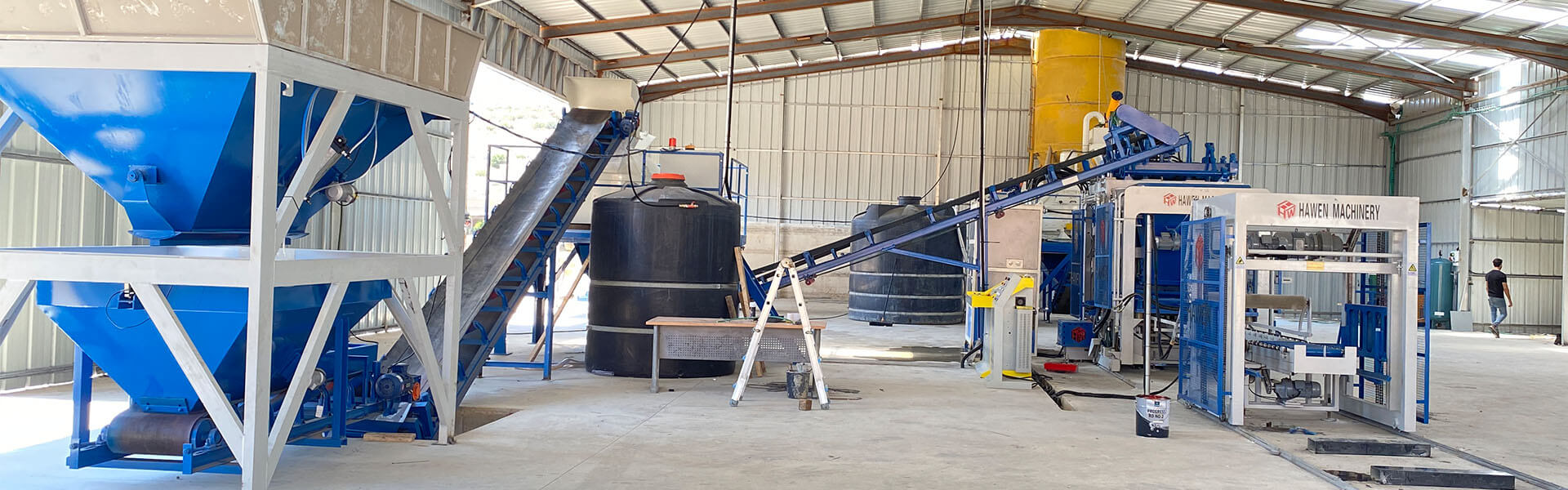
A buyer comparing a block machine or brick making machine should still evaluate the complete process. The review should include aggregate storage, moisture measurement, batching accuracy, mixer performance, pallet circulation, curing, cubing, and finished-product protection. Surface consistency is produced by the line as a system. It cannot be assigned to one motor, one mould, or one PLC setting.
Conclusion
Concrete pavers turn white when soluble materials are carried by moisture and deposited during evaporation. The visible result is influenced by raw materials, water content, pore structure, compaction, curing, storage, climate, and installation drainage. Accurate diagnosis separates true efflorescence from cement film, abrasion, contamination, and sealer-related haze.
The strongest prevention strategy is disciplined process control. Stable batching, uniform vibration, appropriate curing, protected storage, and traceable production records reduce variation and make problems easier to solve. A capable brick machine supports that discipline, but enduring quality comes from the relationship between equipment, materials, people, and evidence. When those elements are managed as one system, a paver plant does more than improve surface appearance. It conserves cement, reduces rejected products, protects customer confidence, and turns industrial precision into infrastructure that can serve communities for decades.
FAQ
Does white efflorescence mean concrete pavers are defective?
Not necessarily. Efflorescence is often an aesthetic deposit rather than evidence of structural failure. Manufacturers should still confirm strength, dimensions, density, absorption-related performance, and the actual cause of the discoloration.
Why is efflorescence more visible on dark pavers?
The contrast is stronger. A similar pale deposit may exist on gray units but attract less attention. Dark pigments also make inconsistent curing moisture and surface density easier to see.
Can a block making machine completely prevent efflorescence?
No machine can remove every soluble compound or control weather after installation. Consistent filling, vibration, pressure, and PLC settings can reduce density variation. Material control, curing, storage, and drainage remain essential.
Should freshly produced pavers be sealed immediately?
Only when the pavers meet the sealer supplier's moisture and curing requirements. Sealing a damp surface can trap moisture or create a cloudy appearance. Test the complete system on a small area first.
What information should a buyer give HAWEN before selecting a paver machine?
Provide product drawings, thicknesses, target output, raw-material details, face-mix requirements, curing method, local electrical conditions, automation preference, and available factory area. With these inputs, HAWEN can match the brick making machine, mould arrangement, vibration parameters, and line layout to a real production objective. That is the larger purpose of equipment selection: not simply to purchase machinery, but to build a stable manufacturing capability in which every batch, every paver, and every customer promise is supported by a process that can be understood, measured, and continuously improved.






 Tel: +86-13905968794
 Email: export@hwmachines.com
 MP/WhatsApp: +86-13905968794
 Manufacturer Address:Nanan,Quanzhou City,Fujian Province,China