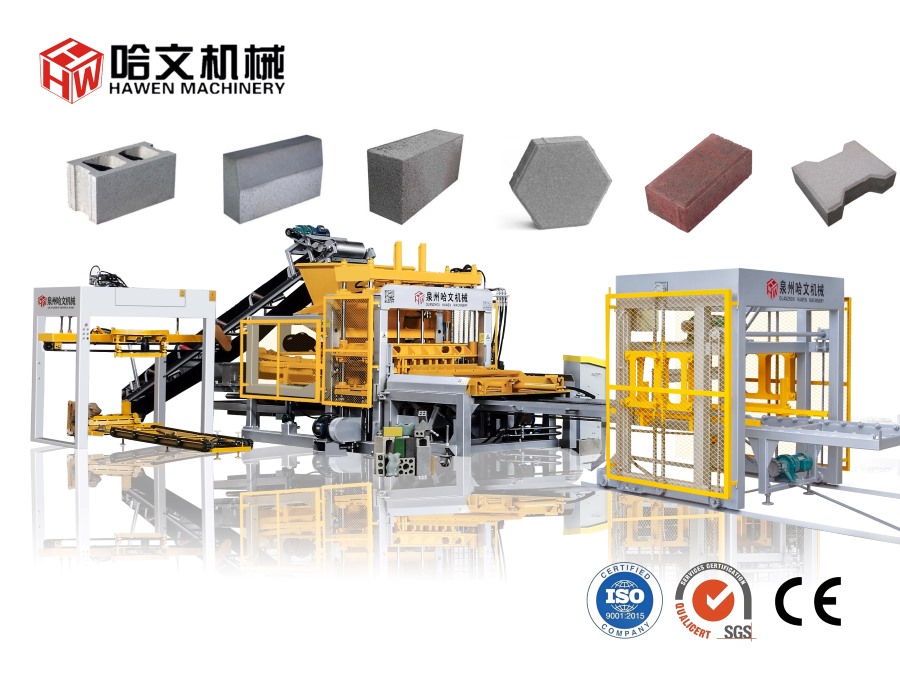
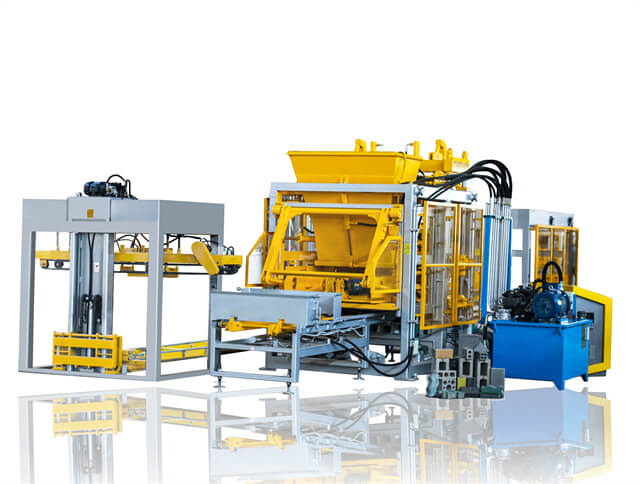
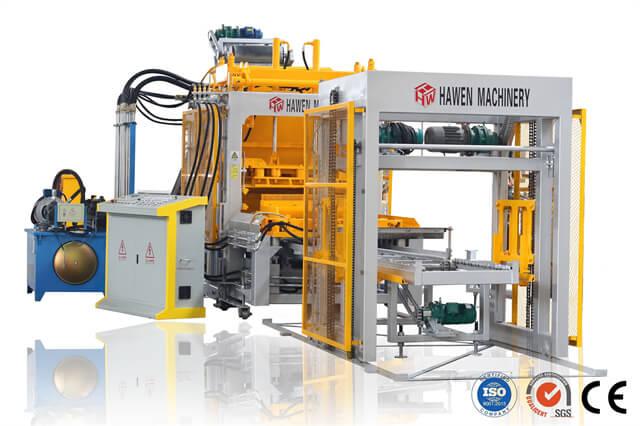
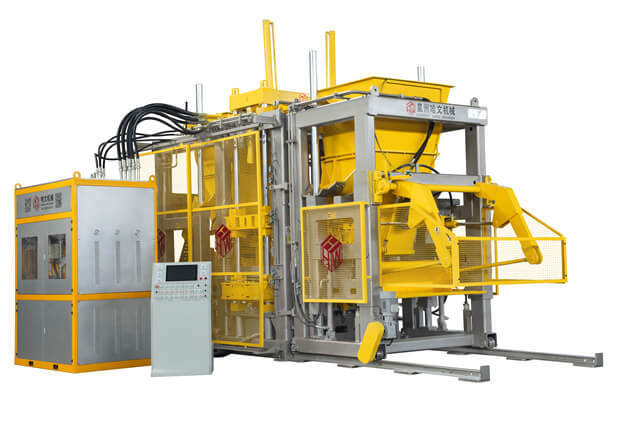
Industrial solid waste is no longer merely a by-product of manufacturing. In modern construction material production, it has become an increasingly valuable resource. The Hawen QT12-15 fully automatic block machine is designed to transform fly ash, slag, construction waste residue, stone powder, and recycled aggregates into high-quality concrete bricks, pavers, and blocks with stable performance and efficient production capacity.
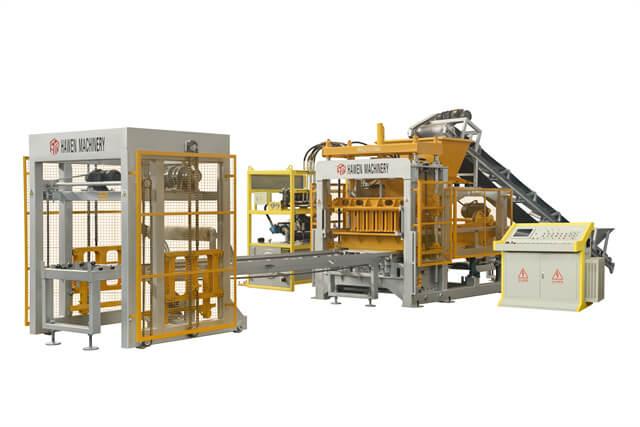
Equipped with a 1400×950mm pallet system, this fully automatic brick making machine integrates batching, mixing, forming, curing, cubing, and packaging into one coordinated production line. The entire process minimizes labor dependency while improving production consistency and raw material utilization.
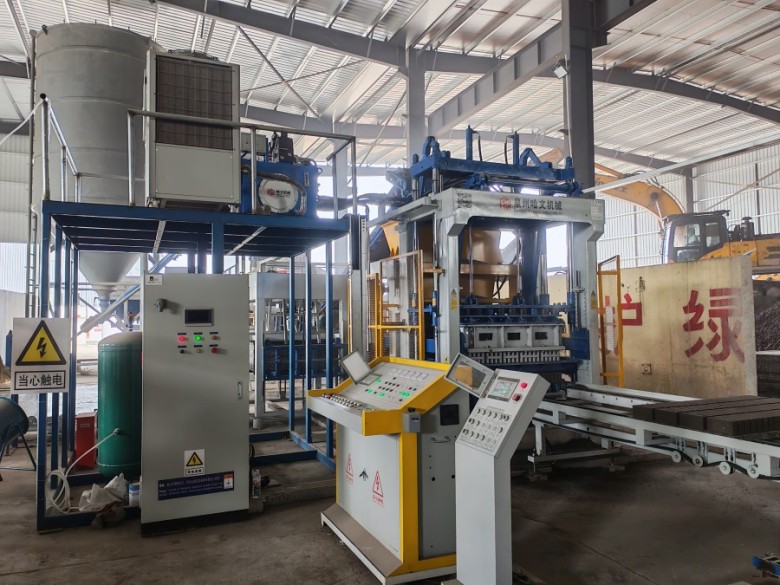
Industrial Solid Waste Recycling Solution
The production process begins at the material stock yard.
Different aggregates and recycled materials are stored separately for stable proportioning. A wheel loader transfers raw materials into the PL1600-III batching machine with three storage bins.
Through intelligent proportion control, the system can effectively utilize:
Fly ash
Slag
Stone powder
Recycled concrete aggregates
Construction solid waste
This production model not only reduces environmental pressure but also lowers long-term manufacturing costs for concrete block producers.
In many developing construction markets, industrial waste recycling has gradually become a practical and commercially sustainable direction for concrete product manufacturing.
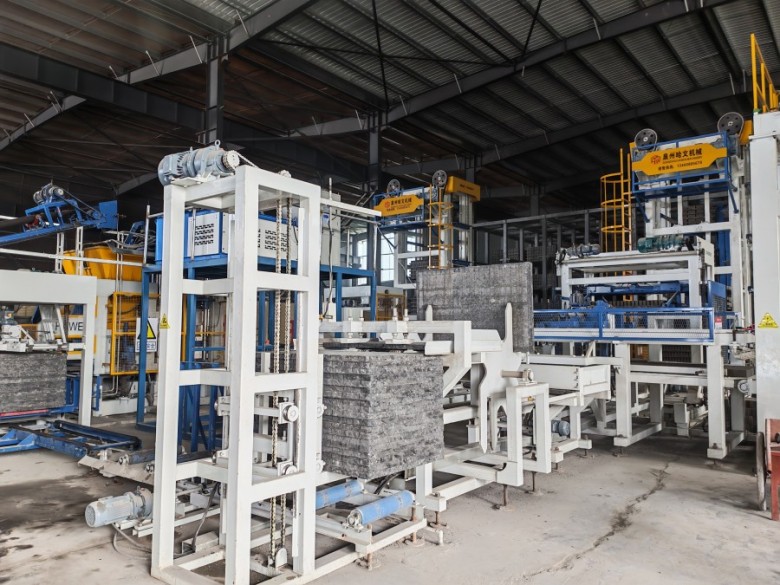 Fully Automatic Production Line Configuration
The automatic batching machine accurately weighs raw materials according to preset formulas.
Stable batching precision is critical because even small fluctuations in aggregate ratio or water content may directly affect block density, compressive strength, and surface appearance.
After batching, materials enter the automatic planetary mixing system.
The mixer ensures homogeneous material distribution and stable moisture consistency before the concrete mixture is transferred into the forming section of the block making machine.
Mixed materials are then delivered to automatic forming system.
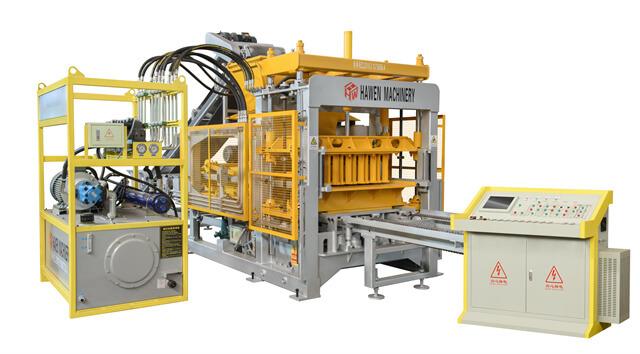
The QT12-15 brick machine performs high-frequency vibration forming combined with hydraulic compression, ensuring dense internal structure and dimensional accuracy.
For solid brick production sized 240×115×53mm, the machine can produce 63 pieces per mould cycle.
At Hawen Machinery, the vibration system adopts a six-shaft vibration box structure with eccentric blocks positioned outside the housing. This engineering design reduces vibration resistance, improves compaction uniformity, and lowers unnecessary cement consumption while maintaining stable forming efficiency.
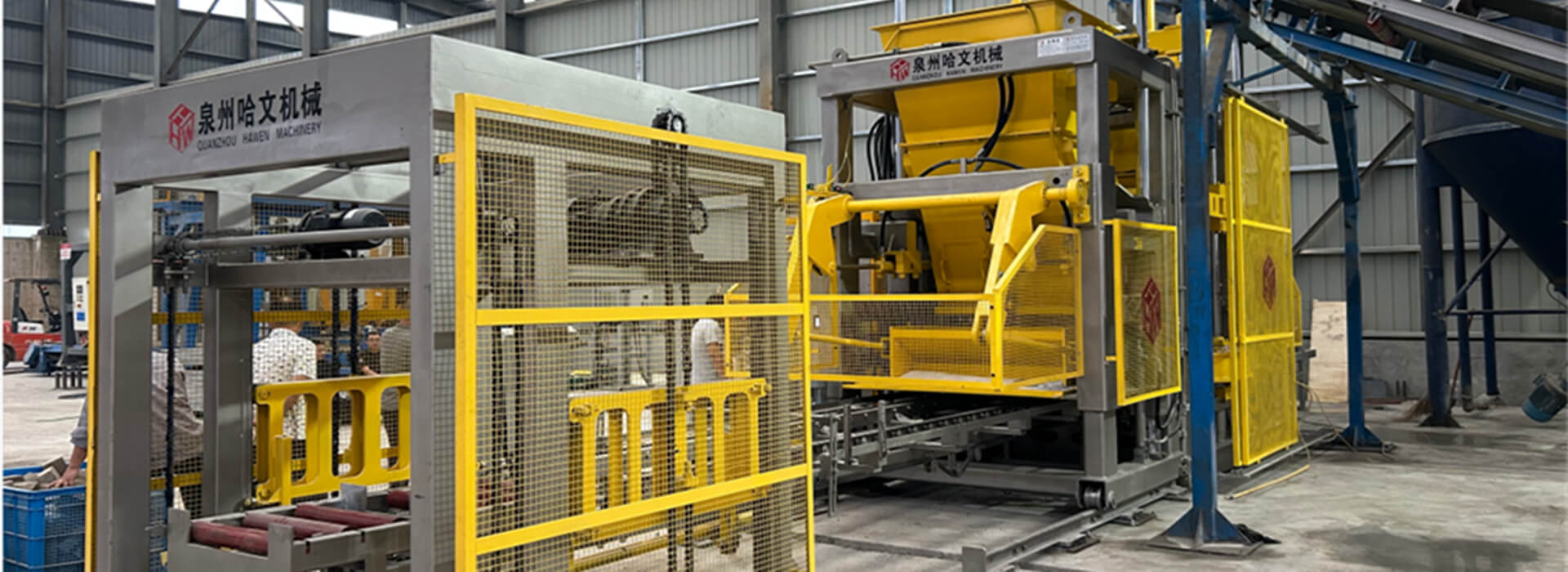
After forming, the automatic block stacker transfers fresh bricks into the elevator.
Finger cart takes the wet bricks from the Automatic Elevator.
The finger cart rotates 180 degrees and transports green bricks into the curing chamber with minimal manual intervention. This process significantly improves production continuity and reduces labor intensity.
Inside the curing chamber, stable humidity and temperature conditions help ensure proper hydration and improve final compressive strength.
Once curing is completed, finished bricks are transferred into the automatic cuber system.
Fully Automatic Production Line Configuration
The automatic batching machine accurately weighs raw materials according to preset formulas.
Stable batching precision is critical because even small fluctuations in aggregate ratio or water content may directly affect block density, compressive strength, and surface appearance.
After batching, materials enter the automatic planetary mixing system.
The mixer ensures homogeneous material distribution and stable moisture consistency before the concrete mixture is transferred into the forming section of the block making machine.
Mixed materials are then delivered to automatic forming system.
The QT12-15 brick machine performs high-frequency vibration forming combined with hydraulic compression, ensuring dense internal structure and dimensional accuracy.
For solid brick production sized 240×115×53mm, the machine can produce 63 pieces per mould cycle.
At Hawen Machinery, the vibration system adopts a six-shaft vibration box structure with eccentric blocks positioned outside the housing. This engineering design reduces vibration resistance, improves compaction uniformity, and lowers unnecessary cement consumption while maintaining stable forming efficiency.
After forming, the automatic block stacker transfers fresh bricks into the elevator.
Finger cart takes the wet bricks from the Automatic Elevator.
The finger cart rotates 180 degrees and transports green bricks into the curing chamber with minimal manual intervention. This process significantly improves production continuity and reduces labor intensity.
Inside the curing chamber, stable humidity and temperature conditions help ensure proper hydration and improve final compressive strength.
Once curing is completed, finished bricks are transferred into the automatic cuber system.
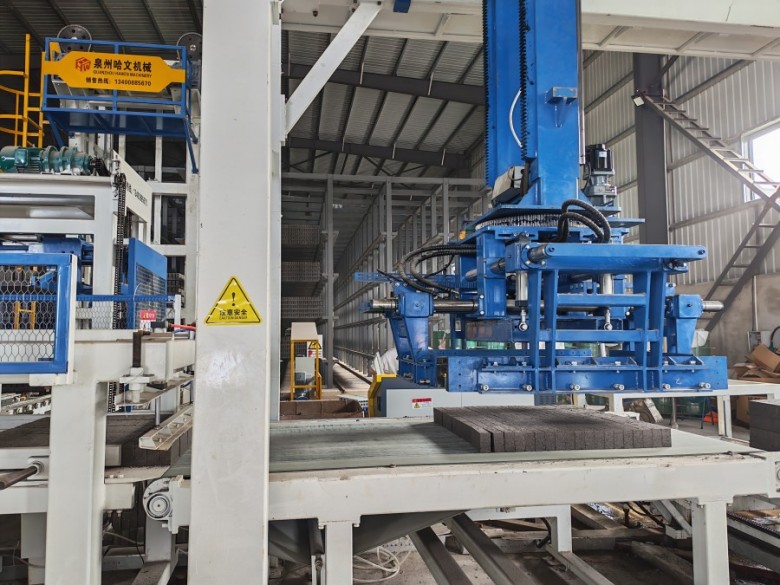 Intelligent Cubing System with Reserved Forklift Holes
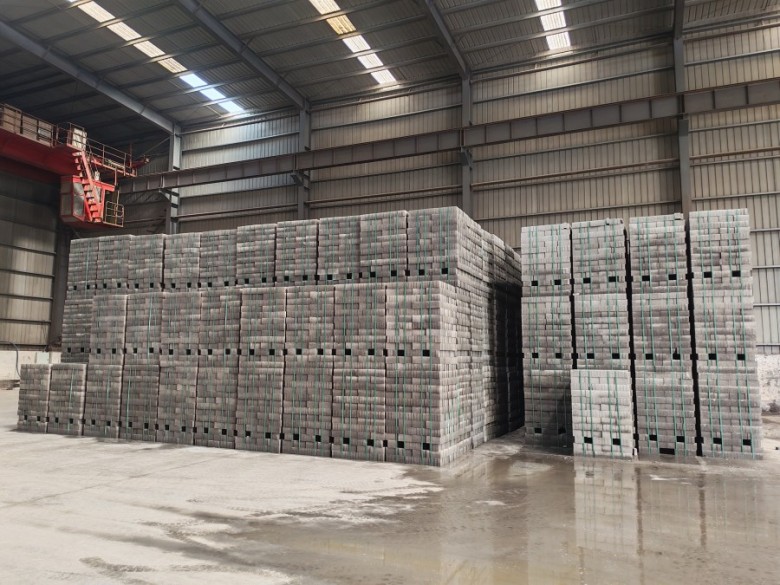
One practical advantage of the Hawen automatic cubing system is the reserved forklift hole structure.
Unlike traditional manual stacking methods, the system automatically forms standardized forklift channels within each brick package.
This design greatly improves:
Forklift handling efficiency
Warehouse management
Loading and unloading speed
Transportation stability
After cubing, the automatic strapping system secures the finished brick packages for safer transportation and storage.
Finally, forklifts transfer the packaged concrete bricks into the finished product stock yard.
For large-scale concrete block production plants, logistics efficiency is equally important as production efficiency itself.
A modern brick making machine should not only manufacture concrete products efficiently, but also optimize downstream handling and packaging processes.
Intelligent Cubing System with Reserved Forklift Holes
One practical advantage of the Hawen automatic cubing system is the reserved forklift hole structure.
Unlike traditional manual stacking methods, the system automatically forms standardized forklift channels within each brick package.
This design greatly improves:
Forklift handling efficiency
Warehouse management
Loading and unloading speed
Transportation stability
After cubing, the automatic strapping system secures the finished brick packages for safer transportation and storage.
Finally, forklifts transfer the packaged concrete bricks into the finished product stock yard.
For large-scale concrete block production plants, logistics efficiency is equally important as production efficiency itself.
A modern brick making machine should not only manufacture concrete products efficiently, but also optimize downstream handling and packaging processes.
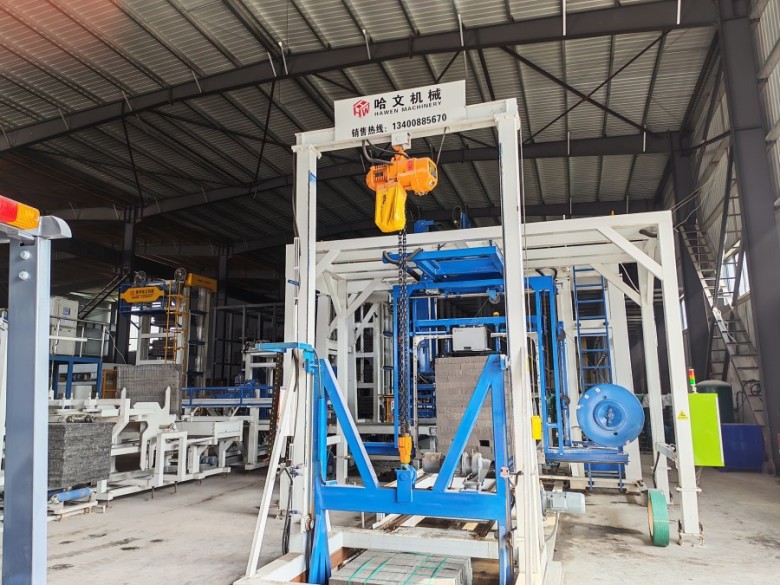 Why Hawen Block Machines Operate More Efficiently
The performance of a fully automatic block machine depends not only on forming capacity, but also on hydraulic stability, electrical coordination, vibration efficiency, and long-term mould durability.
The hydraulic station of Hawen block machines integrates Japanese YUKEN proportional and directional valves together with an American ALBERT hydraulic pump. This configuration provides responsive hydraulic control, strong load capacity, and reliable operation under continuous heavy-duty production conditions.
Stable hydraulic response helps reduce pressure fluctuation during high-frequency operation, ensuring smoother machine movement and more consistent concrete block quality.
The QT12-15 also incorporates a SIEMENS S7-200 PLC control system with touch-screen operation and remote monitoring capability.
Through this intelligent control platform, operators can monitor real-time production status, optimize operational parameters remotely, and maintain stable manufacturing consistency throughout the entire production cycle.
In practical operation, intelligent automation reduces unnecessary downtime while improving overall production reliability.
Hawen Machinery also designs moulds compatible with leading global block machine brands, including Masa, Hess, Zenith, Poyatos, Besser, Tiger, Columbia, Quadar, Omag, and others.
By following original dimensional specifications, these moulds ensure:
Precise installation
Stable operation
Smooth compatibility
Consistent product dimensions
All moulds undergo professional heat treatment processes to improve wear resistance and extend operational lifespan.
Hardness testing is maintained within HRC 62, balancing abrasion resistance with structural toughness for long-term industrial production.
The Hawen QT12-15 fully automatic brick machine is more than a concrete product manufacturing system. It represents an integrated production philosophy focused on automation, efficiency, sustainable material utilization, and intelligent control.
From industrial solid waste recycling to automatic batching, precision vibration forming, intelligent curing transfer, and automatic cubing with reserved forklift holes, every stage of the production line is designed to reduce operational cost while improving manufacturing consistency.
As global construction markets continue shifting toward higher efficiency and greener production standards, the future of concrete manufacturing will increasingly belong to factories capable of producing stronger products with lower material waste, lower labor dependency, and smarter automation systems.
Because in modern construction material manufacturing, true competitiveness is no longer defined simply by how many bricks a factory can produce.
Why Hawen Block Machines Operate More Efficiently
The performance of a fully automatic block machine depends not only on forming capacity, but also on hydraulic stability, electrical coordination, vibration efficiency, and long-term mould durability.
The hydraulic station of Hawen block machines integrates Japanese YUKEN proportional and directional valves together with an American ALBERT hydraulic pump. This configuration provides responsive hydraulic control, strong load capacity, and reliable operation under continuous heavy-duty production conditions.
Stable hydraulic response helps reduce pressure fluctuation during high-frequency operation, ensuring smoother machine movement and more consistent concrete block quality.
The QT12-15 also incorporates a SIEMENS S7-200 PLC control system with touch-screen operation and remote monitoring capability.
Through this intelligent control platform, operators can monitor real-time production status, optimize operational parameters remotely, and maintain stable manufacturing consistency throughout the entire production cycle.
In practical operation, intelligent automation reduces unnecessary downtime while improving overall production reliability.
Hawen Machinery also designs moulds compatible with leading global block machine brands, including Masa, Hess, Zenith, Poyatos, Besser, Tiger, Columbia, Quadar, Omag, and others.
By following original dimensional specifications, these moulds ensure:
Precise installation
Stable operation
Smooth compatibility
Consistent product dimensions
All moulds undergo professional heat treatment processes to improve wear resistance and extend operational lifespan.
Hardness testing is maintained within HRC 62, balancing abrasion resistance with structural toughness for long-term industrial production.
The Hawen QT12-15 fully automatic brick machine is more than a concrete product manufacturing system. It represents an integrated production philosophy focused on automation, efficiency, sustainable material utilization, and intelligent control.
From industrial solid waste recycling to automatic batching, precision vibration forming, intelligent curing transfer, and automatic cubing with reserved forklift holes, every stage of the production line is designed to reduce operational cost while improving manufacturing consistency.
As global construction markets continue shifting toward higher efficiency and greener production standards, the future of concrete manufacturing will increasingly belong to factories capable of producing stronger products with lower material waste, lower labor dependency, and smarter automation systems.
Because in modern construction material manufacturing, true competitiveness is no longer defined simply by how many bricks a factory can produce.
It is defined by how intelligently, efficiently, and sustainably those bricks are made.







 Tel: +86-13905968794
 Email: export@hwmachines.com
 MP/WhatsApp: +86-13905968794
 Manufacturer Address:Nanan,Quanzhou City,Fujian Province,China