In a concrete block machine, the feeding cart is sometimes treated as a secondary mechanism, but it has a direct influence on block weight, edge quality, web filling, surface texture, and cycle stability. The vibration table and hydraulic press create compaction, but the mould must first receive a stable and properly distributed quantity of dry concrete mix. If the feeding cart leaves one side short of material, overfills the front cavities, drags material unevenly, or blocks access around the mould, the later vibration and pressing stages have to compensate for a problem that started before compaction.
A swing-out material feeding cart is designed to move away from the forming zone after feeding, usually by swinging outward or leaving a wider side access area compared with a common straight-feeding cart. The exact structure differs by machine builder, but the basic purpose is similar: reduce interference around the mould, provide better operating space, make cleaning easier, and support more consistent feeding for different block products. For buyers comparing an ordinary block making machine with a higher-automation model, the feeding cart structure deserves careful attention.
The advantage of a swing-out feeding cart is not that it automatically makes perfect blocks. It works best with stable aggregate grading, suitable moisture, correct feeding time, proper vibration, good mould design, and pallet stability. However, it can make the operator's work more predictable, especially for products with cavities that are sensitive to uneven material filling.
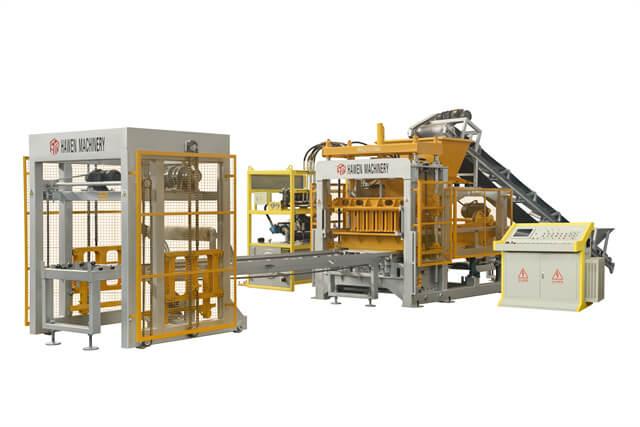
Feeding cart role in block machines
The feeding cart carries fresh concrete mix from the hopper area to the mould box. During each cycle, it moves over the mould, releases or spreads material, helps the mix settle into the cavities, and then retreats before the press head and vibration stage complete forming. In many automatic machines, the cart works together with a material rake, rotating brush, agitator, scraper, or grid plate to improve filling consistency.
Because block concrete is usually low-slump, it does not flow easily by itself. The mix may contain aggregate, sand, cement, water, pigment, or face-mix material depending on the product. For hollow blocks, narrow webs and corner sections need enough material but cannot be over-packed before vibration. For pavers, the surface layer must spread evenly. For kerbstones, the larger volume requires enough feeding capacity without heavy front-back imbalance.
A good feeding system therefore needs more than speed. It needs controlled travel, stable discharge, suitable scraping height, smooth return movement, and enough clearance so spilled material does not remain trapped around the mould. This is why the feeding cart should be evaluated as part of the forming system, not just as a moving box for concrete.
Ordinary feeding cart limitations near the mould
A common straight-feeding cart usually moves forward and backward along rails. This design is simple, widely used, and suitable for many block plants. Operators understand the travel path, maintenance is straightforward, and the structure can be robust. For standard hollow block production with limited product changes, an ordinary cart may perform well if the machine is properly adjusted.
The limitation appears around the mould area. A straight cart often occupies the same central working zone before and after feeding. When the operator needs to inspect cavities, clean side buildup, check the scraper, replace a mould, or remove a small jam, access can be restricted. This can increase adjustment time and make small problems harder to notice early.
Another limitation is sensitivity to material dragging. If the cart retracts along the same path and the scraping edge is not adjusted well, it may pull material away from some cavities or leave extra material at the front or rear of the mould. This is especially visible in products with large differences between cavity shape and wall thickness. The problem may be blamed on vibration or mould design, but the true cause may be uneven feeding and retreat movement.
Maintenance access also matters. Feeding carts operate in a harsh zone with abrasive aggregate, cement dust, moisture, vibration, and repeated impact. Rollers, rails, bearings, scraper plates, rubber seals, and agitator parts need regular inspection. A design that improves access can indirectly improve long-term quality because cleaning and adjustment are more likely to be done on time.
Swing-out feeding cart working logic
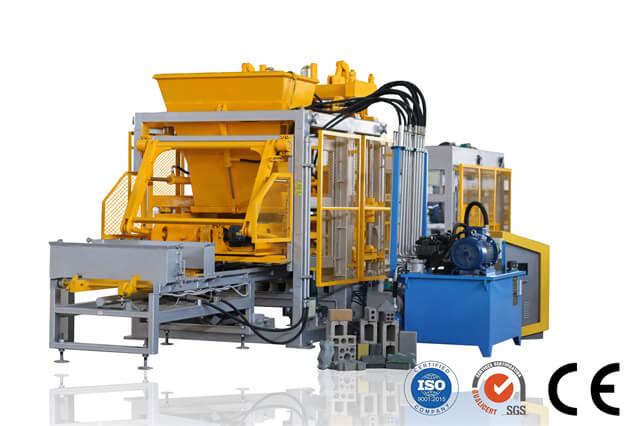
A swing-out feeding cart changes the relationship between the feeding unit and the forming zone. Instead of only moving straight backward and remaining aligned with the mould centerline, the cart can swing outward or park away from the mould access area after completing the feeding action. The purpose is to open the top or side space around the mould so the press head, mould box, pallet, and operator inspection path are less crowded.
The key engineering point is controlled separation. During feeding, the cart still needs to deliver material evenly across the mould. After feeding, it should leave the forming area without disturbing the filled cavities. The swing path must therefore be stable, repeatable, and synchronized with the rest of the machine cycle.
In well-designed systems, the swing-out movement is guided by a rigid frame, reliable cylinders or drive units, position sensors, and PLC interlocks. The control system should confirm that the cart has reached the feeding position before discharge and has cleared the mould area before pressing or demoulding.
Advantages for material distribution and cavity filling
The first advantage is better control of the material path. A swing-out cart can be designed so that feeding, scraping, and retreat movement create less disturbance to the filled mould. When the cart clears the forming area cleanly, there is less chance of dragging material back from the top of the cavities. This helps reduce cavity-to-cavity weight variation, especially on larger pallets where the far side and near side of the mould may otherwise receive slightly different quantities of concrete.
The second advantage is easier observation. Operators can see the mould filling condition more clearly when the cart moves out of the way. A small shortage in one hollow block web, a clump of oversized aggregate, a wet patch in the mix, or a scraper edge that is too low can often be found before it becomes a batch of defective blocks.
The third advantage is more stable feeding for special products. Interlocking pavers, face-mix pavers, grass blocks, drainage blocks, and kerbstones may not fill like a simple rectangular solid block. A swing-out design gives the machine builder more freedom to arrange the feeding box, rake movement, and cleaning path without leaving the mechanism crowded above the mould.
These advantages do not replace correct mix design. If aggregate size is too large, moisture is unstable, or cement paste is poorly mixed, the feeding cart cannot solve the root problem. It gives the operator and control system a cleaner mechanical condition for distributing a qualified mix.
Advantages for mould change, cleaning, and inspection
Mould change is one of the clearest practical advantages. Block plants that produce different products may change between hollow blocks, pavers, kerbstones, and custom moulds. When the feeding cart can swing away from the mould area, there is more space for lifting tools, alignment checks, bolt access, press head inspection, and final cleaning before installing the next mould.
Cleaning is another important factor. Semi-dry concrete tends to build up around scraper plates, corners, hopper outlets, rails, and cavity edges. If old material dries and drops into the next cycle, it may create surface marks, weak corners, or height variation. A swing-out cart exposes the working area more clearly, making buildup easier to remove before it hardens.
Inspection access also protects machine components. The operator can more easily check whether the scraper rubber is worn, whether the feeding box is level, whether the guide wheels are loose, and whether material is accumulating near sensors. Small inspections are often skipped when access is awkward. A machine layout that invites inspection tends to stay stable longer, because problems are found before they become stoppages.
For factories evaluating high-capacity models such as a QT15 automatic concrete paver block machine, the feeding cart design should be reviewed together with mould size, pallet size, product range, and planned changeover frequency.
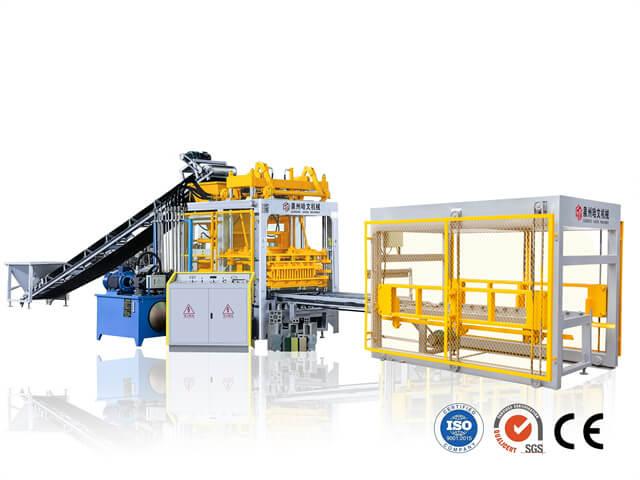
Comparison table for buyers
| Evaluation point | Ordinary straight feeding cart | Swing-out material feeding cart |
|---|
| Mould access | Access may be limited because the cart and guide structure remain close to the forming area. | The cart can move away from the mould area, improving access for cleaning, inspection, and changeover. |
| Feeding observation | Operators may have a restricted view of cavity filling after the cart retreats. | Better visual access helps identify poor filling, wet mix, aggregate clumps, and scraper problems earlier. |
| Product changeover | Suitable for stable production with fewer mould changes. | More useful where the plant changes between hollow blocks, pavers, kerbstones, and custom moulds. |
| Maintenance focus | Rails, wheels, scraper plates, seals, and feeding box alignment. | All ordinary feeding parts plus swing mechanism, sensors, cylinders or drive units, and locking accuracy. |
| Best application | Simple products, lower changeover frequency, and plants prioritizing mechanical simplicity. | Multi-product plants, larger pallets, frequent mould changes, and products requiring closer filling control. |
Where the advantage is most obvious
The advantage is most obvious in factories that produce many product types. A plant making only one hollow block size may not feel the difference every day if the ordinary cart is already adjusted well. But a plant that changes moulds frequently benefits from faster access and easier cleaning. This is especially true when the same machine produces standard blocks in the morning and pavers or kerbstones later in the day.
It is also useful for products with sensitive filling geometry. Hollow blocks need stable web filling; pavers need a consistent surface layer; kerbstones need enough material volume without weak corners. In these situations, the ability to observe and clean the feeding zone becomes part of quality control. A swing-out cart helps make that work less dependent on guesswork.
The benefit is stronger when the line has good upstream equipment. A stable batching machine and an efficient planetary concrete mixer help deliver a consistent mix to the feeding cart. If upstream batching and mixing are unstable, even a well-designed swing-out cart will still receive material that is difficult to distribute evenly.
Supplier checkpoints before ordering
Before choosing a swing-out material feeding cart, buyers should ask how the movement is guided and locked. The supplier should explain whether the swing uses hydraulic cylinders, electric drive, mechanical linkage, or another structure. More important, the supplier should explain how the machine confirms the cart position before feeding, pressing, and demoulding. Position confirmation prevents the swing-out function from becoming a source of collision or timing error.
Buyers should also check whether the cart design matches the mould range. A feeding system that works well for one paver mould may need different scraper height, feeding time, or rake movement for hollow blocks. Ask the supplier to show video of the cart feeding real material, not only empty movement. If possible, request samples from the products you plan to produce and compare weight variation across the pallet.
Maintenance access should be discussed before ordering. Ask how operators clean the cart, adjust scraper plates, replace wear parts, inspect sensors, and remove hardened material. If the swing mechanism has special bearings, guide blocks, or cylinders, ask for spare part lists and lubrication points. A convenient swing-out design should reduce daily cleaning difficulty, but it also adds movement parts that must be maintained correctly.
FAQ
Does a swing-out feeding cart increase block strength?
It does not directly increase strength like cement content, compaction pressure, or curing. Its value is better feeding consistency, easier observation, and cleaner mould conditions, which can support more stable block density and weight.
Is a swing-out feeding cart necessary for every block machine?
No. If the factory produces one simple block type with few mould changes, an ordinary straight feeding cart may be sufficient. The swing-out design is more valuable in multi-product plants or where mould access is important.
Can a swing-out cart solve poor material mixing?
No. If the mix has unstable moisture, oversized aggregate, or poor cement distribution, the feeding cart cannot remove the root cause. It can only distribute the prepared mix more conveniently and visibly.
What should be checked during machine testing?
Check whether all cavities fill evenly, whether the cart leaves material behind, whether it clears the mould before pressing, whether operators can clean the sides easily, and whether block weight variation across the pallet is acceptable.
Conclusion
A swing-out material feeding cart has advantages over an ordinary straight feeding cart because it improves access around the mould, supports cleaner feeding, makes cavity filling easier to observe, and reduces downtime during cleaning or mould change. Its value is strongest in plants that produce multiple block types, use larger moulds, or need closer control of paver, kerbstone, and hollow block quality.
The buyer should not judge the feeding cart only by whether it swings outward. The more important questions are how stable the swing mechanism is, how the PLC confirms position, how the cart feeds real semi-dry concrete, and how easily operators can clean and adjust the system. When the feeding cart, mould, mixer, batching system, vibration, and hydraulic pressing sequence work together, the swing-out structure becomes a practical upgrade rather than just an extra moving part.





 Tel: +86-13905968794
 Email: export@hwmachines.com
 MP/WhatsApp: +86-13905968794
 Manufacturer Address:Nanan,Quanzhou City,Fujian Province,China