Aggregate size has a direct influence on concrete block strength, surface finish, mold filling, cement demand, demoulding stability, and production speed. Material that is too coarse may bridge above narrow mold cavities or damage product edges. Material that is too fine may increase water demand, create sticky surfaces, and force the factory to use more cement. The best aggregate is not simply the smallest or cheapest material available. It is a stable combination of particle sizes that matches the product geometry and the block machine process.
This guide explains how to choose aggregate size for hollow blocks, solid bricks, pavers, kerbstones, and other dry-cast concrete products. It also shows how batching, mixing, vibration, hydraulic movement, mold condition, and process control affect the way aggregate performs inside a brick making machine line.
Start with the Product Geometry
Aggregate size must match the product
The product drawing should guide aggregate selection. A thick solid block can accept a different material structure from a thin-wall hollow block. A paver with a visible face requires better surface control. A kerbstone has a larger body but may include chamfers, narrow edges, or drainage details that still require reliable cavity filling.
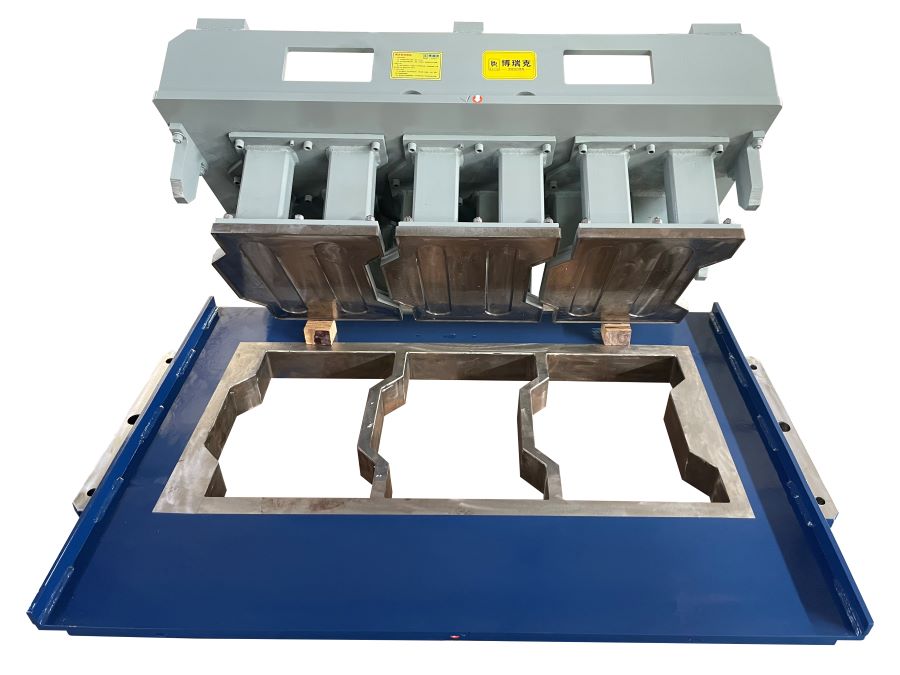
The maximum particle size must be small enough to move through the narrowest important part of the mold. This includes hollow-block webs, paver corners, interlocking profiles, chamfers, and detailed surface areas. If aggregate cannot enter these zones evenly, the block machine may produce voids, weak corners, rough edges, or incomplete shapes.
There is no universal aggregate size that is correct for every brick machine and every product. Local stone type, crushing method, sand shape, moisture, cement, supplementary materials, mold design, and curing practice all affect the final choice. The factory should use product trials rather than copy a recipe from another country without verification.
Technical note: Published concrete masonry specifications and industry guidance commonly control aggregate by grading and material performance rather than promoting one universal particle size. This is why local screening and production trials remain essential.
Why particle-size distribution matters
Good aggregate grading combines larger and smaller particles so that smaller material fills the spaces between larger particles. This improves packing and helps the block making machine achieve density with efficient vibration. A poorly graded mix contains too many particles of one size, leaving more voids or demanding more paste to hold the structure together.
Well-graded material can support lower water demand, stable green strength, cleaner edges, and more economical cement use. However, the grading must remain consistent from batch to batch. A good laboratory result has limited value if quarry deliveries change every week or if different piles are mixed carelessly in the yard.
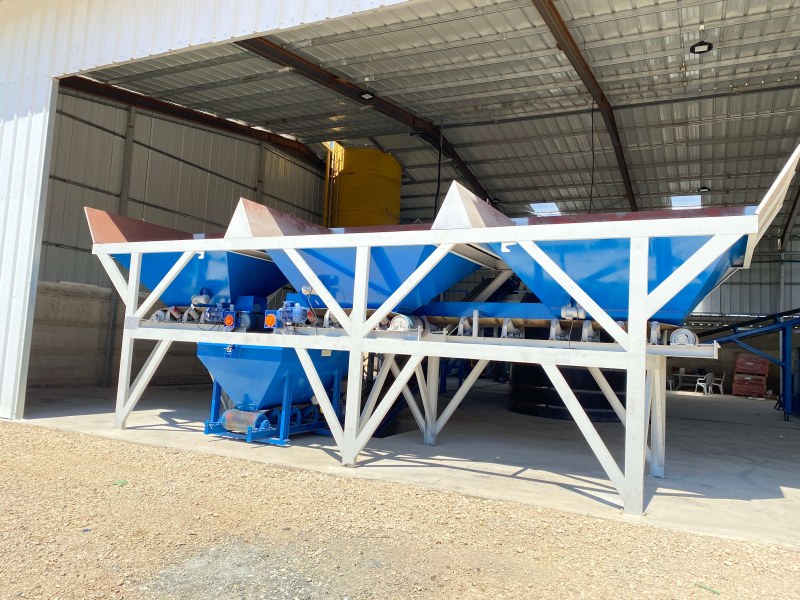
The factory should separate material by size where practical. Screened sand, stone chips, crushed fines, and larger aggregate can then be combined through controlled batching. This gives the operator more control than relying on one uncontrolled mixed pile.
| Material condition | Likely production effect | Practical response |
|---|
| Too many large particles | Poor cavity filling, voids, broken corners | Screen material and review the narrowest mold section |
| Too many fines | High water demand, sticking, shrinkage, dusty surface | Control crushed dust and rebalance coarser fractions |
| Gap-graded material | Higher void content and unstable compaction | Blend compatible particle fractions through batching |
| Changing moisture | Different filling, compaction, and demoulding behavior | Check moisture and adjust total water systematically |
Aggregate Selection by Product Type
Aggregate for hollow blocks and solid bricks
Hollow blocks contain internal cores and relatively narrow webs. Aggregate must move around the core components and fill the web sections without bridging. Oversized particles can leave weak zones or expose stone at the edges. At the same time, a mix made almost entirely from fine sand may need more cement and water to maintain strength.
For hollow-block trials, inspect the web, shell, corner, and bottom surface. Break or cut sample products when appropriate to see whether large voids remain inside. If one cavity repeatedly has poor filling, check the hollow block mould, feeding path, and material distribution before changing the whole recipe.
Solid bricks and dense blocks can accept a broader material structure, but aggregate still needs to compact evenly. A solid cement block machine should not be used to force badly graded material into shape by pressure alone. Good packing and controlled moisture should do part of the work before pressing begins.
Aggregate for pavers and kerbstones
Pavers require attention to both the structural layer and the visible face. Coarse exposed particles, uneven fines, or contaminated sand can reduce surface quality. Interlocking corners and small edge details also need complete filling. If a face-mix layer is used, its aggregate and pigment distribution should be controlled separately from the base mix.
Kerbstones are larger and heavier, but their edges, slopes, and profiles still require suitable grading. The mix must compact across the full mold length without leaving weak corners. A concrete curb stone mould should be considered together with the aggregate source and product drawing.
For paver and kerbstone production, the buyer should judge more than compressive strength. Check surface texture, dimensional stability, edge integrity, color consistency, water behavior where relevant, and handling strength. A product can be strong in a test but still be difficult to sell if the surface is rough or the corners break during transport.
Recognize Incorrect Aggregate Size
Problems caused by oversized aggregate
Oversized aggregate can bridge above a narrow cavity instead of flowing into it. The mold may appear full from the top while the lower section remains incomplete. During demoulding, the product can show missing corners, large surface pores, exposed stone, thin webs, or local cracking.
Large particles can also interfere with the material car, scraper, and mold components. If the operator hears repeated impact or sees stones trapped near the mold edge, the material should be checked immediately. Continuing production may damage the product and increase wear on the mould.
The solution is not always to remove all coarse material. Coarser particles can contribute to an efficient skeleton when they fit the product. The practical solution is to control the maximum size, remove accidental oversize, and combine particle fractions so the mix remains dense and workable under vibration.
Problems caused by excessive fines
Fine material includes natural fines, crushed stone dust, very fine sand, cementitious powder, and dust introduced through poor storage. Some fines are useful because they fill voids and improve surface closure. Excessive fines, however, can increase water demand and make the mixture sticky.
A sticky mix may adhere to the tamper head or mold walls. It may also compact differently as moisture changes. Factories sometimes add more cement to control weak green products, but the real issue may be an unbalanced fine fraction. This raises cost without creating a stable process.
Watch the product surface and mixer behavior. Excessive dusty material, clumping, slow discharge, mold buildup, and changing water demand are warning signs. The correction may involve screening, blending cleaner sand, reducing crusher dust, improving storage, or adjusting mixing order.
Batching, Mixing, and Machine Adjustment
Batching mixing and moisture control
Aggregate grading only works when the fractions are dosed consistently. The batching system should separate and weigh the selected materials according to the trial recipe. If the loader puts the wrong material into a bin or if a discharge gate leaks, the grading can change even though the recipe on the control screen remains the same.
Mixing must distribute coarse particles, fines, cement, water, and admixture without creating dry pockets. A concrete mixer should be matched to batch size and material behavior. For detailed pavers and face products, a planetary concrete mixer can support uniform material movement and fine-material distribution.
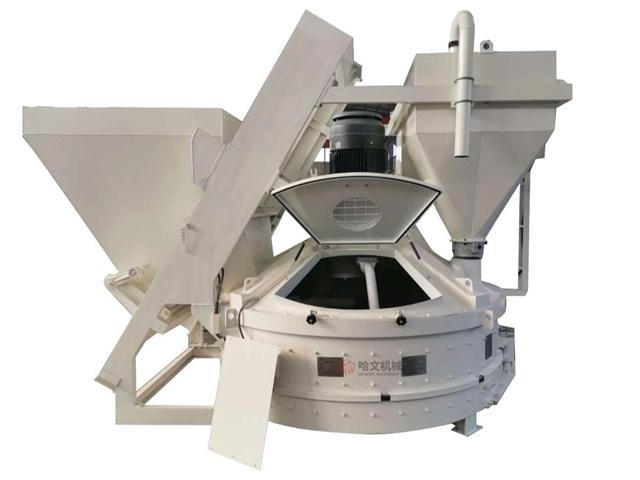
For higher-output plants, a twin-shaft concrete mixer may be suitable according to capacity and layout. Whichever mixer is chosen, the factory should keep the mixing sequence repeatable. Cement and water cannot correct aggregate that changes from batch to batch.
Moisture deserves special attention because fine material holds water differently from coarse aggregate. After rain or a new delivery, the same water setting may produce a very different mixture. Record raw-material condition, water adjustment, mixer behavior, and block quality together.
Vibration hydraulics and mold filling
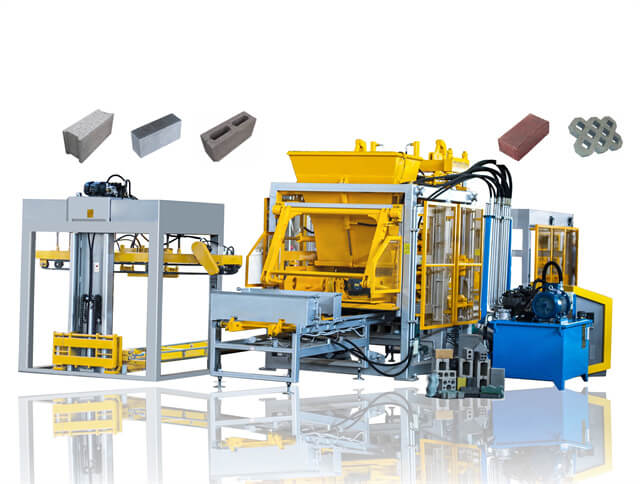
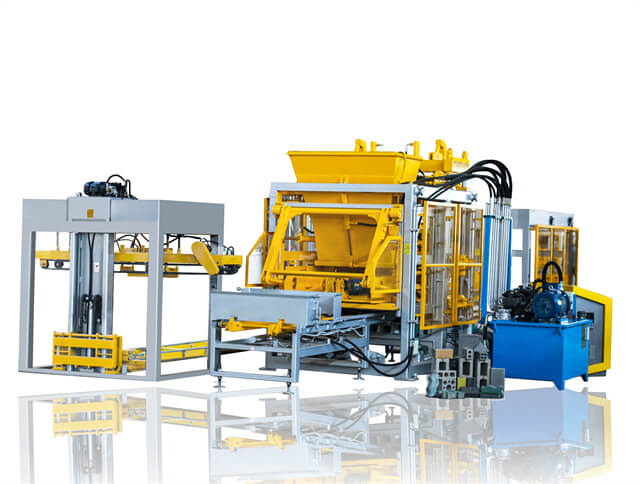
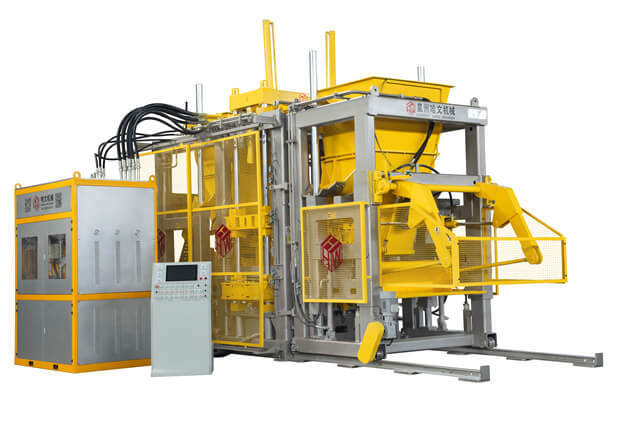
The block machine must compact the selected grading uniformly. HAWEN Machinery uses a four-shaft vibration box with eccentric blocks positioned outside the housing. This arrangement reduces vibration resistance, supports even compaction, and helps lower unnecessary cement consumption while improving production efficiency.
Efficient vibration helps smaller particles move into the spaces around larger particles. However, vibration cannot fully correct severe oversize, excessive fines, or poor feeding. The recipe and machine settings must support each other. If the material changes, feeding time, vibration time, and pressing behavior may also need review.
The hydraulic station in HAWEN block machines uses Japanese YUKEN proportional and directional valves together with an American ALBERT hydraulic pump. This supports controlled movement and dependable load response during pressing and demoulding. Stable hydraulic action helps protect product geometry, but pressure should not be used to compensate for badly graded aggregate.
HAWEN mold systems follow product drawings and can be made compatible with major machine brands such as Masa, Hess, Zenith, Poyatos, Besser, Tiger, Columbia, Quadra, and Omag. Mold wear parts are heat-treated for abrasion resistance and checked at HRC 59-61. This is relevant to aggregate selection because abrasive or oversized material can accelerate wear, while accurate cavities make filling defects easier to identify.
Factory Trials and Repeatable Quality
Factory trial and quality checks
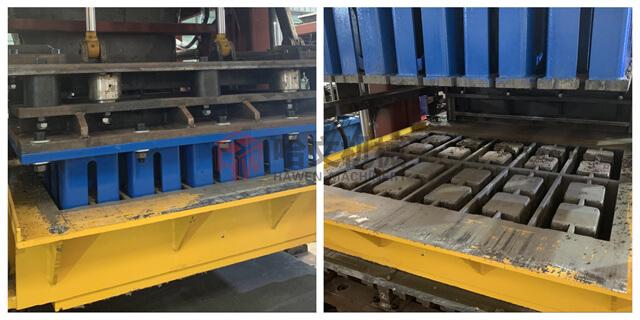
The safest aggregate decision comes from controlled trials. Begin with the product drawing and local materials. Screen the available aggregate, prepare a practical grading, and keep cement, water, mixing, vibration, pallet, mold, and curing conditions controlled. Change one important variable at a time.
During the trial, inspect fresh-product stability, cavity filling, block height, weight, surface texture, corners, demoulding, and visible voids. After curing, evaluate the requirements relevant to the customer or project. Do not invent a universal target or rely only on appearance. Use the applicable product standard and buyer specification for final acceptance.
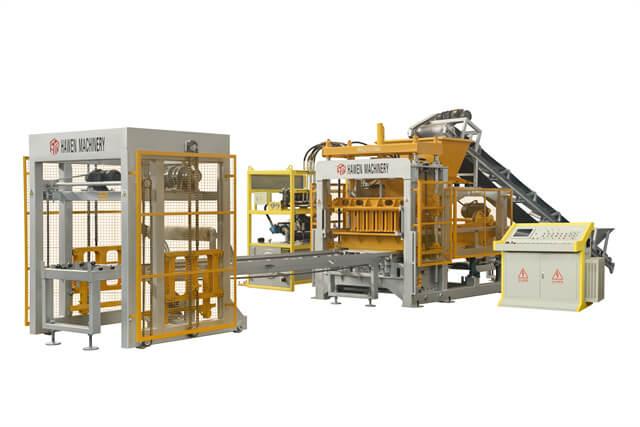
The control system can help keep successful settings repeatable. HAWEN Machinery integrates a Siemens S7-200 PLC with a touch panel and remote monitoring capability. Machine status can be reviewed in real time, and operating parameters can be optimized remotely when needed. This helps connect material changes with feeding, vibration, pressing, and final product results.

| Trial check | What to observe | Possible aggregate cause |
|---|
| Mold filling | Incomplete corners, thin webs, empty lower areas | Oversize, bridging, or poor grading |
| Fresh surface | Sticky paste, exposed stone, tearing, rough texture | Excess fines, excessive coarse fraction, moisture imbalance |
| Demoulding | Chipped edges, sticking, collapse, weak corners | Unstable packing or water demand |
| Product consistency | Changing weight, height, color, or density | Variable deliveries, segregation, or inaccurate batching |
Production pallets and curing should remain stable during the comparison. A GMT pallet can support fresh products when its dimensions and stiffness match the machine. If pallets bend or curing changes during the trial, the factory may wrongly blame aggregate for defects created elsewhere.
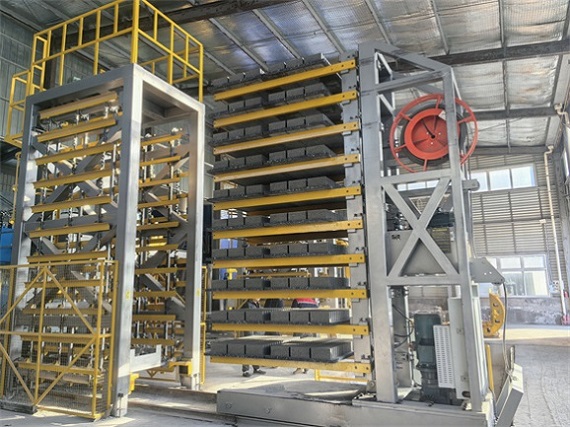
For larger product programs, an automatic pallet provider and an automatic offline palletizing system can support consistent handling. Aggregate selection still begins in the material yard, but its success must survive forming, transfer, curing, stacking, and delivery.
Conclusion
Choosing aggregate size for concrete blocks and pavers requires more than selecting one maximum particle size. The factory must match grading to the narrowest mold detail, product surface requirement, local material shape, moisture condition, batching accuracy, mixer performance, vibration system, and curing process. Oversized material can cause bridging and weak corners. Excessive fines can increase water demand, sticking, and cement use. Balanced grading creates a more stable base for quality production.
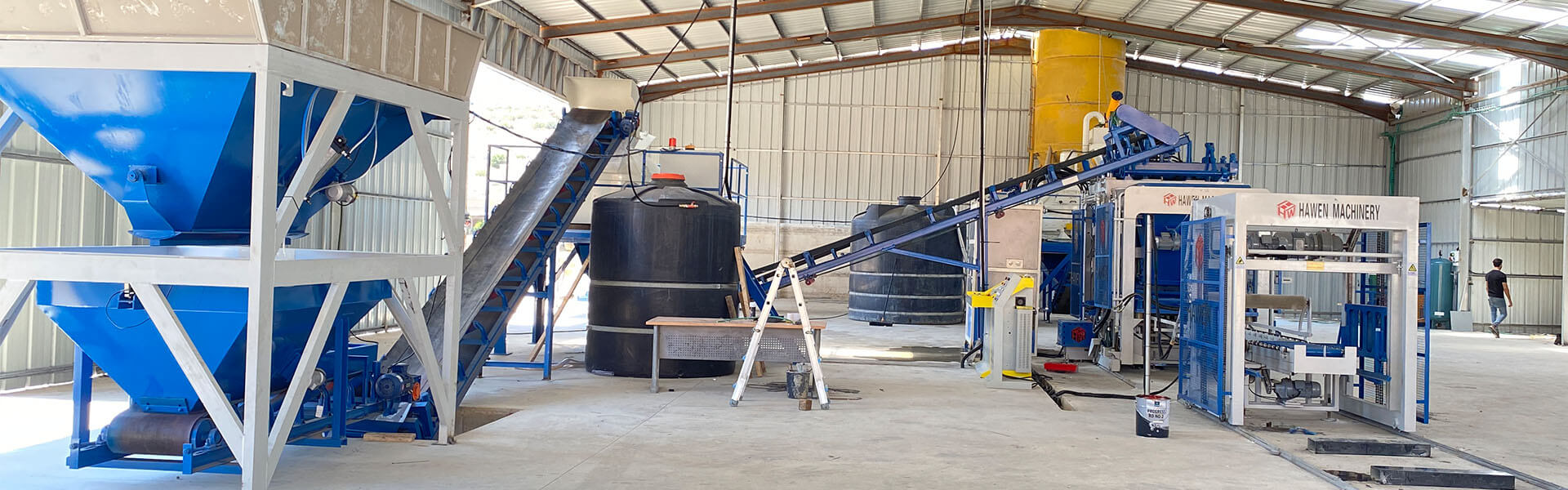
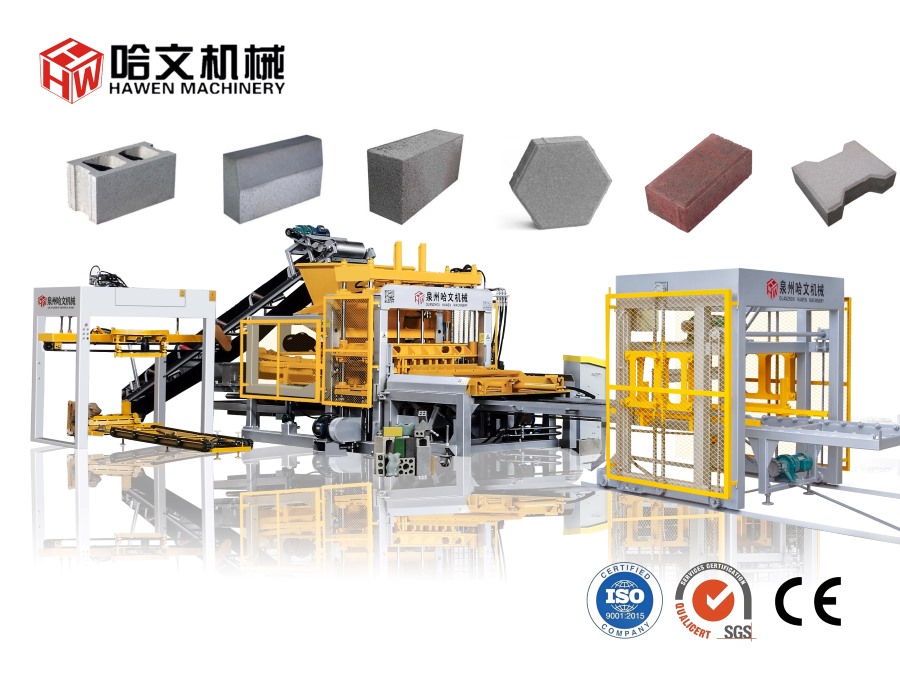
HAWEN Machinery approaches aggregate performance as part of the complete block machine system. Batching, mixing, vibration, hydraulic control, precise molds, PLC monitoring, pallets, and downstream handling all help turn a controlled material grading into repeatable products. When aggregate is selected with evidence instead of habit, a brick making machine does more than compress stone and cement. It transforms local resources into clean geometry, dependable strength, efficient production, and the durable blocks and pavers that give roads, walls, courtyards, factories, and cities their lasting form.
FAQ
What is the best aggregate size for concrete blocks?
There is no single size for every product. The grading must fit the narrowest mold section, local aggregate shape, required surface, and machine process. Controlled production trials are necessary.
Can aggregate be too large for a block machine mold?
Yes. Oversized particles can bridge above narrow cavities, leave voids, weaken corners, expose stone, and interfere with feeding or mould components.
Why are too many fines a problem in paver production?
Excessive fines can increase water demand, create sticky material, raise cement consumption, cause mold buildup, and make surface quality sensitive to moisture changes.
Should hollow blocks and pavers use the same aggregate grading?
Not automatically. Hollow-block webs and paver surfaces have different filling and finish requirements. Each product should be tested with its own mould and settings.
Can stronger vibration solve poor aggregate grading?
Only to a limited extent. Correct vibration improves compaction, but it cannot reliably correct severe oversize, excessive fines, contamination, or unstable moisture.
How often should aggregate grading be checked?
Check whenever the source, crusher setting, delivery condition, moisture, or product quality changes. Routine checks are also useful when quarry supply is variable.
What should I send HAWEN for aggregate and machine advice?
Send product drawings, aggregate photos, available particle-size information, sand and stone sources, current recipe, target output, defect photos, and a video of feeding and demoulding.





 Tel: +86-13905968794
 Email: export@hwmachines.com
 MP/WhatsApp: +86-13905968794
 Manufacturer Address:Nanan,Quanzhou City,Fujian Province,China