A useful concrete block mould enquiry connects three things: the product the buyer wants to manufacture, the machine that will carry the mould, and the operating requirements that matter to the plant. A photograph or a nominal block size can start the discussion, but it rarely provides enough information to finalize a custom mould. Preparing a clear enquiry package helps the buyer and supplier identify missing information before a quotation becomes a manufacturing commitment.
This checklist is intended for buyers preparing a mould enquiry for Hawen Machinery or another supplier. It does not assume compatibility with any machine brand or prescribe design tolerances. The final interface and product details must be confirmed for the actual equipment and application.
Define the concrete product with a drawing
Start with a dimensioned product drawing whenever one is available. Identify length, width, height, cavities, webs, edge profiles and other features that distinguish the unit. Explain whether the drawing represents an approved product, a sample to be replicated or a proposed design still under review. This distinction matters because a supplier should not have to infer which dimensions are fixed and which remain negotiable.
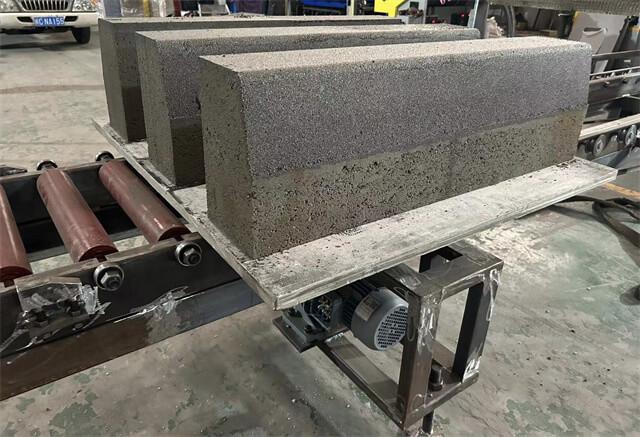
Use photographs as supporting evidence rather than a substitute for dimensions. Include views that show the product shape clearly, and label samples so they can be linked to the correct drawing. If several similar units are requested, give each one a unique product reference. A list of filenames such as final-new-version can quickly become ambiguous once several people are reviewing the project.
| Enquiry information | Purpose |
|---|
| Dimensioned product drawing | Defines the intended concrete unit and its distinguishing features. |
| Machine model and interface information | Provides a basis for reviewing the mould connection. |
| Production pallet dimensions | Supports review of the proposed production layout. |
| Operating requirements and existing issues | Explains what the buyer needs the design discussion to address. |
Identify the machine interface separately from the product shape
A correct product drawing does not establish machine compatibility. Provide the machine model, available identification information and the relevant connection drawings. Where existing mould drawings are available, ask the supplier which views and dimensions are needed for review. Do not assume that the same model label guarantees an identical connection on machines supplied at different times or with different configurations.
Confirm production pallet length, width and thickness separately. Explain whether existing pallets must be retained. The supplier can then discuss the proposed cavity layout and machine fit using a consistent set of inputs. If information is incomplete, keep the compatibility question open rather than treating an early price as final technical approval.
Explain special requirements without assuming a solution
Describe the actual production concern behind a requested modification. If the buyer wants to address release, filling, product marking or changeover, provide the relevant observations and any existing drawings. A clear problem statement helps the technical discussion stay focused. It also avoids implying that a familiar feature from another mould will necessarily solve the issue on the new product.
During drawing review, distinguish a requested feature from a verified outcome. A design change can be incorporated to assist a particular operation, but performance still depends on the complete process. Confirm the feature, its location and the agreed purpose in the drawing set. Do not attach unsupported promises about cycle time, service life or defect reduction to a modification alone.
A practical review approach is to trace each request from the enquiry email to the relevant drawing note. If a requirement cannot be found in the proposed design or remains unclear, resolve it before approval. This is particularly valuable when commercial and engineering teams communicate through different contacts.
Control drawing revisions before approval
Keep one identifiable current drawing set, with revision references and an approval record. When a dimension or feature changes, identify which earlier version it replaces. Confirm that the product drawing and machine interface drawing are consistent with the same agreed scope. An old attachment should not become a manufacturing instruction simply because it remains in a message thread.
Before approval, review the product reference, dimensions, quantity of mould sets, proposed layout, interface confirmation and special notes together. Record outstanding questions and who will answer them. This final review makes the enquiry useful beyond purchasing: it becomes the reference for manufacturing communication and later delivery checks.
FAQ
Can a supplier quote from a block photograph? A photograph can support an initial discussion, but final design and compatibility require confirmed technical information.
Why provide both product and machine drawings? One defines the concrete unit; the other establishes how the mould connects to the production equipment.
Should a special modification be described in writing? Yes. Link the requirement to the approved drawing so its location and purpose are clear.
Conclusion
A strong mould enquiry reduces uncertainty by defining the product, identifying the machine interface and documenting special requirements. Buyers should assemble the available drawings, label their revisions and resolve missing information before approving manufacture. The result is a clearer basis for quotation comparison and technical confirmation.





 Tel: +86-13905968794
 Email: export@hwmachines.com
 MP/WhatsApp: +86-13905968794
 Manufacturer Address:Nanan,Quanzhou City,Fujian Province,China