Concrete grass pavers use an open grid of concrete ribs and cells that can be filled with soil and turf or with aggregate, depending on the specified system. Their production challenge is concentrated in the geometry: large openings must remain clear, ribs must form consistently, and the green unit must survive transfer before curing. The term is sometimes used loosely alongside permeable interlocking pavers, although those products use different surface and joint arrangements.
CMHA's guidance on concrete grid pavements describes open grid units as a distinct paving approach and points designers to separate guidance for permeable interlocking pavement systems. For a manufacturer, that distinction begins at the mold drawing. This article focuses on producing the grid unit itself: defining ribs and cells, controlling filling, validating demolding, and matching the block making machine to the intended product.
A grid-paver mold needs to preserve open cells while forming continuous supporting ribs.
1. Identify the grid unit and its intended use
A concrete grid paving unit contains deliberately open cells separated by concrete ribs. Depending on the approved application, those cells may receive topsoil and vegetation or a granular fill. The open area is part of the product geometry, not a defect to be minimized. This differs from a conventional solid interlocking paver, and it should not be confused with a permeable interlocking pavement system that manages water through joints and a designed aggregate reservoir beneath the surface.
The manufacturer should receive the actual product specification, intended fill, edge condition, and expected handling route before quoting a mold. Structural performance and pavement suitability are determined by the project design and applicable standard, not by the machine supplier alone. In North America, CMHA identifies ASTM C1319 for concrete grid paving units; other markets may use different requirements. Confirm the governing specification and acceptance method for the destination before finalizing the product drawing.
2. Convert the grid pattern into a manufacturable profile
The drawing should show overall length, width and depth, cell opening dimensions, rib width and height, edge ribs, bearing surfaces, and any interlocking feature. Mark which face is exposed and how units connect at the pavement boundary. Openings that look generous in plan can still leave narrow concrete sections that are difficult to fill or vulnerable during handling. Review a full-scale sample or digital section before tooling, especially when the pattern is asymmetrical or uses a special edge unit.
The mold layout must balance the required open area with the space needed to form continuous ribs. Confirm the cavity count and orientation on the production pallet, and check how the tamper head and feed box move over the pattern. Where the grid is directional, define how the unit is loaded and stacked so that a correct product cannot be rotated into an incorrect orientation. Keep the approved profile, mold revision, machine interface, and inspection plan connected throughout production.
Product-specific trials reveal filling and release issues before routine production.
3. Plan material distribution through the narrow ribs
Grid molds contain open spaces that do not retain concrete, so the feeder must deliver material to the rib cavities without leaving thin sections starved. Observe how the feed box crosses the mold and whether aggregates bridge or segregate around narrow details. Review aggregate grading, moisture consistency, mixing quality, and material distribution together. A visually full mold top does not prove that every rib cavity has filled to the intended depth. Use first-off samples from different positions to inspect the actual formed geometry.
If ribs appear incomplete, separate a local cavity issue from a line-wide mix or feed problem. Check for material buildup, worn or damaged cavity edges, inconsistent feed-box travel, and differences across the pallet. Adjust one factor at a time and document the result. Do not increase cement or compaction automatically: the defect may come from mold filling, material flow, or an incorrect profile allowance rather than a general lack of strength. The approved design and mix remain the reference points.
4. Validate compaction and demolding on the grid
A grid unit concentrates concrete into ribs rather than a continuous slab. The machine must compact those sections while allowing the product to strip without tearing or collapsing. Review the tamper-head pattern against the cavity layout, then observe release from several mold positions. Look for cracked rib intersections, chipped corners, uneven rib height, or cells partially blocked by loose concrete. Record whether damage occurs during stripping or only after a later transfer; the timing narrows the likely cause.
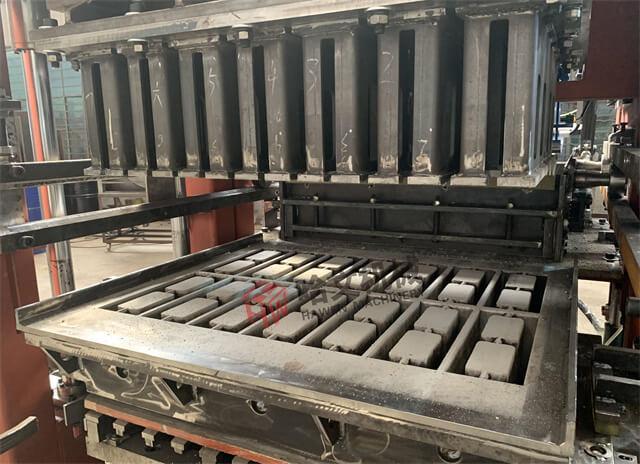
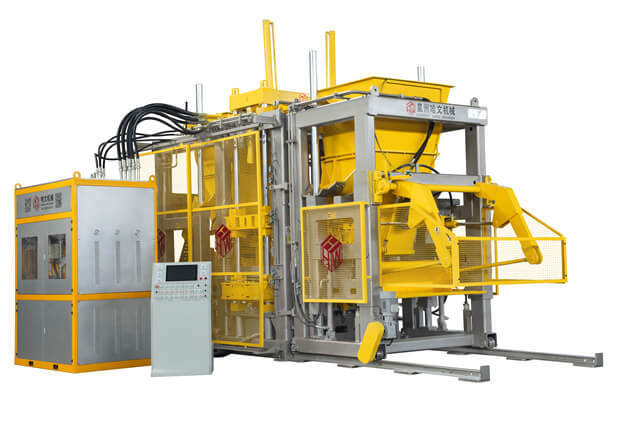
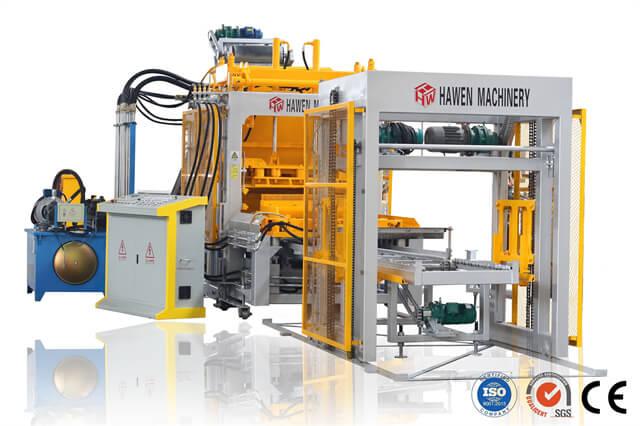
Hawen Machinery's four-shaft vibration-box design places eccentric weights outside the housing, a layout intended to reduce internal resistance and support uniform compaction. Its effect should be validated on the chosen grid profile and mix. If the outer ribs consistently differ from the center, examine feed distribution, pallet condition, mold alignment, and settings before changing several variables together. The machine's control data can support a repeatable trial, but sample inspection remains necessary to confirm the open-cell geometry.
The mold drawing should dimension openings, ribs, bearing areas, and edge units.
5. Protect the green grid during transfer
The open spaces reduce the amount of concrete in a unit and create exposed rib intersections that can be damaged if a pallet is uneven or a transfer point applies impact. Confirm pallet flatness and support under the rib network. Check lift points, acceleration, transfer clearances, and stack orientation. A green unit that looks sound on the press pallet may crack when it crosses a gap or is picked up from an unsupported edge, so inspect each handoff in the route to curing.
When damage repeats at the same location, map the fracture back to the product orientation and transfer station. A pattern at one corner may signal a support or handling issue; defects across many units may point to mold release, mix condition, or compaction. Keep a safe rejection route so a compromised unit does not continue through cubing and packing. Any change to a support plate or handling arrangement should preserve the geometry and should be checked against the approved product details.
6. Cure and inspect without confusing product classes
Cure the units under the plant's approved method and product requirements. Separate grid pavers from solid or conventional interlocking pavers in production records, because the geometry, mass, intended fill, and evaluation criteria differ. Record material batch, mold identity, machine settings, pallet position, and curing conditions for representative samples. Inspect overall dimensions, rib continuity, cell openings, edge features, and any criteria required by the applicable standard. Use a consistent orientation and measuring method so results can be compared across production days.
A grid paver's open cells are not proof that a pavement will infiltrate water at a particular rate; the installed system also depends on fill, base, subbase, and site design. Avoid promising field drainage or vegetation performance from a factory sample alone. For production troubleshooting, identify whether a defect is in the concrete unit, the mold, the handling process, or the project-level pavement design. Keep those questions separate so a factory adjustment does not compensate for an installation requirement.
7. Match the block machine, mold, and line to the approved grid
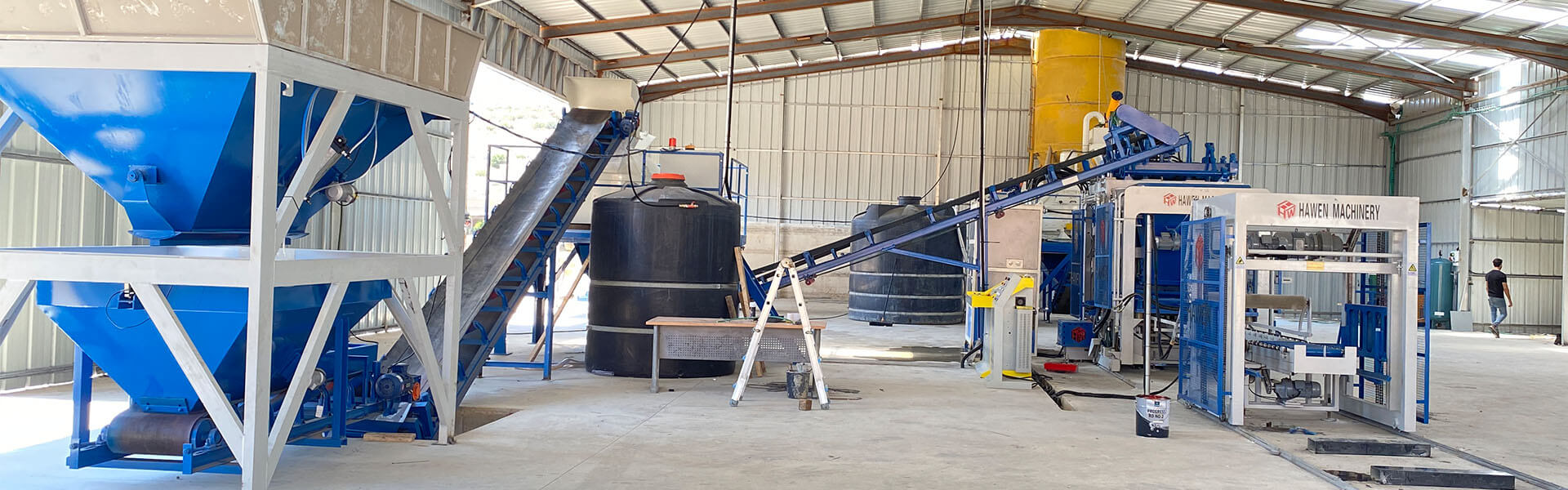
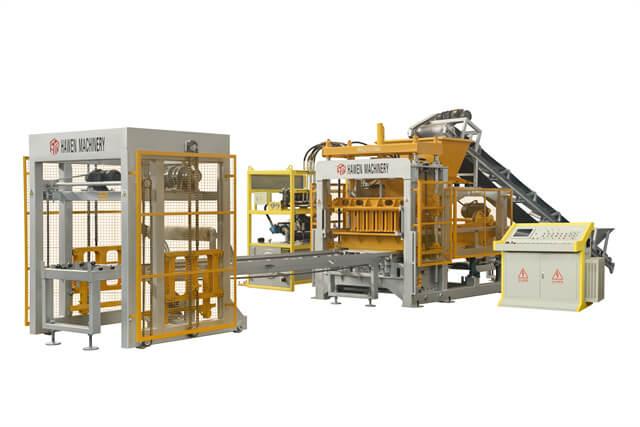
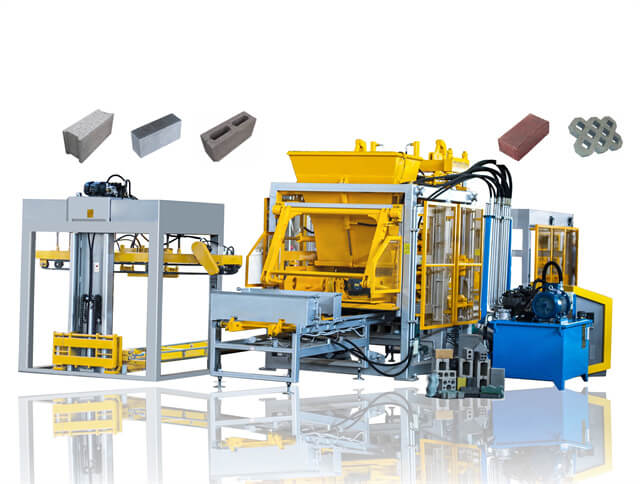
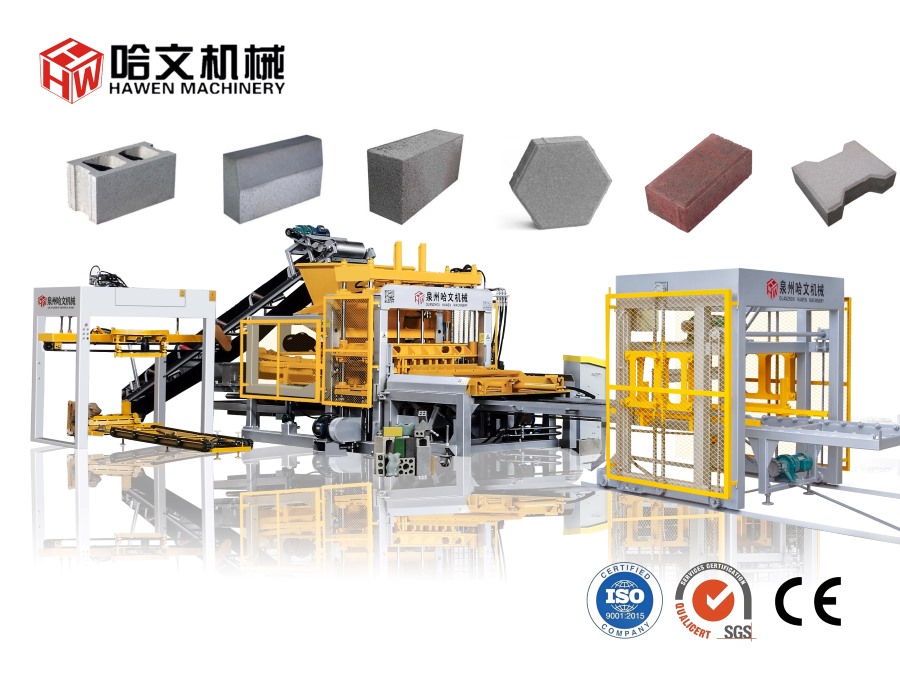
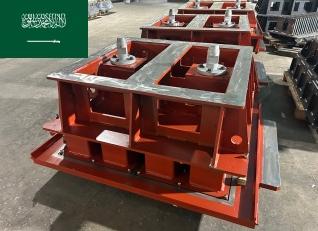
Hawen molds are designed for compatibility with leading platforms including Masa, Hess, Zenith, Poyatos, Besser, Tiger, Columbia, Quadra, and Omag. Heat treatment supports wear resistance, with hardness tested at HRC 59-61. Review the cavity drawing, tamper-head layout, pallet interface, and first-off trial as a set. A broader project can also include an automatic pallet provider, offline palletizing system, or the block machine catalog. These are planning options, not a substitute for product-specific validation.
Action checklist
Confirm whether the product is an open-grid unit or a permeable interlocking paver system.
Approve a drawing with cell dimensions, rib sections, edge details, pallet layout, and exposed-face orientation.
Trial mold filling and inspect rib continuity across cavities and pallet positions.
Check stripping, pallet support, transfer impacts, curing records, and rejection handling.
Use the destination market's applicable product standard and agreed acceptance method.
Keep pavement drainage and vegetation claims tied to the full designed and installed system.
Concrete grass pavers succeed when open space is treated as an engineered feature and the surrounding ribs are made consistently. A clear profile drawing, a mold built for that pattern, careful feeding, stable demolding, and a traceable inspection plan make the product repeatable. The result is more than a different block shape: it is a carefully manufactured grid that can support a larger landscape or paving design when the complete system is properly specified.
FAQ
What is a concrete grass paver? It is an open-grid concrete paving unit whose cells may be filled with soil and turf or with aggregate, as specified for the project.
Is a grass paver the same as a permeable interlocking paver? No. Grid units have larger open cells; permeable interlocking systems typically manage water through joints and a designed aggregate base. Follow the project specification.
Can an automatic block machine make grass pavers? A suitable machine may form them with a product-specific mold and compatible pallet and tamper arrangement; confirm capability with a controlled trial.
Why do the ribs in a grass paver break? Possible causes include incomplete filling, unsuitable green strength, mold release, pallet support, or impact during transfer. Track where the damage first appears.
What should a grass paver mold drawing include? Show overall dimensions, cell openings, rib widths and heights, edge details, orientation, cavity layout, and pallet interface.
Does an open-cell block guarantee drainage performance? No. Drainage depends on the full pavement design, including fill, base, subbase, site soils, and maintenance.
Which standard applies to concrete grid paving units? Requirements vary by destination. CMHA references ASTM C1319 for concrete grid paving units in its guidance; verify the current governing specification for the project.





 Tel: +86-13905968794
 Email: export@hwmachines.com
 MP/WhatsApp: +86-13905968794
 Manufacturer Address:Nanan,Quanzhou City,Fujian Province,China