How to Control Drying Shrinkage in Concrete Masonry Units Before Delivery is a practical topic for buyers and plant managers who want a more stable block making machine workflow. The goal is not only to explain the issue, but to give a clear method that supports better output, cleaner operation, and stronger customer confidence.
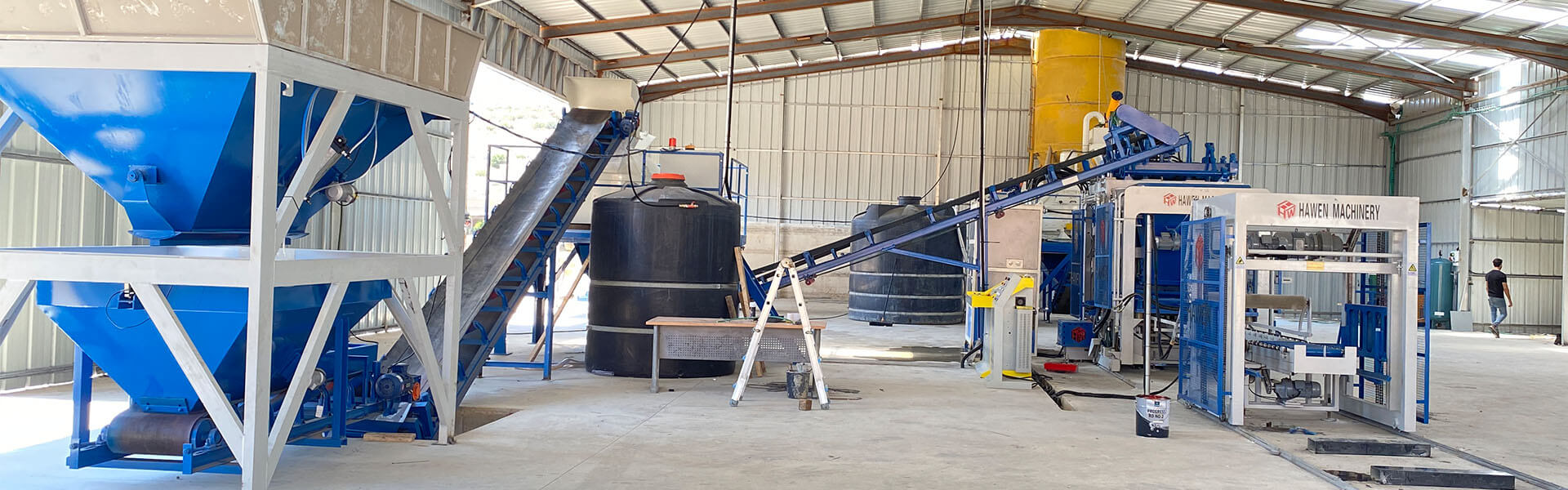
In a professional concrete products factory, the block machine, material system, mold, pallet circulation, control system, and operator routine must work as one process. A good solution therefore looks at the whole line before changing one visible setting.
Shrinkage control begins with traceable constituents, repeatable forming, protected hydration, and a defined release condition.
Separate drying shrinkage from other causes of cracking
Drying shrinkage is a reduction in masonry-unit length as moisture leaves the concrete. It is different from a fresh crack made during demoulding, a thermal crack caused by rapid temperature change, an impact fracture, or movement in a completed wall. Begin by identifying when the crack appeared and whether the unit itself shortened or was physically damaged.
Examine crack location, orientation, depth, and distribution. Random fractures on one carrier may indicate handling. Repeated web cracks from the same cavity may point toward filling or tooling. Widespread wall cracking can also involve restraint, control-joint layout, foundation movement, mortar, temperature, and workmanship. The block machine is only one part of a larger diagnosis.
Preserve failed pieces and compare them with unaffected companions from the same manufacturing batch. Record manufacture time, recipe, granular source, support board, cavity, hydration chamber, storage position, and dispatch age. A useful investigation describes the movement and its timeline before proposing a richer recipe or longer cycle as an automatic cure.
Understand what the ASTM C426 result represents
ASTM C426 provides a standardized accelerated procedure for evaluating linear drying shrinkage of concrete masonry units and related concrete products. ASTM describes the result as a characteristic used when determining crack-control provisions. Apply the current specified edition through a qualified laboratory and pair it with the governing product specification for the destination market.
A CMHA testing note explains that the method addresses length change associated with moisture loss under defined conditioning. It does not isolate every effect that can occur in service. Carbonation and temperature movement can also change masonry dimensions, while restraint and construction details influence whether movement becomes a visible wall crack.
Treat the reported value as potential movement under the standardized sequence rather than a promise that every wall will move by that exact amount. Avoid copying a limit from another unit category or country. The contract, local code, product classification, laboratory method, and structural crack-control design must agree before the brick machine recipe is judged.
Level support and orderly movement help separate true volume change from cracks created by early handling or board distortion.
Audit specimen selection, gauge points, and conditioning
Select representative pieces from an identified lot rather than the driest, heaviest, or best-looking examples. Preserve recipe, source, chamber, and manufacturing-date identity. If several shapes use the same mix and process, confirm with the specification and testing professional whether one program can represent them; geometry should never be assumed irrelevant without technical review.
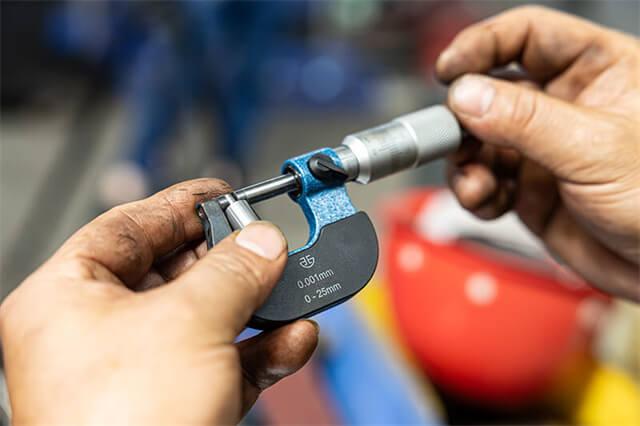
Length measurement is sensitive to gauge-point attachment, reference length, comparator stability, temperature correction, and handling. The laboratory should follow the method for saturation, measurement, drying, equilibrium assessment, and calculation. A factory ruler, one-time caliper reading, or uncontrolled oven cycle cannot establish standardized drying shrinkage.
Request the original observations as well as the final percentage. Review specimen identity, initial and final comparator readings, conditioning log, equipment checks, and any damaged gauge point. If replicate pieces disagree widely, investigate procedure and manufacturing variation before changing the brick making machine. A result must be reconstructable to support a costly decision.
Control volume-changing constituents and effective water
Aggregate occupies most of the unit volume and restrains paste movement. Review mineral type, absorption, grading, cleanliness, and source consistency. Some aggregates change volume more with wetting and drying than others. A source substitution that passes a basic grading check may still alter shrinkage behavior, unit mass, water demand, and compacted structure.
Control cementitious content by validated performance rather than the belief that more cement always means a better block. Additional paste can increase movement potential when the complete mixture is not rebalanced. Check cement type, supplementary cementitious material, pigment, admixture, and recycled fraction together. Qualify any source change with trials and required testing before full production.
Calculate effective batch water from measured stockpile moisture and every liquid addition. Unrecorded corrections create changing paste consistency and changing drying history. Use the aggregate batching system for traceable masses and protect powders in the cement silo. A screen recipe alone does not prove what entered the mixer.
Finished-unit identification connects storage age and dispatch condition with the material and forming records for each lot.
Mix, fill, and compact without creating weak zones
Use a defined charging order, mixing time, and discharge condition. Inspect the twin-shaft mixer or planetary mixer for blade wear, sidewall buildup, residue, and overloaded batches. Dry pockets and coarse-particle segregation create a nonuniform internal skeleton, so adjacent areas can respond differently as the piece dries.
Observe cavity filling across the complete tooling box. Compare green height and mass by position. Bridging, feeder acceleration, worn scrapers, or board deflection can create local density differences that later appear as cracks rather than smooth dimensional contraction. Correct distribution before increasing pressure, oscillation time, or cement content.
Hawen Machinery uses a four-shaft vibration box with eccentric blocks positioned outside the housing. Reduced resistance within the mechanism supports even compaction and efficient cement use when feed, liquid content, and board support are stable. The design improves repeatability, but vibration cannot correct an unsuitable aggregate or a batch that received the wrong effective water.
Inspect tooling, demoulding, and early support
Measure tooling wear, tamper alignment, guide clearance, stop position, and release condition. A fresh fracture created by drag or uneven lifting can open during storage and be mistaken for drying movement. Map defects by cavity and shift. If the pattern follows a tooling position, resolve the mechanical cause before redesigning the mixture.
Hawen manufactures molds compatible with Masa, Hess, Zenith, Poyatos, Besser, Tiger, Columbia, Quadra, Omag, and other established platforms. Tooling follows the required machine interface and product geometry, receives heat treatment for wear resistance, and is hardness-checked around HRC59-61. Stable geometry makes dimensional trends easier to interpret.
Use flat, sufficiently rigid support through the pallet provider and inspect reused GMT boards for distortion or contamination. Smooth transfer matters while the unit has low green strength. A board-induced crack is an immediate mechanical event, whereas standardized drying shrinkage is a measured length change under controlled conditioning.
Control hydration, storage age, and release condition
Protect new masonry from abrupt moisture loss, direct drafts, uneven heating, and dripping condensation. Track chamber position instead of assuming every carrier received the same environment. Doors, steam outlets, heaters, roofs, and outside rows can create local histories. Early drying can reduce hydration quality while also changing the starting condition for later movement.
Define storage and release rules by evidence. CMHA guidance notes that additional time between manufacture and installation can reduce the movement still available in service. The correct hold period depends on materials, hydration route, climate, order schedule, and specification. Do not promise a universal number that ignores the actual product and destination.
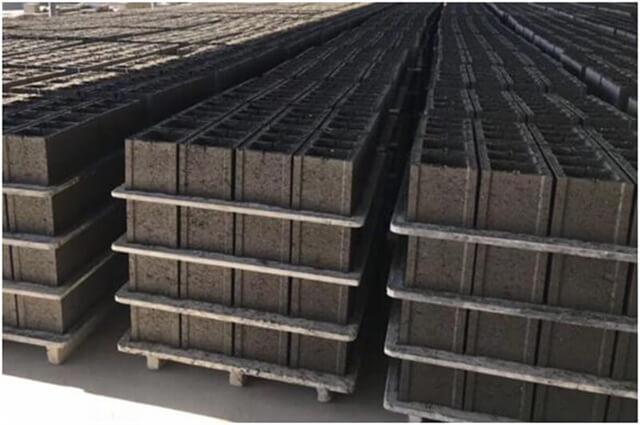
Measure moisture or another approved release indicator consistently and keep lots separated by manufacture date. Use the offline palletizing system to preserve identity through cubing and dispatch. Protect finished cubes from rain rewetting followed by rapid drying, because an uncontrolled cycle can defeat an otherwise disciplined storage plan.
Build a Hawen shrinkage-control plan
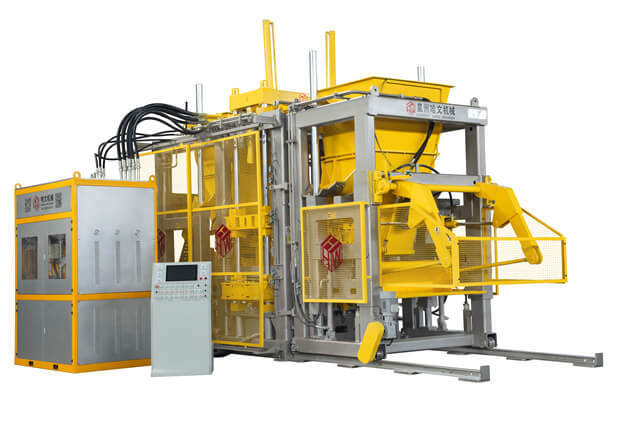
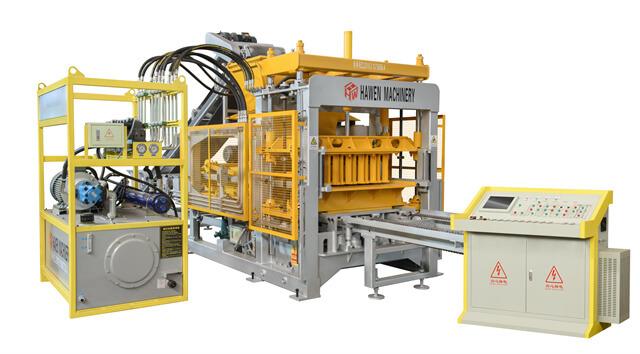
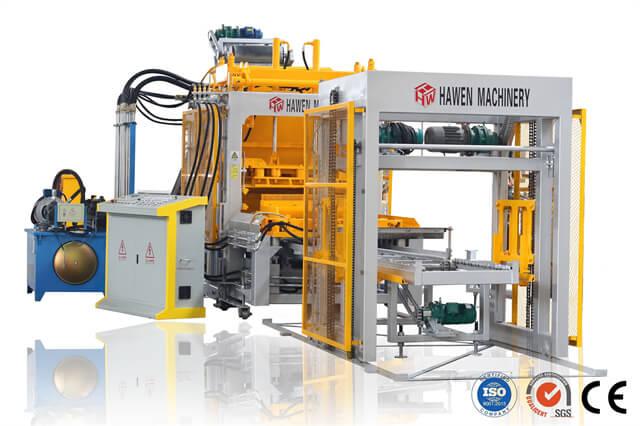
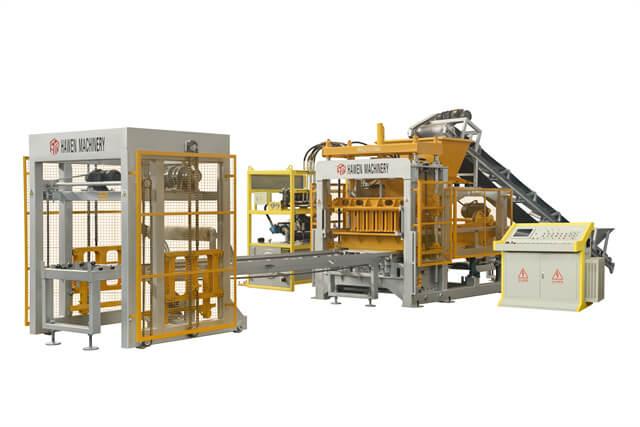
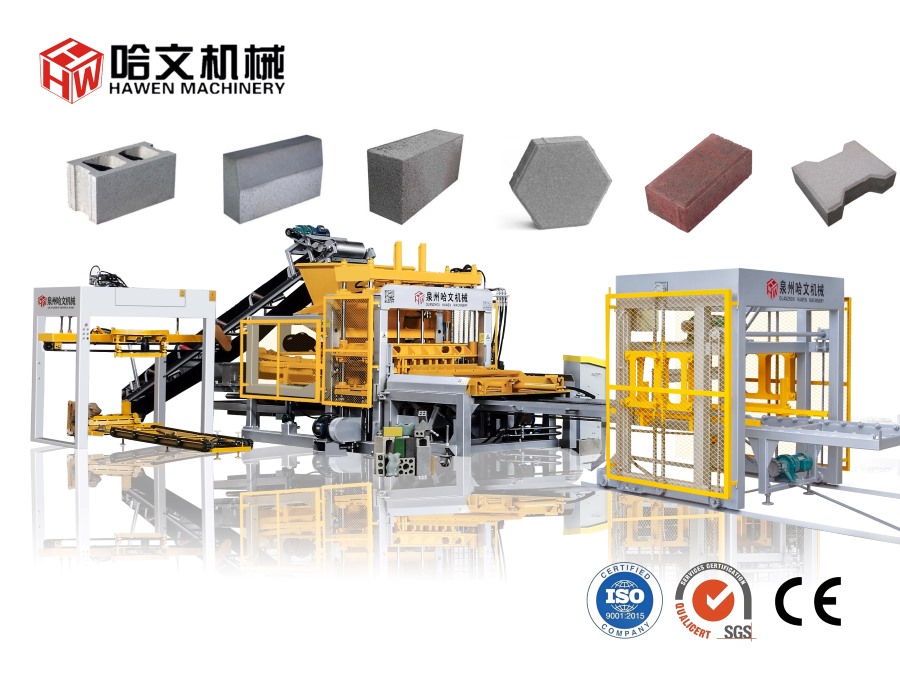
Hawen reviews weighing, mixing, feeding, compaction, board circulation, chamber transfer, and finished handling as a connected process. A QT10 block making machine or QT8 brick making machine can repeat a validated method only when source approval and measurement discipline remain stable.
The Hawen control platform combines a SIEMENS S7-200 PLC, an operator-friendly touch panel, and remote monitoring. It displays live operating status, retains repeatable sequence settings, and lets Hawen engineers assist with remote parameter optimization. Pair those records with laboratory shrinkage data, chamber history, storage age, and dimensional inspections rather than treating the PLC as a laboratory instrument.
When a trend moves unfavorably, hold the affected lot and run a controlled comparison. Keep a baseline, change one supported variable, produce consecutive trial carriers, and repeat the specified assessment. Release the revised process only after laboratory evidence, dimensions, appearance, strength, and factory consistency agree. This turns shrinkage control from a complaint response into a managed manufacturing property.
Action checklist
Identify whether the crack reflects drying movement, fresh damage, temperature change, restraint, or installation conditions.
Confirm the governing product specification and current ASTM C426 procedure with a qualified laboratory.
Trace specimens to constituents, recipe, cavity, support board, chamber position, storage age, and dispatch lot.
Control aggregate source, paste volume, effective water, mixing, filling, compaction, and early handling.
Separate mechanical cracks from measured length change before altering the recipe.
Validate one controlled correction and repeat the required testing before release.
Drying shrinkage is not controlled by hiding a crack or adding one more production setting. It is controlled when the factory understands how constituent selection, effective water, internal structure, hydration, storage, and release condition influence dimensional movement. A traceable block machine line makes that knowledge repeatable. The result is larger than a compliant test report: it is masonry that arrives with a known history, supports responsible crack-control design, and protects the trust linking manufacturer, builder, designer, and owner.
FAQ
Is every crack in a concrete block caused by drying shrinkage? No. Demoulding damage, board deflection, thermal movement, handling, wall restraint, foundations, mortar, and workmanship can produce different crack patterns.
Can a factory measure ASTM C426 shrinkage with a caliper? No. The standardized procedure requires controlled specimen preparation, gauge points, comparator measurements, conditioning, correction, and calculation.
Does a higher cement content always reduce shrinkage? No. Additional paste can increase movement potential unless the complete mixture and performance are revalidated.
Why does aggregate source matter? Mineralogy, absorption, grading, stiffness, cleanliness, and moisture-related volume change can alter how the paste is restrained as the unit dries.
Should wet units be shipped quickly to keep them from cracking? No. Shipping condition should follow the specification and a validated release plan; wetter units may retain more movement for later service.
Can machine settings replace laboratory shrinkage testing? No. Stable settings support repeatable manufacture, while a qualified laboratory measures the specified shrinkage property.
How can Hawen help control the problem? Hawen can connect batching, mixing, filling, vibration, tooling, pallet movement, PLC records, and handling data with the plant's laboratory program.





 Tel: +86-13905968794
 Email: export@hwmachines.com
 MP/WhatsApp: +86-13905968794
 Manufacturer Address:Nanan,Quanzhou City,Fujian Province,China