How Aggregate Stockpile Management Affects Concrete Block Quality
Table of Contents
From the aggregate yard to the mould
A block plant can weigh every batch accurately and still feed inconsistent material into its mixer. The reason may be upstream: the material collected by the loader is not always the same material represented by the approved aggregate sample. Storage, handling, and bin replenishment can change what reaches production.
Aggregate stockpile management addresses that gap. The objective is to preserve the identity and condition of each material from delivery through batching. For dry-cast blocks and pavers, a useful yard review follows the complete route: delivery vehicle, storage bay, loader bucket, receiving hopper, weighing system, and mixer.
This article focuses on practical stockyard organization and acceptance checks. It complements mix-design and moisture-control work but does not prescribe a universal grading curve, stockpile dimension, or water setting. Those decisions depend on local materials, the product, equipment, and the plant's validated recipe.
Coarse aggregate segregation and stockpile shape
Segregation means that particles separate by size so that material taken from one part of a pile differs from material taken elsewhere. Coarse aggregate is particularly relevant: repeated handling and uncontrolled piling can undermine an initially acceptable size distribution. Damp fine aggregate generally behaves differently, so do not assume identical segregation behavior for every material.
Keep designated aggregate fractions separate and batch them according to the validated recipe. At the delivery stage, review how the material is deposited and whether particles visibly accumulate differently across the stockpile. Reduce unnecessary handling and follow a stockpiling method suitable for the aggregate and handling equipment.
Sample the material actually being consumed, not only the most convenient point beside the entrance. If changes in block appearance coincide with the loader reaching a different part of a pile, compare grading and moisture records before changing vibration settings. The timing provides a lead, but it does not by itself establish causation.
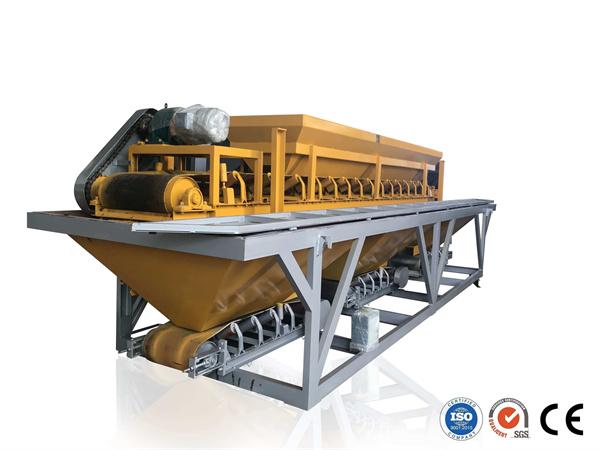
Separate receiving bins support defined aggregate fractions; the storage yard must preserve that separation.
Storage floors, bay dividers, and contaminated material
A storage bay needs a clean, durable base appropriate for the loading operation, with drainage that prevents standing water from mixing with usable stock. Keep soil, demolition debris, and unrelated material away from production aggregates. A loader collecting the last material from a dirty floor can introduce a different input from the material originally delivered.
Provide separation that matches the actual delivery and loader movements. A painted line may identify a bay, but it will not contain material that spills over during unloading. Check divider height and loading access against the operating method, and keep the bay labels visible when the stock is high.
Do not quietly blend visibly contaminated material into a larger pile. Identify and isolate the affected area, document the event, and decide whether testing or rejection is required. Record any approved disposition so that the next shift does not unknowingly return held material to production.
Rain exposure and drainage at the loading face
Rain can create different moisture conditions within one storage area. A surface sample taken after rain may not represent the material subsequently collected from a deeper part of the pile. Roofs and covers can reduce exposure, but their value depends on drainage, unloading practice, and whether fresh deliveries are protected as well.
Use representative moisture measurements and the plant's approved correction method when batching. When moisture is expressed on an oven-dry mass basis, wet aggregate mass includes both the dry aggregate and its measured water. Available mixing water also requires attention to aggregate absorption; a measured total moisture percentage is not automatically all free water.
From a yard-management perspective, the important decision is where and when to sample. Reassess after a delivery, significant weather change, or movement to a different working face when these events can alter the material being used. Document the sampling location and link the result to the actual production period.
Loader movements and feed-bin replenishment
The loader operator connects the stockyard to the recipe. Use clear bay and bin identification so that the correct material reaches the correct hopper. Include a check when an operator changes shift or a bay is reassigned; a familiar location can otherwise be mistaken for a familiar material.
Review the loader bucket condition after work outside the aggregate area. Material left from cleaning, earthmoving, or waste handling can enter production with the next load. A dedicated machine or documented cleaning procedure may be appropriate, depending on the site's workflow.
Bin replenishment should be planned before the production line runs short. Rushed loading makes it harder to maintain material identification and observe abnormal feed. However, extra stock should remain within the equipment's permitted loading limits. Overflow is not a substitute for a replenishment plan.
During a process review, record when each bin was replenished and from which bay. If a quality change begins shortly afterward, the record helps identify the relevant incoming material. It does not eliminate other possible causes such as feeder behavior, weighing problems, or mixer condition.
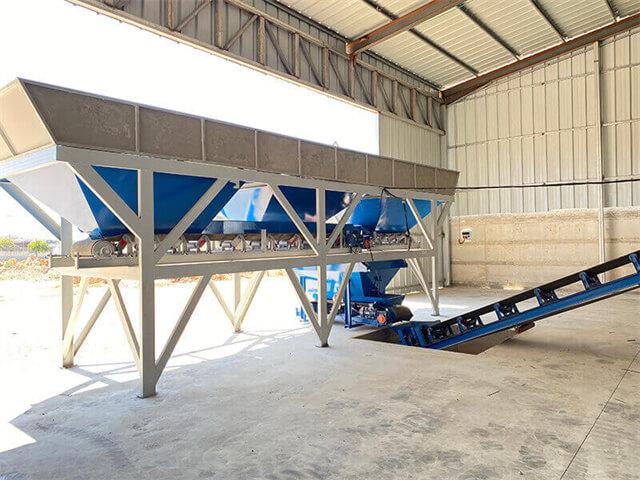
Bin identification and planned replenishment connect the loader routine with the batch recipe.
What accurate aggregate weighing can and cannot correct
A concrete aggregate batching machine controls the quantity delivered according to its weighing arrangement. It cannot identify every unwanted particle or automatically restore a grading distribution that changed in the yard. Accurate measurement and consistent material supply are separate requirements.
When a recipe calls for a defined aggregate fraction, the scale measures what is present in the bin. It does not establish that the bin contains the approved fraction. Similarly, a stable displayed mass does not prove that the dry aggregate mass is unchanged if moisture conditions have changed.
Investigate the entire material path when product mass or surface appearance varies. Check bin identity, material condition, moisture correction, weighing performance, and mixing before selecting an adjustment. This sequence prevents repeated recipe changes from concealing a stockyard problem.
Stockyard observations and the next quality check
Use this screening table during a routine production walk. The observations are reasons to inspect further, not automatic diagnoses. Where a material change is suspected, compare representative samples with the approved material specification and link the results to the affected batch records.
| Yard observation | Record or check | Decision supported |
|---|
| Material spills between bays | Identity and extent of affected stock | Whether to isolate and reassess the material |
| Quality changes after rain | Representative moisture and batch corrections | Whether water control needs adjustment |
| Quality changes after replenishment | Bay, delivery, grading, and bin identity | Which material transition to investigate |
| Loader collects material from a dirty floor | Condition of the remaining stock and bucket | Whether cleanup or material rejection is needed |
Delivery acceptance and material traceability
At delivery, confirm the material designation and source against the order. Keep the delivery record with the receiving bay and date. Where testing is required, use the applicable sampling and test procedures rather than accepting a single photograph as evidence of grading or cleanliness.
An effective record does not need to be complicated. A material code, supplier, delivery identifier, bay location, acceptance status, and associated test results can establish a useful chain of information. Specify who can release held material and how that decision is communicated to loader and batching operators.
If a new delivery must share a bay with existing material, document that transition. Traceability becomes approximate once materials are mixed, so the production record should not claim an exact delivery identity that no longer exists. Plan storage space to support the level of traceability the business actually needs.
A stockyard layout review before buying a block line
When reviewing a plant proposal, ask the supplier to show delivery access, loader turning space, aggregate bays, and the route to the batching hoppers. A machine layout alone does not describe how materials will reach the line during a busy shift.
Compare storage provision with delivery frequency, the number of aggregate fractions, weather exposure, and space for material awaiting acceptance. Avoid assigning a universal storage area based only on the block machine model. A plant with frequent reliable deliveries has different storage needs from one receiving occasional bulk deliveries.
During acceptance, observe an actual replenishment sequence with the intended loader and materials. Check that operators can identify the bins, load without spillage, and access sampling points without entering hazardous equipment areas. Follow site traffic controls and equipment instructions throughout the review.
Include responsibilities in the handover: who inspects deliveries, who measures moisture, who updates batch corrections, and who reports a damaged divider or blocked drain. These operating arrangements make the physical layout useful after commissioning.
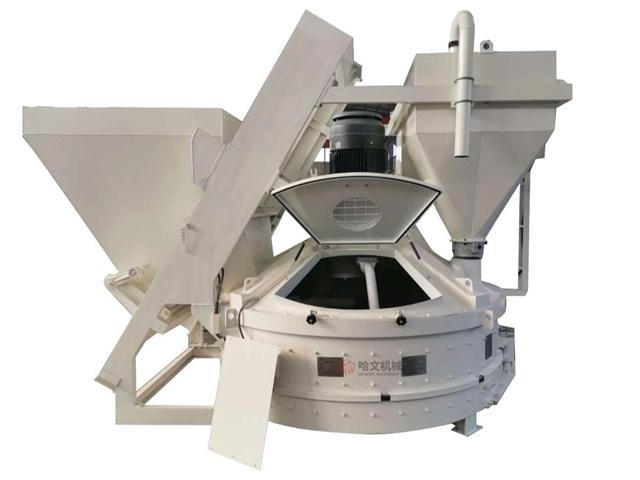
The mixer receives the result of upstream storage, loading, and weighing decisions.
A shift audit that links the yard to finished blocks
Choose one product and follow a manageable production period from loading to inspection. Record the aggregate bays used, loading times, moisture results, batch identifiers, machine settings, and curing references. Avoid combining several recipe changes into the same audit because the result becomes difficult to interpret.
Retain representative aggregate samples under the plant's sampling procedure and identify corresponding finished-product samples. Compare results using consistent test methods and comparable product ages. Green-product measurements can help reveal a process change, but they do not replace the required tests on cured products.
Review the timeline with the loader operator and batching operator together. An event that appears unexplained in the control room may correspond with a delivery, a bay change, or the removal of the last material from a pile. Record their observations as observations, then check them against the material and product data.
Select a specific corrective action, such as restoring a divider or revising bin identification, and repeat the comparison. Define success before reviewing results. Useful evidence could include fewer material identification errors or reduced measured variability, provided the measurement method and other operating conditions remain comparable. Do not claim a fixed productivity gain from a yard change without production evidence.
FAQ
Will a larger mixer solve stockpile inconsistency? Not by itself. The mixer combines the materials it receives. First establish whether the incoming aggregate matches the recipe and acceptance requirements.
Should all aggregate be stored under a roof? Evaluate climate, material sensitivity, drainage, and cost. Covered storage can help control exposure, but it does not replace material separation, sampling, or moisture corrections.
Can two aggregate sources share one bay? Only within an approved material-control arrangement. Review compatibility and testing requirements, and document the loss of source separation when materials are combined.
Does consistent block weight prove the yard is well controlled? No. Weight is one useful signal, but grading, contamination, moisture, dimensions, and required finished-product tests must also be considered.
Conclusion
Consistent block production starts with consistent material reaching the mixer. Storage separation, clean loading surfaces, representative sampling, and traceable replenishment help preserve the assumptions behind an approved recipe.
For a new plant, evaluate the stockyard and loader route alongside the batching equipment. For an operating plant, begin with one documented material-flow review and compare it with production records. Use the findings to select a specific improvement and verify its effect before making wider recipe or machine adjustments.





 Tel: +86-13905968794
 Email: export@hwmachines.com
 MP/WhatsApp: +86-13905968794
 Manufacturer Address:Nanan,Quanzhou City,Fujian Province,China