Why Do Concrete Blocks Crack After Production?
Cracks in concrete blocks, paving stones, and kerbstones are among the most common quality problems in block manufacturing plants. Although some cracks appear immediately after demoulding, others become visible only during curing, pallet stacking, transportation, or even at the construction site.
For block manufacturers, cracked products lead to higher rejection rates, customer complaints, additional production costs and damage to company reputation. Understanding why cracks occur is essential for maintaining stable product quality and improving factory profitability.
This guide explains the major causes of block cracking and provides practical solutions for factories operating automatic concrete block machines and complete block production lines.
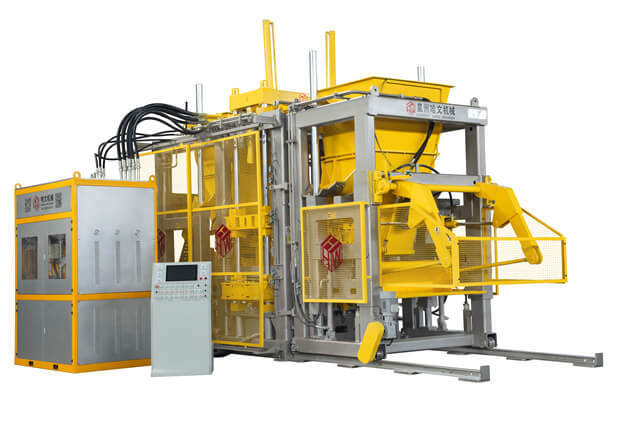
Understand the Cracking Problem First
Why block cracking matters
Cracked products reduce both appearance quality and structural performance. Even small surface cracks can negatively affect customer confidence, while severe cracks may significantly reduce compressive strength and service life.
For paving products, cracks may develop further under traffic loads. For hollow blocks, cracks can weaken wall integrity and increase water penetration.
Factory rejection rates often increase rapidly once cracking problems become frequent.
Identify when cracks appear
Before adjusting machine settings, determine when the cracks occur:
- Immediately after demoulding
- During pallet transportation
- During curing
- After stacking
- During loading and shipment
The timing of crack formation often indicates the root cause.
| Crack timing | Possible cause | First inspection point |
|---|
| Immediately after demoulding | Low moisture or excessive vibration | Mix design and vibration settings |
| During curing | Improper moisture loss | Curing conditions |
| During transportation | Insufficient early strength | Mix proportion and handling process |
Material and Production Causes
Raw Material Quality
Poor aggregate grading, excessive clay content and unstable cement quality are common causes of cracking.
Large particles may create internal stress concentrations, while excessive fines increase shrinkage.
A stable batching machine helps maintain consistent material proportions.
A reliable cement silo system ensures stable cement feeding during production.
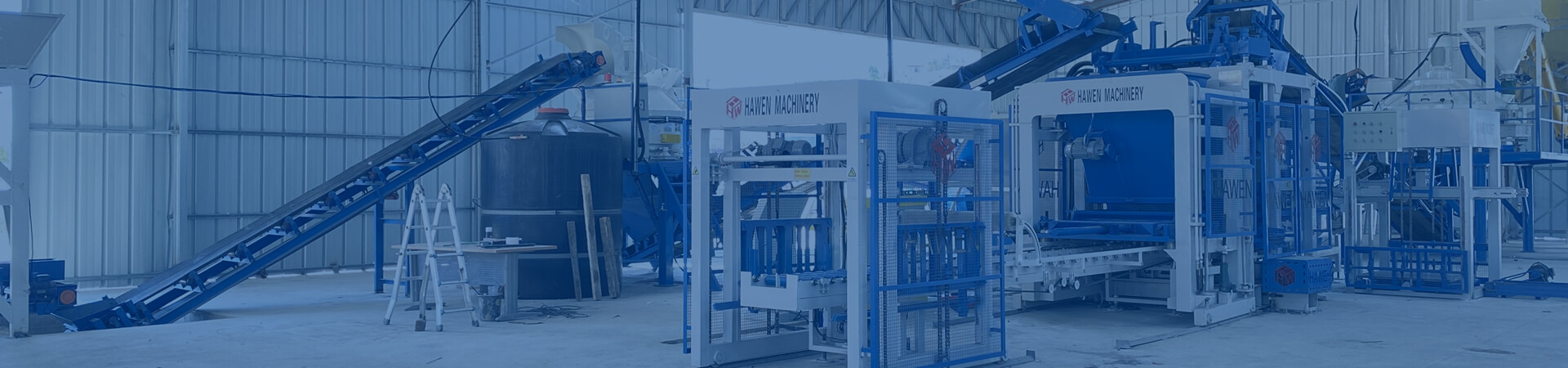
Mix Design and Moisture Control
Improper water content is one of the most frequent reasons for cracking.
A dry mix may not compact properly, resulting in weak bonding between particles.
A wet mix can cause excessive shrinkage during curing.
Suitable mixing equipment such as a planetary concrete mixer or a twin-shaft mixer helps improve mix uniformity.
Vibration and Compaction Problems
Improper vibration settings can create internal defects.
Insufficient vibration leaves excessive voids inside the product, while excessive vibration may cause segregation and cracking.
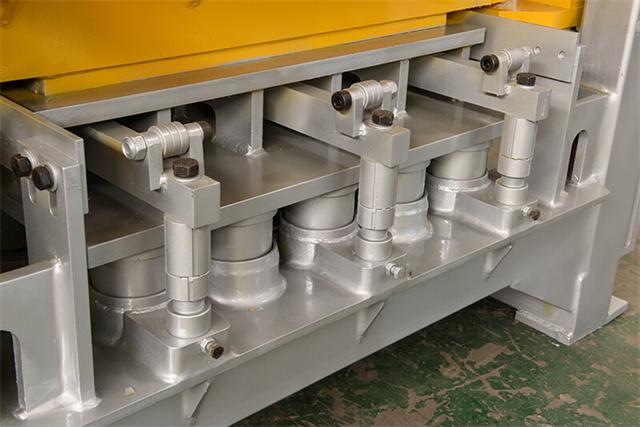
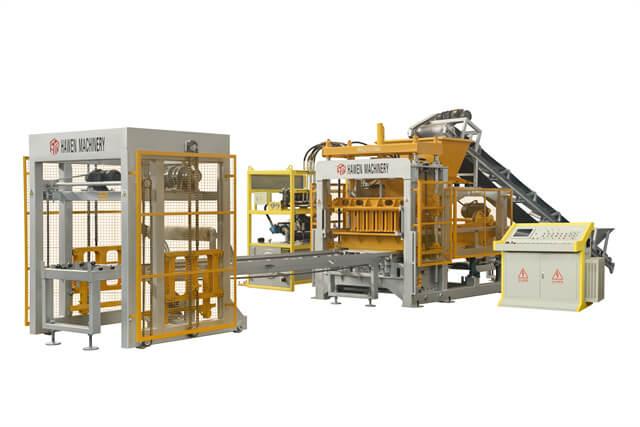
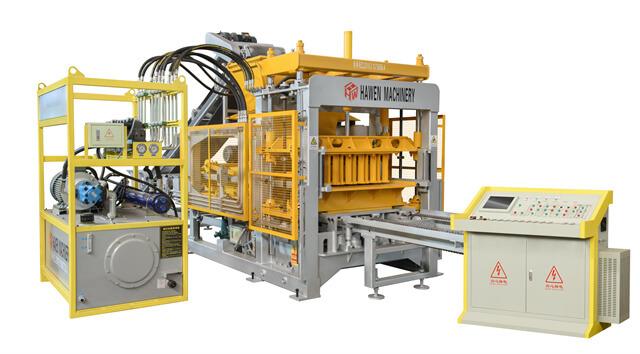
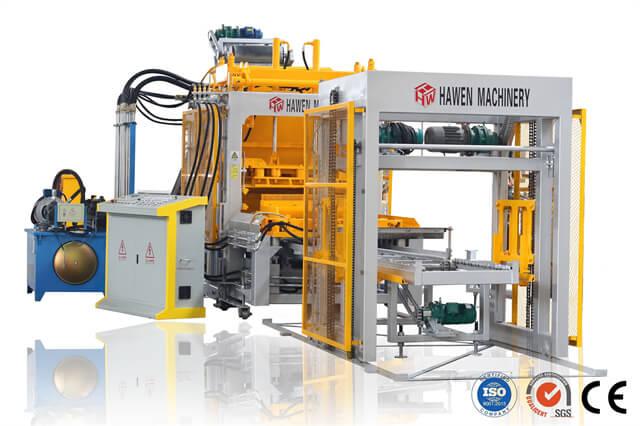
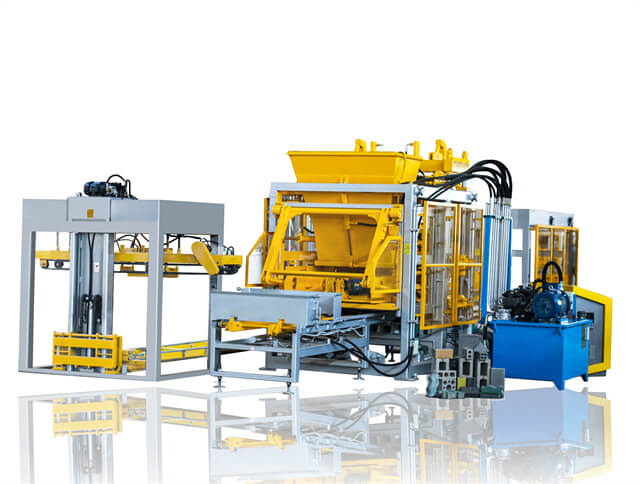
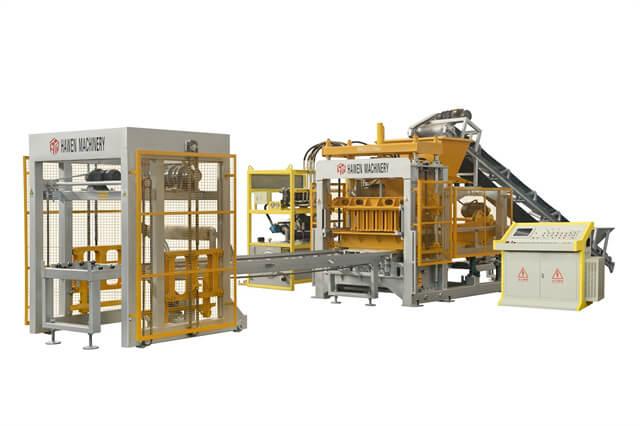
HAWEN block machines use a heavy-duty four-shaft vibration system that provides more uniform compaction and improves product strength.
Machine and Handling Factors
Mould and Demoulding Conditions
Worn mould liners, damaged tamper heads and poor alignment may create stress during demoulding.
Excessive demoulding speed can also damage green products.
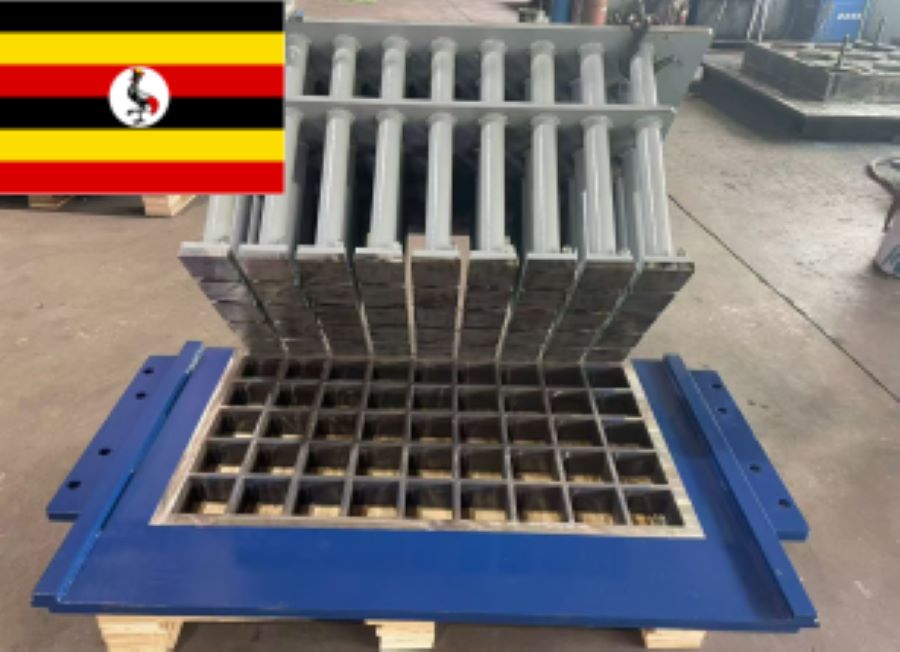
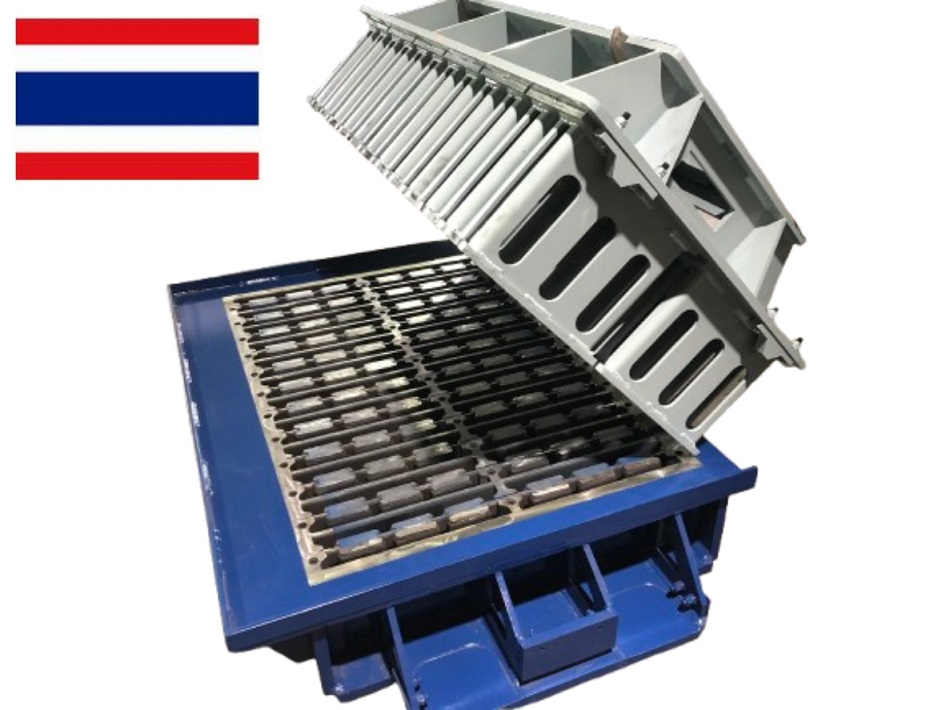
Regular inspection of concrete block moulds is essential for maintaining stable product quality.
HAWEN moulds undergo heat treatment and hardness inspection to improve wear resistance and dimensional accuracy.
Curing and Handling Issues
Improper curing conditions frequently lead to shrinkage cracks.
If products lose moisture too quickly, tensile stress develops and cracks may appear.
Fresh products should remain under suitable humidity and temperature conditions during the early curing period.
Premature transportation or stacking may also damage products that have not yet developed sufficient strength.
Factory Checklist for Crack Prevention
Factory Checklist
| Check Item | Inspection Point | Why It Matters |
|---|
| Aggregate quality | Particle grading and clay content | Reduces shrinkage and internal stress |
| Moisture control | Water dosage consistency | Improves compaction and curing performance |
| Vibration settings | Frequency and vibration time | Ensures proper density |
| Mould condition | Wear and alignment | Prevents demoulding damage |
| Curing environment | Humidity and temperature | Reduces shrinkage cracking |
Conclusion
Concrete block cracking is usually caused by a combination of material quality, moisture control, vibration settings, mould condition and curing practices.
Factories should analyze the defect systematically rather than adjusting multiple parameters simultaneously.
With proper process control and reliable equipment, manufacturers can significantly reduce rejection rates and improve customer satisfaction.
FAQ
Why do concrete blocks crack after demoulding?
The most common reasons are low moisture content, insufficient compaction and excessive demoulding stress.
Can excessive cement cause cracks?
Yes. Excessive cement content may increase drying shrinkage and create additional cracking risk.
Does pallet quality affect cracking?
Yes. Warped pallets may create uneven support and induce stress during transportation and curing.
Can vibration settings cause block cracks?
Improper vibration can cause both insufficient density and material segregation, leading to cracking problems.





 Tel: +86-13905968794
 Email: export@hwmachines.com
 MP/WhatsApp: +86-13905968794
 Manufacturer Address:Nanan,Quanzhou City,Fujian Province,China