In a vibration-compaction concrete block machine, the mould box and the tamper head work as one forming set. The mould box creates the side profile, cavity shape, and lower boundary of the product, while the tamper head enters from above and compresses the concrete inside each cavity. If the tamper head is worn, misaligned, loose, or poorly matched to the mould box, the machine may still complete each cycle, but block height, density, surface quality, and demoulding behavior can become unstable.
This topic is important because many factories first blame vibration, hydraulic pressure, or raw material when block height changes. Those factors are real, but the upper compression component should not be ignored. A well-designed concrete block mould normally includes a matching tamper head, and both parts must remain aligned during feeding, vibration, pressing, and demoulding. The tamper head is not just a flat plate; it is a precision forming component.
For buyers and plant managers, the key question is how the tamper head fits the product cavities after repeated cycles. A small clearance change can affect a hollow block web, a paver corner, or a kerbstone edge. A small height difference between tamper shoes can become a visible height difference across the pallet. This article explains why tamper head wear and clearance should be inspected as part of routine quality control.
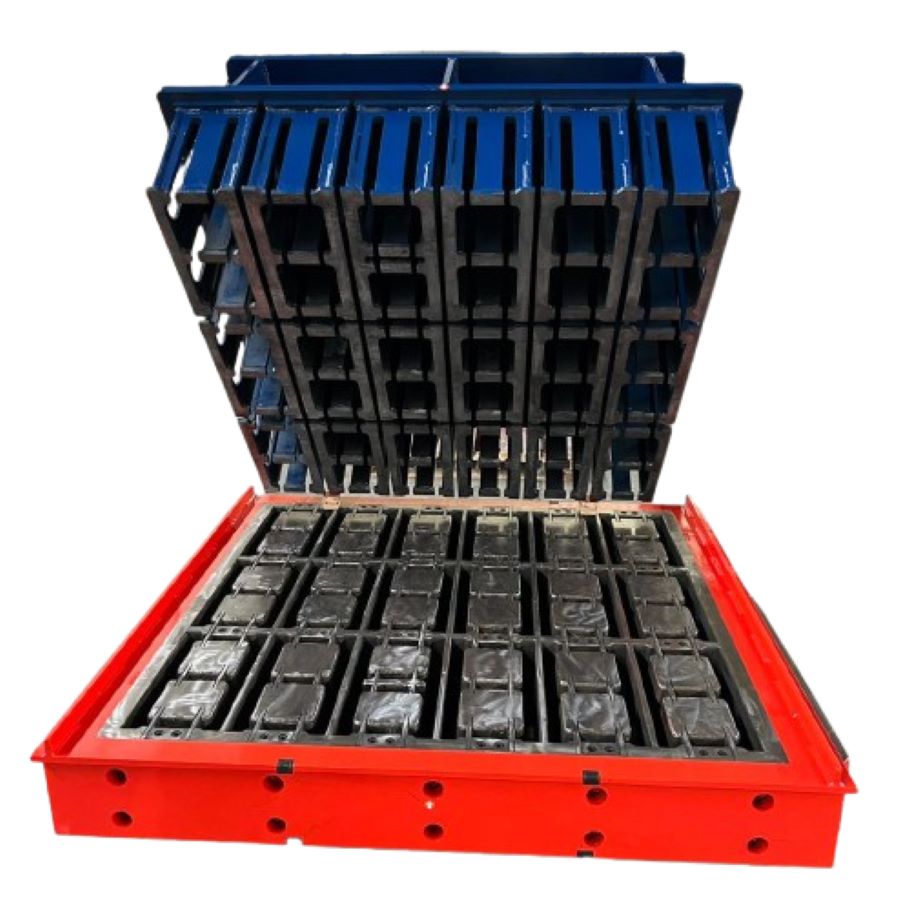
The tamper head compresses concrete from the top while vibration helps the mix settle and densify inside the mould. In hollow block production, the tamper shoes must match the web layout and avoid contacting the cores incorrectly. In paver production, the tamper head must form a flat or textured top surface while maintaining height consistency across many small units. In kerbstone production, it must apply stable pressure over a larger product area.
The tamper head also influences material distribution. During pressing, concrete moves slightly under the shoe surface. If the tamper head is level and matched to the cavity, pressure is distributed more evenly. If one shoe sits lower, tilts, or has a worn edge, it may over-compress one area and under-compress another. The defect may later appear as uneven block weight, different surface texture, or local edge weakness.
In automatic production, the tamper head repeats the same action thousands of times. The load includes hydraulic force, vibration, abrasive contact with concrete, and occasional impact from incorrect material buildup. This repeated action makes wear unavoidable. The purpose of maintenance is not to prevent all wear, but to keep wear within a range where product dimensions and density remain acceptable.
Why clearance and alignment matter
Clearance means the controlled space between the tamper head, mould box, cores, and cavity walls. It must be large enough to avoid mechanical collision, but small enough to guide compression accurately. Too little clearance can cause rubbing, metal contact, edge damage, and premature wear. Too much clearance can allow material to escape upward, create rough edges, or reduce shape definition.
Alignment is the relationship between the tamper head and the mould box. Even if both parts are individually well made, poor installation can create problems. If the head is slightly offset, some shoes may touch the cavity wall or compress off-center. If the press head guide system is loose, alignment may change during vibration. If the mould connection plate is not seated correctly, one side may close earlier than the other.
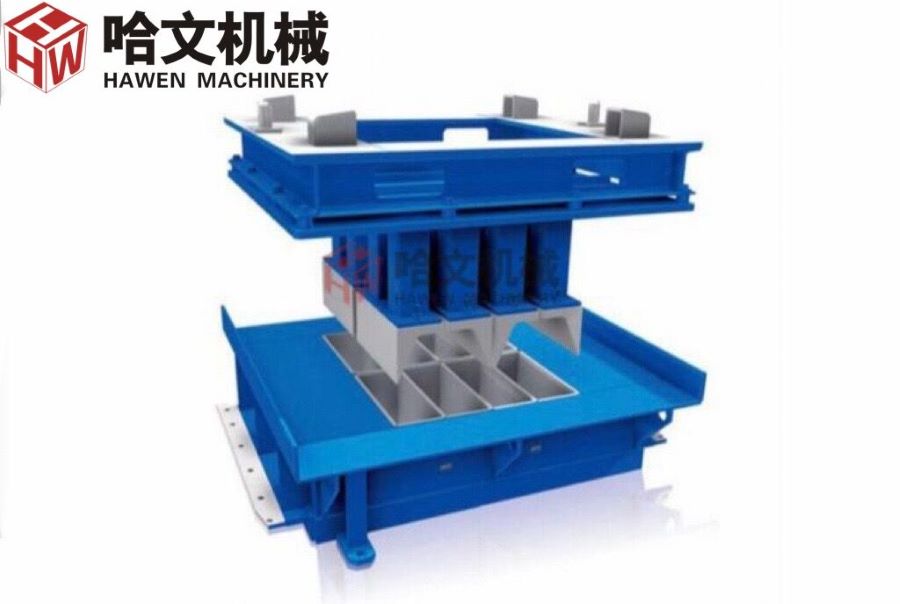
The article on choosing a concrete block mould explains that the mould box and matching tamper head should be considered together. In daily production, this principle continues after purchase. A replacement mould, repaired tamper head, or adjusted press head should be checked against the real machine interface before full production begins.
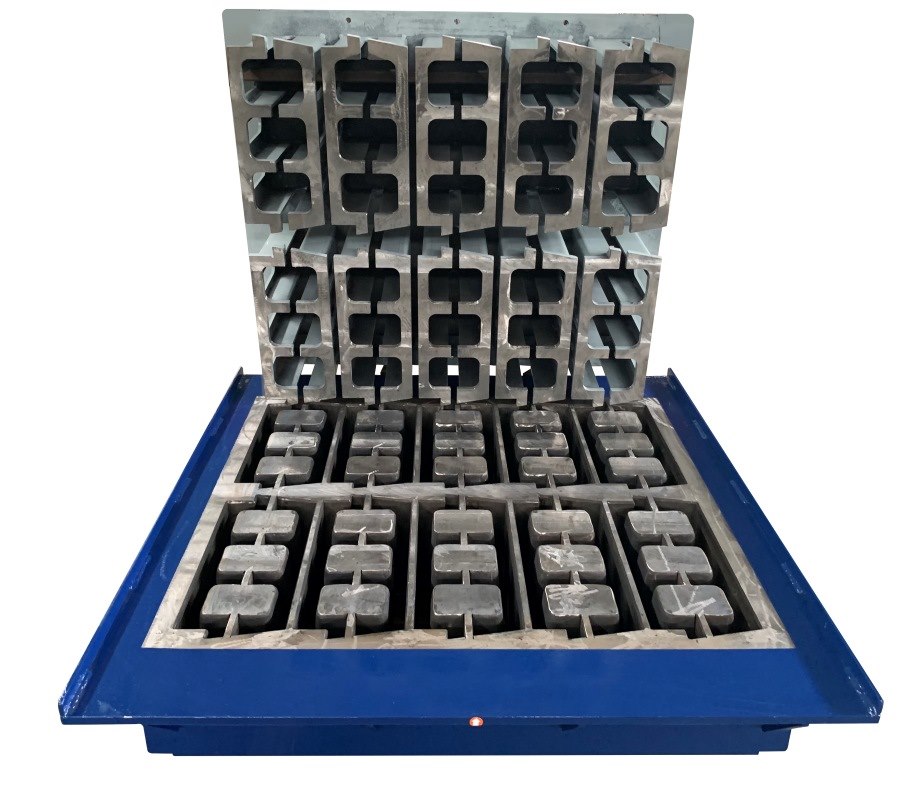
Wear patterns on tamper shoes and plates
Tamper shoes wear at edges, corners, bottom contact surfaces, bolt holes, and connection points. Abrasive aggregates and cement paste slowly round the edges. Hardened concrete buildup can create local impact. Loose bolts can allow movement that damages mounting holes. If the press head is not level, one side may wear faster than the other.
Wear is not always symmetrical. A factory may see one row of pavers with slightly different surface texture because the related tamper shoes are more worn. A hollow block may show weak webs because the shoe no longer presses the web zone evenly. A curb stone may have a high-low surface line because the tamper plate is not flat. These are often gradual defects, which makes them easy to miss until customers complain.
Another common issue is repaired parts that are not restored to the original geometry. Welding, grinding, or adding plates may seem economical, but if the repair changes shoe height, surface flatness, or edge shape, it can affect product dimensions. Repairs should be measured against drawings or a known reference, not only judged by appearance.
Effects on block height and density
Block height is controlled by several factors: mould height, pallet condition, feeding volume, vibration, hydraulic stroke, mix moisture, and tamper head condition. The tamper head affects height because it defines the upper compression plane. If one shoe is worn shorter or mounted higher, the corresponding block area may receive less compression. If one shoe is lower, it may over-compress that area and reduce height.
Density is affected in a similar way. Concrete inside each cavity should receive enough pressure and vibration energy to reduce voids. If the tamper head does not press evenly, the density distribution across the pallet becomes uneven. Some blocks may meet weight and strength expectations, while others from the same cycle may be lighter or weaker. This is especially important on high-output machines where many pieces are formed per cycle.
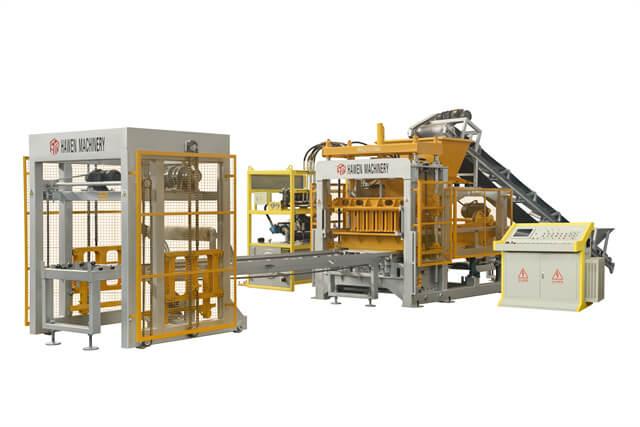
In a large automatic block making machine, small differences repeat quickly. A defect in one tamper shoe may create the same defective block position on every pallet. Mapping defects by cavity position is therefore useful. If the same cavity always produces a shorter, lighter, or rougher block, the mould and tamper head should be inspected before changing the whole recipe.
Demoulding, edge quality, and surface marks
Demoulding quality depends on the formed block releasing from the mould without tearing, sticking, or breaking. A worn tamper head can affect release indirectly. If the top surface is unevenly compacted, the block may not have enough green strength in some areas. If the shoe edge is damaged, it may create rough top edges that break during mould lifting. If clearance is too tight, metal contact may scrape or disturb the product.
Surface marks are another sign. Scratches, pressure lines, uneven texture, or repeated marks in the same position may come from the tamper shoe surface. In pavers, visible top-surface quality is commercially important. In hollow blocks, the top surface may be less decorative, but rough or weak edges still affect handling and laying. The top surface should therefore be inspected together with block height and weight.
Edge quality is also connected with filling. If the tamper head has too much clearance or rounded edges, concrete near the top may not be held and compressed cleanly. This can create feathered edges or loose material after demoulding. Operators may increase water or vibration to improve appearance, but the real cause may be mechanical wear in the mould and tamper head.
Comparison table for tamper head problems
| Observed problem | Possible tamper head cause | Production effect |
|---|
| Repeated height difference in one cavity position | One tamper shoe is worn, loose, high, low, or incorrectly repaired. | Blocks from the same pallet have inconsistent height and weight. |
| Top edge breakage after demoulding | Rounded shoe edges, poor clearance, or uneven compression near cavity walls. | More damaged blocks and lower saleable output. |
| Surface lines or repeated marks | Scratched, dented, welded, or contaminated tamper shoe surface. | Visible defects on pavers, slabs, or other top-surface products. |
| Metal rubbing noise during pressing | Tamper head offset, guide looseness, wrong installation, or clearance too tight. | Accelerated mould wear and risk of sudden damage. |
| Weak web or corner in hollow blocks | Shoe layout no longer matches core and cavity geometry accurately. | Lower green strength, corner loss, and unstable compressive strength. |
Buyer checkpoints for mould and tamper head
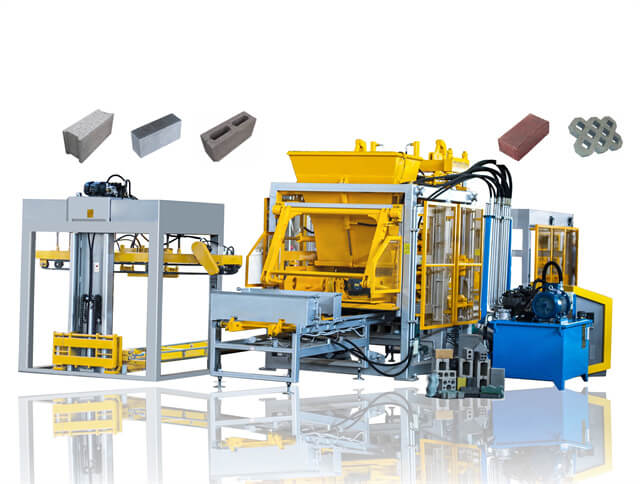
When buying a new mould or replacement tamper head, buyers should provide more than product size. The supplier needs the machine model, pallet size, mould mounting dimensions, product drawing, target height, cavity count, raw material, and product type. If the machine is a high-capacity model such as a QT15 automatic concrete paver block machine, the total forming area and tamper connection strength should also be reviewed.
Buyers should ask whether the quotation includes the mould box, tamper head, connection plate, wear parts, core components, and required bolts or spacers. They should also ask how the supplier checks tamper fit before shipment. Trial assembly photos, dimension records, or sample blocks can reduce the risk of installation problems. If a mould is produced for another brand of machine, interface measurement becomes even more important.
Material and heat treatment should be reviewed, but they are not the only decision points. A hard tamper shoe that is poorly aligned will still damage products. A durable mould box with a weak tamper head will still create top-surface and height problems. The forming set should be evaluated as a matched system, especially for interlocking pavers, hollow blocks, kerbstones, and special landscape products.
Inspection and maintenance routine
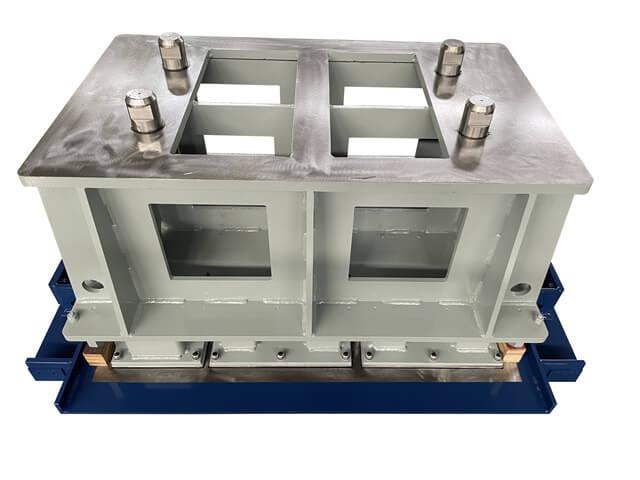
A practical routine should begin with cavity-position mapping. If one block position repeatedly shows height difference, weak edge, surface mark, or low weight, mark that position and compare it with the corresponding tamper shoe. This method is faster than adjusting the whole machine blindly. It also helps distinguish tamper wear from random mix or moisture variation.
Daily inspection should include visible wear, loose bolts, hardened concrete buildup, shoe flatness, side rubbing marks, and guide movement. Weekly or scheduled inspection should include measuring shoe height, checking clearance, and comparing critical dimensions with records. A simple straightedge and feeler gauge can reveal many problems before they create large rejection rates.
Cleaning should be controlled. Hardened concrete should be removed without damaging precision surfaces. Hammering the tamper head aggressively may bend small parts or create local dents. If material buildup happens repeatedly, the cause should be checked: moisture may be too high, feeding may be excessive, or clearance may be unsuitable. Maintenance should solve the cause, not only remove the symptom.
Replacement timing should be based on product quality and measured wear, not only on calendar time. Plants using abrasive aggregates, high daily output, or complex paver moulds may need more frequent inspection. Keeping spare tamper shoes, bolts, and alignment records helps reduce downtime when wear reaches the replacement limit.
FAQ
Can tamper head wear cause block height variation?
Yes. The tamper head forms the upper compression plane. If one shoe is worn, loose, or not level, the related cavity may produce blocks with different height, density, or surface texture.
How can I tell whether the problem is the tamper head or the mix?
If the same cavity position repeats the same defect across many pallets, inspect the mould and tamper head first. If defects appear randomly, mix moisture, feeding, vibration, and curing should also be checked.
Should a tamper head be repaired by welding?
It can be repaired in some cases, but the final height, flatness, edge shape, and fit must be measured. A visually neat repair can still create product defects if the geometry changes.
What information is needed for ordering a replacement tamper head?
Provide the machine model, pallet size, mould drawing, product drawing, cavity count, connection dimensions, current tamper photos, and measured wear areas. Original drawings are very helpful when available.
Conclusion
Tamper head wear and clearance directly affect block height, density, top surface quality, and demoulding stability. The tamper head presses the concrete from above, so its alignment with the mould box and cores must remain accurate. Worn shoes, loose bolts, wrong clearance, poor repair, or guide looseness can create repeated defects that look like vibration, hydraulic, or material problems.
For buyers and plant managers, the next step is to inspect the tamper head as part of the complete forming set. Map defects by cavity position, measure shoe height and clearance, check alignment, clean without damaging precision surfaces, and provide complete machine and product information when ordering replacements. When the mould box, tamper head, pallet, mix, vibration, and hydraulic pressing are matched correctly, the block machine can maintain more stable height, density, and saleable output.





 Tel: +86-13905968794
 Email: export@hwmachines.com
 MP/WhatsApp: +86-13905968794
 Manufacturer Address:Nanan,Quanzhou City,Fujian Province,China