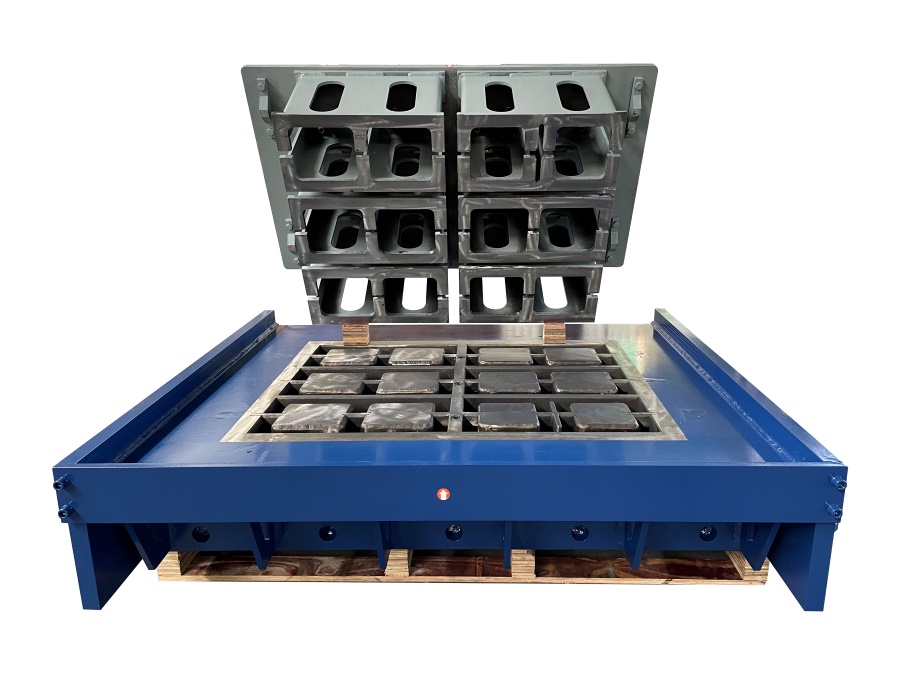
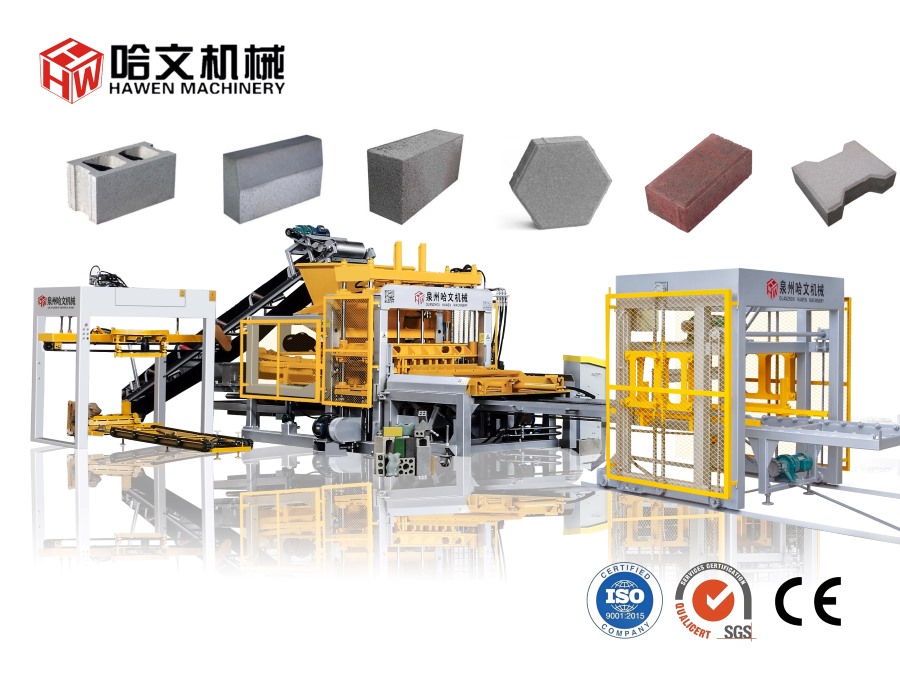
A concrete block mould is the forming assembly that determines the external dimensions, cavity geometry, surface pattern, edge profile, and production consistency of a concrete masonry product. In a vibration-compaction block machine, the mould works together with the filling system, vibration table, tamper head, pallet, and concrete mix. It is therefore not a simple interchangeable frame. Its design directly influences whether a plant can produce stable hollow blocks, solid blocks, paving blocks, interlocking units, kerbstones, or other precast products.
For buyers, mould selection is a combined product-design and production-engineering decision. A drawing that shows only length, width, and height is rarely sufficient for an accurate quotation or reliable production result. The buyer must also consider the block machine model, pallet size, raw material, expected output, wall thickness, draft angle, face texture, local dimensional requirements, and planned product changeover frequency. This article presents a practical framework for choosing a mould for different concrete block products.
Mould Design and Product Classification
Definition and Scope
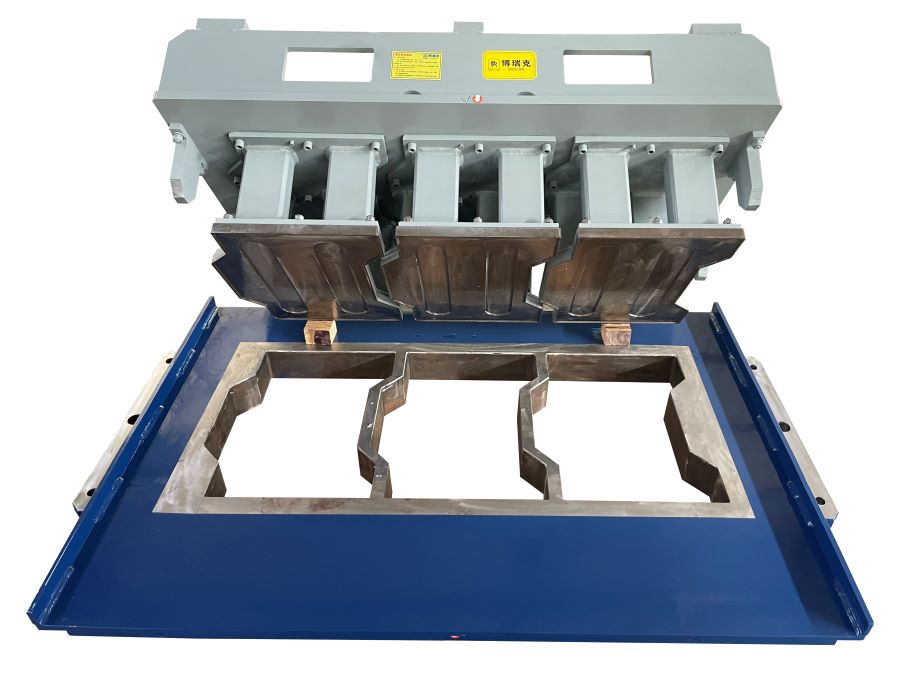
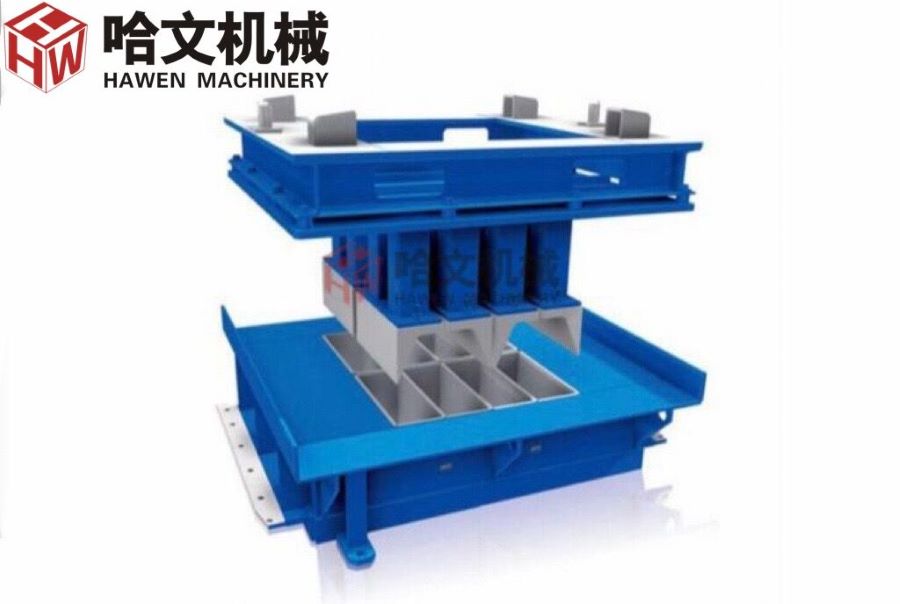
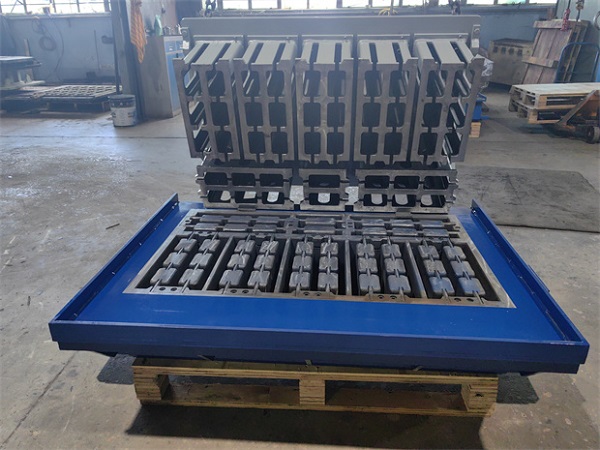
A block mould normally consists of a mould box and a matching tamper head. The mould box creates the sides and lower profile of the product, while the tamper head compresses the concrete from above and forms the top surface. For hollow products, core components create internal cavities. For textured paving products, additional face-mix or surface-forming arrangements may be required. These components must remain aligned during repeated filling, vibration, compression, and demoulding cycles.
The mould defines more than appearance. It affects the amount of concrete used per unit, the ease of demoulding, the risk of edge damage, the number of products formed on each pallet, and the loading behavior of the finished block. Small changes in cavity spacing or wall geometry can alter production efficiency and material consumption across thousands of cycles.
Definition note: In block production, the word mould may refer to the complete forming set or only the mould box. Buyers should confirm whether a quotation includes the mould box, tamper head, core parts, connection plates, wear parts, and any special surface components needed for the intended product.

Key Mould Terms
Clear technical vocabulary helps prevent specification errors between the buyer, block designer, machine supplier, and mould workshop. The same nominal block size can require different mould designs when the cavity arrangement, surface profile, or production machine changes. Buyers should therefore use drawings and samples together with written dimensions.
| Term | Practical meaning | Buyer relevance |
|---|
| Mould box | The main frame containing the product cavities. | Determines product layout, side dimensions, and cavity spacing. |
| Tamper head | The upper assembly that compresses concrete inside the mould. | Must match the cavity layout and connect correctly to the machine. |
| Core | A component that forms holes or recesses in a block. | Controls cavity shape, wall thickness, unit weight, and demoulding behavior. |
| Draft angle | A slight taper that helps the formed product leave the mould. | Insufficient draft can increase sticking or edge damage. |
| Cavity count | The number of products formed during one machine cycle. | Affects cycle output, pallet utilization, filling uniformity, and machine load. |
| Wear clearance | The controlled gap between moving and fixed mould parts. | Clearance affects alignment, surface quality, and long-term dimensional consistency. |
Mould Selection by Product Type
The first selection step is to classify the intended product according to geometry and application. Hollow masonry blocks require stable cores and controlled wall thickness. Solid blocks emphasize material distribution and dimensional repeatability. Paving blocks may require complex interlocking edges, visible face quality, and close height consistency. Kerbstones are larger and heavier, placing different demands on filling, vibration, demoulding, and pallet support.
A buyer planning several products should not assume that one universal mould can create all variations. Some dimensions can be adjusted through interchangeable inserts, but major changes in product height, cavity layout, or surface profile normally require a separate mould set. The economic question is whether each product has enough market demand to justify dedicated tooling.
| Product type | Primary mould concern | Specification questions |
|---|
| Hollow block | Core stability, web thickness, cavity geometry, and easy demoulding. | What are the external size, hole layout, minimum wall thickness, and required unit weight? |
| Solid block or brick | Uniform filling, edge quality, compression, and material consumption. | Is the product fully solid, recessed, frog-shaped, or marked with a logo? |
| Interlocking paver | Interlocking geometry, face texture, corner durability, and height tolerance. | Is a face-mix layer needed, and what laying pattern must the edges support? |
| Kerbstone | Large product mass, profile accuracy, lifting stability, and pallet support. | Can the machine and pallet support the product size and weight per cycle? |
| Special landscape unit | Complex shape, small sections, surface appearance, and market-specific dimensions. | Is a physical sample available, and which dimensions are functionally critical? |
When comparing a concrete block mould for different masonry and paving products, buyers should submit the machine model, pallet drawing, finished-product drawing, product sample images, and expected raw material. This information allows the mould design to be reviewed as part of the production system rather than as an isolated steel component.
Compatibility, Durability, and Buyer Evaluation
Machine and Pallet Compatibility
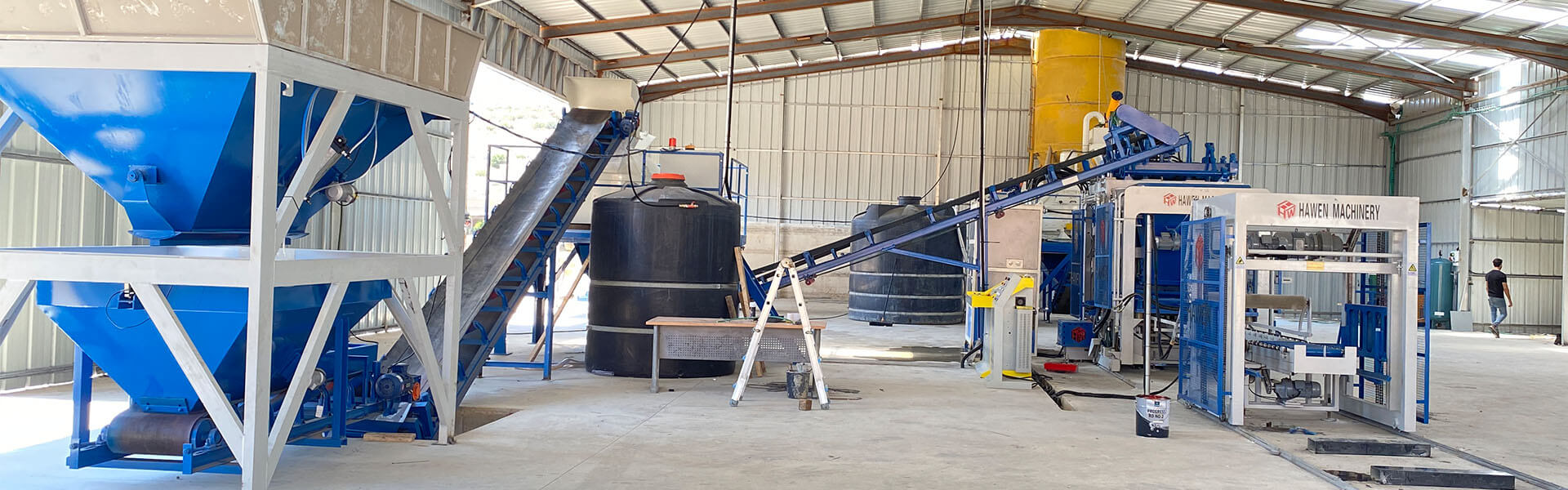
A mould must fit the physical and operating limits of the block machine. Important compatibility points include maximum mould dimensions, usable forming area, connection pattern, tamper-head travel, product-height range, feeding-box clearance, vibration arrangement, and pallet size. Even when two machines have similar production capacities, their mould mounting and operating geometry may differ.
Pallet utilization is a central design variable. The cavity layout should place as many products as practical on each pallet while leaving enough steel between cavities for strength and enough space for reliable filling. Maximizing cavity count without considering filling uniformity can produce inconsistent density between the center and edges of the mould. The machine must also provide enough vibration and compression force for the total product area.
Method note: Estimate theoretical cycle output as cavity count multiplied by cycles per hour. Then adjust for stoppages, material changes, inspection, cleaning, and product handling. A higher cavity count does not guarantee higher saleable output if the mould fills unevenly or creates more damaged products.
Compatibility evidence summary: A reliable mould quotation should identify the intended machine model, pallet size, product height, cavity count, connection method, and product drawing revision. If these items are not confirmed, the risk of installation changes, poor alignment, or unsuitable production performance increases.
Steel, Wear, and Service Life
Block moulds operate in an abrasive environment. Sand, aggregate, pigments, and repeated vibration wear the cavity surfaces, edges, cores, and tamper components. Steel selection, heat treatment, machining accuracy, welding quality, and replaceable wear-part design all influence how long the mould maintains acceptable product dimensions.
Service life should not be interpreted as a guaranteed number of cycles without context. Coarse or highly abrasive aggregate can accelerate wear. Poorly controlled feeding can damage narrow mould sections. Incorrect machine alignment can create uneven contact between the tamper head and mould box. Insufficient cleaning may allow hardened concrete to interfere with movement. A well-built mould can still perform poorly if the production process is unsuitable.
Buyers should ask which areas are hardened, which parts are replaceable, and how the supplier controls deformation during manufacture. They should also ask how dimensional wear will be measured during operation. Product width, height, edge profile, and cavity geometry should be inspected periodically so maintenance occurs before rejected output becomes significant.
| Wear factor | Possible production effect | Control approach |
|---|
| Abrasive aggregate | Faster cavity and core wear. | Review material characteristics and specify suitable wear treatment. |
| Misalignment | Uneven wear, contact damage, or inconsistent product height. | Check machine guides, tamper alignment, and mould installation. |
| Hardened concrete buildup | Sticking, damaged edges, and restricted movement. | Use a defined cleaning routine without damaging precision surfaces. |
| Complex thin sections | Higher local stress and more difficult filling. | Review geometry with the mould supplier before final approval. |
Buyer Evaluation Method
A practical evaluation begins with the finished product rather than the mould price. The buyer should define the target product dimensions, application, appearance, expected strength, and daily sales demand. Next, the buyer should confirm that the existing or planned machine can form the product. Only then should mould construction, cavity count, wear treatment, delivery time, and cost be compared.
A physical sample is useful when the product has an interlocking profile, unusual cavity, decorative face, or locally established shape. However, samples can be worn or dimensionally inconsistent. A dimensioned drawing should therefore identify critical measurements and acceptable tolerances. The drawing revision approved by both parties should become the basis for manufacturing and inspection.
Before shipment, the buyer should request an inspection record or trial-production evidence appropriate to the project. Important checks include overall mould dimensions, mounting points, cavity arrangement, product dimensions, tamper fit, visible machining quality, and correspondence with the approved drawing. Trial blocks can reveal demoulding behavior and appearance, but their strength and long-term quality also depend on the concrete mix and curing process.
| Evaluation stage | Information to confirm | Risk if omitted |
|---|
| Product definition | Drawing, sample, application, surface, cavities, and critical dimensions. | The mould may form a product that does not fit the local market requirement. |
| Machine review | Machine model, forming area, pallet, connections, and height range. | The mould may require modification or may not operate correctly. |
| Production review | Raw material, cavity count, expected cycles, and changeover plan. | Actual saleable output may differ from the commercial estimate. |
| Pre-shipment check | Dimensions, fit, finish, trial product, and approved drawing revision. | Errors may only become visible after international delivery. |
Cost and Changeover Planning
The lowest mould purchase price does not always produce the lowest cost per saleable block. A more complete estimate includes mould price, freight, installation, trial materials, machine downtime during changeover, maintenance parts, expected wear, and losses caused by dimensional rejection or edge damage. The value of a mould also depends on how consistently the plant can sell the product it creates.
Cost estimation method: Estimated mould cost per saleable unit = total mould-related project cost divided by expected saleable units produced during the planned service period. The estimate should use a conservative saleable-output assumption rather than theoretical cycle output.
Plants serving several markets should also plan mould changeovers. A frequent changeover schedule can reduce productive hours and requires organized storage, lifting equipment, cleaning, identification, and setup records. If one product represents most sales volume, a dedicated mould may remain installed for long campaigns. Lower-volume products may be grouped into scheduled production batches to reduce downtime.
Practical limitation: The service period and cost per unit cannot be predicted accurately from mould construction alone. Aggregate abrasiveness, operator practice, machine condition, cleaning, maintenance, product complexity, and commercial demand all affect the final result. Buyers should treat cycle-life figures as project assumptions that require operating controls.
FAQ
Can one block mould produce several block sizes?
Some moulds can use replaceable inserts or related components for limited variations, but major changes in external dimensions, cavity layout, height, or surface pattern normally require a separate mould. The supplier should evaluate whether an adjustable concept remains strong, accurate, and economical for the planned production volume.
What information is needed to order a replacement mould?
The buyer should provide the block machine model, pallet dimensions, existing mould measurements, mounting details, product drawing, photographs, desired cavity count, raw material description, and expected product height. When possible, the original machine and mould drawings should be checked before manufacturing begins.
Why does cavity count matter?
Cavity count determines how many products are formed per cycle, but it also changes the total forming area, filling behavior, mould strength, and machine load. The best cavity count balances output with reliable filling, vibration, compaction, and product handling.
Can a paver mould be used on any automatic block machine?
No. The paver dimensions may appear suitable, but the mould must match the machine forming area, connection system, pallet, product-height range, feeding arrangement, and available compaction performance. Face-mix paving production may also require additional equipment.
How should a buyer inspect a new mould?
The buyer should compare the mould with the approved drawing, verify overall and mounting dimensions, inspect cavity and tamper alignment, review visible workmanship, and evaluate trial products when available. Inspection criteria should be agreed before production rather than introduced after shipment.
What causes premature mould wear?
Common causes include abrasive aggregate, machine misalignment, unsuitable clearance, hardened concrete buildup, poor cleaning methods, overloaded operation, and complex product sections. Wear should be investigated as a system condition rather than attributed only to steel hardness.
Conclusion
Choosing a concrete block mould requires the buyer to connect finished-product requirements with machine capability, pallet layout, raw material behavior, mould construction, and production economics. Hollow blocks, solid blocks, interlocking pavers, kerbstones, and special landscape units each create different forming and wear conditions. A complete specification should therefore include more than nominal product dimensions.
The most reliable selection process begins with an approved product drawing and a verified machine interface. It then evaluates cavity count, filling behavior, demoulding, steel treatment, replaceable parts, inspection method, expected output, and changeover planning. Buyers who review these factors before ordering are better positioned to control dimensional consistency, reduce avoidable downtime, and calculate mould cost according to saleable production rather than purchase price alone.






 Tel: +86-13905968794
 Email: export@hwmachines.com
 MP/WhatsApp: +86-13905968794
 Manufacturer Address:Nanan,Quanzhou City,Fujian Province,China