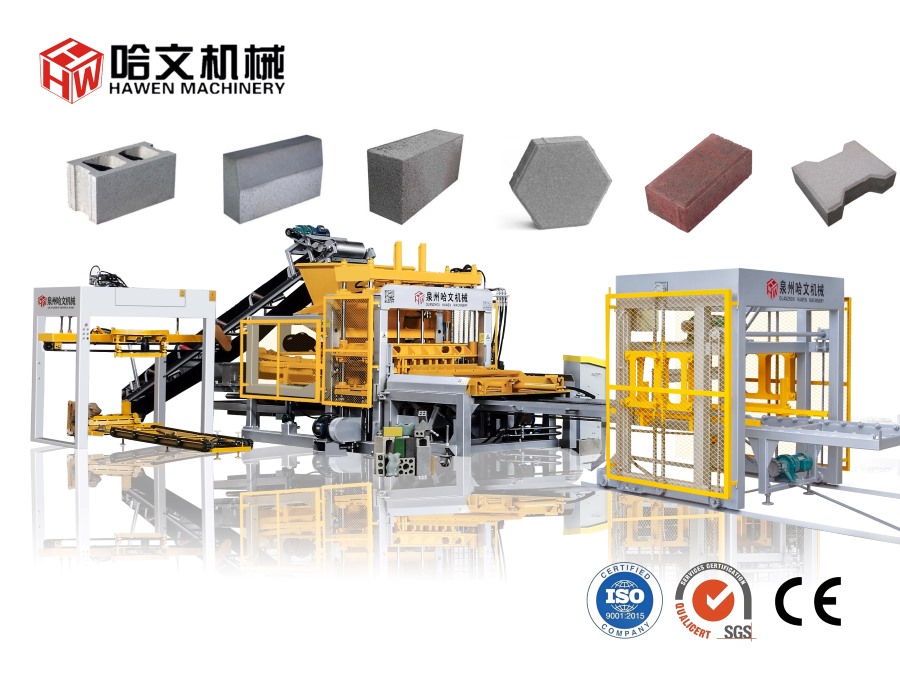
A multi-product concrete block plant can serve more customers, but only if the mold plan is correct. Hollow blocks, pavers, kerbstones, solid bricks, grass pavers, and special shapes do not load the machine in the same way. The mold affects cycle time, material consumption, vibration response, pallet selection, curing space, and product appearance. In a serious block machine investment, mold selection should be discussed as early as the machine model.
This article explains how to choose molds for a brick machine plant that needs flexible production without losing quality or daily output.
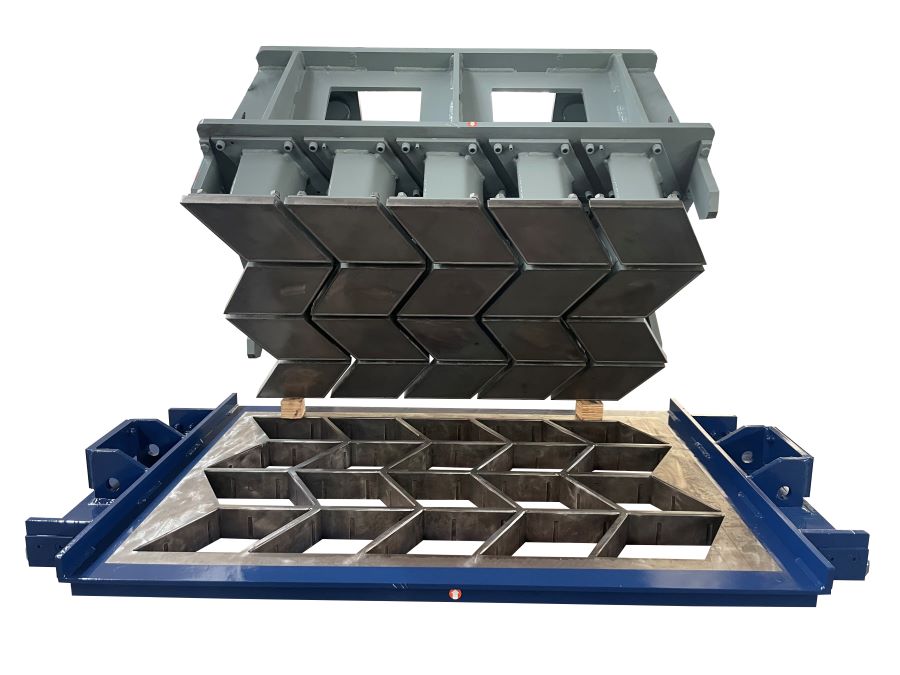
Why mold selection decides flexibility
The mold is where product design becomes a physical block. It controls shape, wall thickness, corner definition, surface pattern, and demoulding behavior. A high-quality concrete block mould helps the machine produce repeatable products. A poor mold can create height variation, chipped corners, rough faces, and weak edges even when the mix and machine are acceptable.
For multi-product production, the wrong mold plan can also reduce efficiency. Too many low-demand molds tie up capital. Too few molds limit market response. A mold with poor cavity layout may look cheaper, but it can reduce output per cycle or overload the handling system. Buyers should choose molds according to product demand, not only according to catalog photos.
Start with product strategy
Before buying molds, list the products that will actually sell in the first production stage. Separate them into core products, seasonal products, and experimental products. Core products deserve the most durable molds and the most careful cavity design. Seasonal products can be planned later if the machine and pallet system can support them.
A hollow block mould should be checked for web thickness, clean demoulding, and strength after handling. An interlocking paver mould needs accurate edges and stable surface finish. A curb stone mould requires strong support because kerbstones are heavier and deeper than many standard blocks.
For pavers with surface texture or face mix, mold detail becomes even more important. The mold must support clean filling, complete compaction, and easy release. If the mold geometry traps material, operators may increase water or vibration incorrectly, creating new problems in the brick making machine.
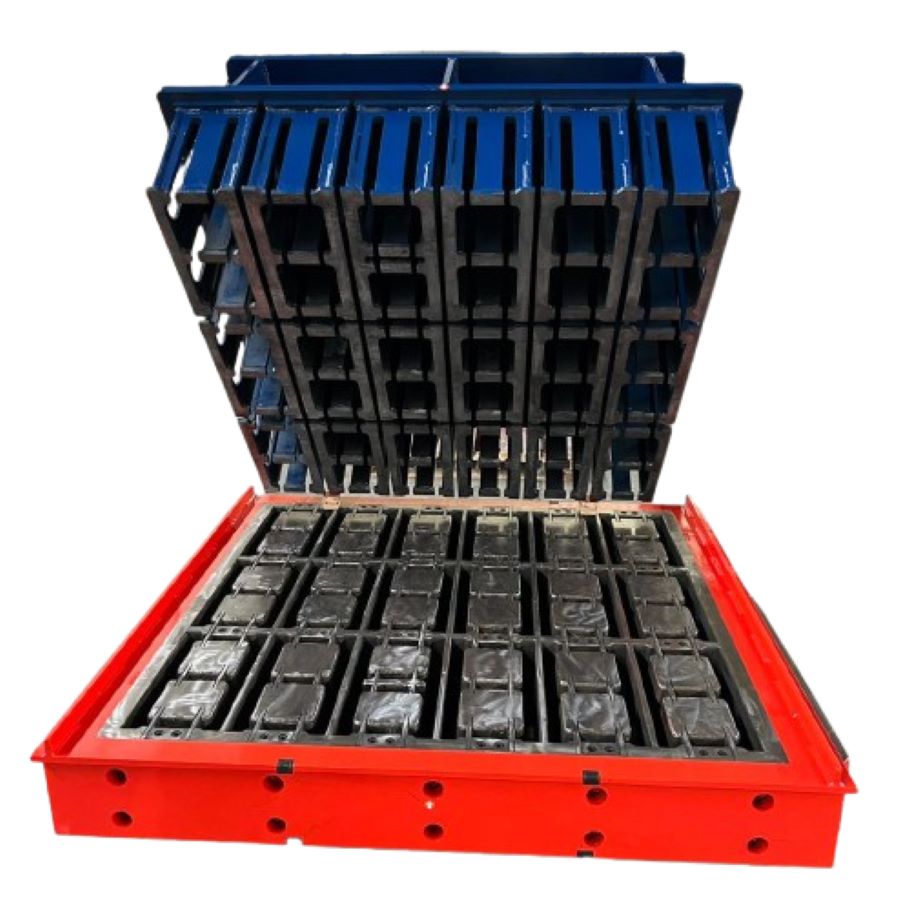
Fit with machine and pallet
Mold selection must match the machine frame, vibration system, feeding box, pallet size, product height, and handling method. A mold that fits one block making machine may not fit another machine without modification. Buyers should confirm fixing points, mold height, tamper head design, pallet clearance, and product layout before ordering.
The pallet is part of the same decision. A stable GMT pallet helps keep the product flat after demoulding. If the mold creates a high load per board, the pallet must support that load without bending. For thin pavers or products with decorative faces, pallet flatness is especially important.
Machine capacity also matters. A brick machine may run several different molds, but each mold will create a different cycle demand. Heavy kerbstones, high-cavity hollow blocks, and dense pavers should be checked separately for mix volume, vibration time, and pallet handling.
Wear, heat treatment, and precision
Concrete is abrasive. Every cycle moves aggregate against mold surfaces. Over time, poor mold steel or weak treatment leads to worn corners, larger dimensions, rough release, and more rejected products. This is why mold durability should be considered as production insurance, not only as a spare part cost.
Hawen Machinery manufactures molds with heat treatment to improve wear resistance, with hardness controlled around HRC59-61. This helps maintain shape accuracy during long-term vibration and repeated demoulding. For customers using mixed product schedules, this durability is especially valuable because frequent mold changeover already puts extra stress on the system.
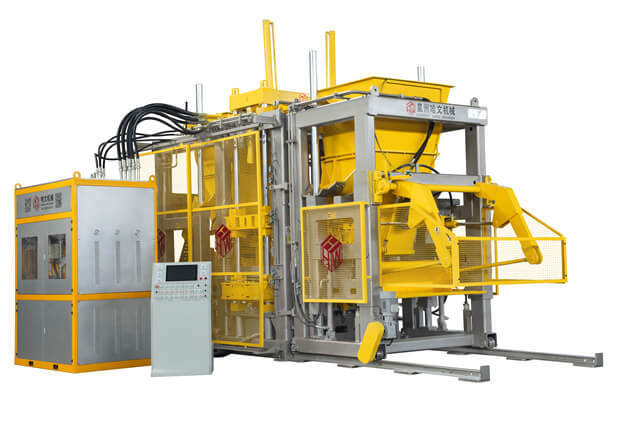
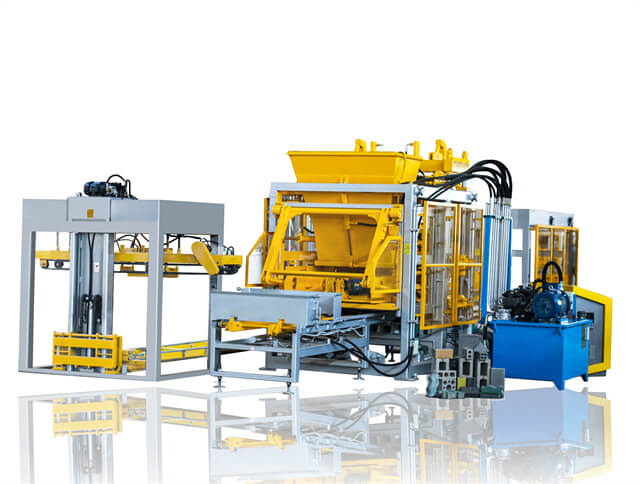
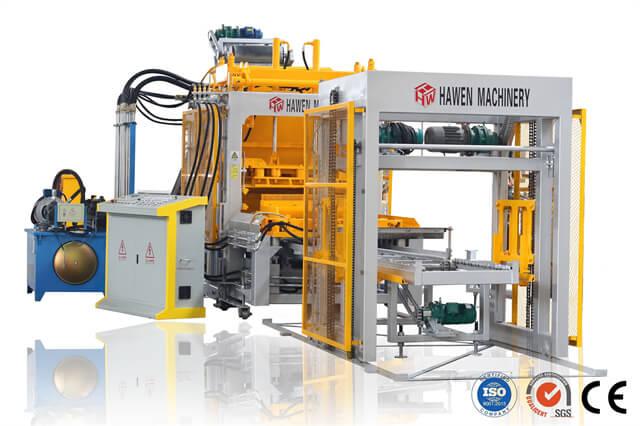
The vibration system and mold must also work together. Hawen Machinery adopts a four-shaft vibration box with eccentric blocks outside the housing. The design reduces vibration resistance and supports uniform compaction. When the mold is precise and the vibration is stable, the block making machine can produce cleaner edges and more consistent density.
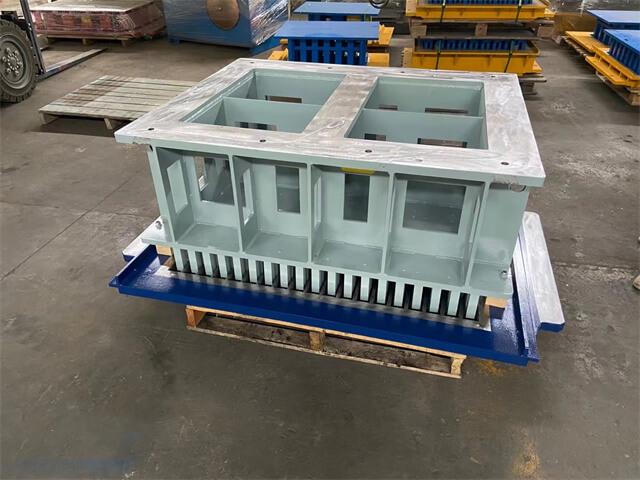
Changeover and production planning
Multi-product factories should plan mold changeover carefully. Each change may require cleaning, alignment, trial boards, parameter adjustment, and product inspection. If changeover is too frequent, the factory loses time and creates more setup waste. A better approach is to group production orders by mold type, color, product height, and curing requirement.
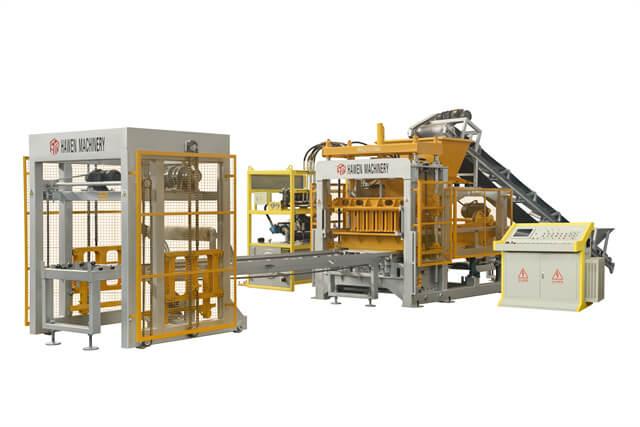
The automatic pallet provider and offline palletizing system should also match the product mix. Some products need gentler handling. Others need different stacking patterns. A flexible plant is not simply a machine with many molds. It is a system that can change products without creating confusion.
Mixing and batching should be reviewed for each product group. A paver mold may need tighter moisture control than a simple hollow block. A concrete mixer and batching system must support those changes without making the operator guess every time.
Hawen Machinery mold support
Hawen Machinery designs molds compatible with leading block machine brands, including Masa, Hess, Zenith, Poyatos, Besser, Tiger, Columbia, Quadra, and Omag. By following original specifications, the molds provide precise fit, smooth operation, and consistent product quality across platforms.
The hydraulic station of Hawen block machines uses Japanese YUKEN proportional and directional valves with an American ALBERT hydraulic pump. This supports smooth demoulding and reliable movement control. The SIEMENS S7-200 PLC and touch panel make it easier to manage parameter settings for different molds and product types.
A good mold program gives a factory market flexibility without turning production into disorder. When mold design, machine power, vibration, pallet support, and changeover planning all agree with each other, the plant can respond to customer demand with confidence instead of compromise.
FAQ
How many molds should a new block plant buy first?
Start with the products that have confirmed demand. Add seasonal or special molds after the main production rhythm is stable.
Can one machine produce hollow blocks, pavers, and kerbstones?
Yes, if the machine, mold, pallet, vibration system, and handling equipment are matched for those product types.
Why does mold hardness matter?
Hardness and heat treatment help resist wear. Better wear resistance keeps dimensions, edges, and demoulding quality more stable over time.
Is the cheapest mold a good choice for low-volume products?
Not always. A cheap mold that creates poor release or unstable dimensions can cost more through waste and downtime.
What should be checked before ordering a replacement mold?
Confirm machine brand, fixing points, pallet size, product drawings, cavity layout, tamper head, and required product height.
Can Hawen make molds for other machine brands?
Yes. Hawen can design molds compatible with several major block machine platforms when original specifications are available.





 Tel: +86-13905968794
 Email: export@hwmachines.com
 MP/WhatsApp: +86-13905968794
 Manufacturer Address:Nanan,Quanzhou City,Fujian Province,China