Concrete block production does not finish when the mould lifts. At that moment, the product has shape, but it has not yet gained enough strength for rough handling, stacking, transport, or long-term service. The early curing stage decides whether the cement hydration process can continue under stable temperature and moisture conditions. If the blocks dry too quickly, cool too unevenly, or are moved too early, defects may appear even when batching, mixing, vibration, and pressing were correct.
This is why curing should be treated as part of the production system, not as a storage step after the block making machine. A modern automatic line may include pallet transfer, elevator, finger cart, curing chamber, lowerator, cuber, and strapping system. Each section must protect green blocks while the cement paste is still developing. A good forming machine creates density; a good curing system helps that density turn into usable strength.
The practical question for buyers is not only whether a plant has a curing area. The important points are temperature control, humidity retention, airflow, pallet spacing, movement timing, chamber capacity, and handling method. Poor curing can reduce compressive strength, create color variation, increase surface dusting, and cause corner breakage. For pavers and kerbstones, it can also affect surface finish and early handling damage.
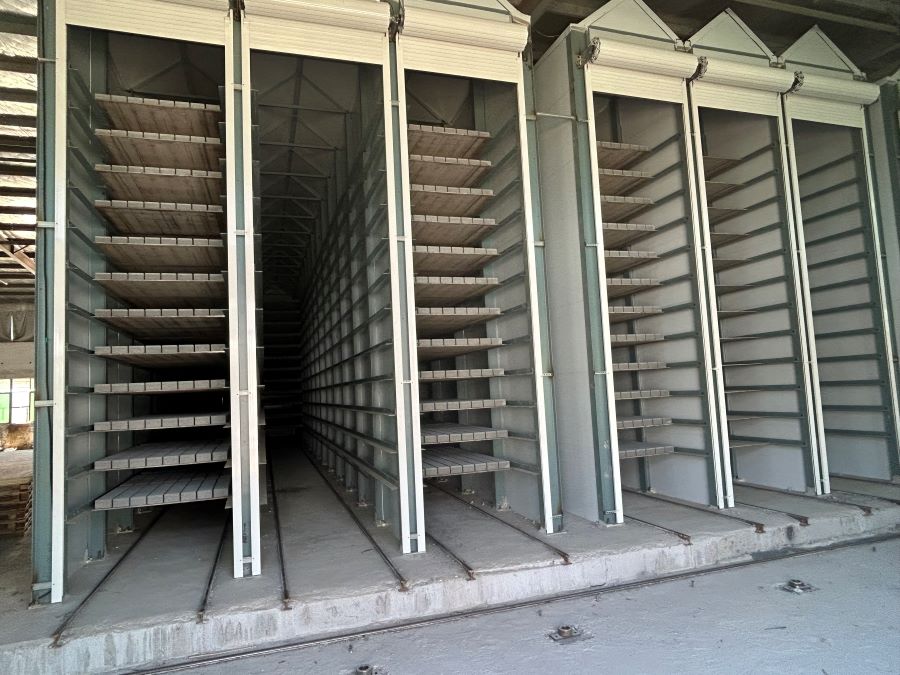
Curing as part of block quality control
Curing is the controlled period after forming when cement reacts with water and develops strength. In dry-cast concrete block production, the mix contains limited water because the fresh blocks must stand immediately after demoulding. This makes curing more sensitive. If the available moisture leaves the block too early, hydration slows and the product may remain weak or dusty at the surface.
A curing system has two main tasks. First, it prevents rapid moisture loss from the green blocks. Second, it keeps the curing environment stable enough for strength development. In simple plants, this may involve covering blocks, misting, shaded storage, or controlled stacking. In automatic lines, curing chambers and pallet transfer systems are used to organize products in a more repeatable way.
Quality control should include the curing stage because many defects show up after several hours, not immediately at the machine. A block may look good when it leaves the mould but show weak edges the next day. A paver may have acceptable surface texture at demoulding but develop shade variation after uneven drying. Curing records help separate forming problems from post-forming environment problems.
Why early-age concrete blocks are sensitive
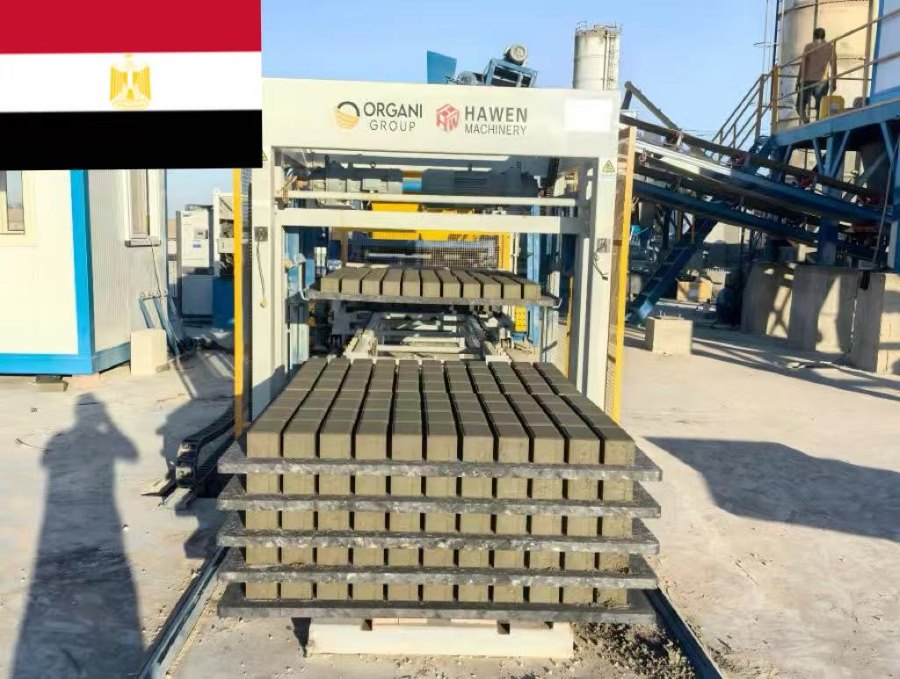
Fresh concrete blocks are green products. They have been compacted, but the cement paste has not fully hardened. Their strength depends on the internal contact between aggregates, cement paste, and moisture. During the first hours, the blocks are vulnerable to vibration, impact, rapid evaporation, and uneven temperature changes. This is why early handling must be gentle.
If green blocks are moved too aggressively, corners can chip or microcracks can form before the product is strong enough to resist movement. These small cracks may not be obvious at first, but they can reduce final strength or create breakage during cubing. Automatic handling equipment should therefore move pallets smoothly and keep acceleration, stopping, and transfer impact under control.
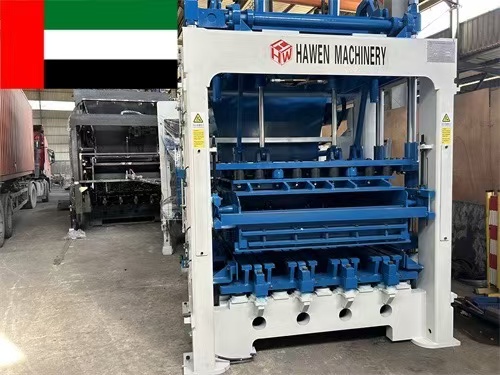
The product type matters. Hollow blocks have thin webs and edges. Pavers have surface appearance requirements. Kerbstones are heavier and place more load on the pallet. Large-format products need stable support during transfer. A line producing different products, including equipment such as a QT6 cement paver brick production machine, should adjust curing and handling timing according to product mass, shape, moisture, and expected early strength.
Temperature and humidity working logic
Temperature affects the speed of cement hydration. Higher temperature can speed early strength gain, but excessive or uneven heat may create surface drying, color variation, or thermal stress. Low temperature slows strength development and may require longer curing before cubing or transport. The target is stable and suitable temperature, not simply maximum heat.
Humidity affects whether the cement can continue reacting with water. If the air is too dry, moisture leaves the blocks quickly. The surface may become weak, powdery, or lighter in color. If the curing environment is humid enough, hydration can continue more effectively and surface drying is reduced. However, uncontrolled condensation or dripping water can create stains, marks, or uneven color on pavers.
Airflow should also be managed. Strong direct airflow may dry one side of the pallet faster than another. Poor airflow may create local hot or damp zones inside a curing chamber. In a good curing layout, temperature, humidity, pallet spacing, and chamber loading pattern work together. This is why curing chamber design should be reviewed together with the production capacity of machines such as a QT15 automatic concrete paver block machine.
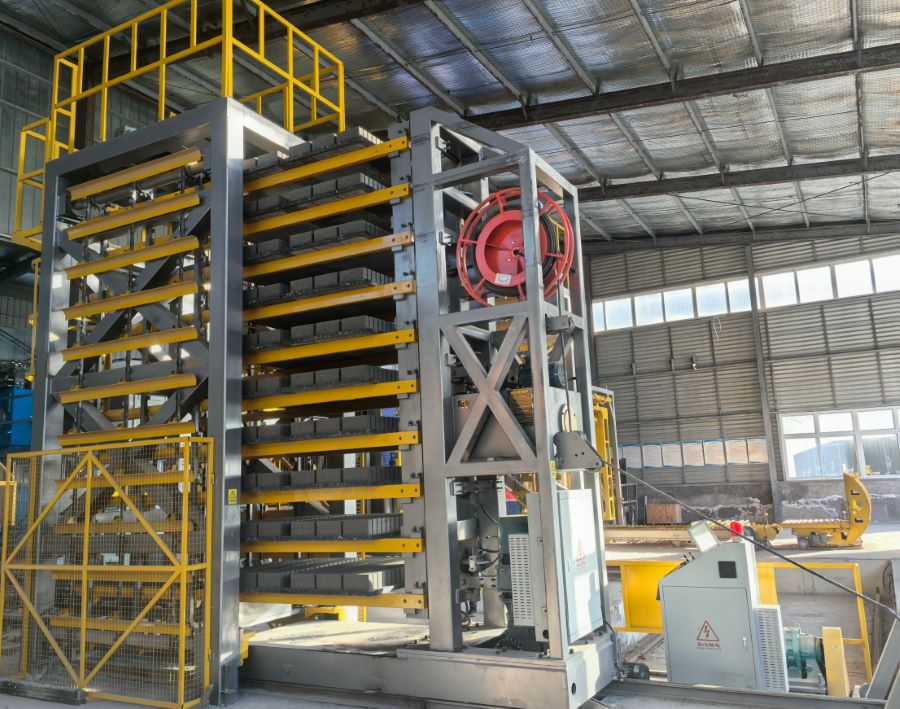
Curing chamber and finger cart coordination
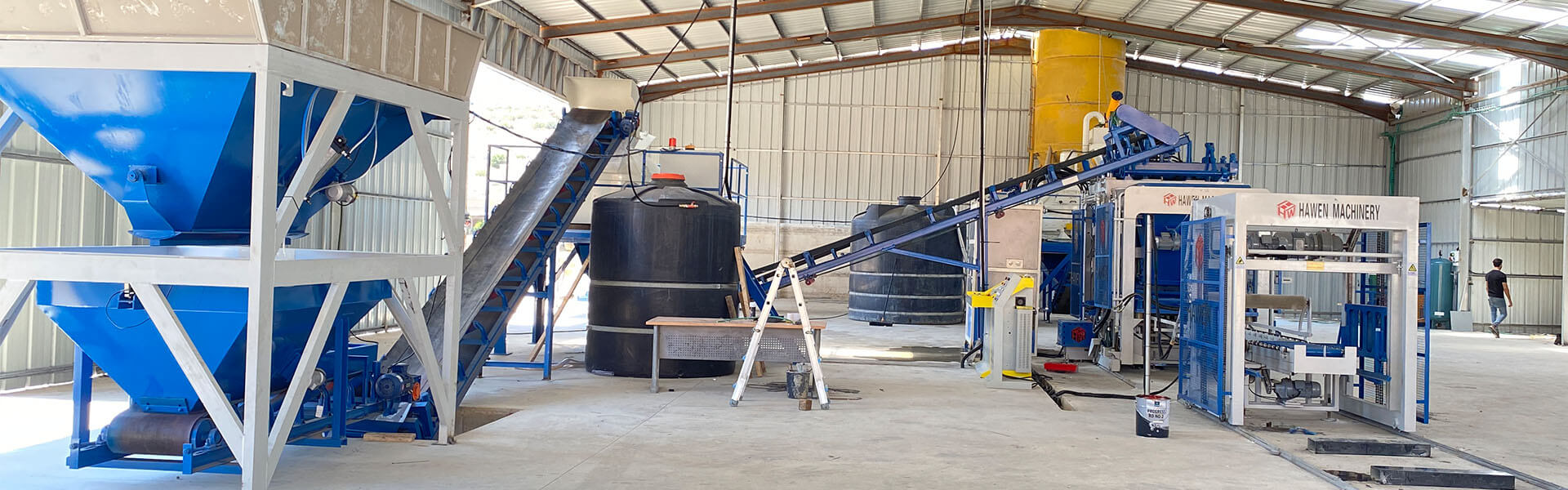
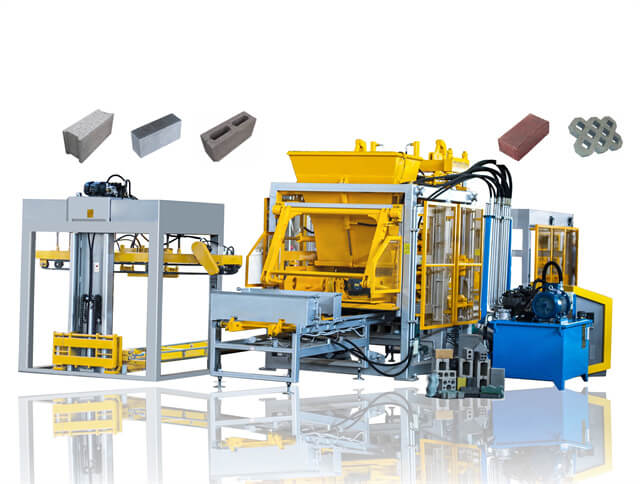
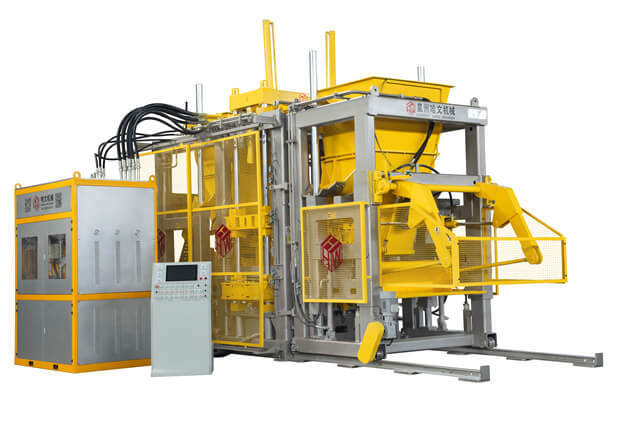
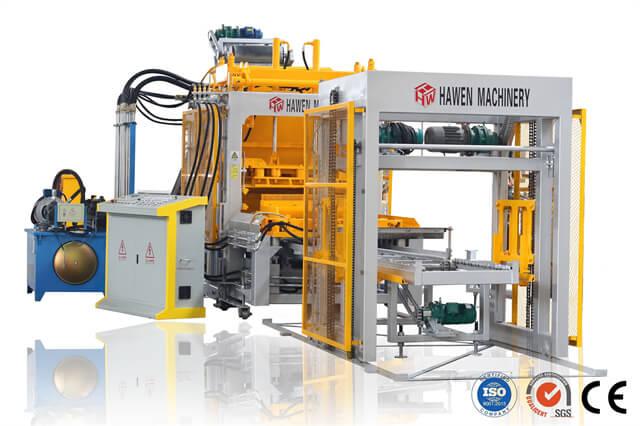
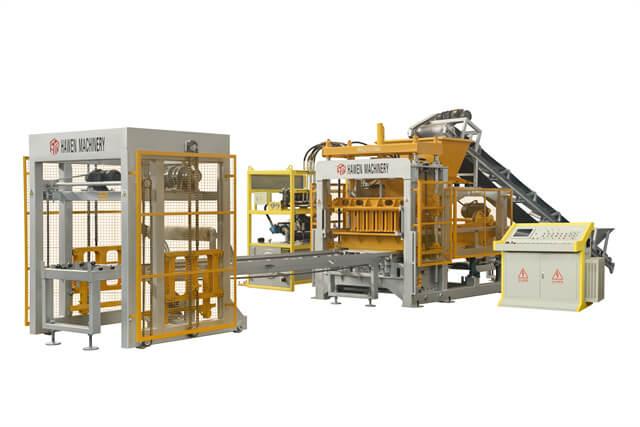
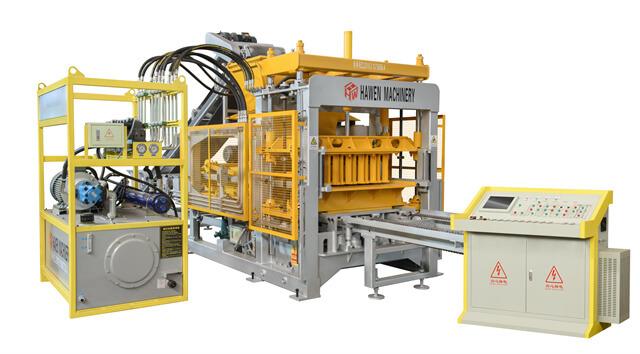
In a fully automatic line, the curing chamber does not work alone. The elevator lifts pallets with green blocks, the finger cart carries them into the curing chamber, and the lowerator retrieves cured products for cubing. This logistics system protects blocks from manual handling and keeps production organized. The Hawen fully automatic production line describes this workflow as batching, mixing, forming, green product transfer, controlled curing, retrieval, cubing, and strapping.
Coordination is important because green blocks must enter the chamber without delay, but also without impact. If the finger cart moves too sharply, blocks may shift on the pallet. If the elevator or finger cart capacity is lower than the forming machine output, pallets may wait outside the chamber and lose moisture unevenly. If cured products are retrieved too early, cubing may damage corners or edges.
The curing chamber capacity should match the production rhythm. A high-output line requires enough chamber space for the number of pallets produced during the required curing period. If the chamber is too small, the factory may shorten curing time, overcrowd pallets, or move products before they are ready. Each of these choices can reduce quality even when the forming section is well adjusted.
Surface defects from poor curing
Poor curing can create several visible defects. Surface dusting may appear when the surface dries before enough hydration occurs. Color variation may appear when one batch dries faster than another, or when temperature and humidity differ between chamber positions. Fine cracks may appear when the surface shrinks while the inside remains moist. Efflorescence risk can also be influenced by moisture movement and drying pattern.
Not every surface defect is caused by curing. Poor mixing, incorrect water, unstable cement dosing, worn moulds, and excessive vibration can also create problems. However, curing should be checked when defects appear after storage rather than immediately at demoulding. A useful diagnostic method is to compare blocks from different chamber positions, different pallet levels, and different curing times.
Colored pavers require particular attention. The face layer must dry and harden evenly to maintain consistent shade. If some pallets receive strong airflow or more heat, those pavers may look different after curing. The same issue can happen when green blocks wait too long before entering the chamber. A stable curing routine helps keep surface appearance repeatable.
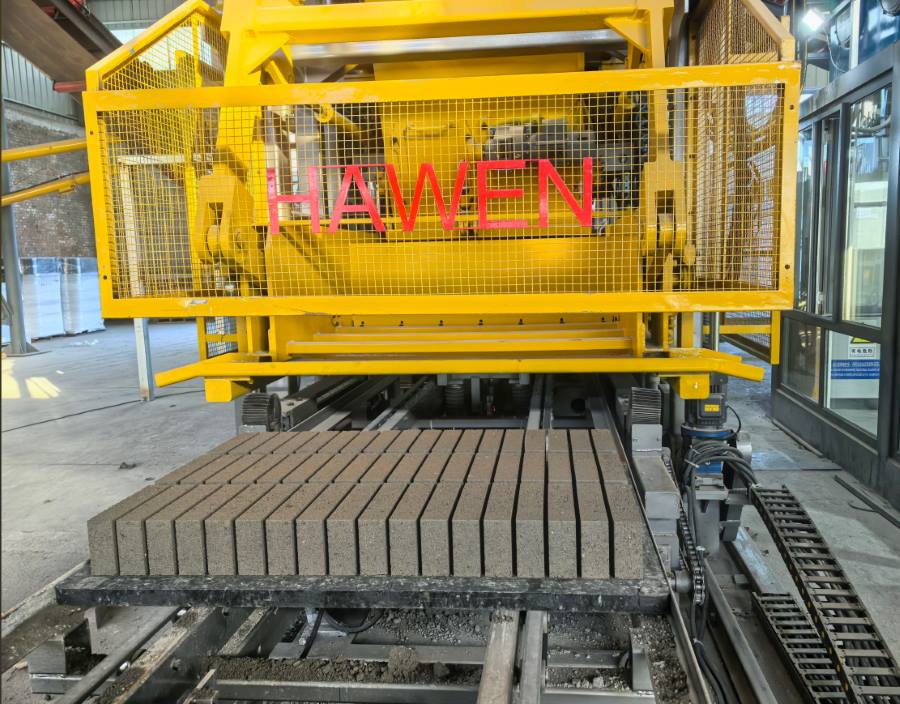
Comparison table for curing conditions
| Curing condition | Possible cause | Effect on blocks |
|---|
| Rapid surface drying | Low humidity, direct airflow, long waiting time before chamber entry. | Dusting, weak surface, fine cracks, and inconsistent shade. |
| Low curing temperature | Cold climate, poor chamber insulation, or insufficient curing time. | Slow strength gain and higher risk of damage during early cubing. |
| Uneven chamber climate | Poor airflow layout, uneven loading, or temperature differences between levels. | Batch-to-batch color variation and inconsistent early strength. |
| Aggressive green handling | Fast finger cart movement, hard stops, pallet vibration, or early retrieval. | Corner chipping, microcracks, and product movement on pallets. |
| Overcrowded curing area | Insufficient chamber capacity or production exceeding planned pallet storage. | Uneven curing, delayed logistics, and pressure to shorten curing time. |
Buyer checkpoints for curing layout
Before ordering a complete line, buyers should ask how many pallets the curing chamber can hold and how that capacity matches cycle time and curing duration. A forming machine with high output needs a curing system sized for real daily production, not only for a short demonstration. If chamber capacity is not enough, the line may form blocks faster than it can cure them safely.
Buyers should also check the transfer system. The elevator, lowerator, finger cart, pallet spacing, rail layout, and control logic should work smoothly. A fully automatic line may use systems such as automatic palletizing and cubing equipment after curing, but those systems only perform well when blocks reach them with enough early strength. Downstream automation cannot repair weak green products.
The curing method should match local climate and product type. A plant in a hot dry region may need stronger moisture retention and faster chamber entry. A cold region may need temperature management and longer curing time. Paver plants should pay more attention to color uniformity and condensation control. Hollow block plants should focus on web strength and edge stability. Buyers should discuss these conditions before finalizing layout and chamber design.
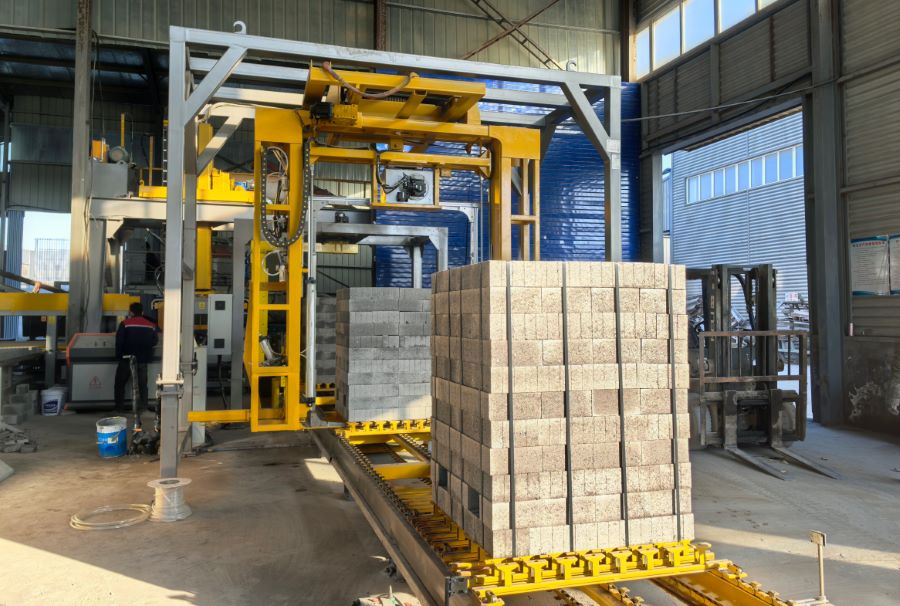
Daily curing management routine
A daily curing routine should include recording forming time, chamber entry time, retrieval time, temperature, humidity, and product type. These records help operators find patterns when strength or color problems appear. Without records, curing problems are often blamed on material or machine settings because the curing condition is invisible after the product leaves the chamber.
Operators should inspect green blocks before chamber entry. If blocks already have loose corners or surface tearing, the cause may be forming, moisture, or mould condition. If they look good before curing but show dusting, cracks, or color variation later, curing conditions should be reviewed. Separating these stages prevents unnecessary adjustment of the wrong part of the line.
Chamber cleanliness matters. Old broken pieces, standing water, blocked airflow paths, and uneven pallet stacking can all affect curing. Pallets should be stable and clean because they support green products during the entire early-age period. The earlier article topic of production pallet quality connects directly with curing because warped or dirty pallets can damage blocks before strength develops.
Finally, retrieval timing should be based on product condition, not only schedule pressure. Blocks should not be cubed or strapped before they can tolerate handling. For projects with strict strength requirements, factories should connect curing records with sample testing. This creates a feedback loop between curing management and actual product performance.
FAQ
Can curing problems reduce block strength even if forming is good?
Yes. Good forming creates shape and density, but cement still needs moisture and suitable temperature to continue hydration. Poor curing can slow strength gain or weaken the surface.
Why do blocks crack after they looked fine at demoulding?
Possible reasons include rapid drying, early handling shock, low green strength, unsuitable moisture, or uneven curing temperature. Comparing blocks before and after curing helps locate the cause.
Does every block plant need a curing chamber?
Not always. Small plants may use covered curing or shaded storage, but high-output automatic lines benefit from controlled curing chambers because they need repeatable timing, humidity, and logistics.
How does curing affect colored pavers?
Colored pavers are sensitive to drying rate, humidity, condensation, and temperature differences. Uneven curing can create shade variation even when pigment dosage and mixing are correct.
Conclusion
Curing temperature, humidity, and early handling affect concrete block quality because green products continue gaining strength after demoulding. If blocks dry too fast, remain too cold, receive uneven airflow, or are moved too aggressively, they may develop dusting, cracks, weak corners, color variation, or lower early strength. These defects can appear after forming, which makes curing easy to overlook during troubleshooting.
For buyers and plant managers, the curing system should be evaluated together with machine output, pallet circulation, finger cart movement, chamber capacity, local climate, product type, and cubing schedule. A stable curing process protects the work already done by batching, mixing, vibration, pressing, and mould design. When forming and curing are matched correctly, the block production line can deliver more consistent strength, surface finish, and daily output.





 Tel: +86-13905968794
 Email: export@hwmachines.com
 MP/WhatsApp: +86-13905968794
 Manufacturer Address:Nanan,Quanzhou City,Fujian Province,China