In the concrete products industry, many entrepreneurs assume that purchasing a reliable block machine automatically guarantees commercial success. Yet in practical operation, factory planning often exerts a far greater influence on profitability than equipment price alone.
A poorly planned plant may suffer from material congestion, excessive labor movement, unstable production flow, and unnecessary operating costs, even when equipped with an advanced brick making machine. By contrast, a rationally designed small-scale factory can achieve impressive efficiency with relatively modest investment.
For startups entering the concrete block manufacturing sector, intelligent planning is not a secondary consideration. It is the operational framework upon which long-term sustainability depends.
Define Your Production Objectives Clearly
Before selecting any block making machine or brick machine, the factory owner must first establish realistic production objectives.
Several key considerations should be clarified in advance:
Which products will be manufactured?
What are the dominant local block specifications?
What is the expected daily output?
Is the target market residential, commercial, or infrastructure-oriented?
How many operators will be available?
Without clear answers to these questions, equipment procurement often becomes irrational.
For example, some investors purchase oversized fully automatic concrete block machines while local demand remains relatively limited. Others underestimate future expansion requirements and later encounter severe production bottlenecks.
An efficient factory begins with accurate market positioning rather than blind equipment expansion.
Note: The most profitable factory is not necessarily the largest one. Frequently, it is the factory with the highest operational efficiency and the lowest controllable waste.
Select a Suitable Factory Site
Factory location directly influences transportation cost, logistics efficiency, and future scalability.
A practical small-scale block factory should ideally provide:
Stable electrical supply
Reliable water access
Sufficient drainage infrastructure
Convenient truck access
Space for curing and finished product storage
Adequate ventilation and working clearance
In many developing regions, transportation costs consume a significant portion of overall production expenditure. Consequently, proximity to construction markets and raw material sources can substantially improve commercial competitiveness.
The site layout should also reserve sufficient space for future upgrades. Many factories initially operate with a semi-automatic block machine and later expand toward more automated production systems as order volume increases.
Design a Rational Production Flow
One of the most overlooked aspects of factory planning is internal production flow.
An efficient production line should follow a logical sequence:
Raw material storage
Aggregate batching
Mixing process
Material conveying
Forming section
Wet block transfer
Curing area
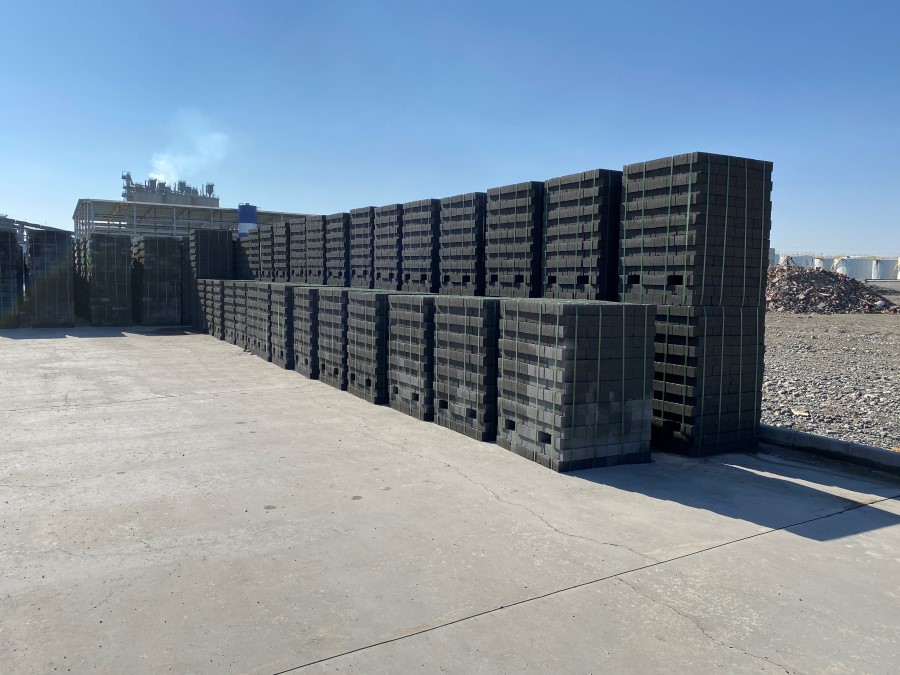
Finished product stacking
This workflow minimizes unnecessary transportation distance and reduces labor intensity.
For instance, if the curing area is excessively far from the brick machine, operators spend considerable time transporting pallets instead of maintaining productive output.
Likewise, poorly positioned aggregate storage zones may create bottlenecks during feeding operations, especially during peak production periods.
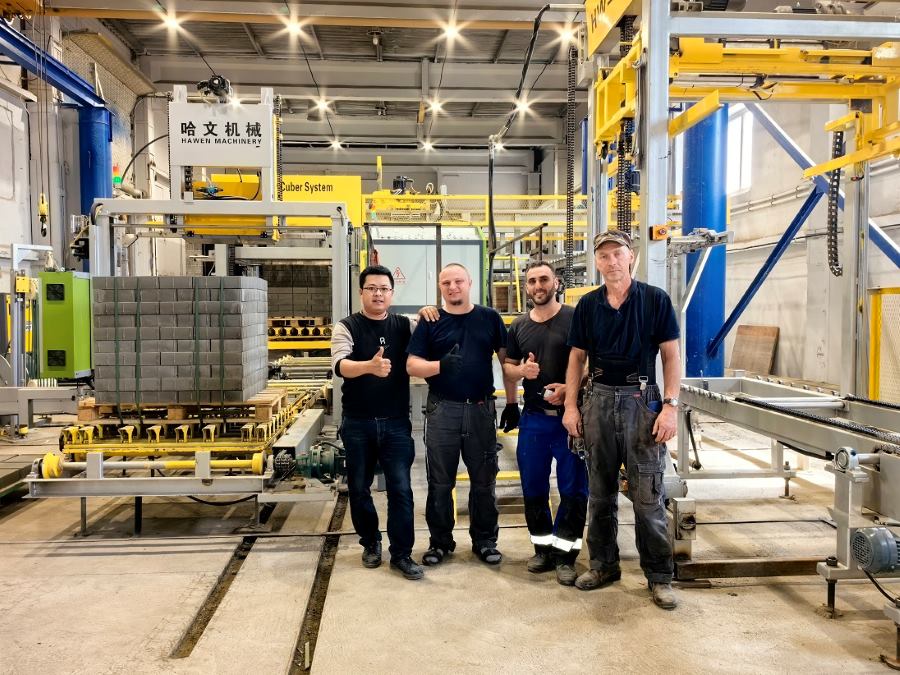
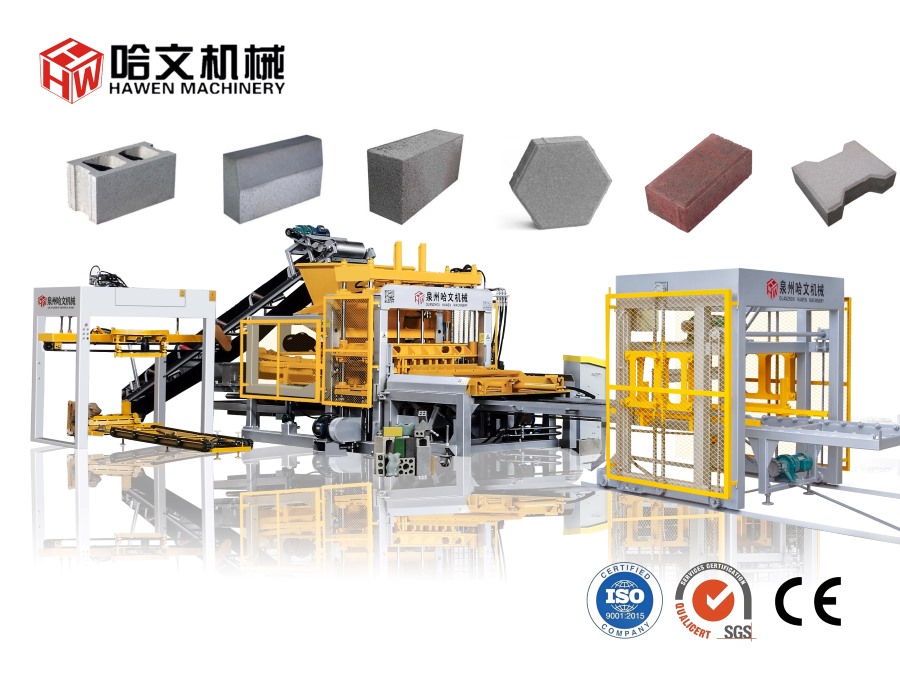
At Hawen Machinery, factory layout recommendations are frequently customized according to local climate conditions, production targets, and customer investment strategy. This practical approach allows many small factories to improve workflow efficiency without excessive infrastructure spending.
Choose Equipment According to Actual Demand
Equipment configuration should reflect operational reality rather than theoretical maximum capacity.
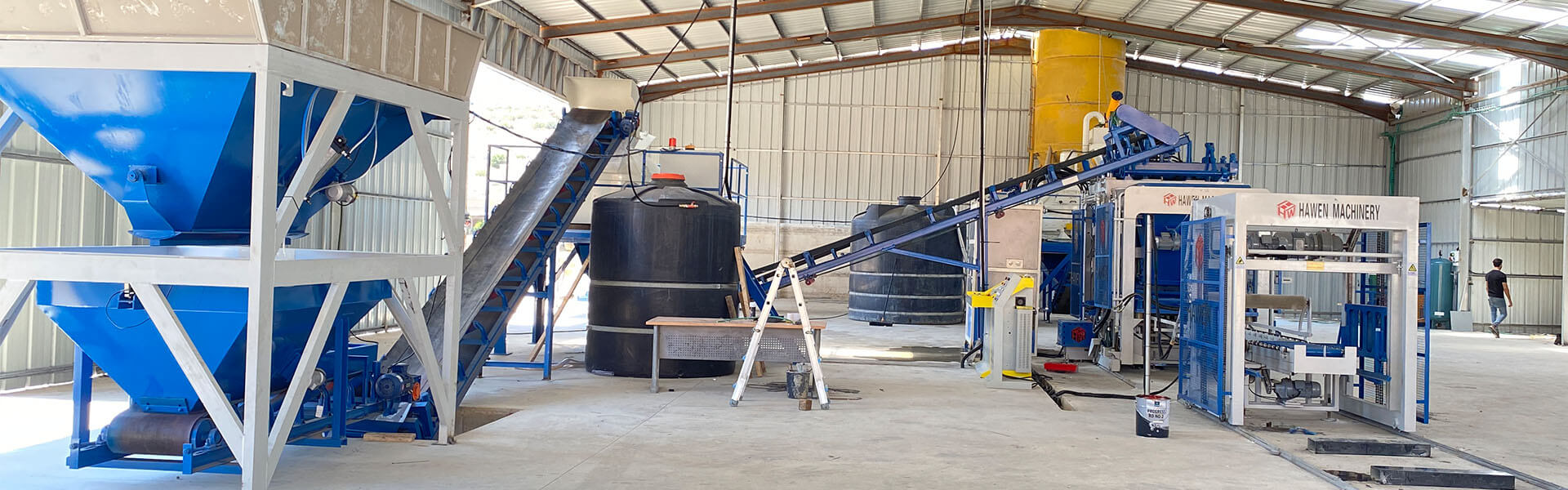
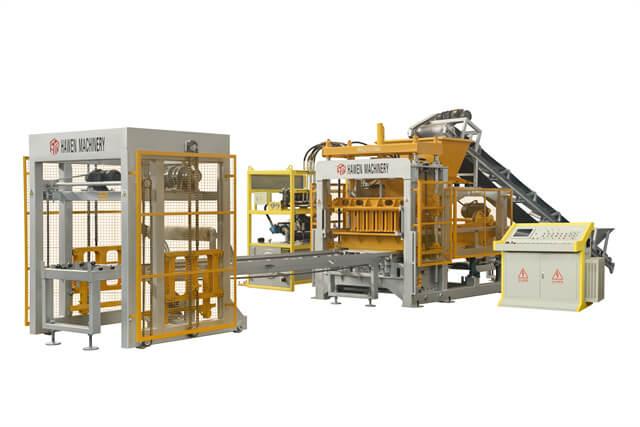
A small-scale concrete block factory commonly includes:
Aggregate storage yard
Batching system
Mixer
Belt conveyor
Block making machine
Pallets
Simple curing area
Manual or semi-automatic stacking system
As production expands, additional automation systems can gradually be integrated, including:
Finger carts
Automatic cubers
Elevator and lowerator systems
Automatic pallet circulation
Intelligent curing chambers
This progressive investment model reduces financial pressure while preserving future expansion flexibility.
A rational startup strategy emphasizes stable cash flow first and large-scale automation later.
Raw Material Management Is Crucial
Even the most advanced concrete block machine cannot compensate for poor raw material control.
Many beginners focus excessively on the brick machine itself while neglecting aggregate quality, moisture consistency, and cement storage conditions.
Yet these factors directly affect:
Compressive strength
Surface smoothness
Block density
Demolding stability
Product durability
Cement exposed to moisture rapidly loses stability, while contaminated aggregates may produce cracking and dimensional inconsistency.
Therefore, even small factories should establish:
Covered cement storage
Segregated aggregate areas
Controlled water supply systems
Drainage channels for rainy seasons
Operational discipline in material management often separates sustainable factories from unstable ones.
Vibration Technology Determines Product Density
In concrete block production, vibration performance is fundamentally important.
Insufficient or unstable vibration frequently causes:
Internal voids
Weak compressive strength
Surface cracks
Edge damage
Inconsistent dimensions
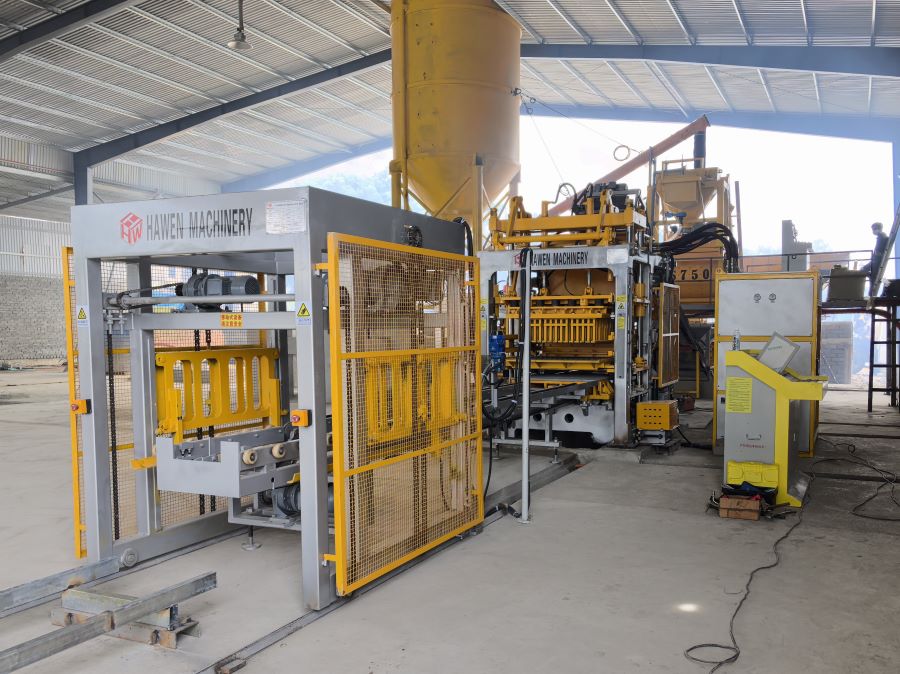
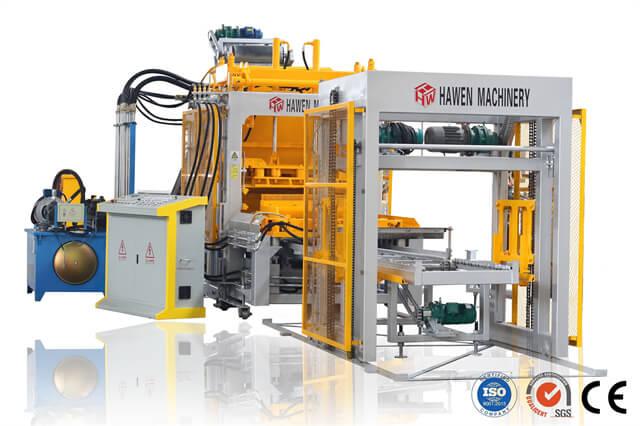
Hawen Machinery adopts a four-shaft vibration box design with eccentric blocks positioned externally. This structural arrangement reduces vibration resistance, improves compaction uniformity, and lowers cement consumption while maintaining production efficiency.
For small-scale factories operating under strict cost control, reduced cement consumption can significantly improve long-term profitability.
Moreover, stable vibration enhances block consistency, which strengthens customer confidence and repeat purchasing behavior.
Hydraulic Stability Improves Operational Reliability
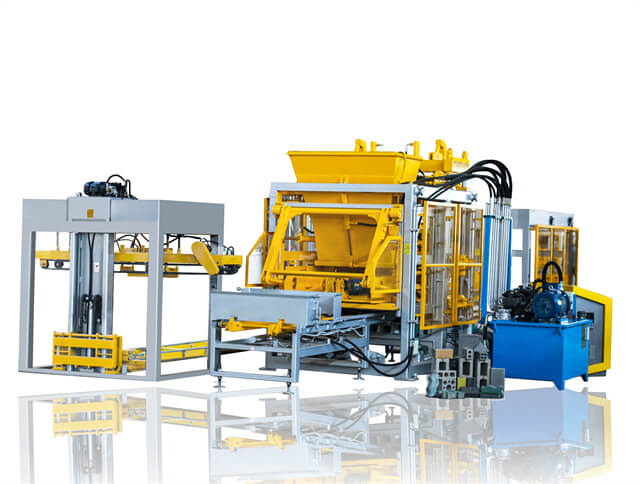
Hydraulic performance remains one of the most decisive factors influencing the long-term stability of a block making machine.
Inferior hydraulic systems often generate:
Pressure instability
Irregular mold movement
Increased maintenance frequency
Oil leakage
Unexpected downtime
To enhance system durability, Hawen Machinery integrates Japanese YUKEN proportional and directional valves together with high-performance American ALBERT hydraulic pumps in many fully automatic block machine configurations. This hydraulic combination delivers accurate pressure control, rapid response characteristics, and stable operation under continuous heavy-duty production conditions.
For small factories, production continuity is often more valuable than theoretical peak output.
Mold Quality Should Never Be Treated as Secondary
Molds are among the most critical productivity assets inside a concrete block factory.
Poor-quality molds inevitably result in:
Dimensional deviation
Surface defects
Premature wear
Higher rejection rates
Unstable pallet release
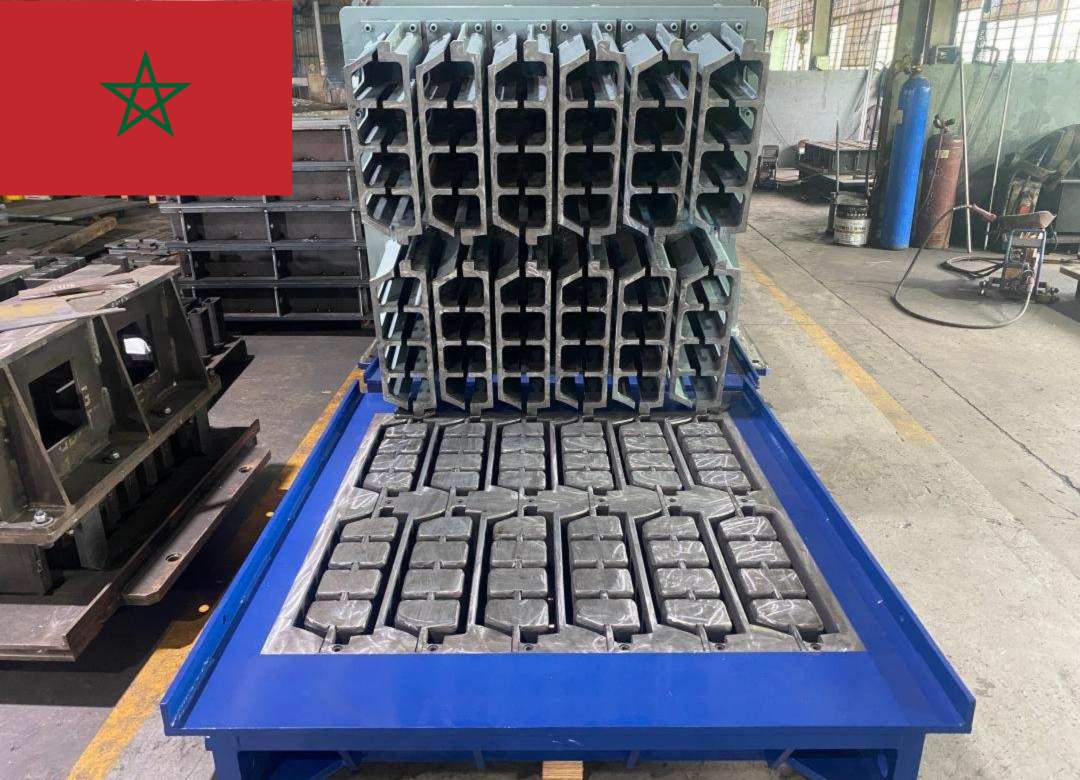
Hawen Machinery designs molds compatible with internationally recognized block machine brands, including Masa, Hess, Zenith, Poyatos, Besser, Tiger, Columbia, Quadar, Omag, and others. By adhering closely to original technical specifications, these molds provide accurate installation, smooth operation, and stable product quality across multiple machine platforms.
All molds undergo professional heat treatment to improve wear resistance, while hardness testing is controlled within the HRC 60–62 range to balance toughness and durability.
For factories operating with limited budgets, durable molds reduce replacement frequency and protect long-term operational efficiency.
Intelligent Control Systems Reduce Human Error
Human operational inconsistency remains a major hidden cost in small factories.
Incorrect feeding timing, unstable vibration cycles, and improper parameter adjustment frequently compromise product quality and production efficiency.
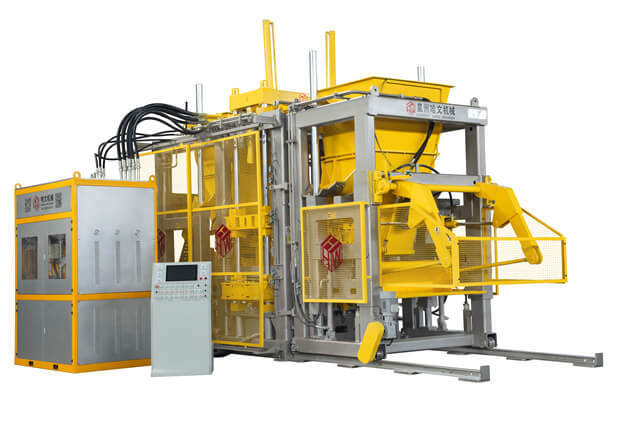
To improve operational precision, Hawen Machinery integrates a SIEMENS S7-200 PLC control system with an intuitive touch-screen interface and remote monitoring functionality. Through this intelligent platform, the operating condition of the block machine can be monitored in real time, while production parameters may be optimized remotely according to actual production conditions.
For startup factories employing inexperienced operators, intelligent control systems significantly reduce avoidable operational losses.
Long-Term Success Depends on Planning, Not Speed
In the block manufacturing industry, sustainable success rarely emerges from impulsive expansion.
Factories that survive economic fluctuations are usually those that:
Understand their local market deeply
Control operational costs carefully
Maintain stable product quality
Expand production rationally
Build reliable customer relationships gradually
A small-scale factory does not represent a limitation. In many cases, it represents a disciplined beginning.
Industrial growth is seldom created by dramatic moments alone. More often, it is constructed quietly — through consistent production cycles, stable product quality, controlled expenditure, and thousands of ordinary operational decisions executed correctly over time.
Because in manufacturing, scale may attract attention initially. But consistency is what ultimately earns trust, secures reputation, and transforms a modest factory into a lasting enterprise.
FAQ
1. What is the ideal size for a small-scale block factory?
The required area depends on production capacity and curing method. Besides the block machine itself, sufficient space is needed for aggregate storage, curing, pallet circulation, and finished product stacking.
2. Should beginners start with a fully automatic brick making machine?
Not necessarily. Many startups achieve better financial stability by beginning with semi-automatic or medium-capacity automatic systems and upgrading gradually as market demand expands.
3. Why is factory layout important in block production?
A rational layout reduces unnecessary transportation distance, improves labor efficiency, minimizes operational congestion, and lowers long-term production costs.
4. How important is mold quality in concrete block manufacturing?
Extremely important. Mold precision directly influences block dimensions, surface finish, demolding stability, and production consistency.
5. What is the biggest planning mistake beginners make?
The most common mistake is focusing exclusively on equipment purchase while neglecting workflow design, raw material management, and long-term operational scalability.






 Tel: +86-13905968794
 Email: export@hwmachines.com
 MP/WhatsApp: +86-13905968794
 Manufacturer Address:Nanan,Quanzhou City,Fujian Province,China