How to Choose Your First Block Making Machine
Author:HAWEN Block MachineFROM:Brick Production Machine Manufacturer
TIME:2026-05-27
Introduction
Entering the concrete block manufacturing industry can be both commercially promising and operationally overwhelming. For first-time investors, the market offers an enormous variety of block machines, brick machines, and automated production systems, each promoted as the “best solution.” Yet the central issue is not simply purchasing equipment. It is selecting a machine configuration that aligns with your market demand, production objectives, capital structure, and long-term development strategy.
Many beginners make the same costly mistake: they either invest in oversized machinery far beyond their operational requirements or purchase low-cost equipment that cannot maintain stable production quality. In both cases, the consequences are similar — escalating maintenance costs, inconsistent concrete blocks, and weakened competitiveness.
Choosing your first block making machine therefore requires more than comparing prices. It requires understanding production logic, mechanical reliability, and the economics of sustainable manufacturing.
This article explains the key factors that should guide your decision before investing in your first concrete block production line.
1. Define What Products You Actually Want to Produce
Before evaluating any block machine, you must first determine your target products.
Different concrete products require different mold structures, vibration parameters, and production capacities. A machine suitable for hollow blocks may not be the ideal choice for colored paving bricks or curb stones.
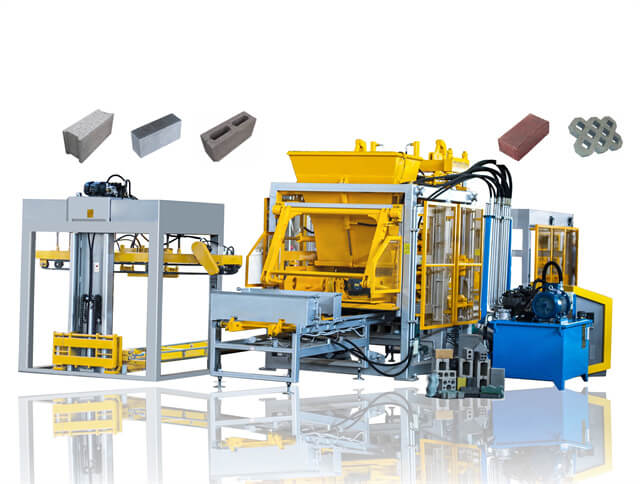
Common product categories include:
Hollow concrete blocks
Solid bricks
Interlocking pavers
Curbstones
Grass planting blocks
Retaining wall units
For example, if your local market primarily demands standard hollow blocks for residential construction, purchasing an expensive multi-layer paving system may create unnecessary financial pressure.
Conversely, if municipal infrastructure projects dominate your region, investing in a more versatile brick making machine capable of producing pavers and curbstones could significantly improve profitability.
Equipment selection should follow market demand — not personal preference.
A rational investor studies the market before studying the machine.
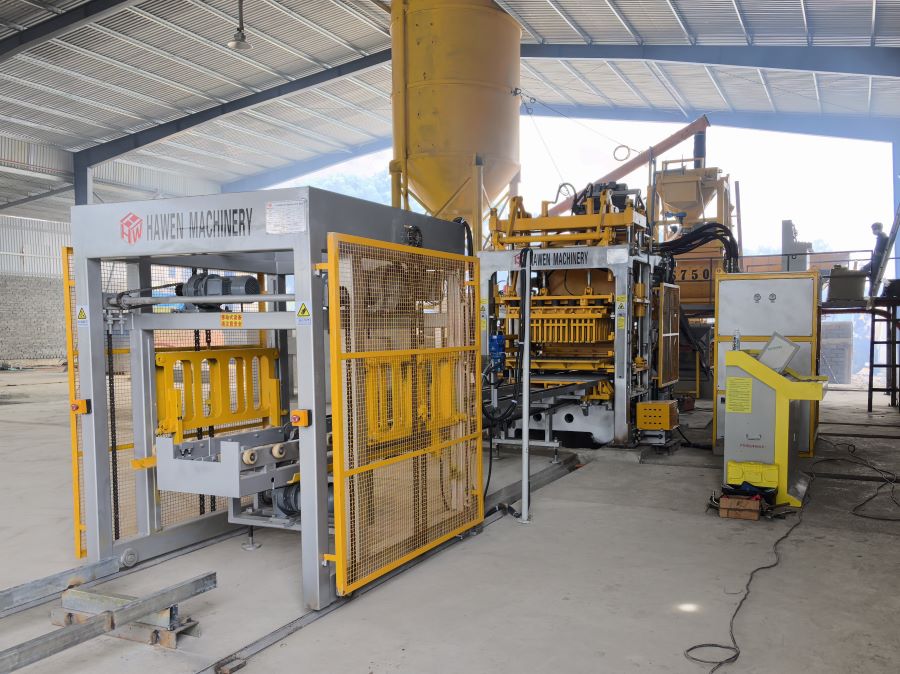
2. Understand the Difference Between Semi-Automatic and Fully Automatic Systems
One of the most important decisions concerns automation level.
Semi-Automatic Block Machines
Semi-automatic systems generally require:
Manual pallet handling
Manual material transfer
Greater labor participation
Their advantages include:
Lower initial investment
Simpler installation
Reduced power consumption
These systems are often suitable for:
Startups
Rural markets
Regions with low labor costs
However, production efficiency and dimensional consistency are comparatively limited.
Fully Automatic Block Making Machines
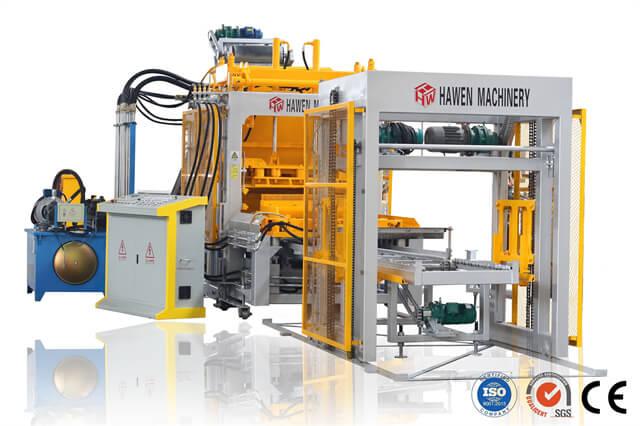
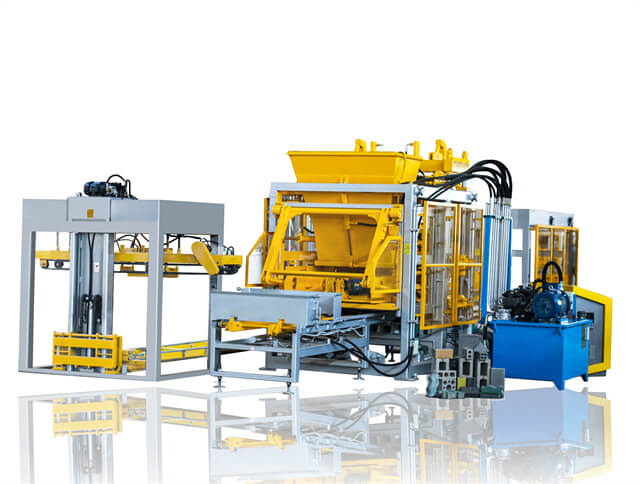
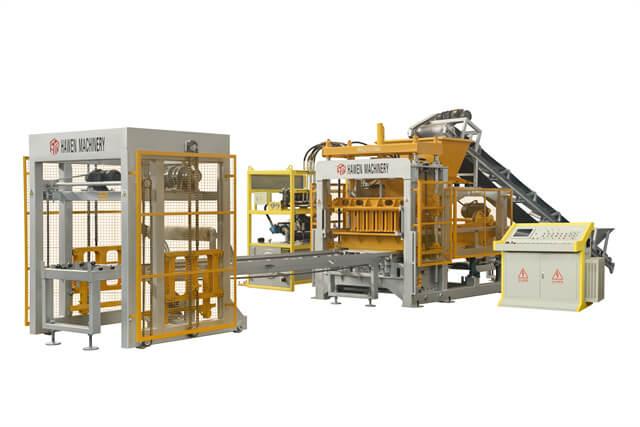
Fully automatic production lines integrate:
Automatic batching
Automatic mixing
Conveyor systems
Automatic stacking
PLC control systems
Such systems dramatically improve:
Production efficiency
Product uniformity
Labor optimization
Operational stability
For investors targeting long-term industrial development, a fully automatic brick machine often provides better lifecycle value despite higher initial expenditure.
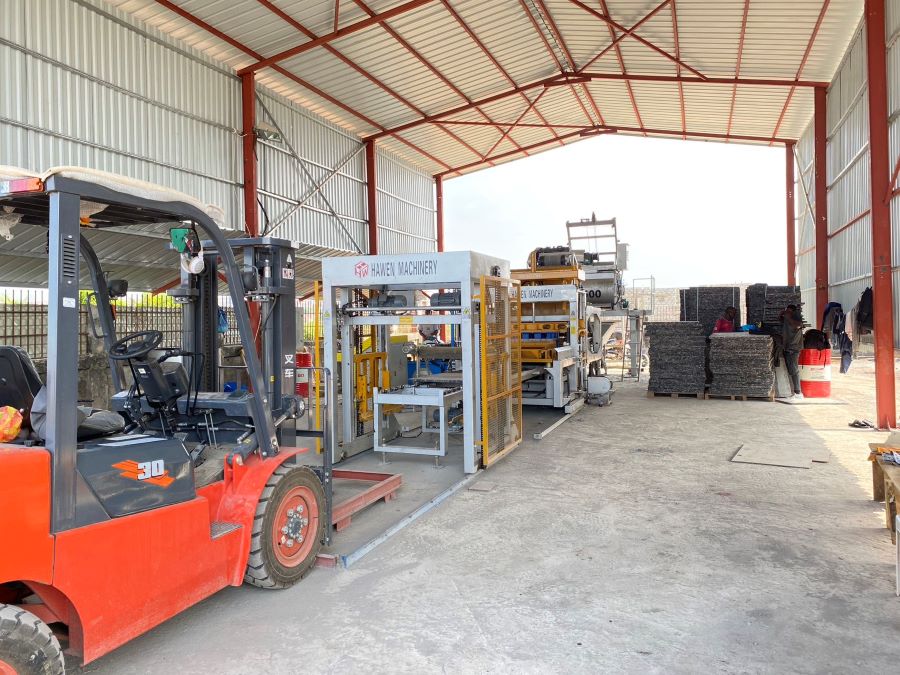
3. Do Not Judge a Block Machine Solely by Output Capacity
Many manufacturers advertise theoretical production output aggressively. Yet experienced investors understand that nominal capacity and actual stable capacity are entirely different concepts.
A machine claiming extremely high output may still suffer from:
Frequent downtime
Unstable vibration
Mold wear
Hydraulic overheating
Poor synchronization
Real productivity depends on operational continuity rather than isolated peak numbers.
A reliable block making machine should maintain:
Stable cycle times
Uniform compaction
Consistent block density
Long-term durability
In industrial manufacturing, sustainable efficiency always outweighs short-term numerical marketing.
4. Pay Close Attention to the Hydraulic System
The hydraulic station is effectively the “circulatory system” of a concrete block machine. Poor hydraulic configuration often results in unstable pressure, sluggish movement, overheating, and accelerated component fatigue.
At Hawen Machinery, the hydraulic system of our brick machine platforms incorporates Japanese YUKEN proportional and directional valve technology together with robust American hydraulic pump components. This combination enables highly responsive motion control, stable pressure transmission, and reliable long-duration operation under demanding production environments.
For beginners, hydraulic stability is particularly important because inexperienced operators often struggle to identify pressure-related abnormalities before they evolve into serious mechanical failures.
A stable hydraulic system reduces:
Maintenance interruptions
Oil leakage risks
Energy loss
Component wear
Over time, these factors substantially influence total operational cost.
5. Vibration System Determines Block Density and Cement Consumption
The vibration structure directly affects:
Block strength
Surface appearance
Density consistency
Raw material efficiency
Weak vibration frequently causes:
Cracked blocks
Low compressive strength
Edge damage
Inconsistent dimensions
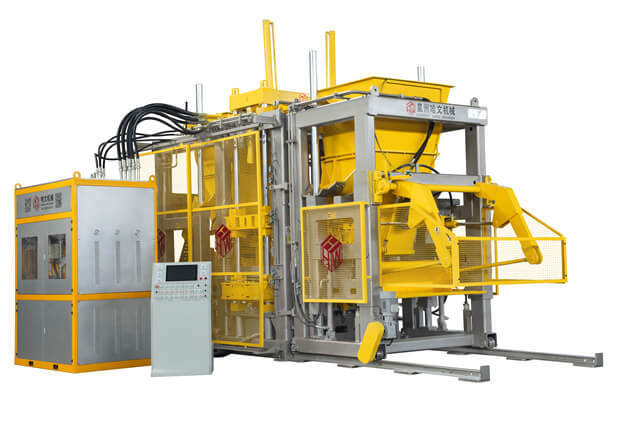
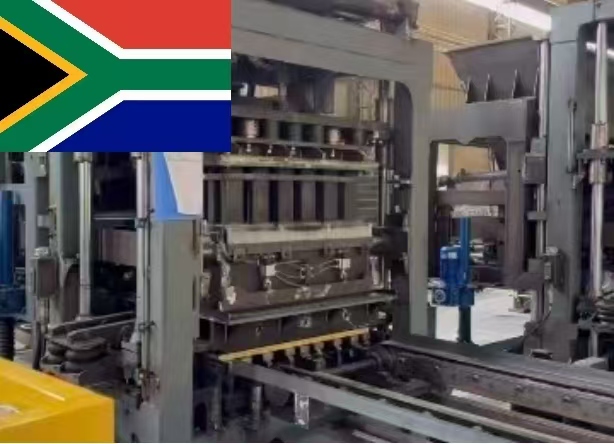
Hawen Machinery adopts a four-shaft vibration box configuration with eccentric blocks positioned externally rather than inside the housing structure. This engineering arrangement lowers vibration resistance, enhances force transmission efficiency, and ensures more uniform material compaction.
An often-overlooked advantage is reduced cement consumption.
When vibration efficiency improves, concrete compacts more effectively with lower cement dependency. In large-scale production, this can significantly reduce long-term material expenditure.
In block production, vibration efficiency is not merely a technical parameter. It is a financial variable.
6. Mold Quality Is More Important Than Many Beginners Realize
New investors often focus almost exclusively on the main machine while underestimating the strategic importance of molds.
In reality, molds directly determine:
Block dimensions
Product appearance
Surface smoothness
Operational precision
At Hawen Machinery, molds are manufactured in accordance with original specifications of internationally recognized brands including Masa, Hess, Zenith, Poyatos, Besser, Tiger, Columbia, Quadar, Omag, and others.
This compatibility ensures:
Accurate installation
Stable operation
Reduced adjustment time
Cross-platform reliability
Moreover, all molds undergo professional heat treatment procedures to improve wear resistance. Hardness testing is maintained within the HRC60–62 range, balancing structural toughness with abrasion resistance.
This substantially extends mold lifespan under high-frequency production conditions.
For a first-time investor, reliable molds reduce both technical risk and maintenance uncertainty.
7. Intelligent Control Systems Improve Operational Stability
Modern automation systems are no longer optional luxuries. Even small and medium-sized factories increasingly rely on intelligent control platforms to maintain stable production quality.
Hawen Machinery integrates SIEMENS S7-200 PLC architecture combined with intuitive touchscreen interfaces and remote monitoring functionality. Through this system, operators can monitor the real-time operating status of the block machine, remotely optimize production parameters, and maintain stable manufacturing consistency.
This becomes especially valuable when:
Skilled technicians are limited
Multiple production shifts operate simultaneously
Remote troubleshooting is required
Automation minimizes human error while improving reproducibility across production cycles.
8. Consider Future Expansion Before Purchasing
Your first block machine should not only satisfy present demand. It should also accommodate future expansion.
Questions worth considering include:
Can the machine support additional molds later?
Can it produce multiple product types?
Is automation upgradeable?
Are spare parts easily obtainable?
Does the manufacturer provide technical support?
A low-cost machine without scalability may eventually become a production bottleneck.
Meanwhile, a well-designed brick making machine with flexible configuration options allows gradual expansion without replacing the entire production system.
Strategic scalability often determines whether a small workshop can eventually evolve into a competitive industrial enterprise.
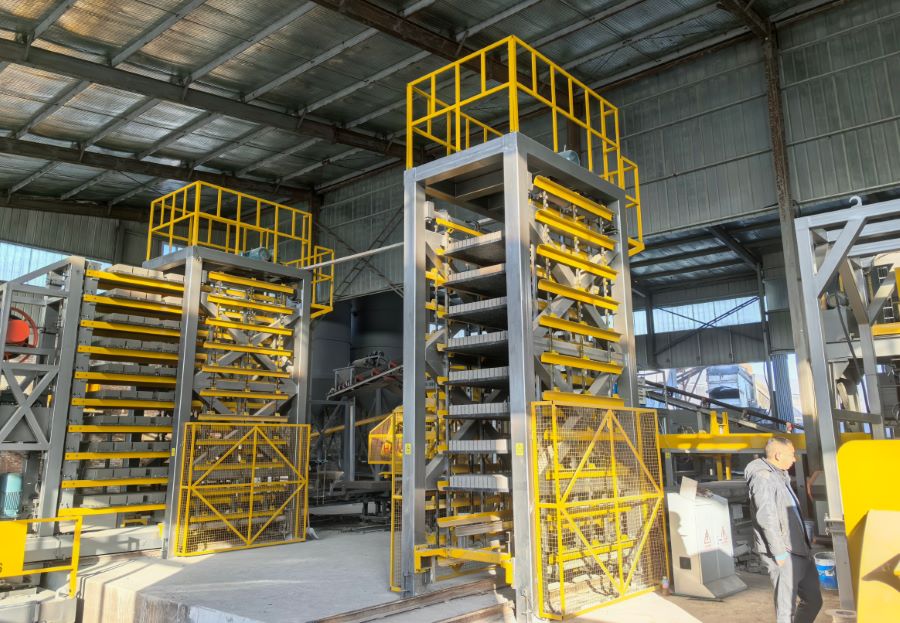
9. After-Sales Support Matters More Than Advertising
Many beginners focus heavily on machine appearance while neglecting after-sales capability.
Yet even high-quality machinery requires:
Technical guidance
Installation assistance
Parameter adjustment
Spare part support
Troubleshooting services
A supplier’s engineering experience is often more valuable than aggressive marketing language.
Reliable manufacturers do not merely sell equipment. They provide operational continuity.
Conclusion
Choosing your first block making machine is not simply a purchasing decision. It is the foundation upon which your entire manufacturing operation will be built.
The right machine should not merely produce concrete blocks. It should create operational stability, material efficiency, and long-term commercial resilience.
In the beginning, many investors believe success depends primarily on production quantity. With experience, however, they gradually realize that sustainable profitability emerges from something deeper: consistency, durability, and intelligent system design.
A dependable block machine transforms raw aggregates into infrastructure. A reliable brick machine transforms investment into industrial capability. And behind every well-produced concrete block lies a larger story — one of urban growth, economic development, and human construction on a continually expanding scale.
Factories do not simply manufacture products.
They participate in building cities, industries, and the structural foundations of the future itself.
FAQ
1. What is the best block machine for beginners?
The best choice depends on:
Budget
Local labor cost
Production target
Product type
For many startups, a semi-automatic block making machine provides a practical balance between affordability and operational efficiency.
2. Should I choose a fully automatic brick machine immediately?
Not always. Fully automatic systems improve efficiency and reduce labor dependency, but they also require higher investment and more stable infrastructure. Many successful factories begin with compact systems and expand gradually.
3. Why is vibration quality so important in concrete block production?
Efficient vibration improves:
Block density
Compressive strength
Surface quality
Cement utilization efficiency
Poor vibration often results in weak or cracked concrete blocks.
4. How long should a quality mold last?
Mold lifespan depends on:
Material quality
Heat treatment
Production frequency
Maintenance conditions
Professionally heat-treated molds with HRC60–62 hardness generally provide significantly longer operational durability.
5. What should I prioritize more: low price or machine stability?
Machine stability is usually more important over the long term. Frequent downtime, inconsistent blocks, and maintenance interruptions often cost far more than the initial price difference between machines.





 Tel: +86-13905968794
 Email: export@hwmachines.com
 MP/WhatsApp: +86-13905968794
 Manufacturer Address:Nanan,Quanzhou City,Fujian Province,China