What Is Smart Control in Block Manufacturing
Author:HAWEN Block MachineFROM:Brick Production Machine Manufacturer
TIME:2026-04-25
In the evolution of industrial production, the concept of “control” has undergone a profound transformation. It is no longer confined to manual switches or fixed automation sequences. Instead, smart control represents a convergence of real-time data processing, adaptive algorithms, and integrated system coordination. In block manufacturing, this shift is particularly consequential, as production quality depends on the precise orchestration of multiple interdependent variables.
1. Defining Smart Control: Beyond Conventional Automation
At its core, smart control refers to an intelligent system that not only executes predefined instructions but also adjusts operational parameters dynamically based on real-time feedback.
Traditional automation follows a linear logic: input → process → output. Smart control, however, introduces a feedback loop, enabling continuous optimization. This distinction is subtle yet decisive. It allows machines to respond to variations in raw materials, environmental conditions, and mechanical load without human intervention.
In practical terms, smart control transforms a block machine from a passive executor into an active decision-making system.
2. The Role of PLC Systems in Smart Control Architecture
A robust control system is the backbone of smart manufacturing. In modern block machines, programmable logic controllers (PLCs) serve as the central processing unit that coordinates all subsystems.
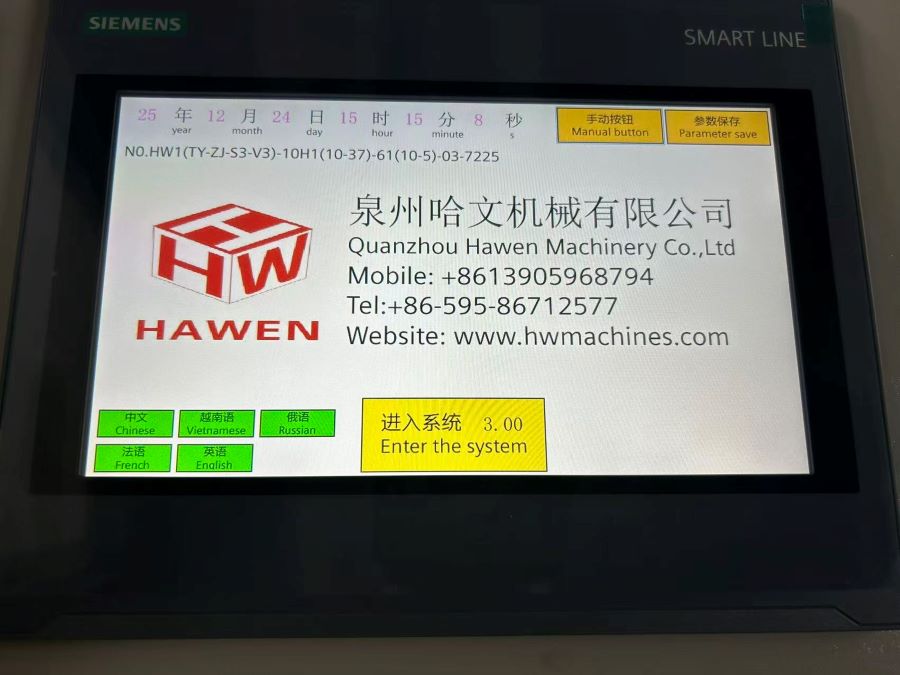
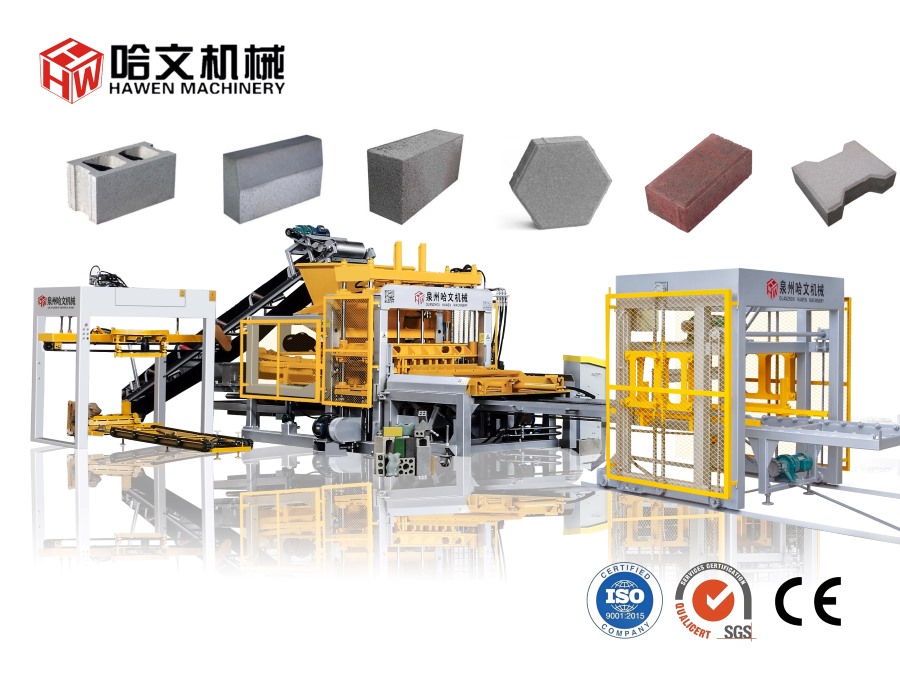
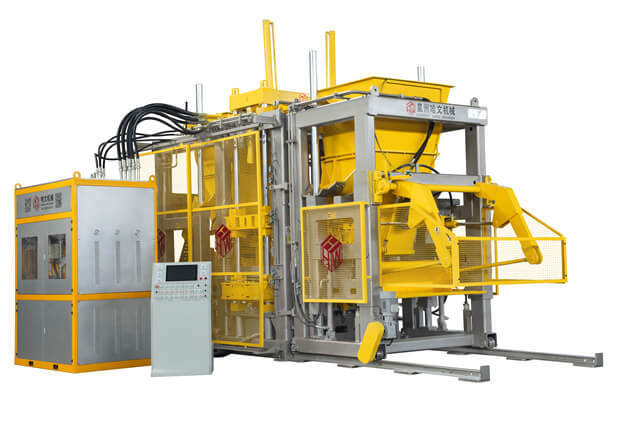
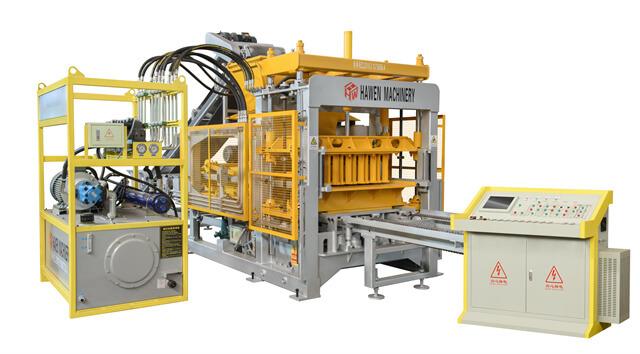
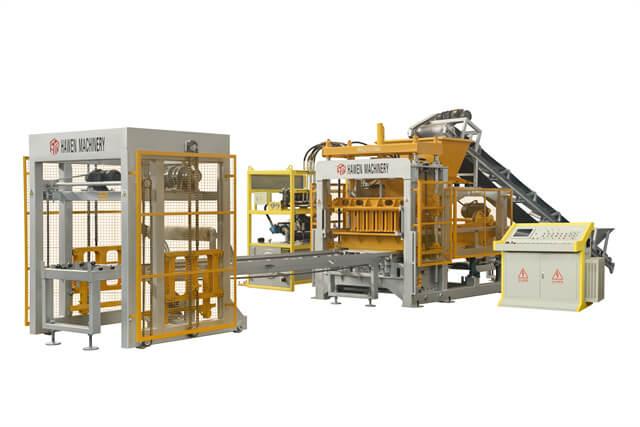
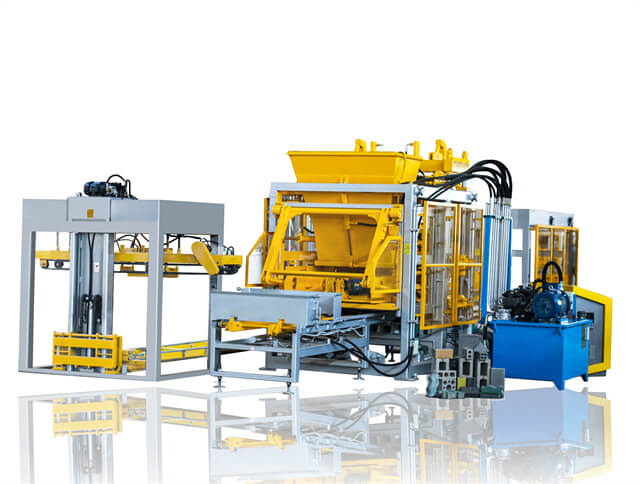
Hawen Machinery integrates a SIEMENS S7-200 PLC with an intuitive touch panel and remote monitoring capabilities. This configuration enables operators to visualize real-time machine status, adjust parameters remotely, and maintain consistent production quality across different operating conditions.
Note: The significance of PLC integration lies not merely in automation, but in its capacity to standardize performance. It reduces reliance on operator experience and ensures repeatability—a critical factor in large-scale production.
3. Intelligent Coordination of Vibration Systems
Vibration is the decisive mechanism in block formation, directly influencing density, strength, and surface finish. However, achieving uniform compaction requires precise synchronization.
Hawen Machinery adopts a four-shaft vibration box design, with eccentric blocks positioned outside the housing. This engineering approach minimizes resistance during vibration, ensures even compaction, and reduces cement consumption while enhancing efficiency.
When governed by a smart control system, vibration parameters—such as frequency, amplitude, and duration—can be adjusted automatically in response to material behavior. This dynamic regulation ensures that each production cycle operates under optimal conditions, even when external variables fluctuate.
4. Hydraulic System Integration and Adaptive Pressure Control
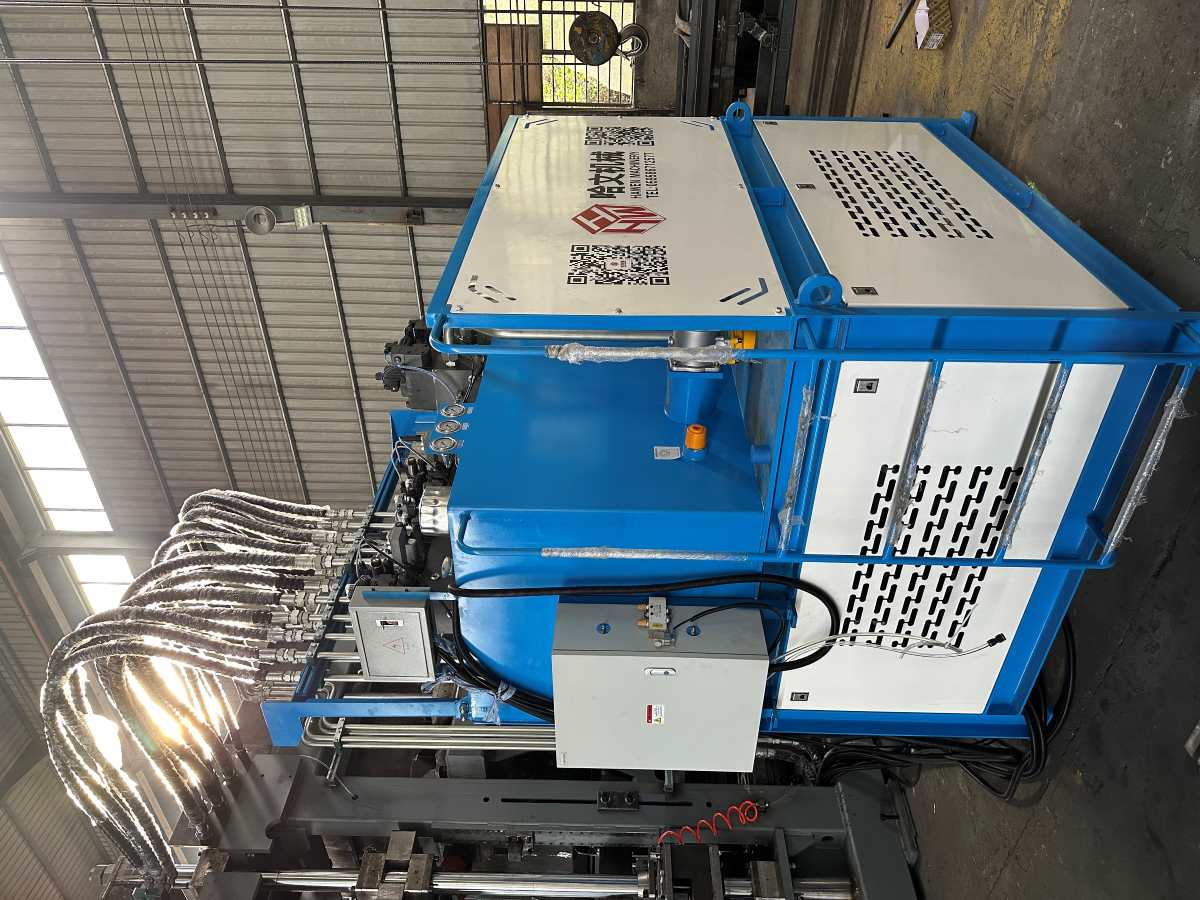
The hydraulic system is another critical component in block manufacturing, responsible for mold movement, pressing force, and cycle stability. Smart control systems enhance hydraulic performance by continuously monitoring pressure levels and adjusting flow rates accordingly.
In advanced configurations, hydraulic stations incorporate high-precision components, including Japanese YUKEN proportional and directional valves combined with American ALBERT hydraulic pumps. This arrangement ensures accurate flow control, high load capacity, and long-term operational stability.
Through sensor feedback and control algorithms, smart systems can detect pressure deviations and correct them instantly, thereby preventing defects such as insufficient compaction or structural inconsistency.
5. Mold Compatibility and Process Consistency
Even the most advanced control system cannot compensate for poor mold design. Therefore, smart control must be complemented by high-precision tooling.
Hawen Machinery designs molds compatible with leading global brands, including MASA, HESS, ZENITH, POYATOS, BESSER, TIGER, and others. By adhering to original specifications, these molds ensure accurate fitting, smooth demolding, and consistent block geometry. Additionally, all molds undergo heat treatment to enhance wear resistance and extend service life.
Smart control systems further optimize mold performance by regulating filling time, vibration intensity, and demolding sequences. This integrated approach minimizes dimensional deviation and improves overall product uniformity.
6. Data-Driven Decision Making and Predictive Optimization
A defining feature of smart control is its reliance on data. By continuously collecting and analyzing operational metrics, the system can identify inefficiencies and implement corrective measures proactively.
For instance, deviations in cycle time or energy consumption can signal underlying issues. Smart control systems interpret these signals and adjust machine behavior accordingly, often before operators are even aware of the problem.
This predictive capability not only improves efficiency but also reduces maintenance costs and extends equipment lifespan.
FAQ: Smart Control in Block Manufacturing
1. How is smart control different from traditional automation?
Smart control incorporates real-time feedback and adaptive adjustment, whereas traditional automation follows fixed, pre-programmed sequences.
2. Does smart control require highly skilled operators?
Not necessarily. Modern systems feature user-friendly interfaces, allowing operators to manage complex processes with minimal technical expertise.
3. Can smart control improve product consistency?
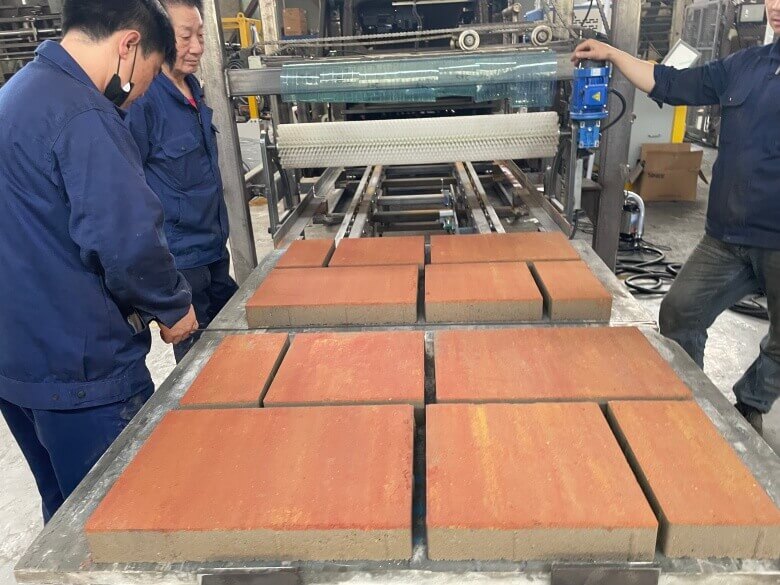
Yes. By stabilizing key variables such as vibration and hydraulic pressure, it ensures uniform block quality across production cycles.
4. Is smart control suitable for small and medium factories?
Absolutely. Scalable control systems can be implemented in various production environments, offering efficiency gains regardless of plant size.
Conclusion
Smart control in block manufacturing is not merely an incremental upgrade—it is a paradigm shift. By integrating data intelligence, precise actuation, and system-wide coordination, it elevates production from a mechanical process to a cognitively guided operation.
In this emerging industrial landscape, competitiveness is increasingly defined by the ability to adapt, optimize, and respond in real time. Smart control embodies this capability. It transforms machines into responsive systems, production lines into intelligent networks, and manufacturing itself into a continuously evolving discipline—where efficiency is no longer pursued, but inherently achieved.





 Tel: +86-13905968794
 Email: export@hwmachines.com
 MP/WhatsApp: +86-13905968794
 Manufacturer Address:Nanan,Quanzhou City,Fujian Province,China