How to Measure the Quality of Concrete Blocks Accurately
Author:HAWEN Block MachineFROM:Brick Production Machine Manufacturer
TIME:2026-03-24
In concrete block manufacturing, quality is not an abstract concept; it is a measurable, verifiable outcome defined by engineering standards and production consistency. Accurate evaluation of block quality is essential not only for compliance with specifications, but also for ensuring structural safety, durability, and long-term performance in real-world applications.
This article provides a systematic framework for assessing the quality of concrete blocks with precision, combining material science principles, standardized testing methods, and modern manufacturing insights.
Defining “Quality” in Concrete Blocks
Before measurement, it is necessary to clarify what “quality” entails. In practical terms, high-quality concrete blocks exhibit:
adequate compressive strength
consistent density and internal structure
precise dimensions and geometry
low water absorption
uniform surface finish
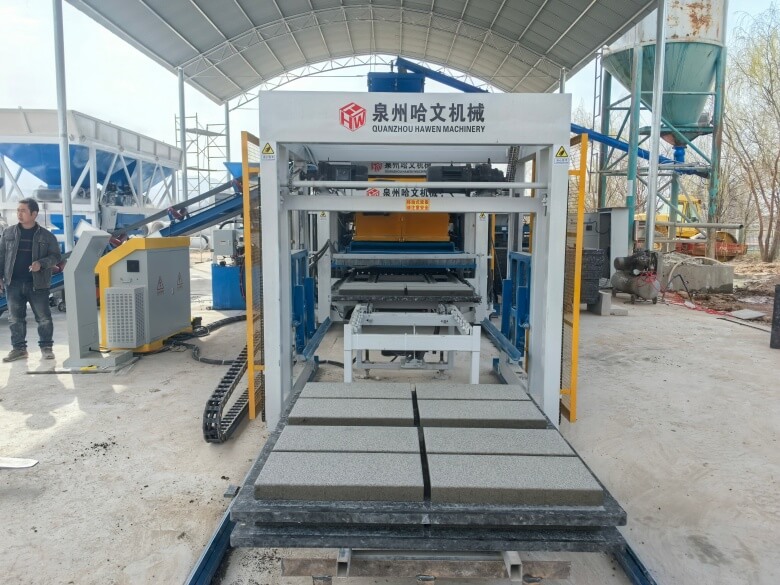 These parameters collectively determine whether a block can perform reliably under structural and environmental stresses.
1. Compressive Strength Testing
Compressive strength is the primary indicator of structural performance. It is measured by applying load to a block until failure, typically using a compression testing machine.
Standard unit: MPa (megapascals)
Key requirement: uniform load distribution during testing
A high-quality block should not only meet minimum strength requirements but also demonstrate consistency across multiple samples.
Annotation: Variability in test results often indicates inconsistencies in compaction or curing rather than material composition alone.
2. Dimensional Accuracy and Tolerance
Precise dimensions are critical for structural alignment and construction efficiency. Measurement is typically conducted using calipers or steel rulers to verify:
length, width, and height
squareness and edge alignment
tolerance within specified limits
Poor dimensional accuracy leads to increased mortar consumption and compromised wall integrity.
3. Density and Internal Structure
Block density reflects the degree of compaction and material distribution. It is calculated by dividing mass by volume.
Higher density → improved strength and durability
Lower density → potential internal voids and weak zones
Uniform density across batches is a hallmark of controlled manufacturing processes.
4. Water Absorption Rate
Water absorption testing evaluates the block’s porosity and resistance to moisture ingress.
Measured as a percentage increase in weight after water immersion
Lower absorption indicates better durability and weather resistance
Excessive absorption can lead to freeze-thaw damage and long-term degradation.
5. Surface Quality and Visual Inspection
While often underestimated, surface quality provides immediate insight into production consistency. Key aspects include:
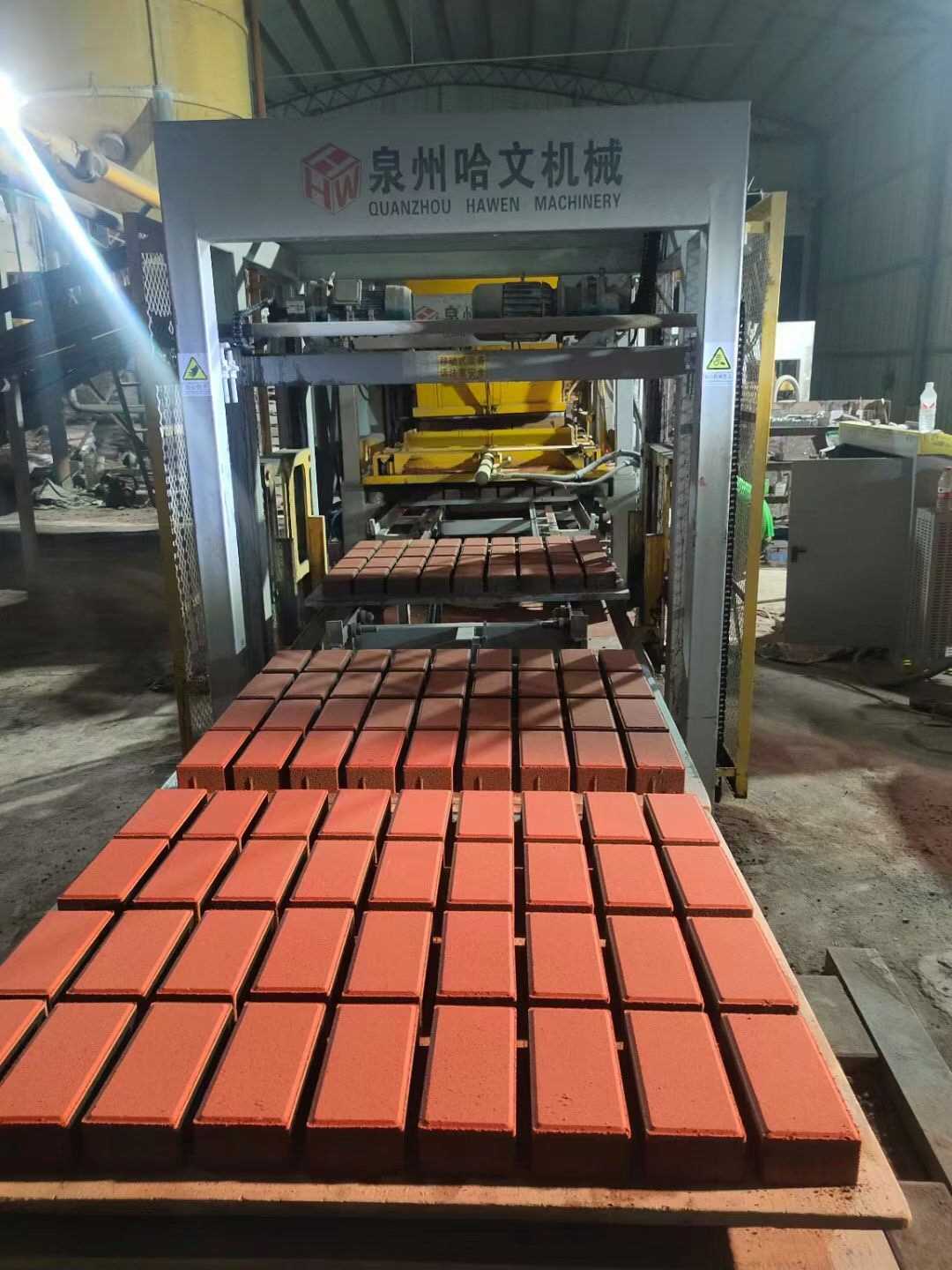
smooth and uniform surface texture
absence of cracks or honeycombing
consistent color distribution
Visual inspection serves as a preliminary quality filter before laboratory testing.
6. The Role of Manufacturing Precision
Accurate quality measurement is only meaningful when supported by consistent production conditions. Variations in compaction, pressure, or mold precision can lead to significant discrepancies in block performance.
Vibration and Compaction
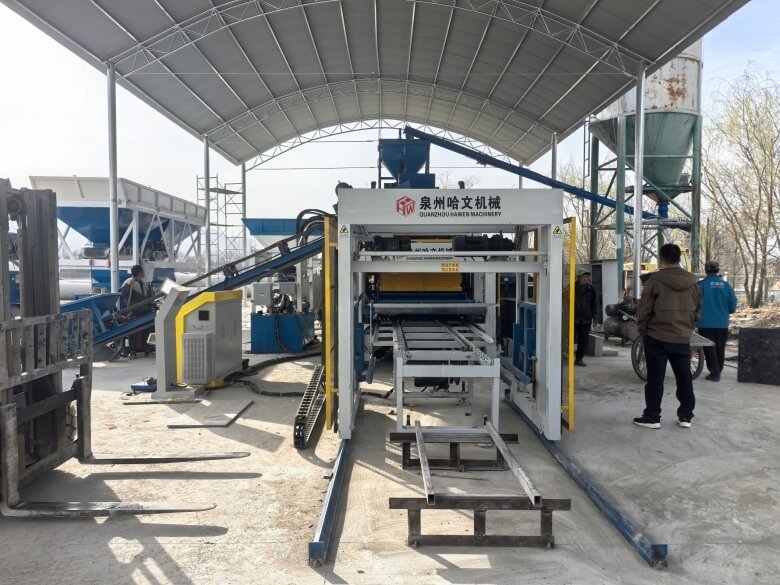
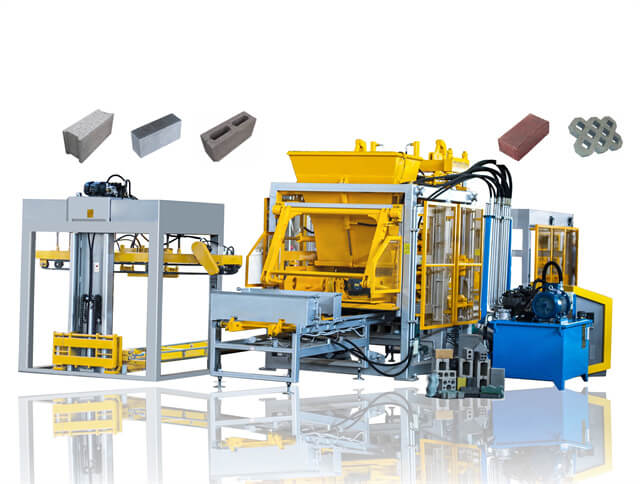
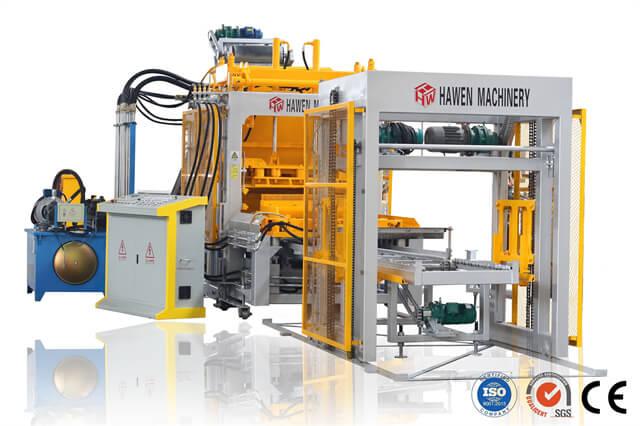
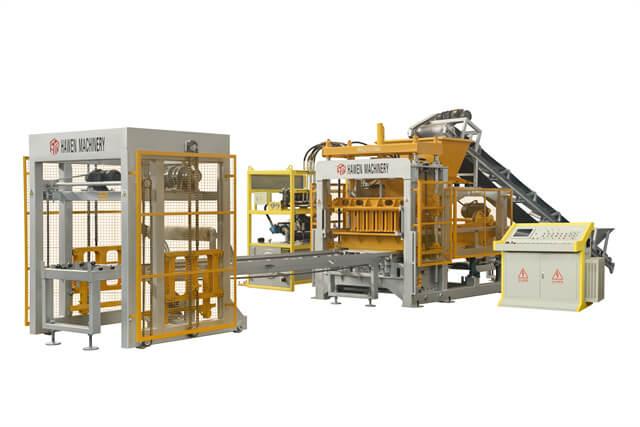
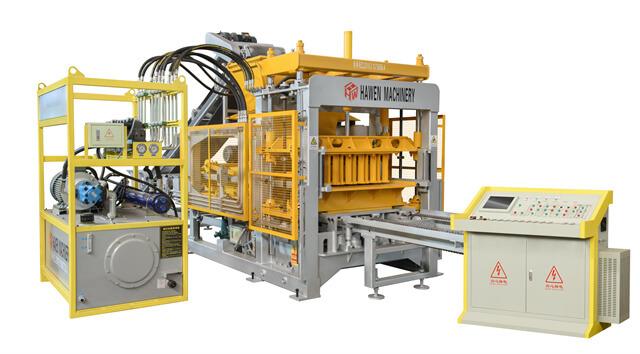
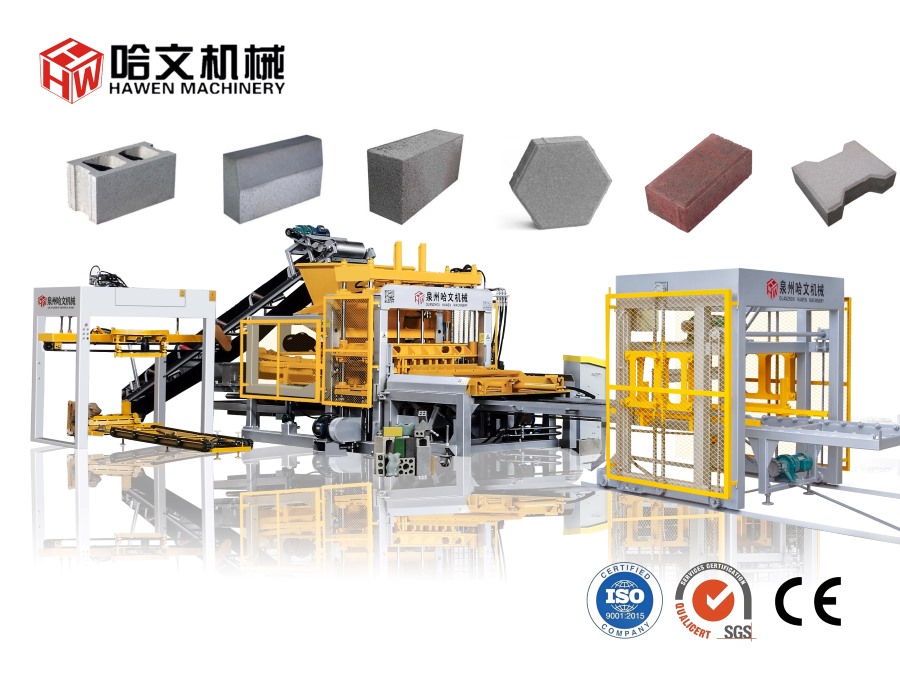
Hawen Machinery adopts a four-shaft vibration box design, with eccentric blocks positioned outside the housing. This configuration reduces resistance during vibration, ensures uniform compaction, and lowers cement consumption while improving overall efficiency.
Hydraulic Stability
The hydraulic system integrates high-performance proportional and directional valves from Japan together with robust American hydraulic pumps, ensuring stable forming pressure and precise control during high-speed production cycles.
Intelligent Process Control
Hawen Machinery integrates a SIEMENS S7-200 PLC system with an intuitive touch panel and remote monitoring capabilities. This allows operators to track real-time operating conditions, optimize parameters remotely, and maintain consistent product quality.
Mold Precision
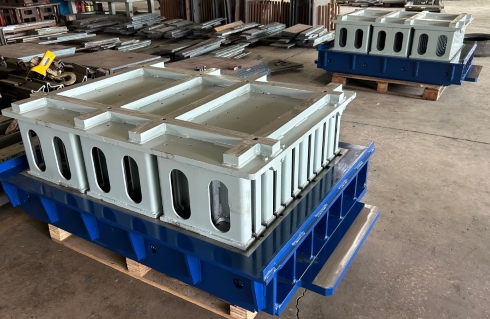
Hawen Machinery designs molds compatible with leading brands such as MASA, HESS, ZENITH, POYATOS, BESSER, TIGER, all of which undergo heat treatment. These molds ensure precise fit, smooth operation, and consistent block dimensions across production runs.
Integrating Testing with Production Control
Accurate measurement should not be treated as an isolated activity. Instead, it must be integrated into a closed-loop quality control system, where testing results inform process adjustments.
Strength deviations → adjust vibration or material ratios
Dimensional errors → inspect mold wear or alignment
Density variations → recalibrate compaction parameters
Annotation: The most advanced manufacturers do not merely test quality; they continuously engineer it through feedback-driven optimization.
Toward Precision-Driven Manufacturing
The accurate measurement of concrete block quality reflects a broader shift in the industry—from empirical production to data-driven precision manufacturing. Quality is no longer judged by isolated test results, but by the consistency, repeatability, and traceability of the entire production process.
Hawen Machinery embodies this transition by integrating advanced vibration systems, precise hydraulic control, intelligent automation, and high-quality molds, enabling manufacturers to achieve stable, measurable, and reproducible quality outcomes.
In an era where construction standards are rising and project risks are increasingly scrutinized, the true value of quality lies not only in meeting specifications, but in delivering predictable performance at scale. Accurate measurement, therefore, is not the end of the process—it is the foundation upon which trust, reliability, and industrial excellence are built.
FAQ: Measuring Concrete Block Quality
1. What is the most important parameter when evaluating block quality?
Compressive strength is the primary parameter, but it should be evaluated alongside density, water absorption, and dimensional accuracy for a comprehensive assessment.
2. How many samples are needed for accurate testing?
Typically, multiple samples (at least 3–5) are tested to ensure statistical reliability and consistency of results.
3. Can visual inspection replace laboratory testing?
No. Visual inspection is useful for preliminary evaluation, but accurate quality assessment requires standardized testing methods.
4. How does manufacturing affect quality measurement results?
Variations in compaction, hydraulic pressure, and mold precision directly influence test outcomes. Consistent production is essential for reliable measurements.
5. Why is consistency more important than peak performance?
Because construction reliability depends on uniform performance across all blocks, not isolated high-strength samples. Consistency reduces structural risk and improves long-term durability.





 Tel: +86-13905968794
 Email: export@hwmachines.com
 MP/WhatsApp: +86-13905968794
 Manufacturer Address:Nanan,Quanzhou City,Fujian Province,China