Why Fully Automatic Block Machines Reduce Long-Term Costs
Author:HAWEN Block MachineFROM:Brick Production Machine Manufacturer
TIME:2026-02-02
Why Fully Automatic Block Machines Reduce Long-Term Costs
Introduction: Cost Is a Lifecycle Question
In block manufacturing, cost is often discussed in terms of initial investment. Fully automatic block machines, with their higher upfront price, are therefore sometimes perceived as a financial burden rather than a rational choice. This view, however, reflects a short-term accounting mindset rather than an industrial one.
In reality, production cost is not determined at the moment of purchase. It is shaped over years of operation through labor efficiency, material utilization, equipment stability, maintenance frequency, and production consistency. When evaluated through this longer horizon, fully automatic block machines are not more expensive; they are structurally more economical.
1. Labor Dependency as a Hidden Cost Driver
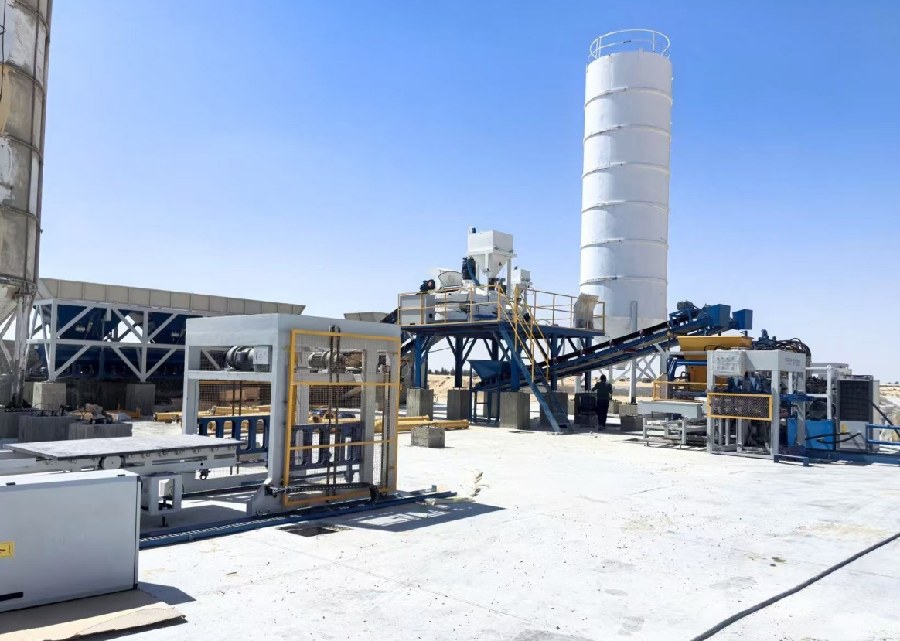
Manual and semi-automatic production lines rely heavily on operator experience and coordination. Output quality, cycle time, and even equipment safety are often influenced by individual skill levels, shift changes, and fatigue. While labor costs may appear manageable at the beginning, they tend to rise steadily due to turnover, training requirements, and productivity inconsistency.
Fully automatic block machines significantly reduce this dependency. Automated feeding, forming, and discharge processes standardize operations across shifts, allowing a smaller team to manage higher output with greater predictability. Over time, reduced labor volatility translates into lower indirect costs and improved operational discipline.
 2. Material Efficiency: Small Savings That Compound
Material cost, especially cement consumption, represents a substantial portion of total production expense. Inconsistent compaction and unstable forming parameters often force producers to compensate by increasing cement dosage, masking mechanical deficiencies with material overuse.
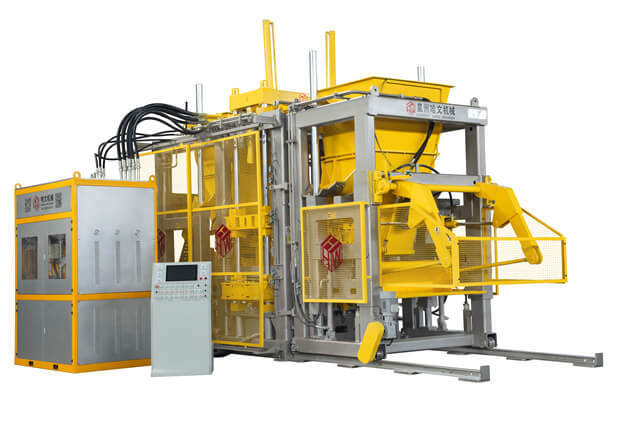
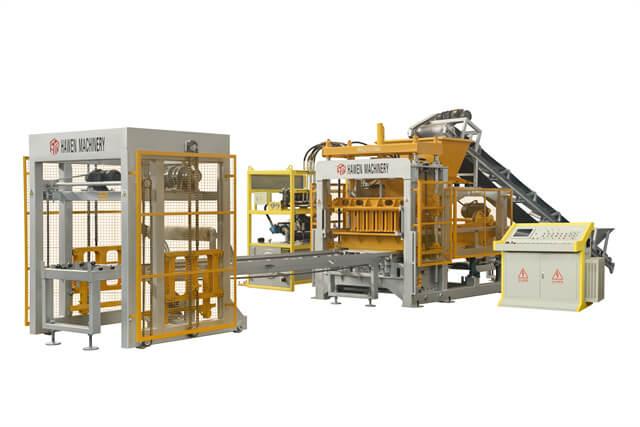
Hawen Machinery adopts a four-shaft vibration box design, positioning eccentric blocks outside the housing. This reduces resistance during vibration, ensures uniform compaction, and lowers cement consumption while improving overall efficiency. By achieving higher density through effective vibration rather than excessive cement, fully automatic systems reduce unit cost at its source.
These marginal savings may appear modest on a per-block basis, yet under continuous high-volume production, they compound over time into a decisive cost advantage.
3. Hydraulic Stability and the Economics of Repeatability
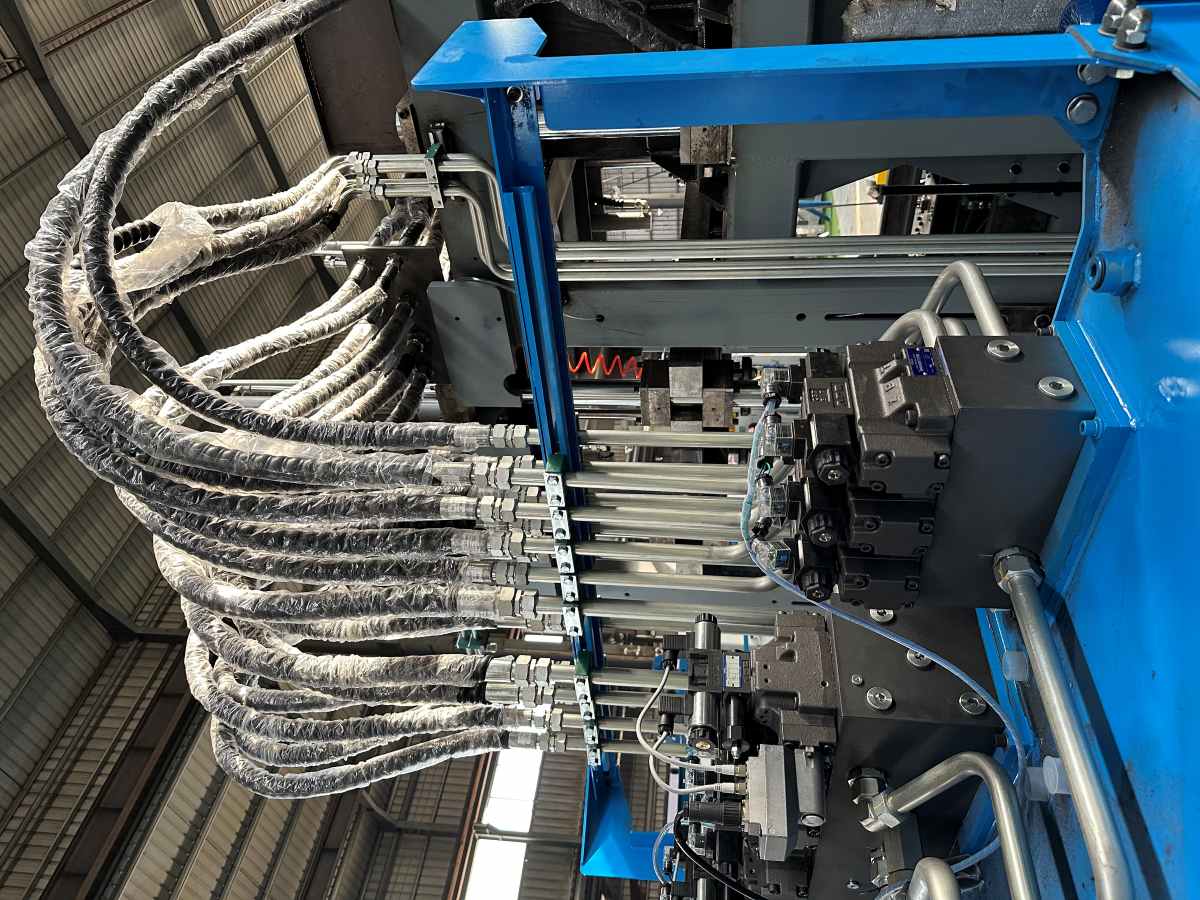
The hydraulic system is central to forming pressure, cycle timing, and mechanical synchronization. In less advanced machines, pressure fluctuation and delayed response introduce variability into each production cycle, increasing reject rates and accelerating component wear.
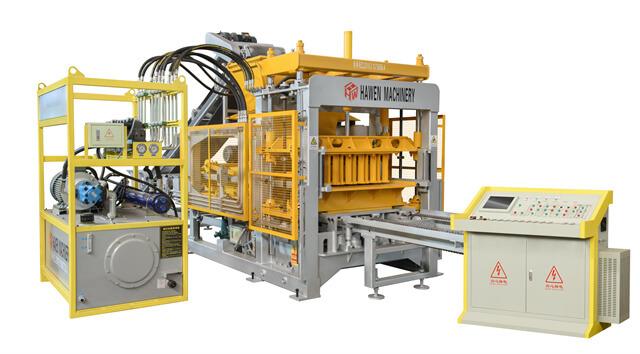
At Hawen Machinery, the hydraulic station of our block machines adopts Japanese YUKEN proportional and directional valves and an American ALBERT hydraulic pump, combining precise control with high load capacity and long-term durability. This configuration ensures stable pressure output and consistent motion control under continuous operation.
From a cost perspective, hydraulic stability reduces unplanned downtime, limits corrective maintenance, and protects critical components from premature failure. Repeatability, in this sense, is not merely a quality metric; it is a direct contributor to cost containment.
2. Material Efficiency: Small Savings That Compound
Material cost, especially cement consumption, represents a substantial portion of total production expense. Inconsistent compaction and unstable forming parameters often force producers to compensate by increasing cement dosage, masking mechanical deficiencies with material overuse.
Hawen Machinery adopts a four-shaft vibration box design, positioning eccentric blocks outside the housing. This reduces resistance during vibration, ensures uniform compaction, and lowers cement consumption while improving overall efficiency. By achieving higher density through effective vibration rather than excessive cement, fully automatic systems reduce unit cost at its source.
These marginal savings may appear modest on a per-block basis, yet under continuous high-volume production, they compound over time into a decisive cost advantage.
3. Hydraulic Stability and the Economics of Repeatability
The hydraulic system is central to forming pressure, cycle timing, and mechanical synchronization. In less advanced machines, pressure fluctuation and delayed response introduce variability into each production cycle, increasing reject rates and accelerating component wear.
At Hawen Machinery, the hydraulic station of our block machines adopts Japanese YUKEN proportional and directional valves and an American ALBERT hydraulic pump, combining precise control with high load capacity and long-term durability. This configuration ensures stable pressure output and consistent motion control under continuous operation.
From a cost perspective, hydraulic stability reduces unplanned downtime, limits corrective maintenance, and protects critical components from premature failure. Repeatability, in this sense, is not merely a quality metric; it is a direct contributor to cost containment.
 4. Automation and Control: Managing Cost Through Data
Fully automatic block machines replace experience-driven adjustment with parameter-driven control. This transition has profound economic implications. When production parameters are digitally defined and consistently executed, variability is reduced, and troubleshooting becomes more efficient.
Hawen Machinery integrates a SIEMENS S7-200 PLC with an intuitive touch panel and remote monitoring capabilities. Through this system, we can track the real-time operating status of customers' block machines, optimize operational parameters remotely, and ensure consistent production quality. Remote diagnostics shorten response time and prevent minor deviations from escalating into costly shutdowns.
Over the machine’s service life, this level of control reduces waste, improves uptime, and transforms maintenance from reactive intervention into planned management.
5. Mold Quality and Investment Protection
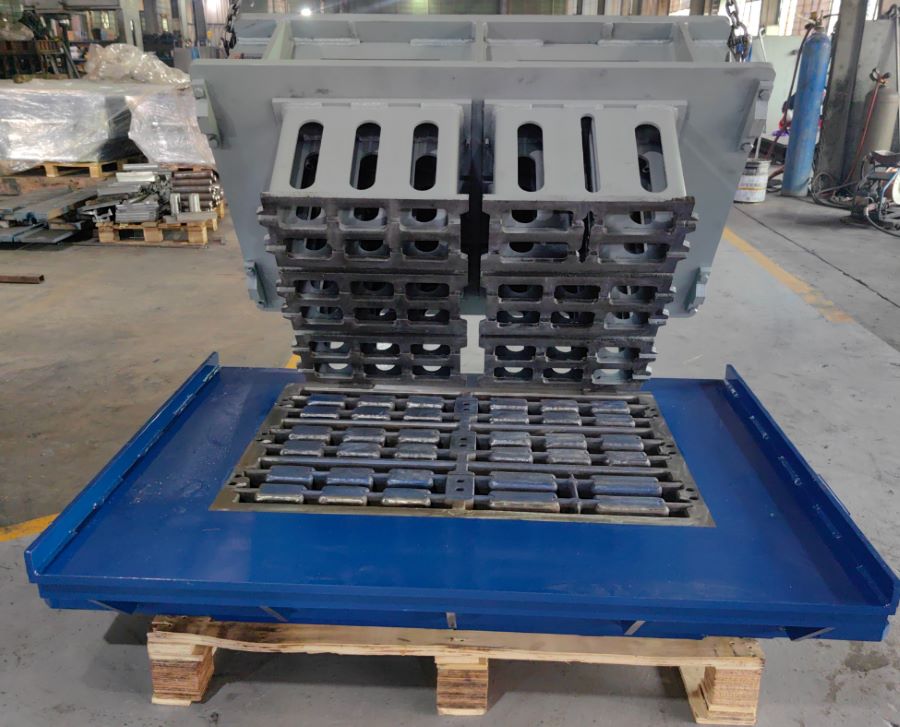
Molds are among the most frequently stressed components in block production. Poor mold precision or compatibility leads to uneven demolding, surface defects, and frequent adjustment, all of which extend cycle times and increase rejection rates.
Hawen Machinery designs molds compatible with leading block machine brands, including MASA, HESS, ZENITH, POYATOS, BESSER, TIGER, and others. By following original specifications, these molds provide precise fit, smooth operation, and consistent block quality across platforms. This compatibility allows producers to protect existing investments while maintaining flexibility in future equipment upgrades.
In long-term cost analysis, durable molds with stable performance reduce replacement frequency and safeguard production continuity.
4. Automation and Control: Managing Cost Through Data
Fully automatic block machines replace experience-driven adjustment with parameter-driven control. This transition has profound economic implications. When production parameters are digitally defined and consistently executed, variability is reduced, and troubleshooting becomes more efficient.
Hawen Machinery integrates a SIEMENS S7-200 PLC with an intuitive touch panel and remote monitoring capabilities. Through this system, we can track the real-time operating status of customers' block machines, optimize operational parameters remotely, and ensure consistent production quality. Remote diagnostics shorten response time and prevent minor deviations from escalating into costly shutdowns.
Over the machine’s service life, this level of control reduces waste, improves uptime, and transforms maintenance from reactive intervention into planned management.
5. Mold Quality and Investment Protection
Molds are among the most frequently stressed components in block production. Poor mold precision or compatibility leads to uneven demolding, surface defects, and frequent adjustment, all of which extend cycle times and increase rejection rates.
Hawen Machinery designs molds compatible with leading block machine brands, including MASA, HESS, ZENITH, POYATOS, BESSER, TIGER, and others. By following original specifications, these molds provide precise fit, smooth operation, and consistent block quality across platforms. This compatibility allows producers to protect existing investments while maintaining flexibility in future equipment upgrades.
In long-term cost analysis, durable molds with stable performance reduce replacement frequency and safeguard production continuity.
 6. Downtime, Maintenance, and the Cost of Instability
Unplanned downtime is one of the most underestimated cost factors in block manufacturing. Each stoppage disrupts material flow, labor allocation, curing schedules, and delivery commitments. Fully automatic machines, designed with integrated systems and higher-quality components, are inherently more stable under continuous operation.
Structural rigidity, balanced vibration, reliable hydraulics, and intelligent control together reduce the probability of failure rather than merely accelerating recovery. Over time, fewer interruptions translate into higher effective operating hours and lower maintenance expenditure.
7. Total Cost of Ownership as the Real Benchmark
The economic superiority of fully automatic block machines becomes evident only when viewed through total cost of ownership. Energy efficiency, material savings, labor reduction, spare-part longevity, and production stability accumulate across years of operation.
A lower-priced machine may reduce initial expenditure, yet higher operating costs often erode this advantage rapidly. Fully automatic systems, by contrast, front-load investment while minimizing downstream expenses. The result is not simply cost reduction, but cost predictability—an essential condition for sustainable industrial planning.
6. Downtime, Maintenance, and the Cost of Instability
Unplanned downtime is one of the most underestimated cost factors in block manufacturing. Each stoppage disrupts material flow, labor allocation, curing schedules, and delivery commitments. Fully automatic machines, designed with integrated systems and higher-quality components, are inherently more stable under continuous operation.
Structural rigidity, balanced vibration, reliable hydraulics, and intelligent control together reduce the probability of failure rather than merely accelerating recovery. Over time, fewer interruptions translate into higher effective operating hours and lower maintenance expenditure.
7. Total Cost of Ownership as the Real Benchmark
The economic superiority of fully automatic block machines becomes evident only when viewed through total cost of ownership. Energy efficiency, material savings, labor reduction, spare-part longevity, and production stability accumulate across years of operation.
A lower-priced machine may reduce initial expenditure, yet higher operating costs often erode this advantage rapidly. Fully automatic systems, by contrast, front-load investment while minimizing downstream expenses. The result is not simply cost reduction, but cost predictability—an essential condition for sustainable industrial planning.
 Conclusion: Automation as a Cost Philosophy
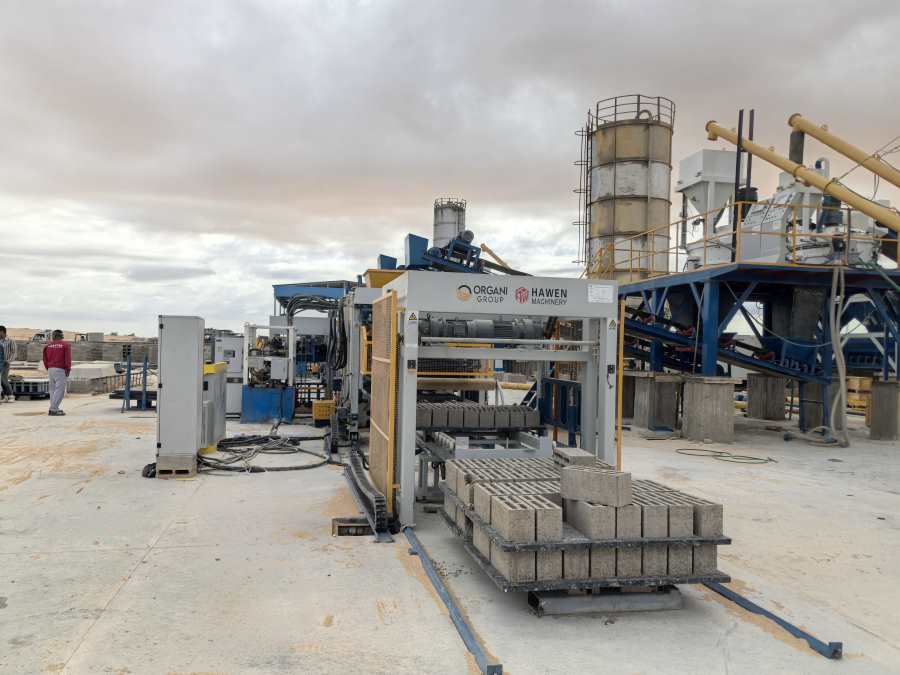
Fully automatic block machines reduce long-term costs not because they are faster or more complex, but because they impose discipline on the production process. They replace variability with repeatability, intuition with data, and short-term compromise with structural efficiency.
At Hawen Machinery, we view automation as an economic strategy rather than a technological luxury. When vibration efficiency lowers material consumption, hydraulic stability preserves equipment health, control systems enforce consistency, and mold precision protects quality, cost reduction emerges naturally as a systemic outcome.
In this sense, investing in a fully automatic block machine is not merely a purchase decision. It is a commitment to an operational philosophy—one that compounds value over time and anchors long-term industrial competitiveness.
Conclusion: Automation as a Cost Philosophy
Fully automatic block machines reduce long-term costs not because they are faster or more complex, but because they impose discipline on the production process. They replace variability with repeatability, intuition with data, and short-term compromise with structural efficiency.
At Hawen Machinery, we view automation as an economic strategy rather than a technological luxury. When vibration efficiency lowers material consumption, hydraulic stability preserves equipment health, control systems enforce consistency, and mold precision protects quality, cost reduction emerges naturally as a systemic outcome.
In this sense, investing in a fully automatic block machine is not merely a purchase decision. It is a commitment to an operational philosophy—one that compounds value over time and anchors long-term industrial competitiveness.





 Tel: +86-13905968794
 Email: export@hwmachines.com
 MP/WhatsApp: +86-13905968794
 Manufacturer Address:Nanan,Quanzhou City,Fujian Province,China