When a concrete block mould develops visible wear or a plant reports changing product dimensions, the buyer faces a practical decision: investigate repair, replace selected parts or order a new tooling set. Price alone cannot resolve that choice. The plant first needs a documented understanding of the condition, the intended product and the work required to return the tool to an acceptable state.
This guide provides general decision criteria for buyers discussing concrete mould maintenance with Hawen Machinery or another qualified supplier. It does not establish repairability, authorize a machining modification or prescribe universal wear limits. Those decisions require the actual tooling, approved drawings and appropriate technical assessment.
Collect mould identity and condition evidence first
Identify the mould, matched tamper head, machine application and relevant drawing revision. Record the product being made and the observation that prompted the review. Include photographs showing the overall assembly and the location of the condition. If measurements are available, document how and where they were taken and which acceptance criteria apply.
Describe observations rather than assuming causes. A chipped concrete edge, a visible mark on tooling and a measured dimensional change are different findings. Keeping them separate helps the reviewer determine what additional information is needed. Record when the issue began and whether it follows one product, one tool or several production conditions.
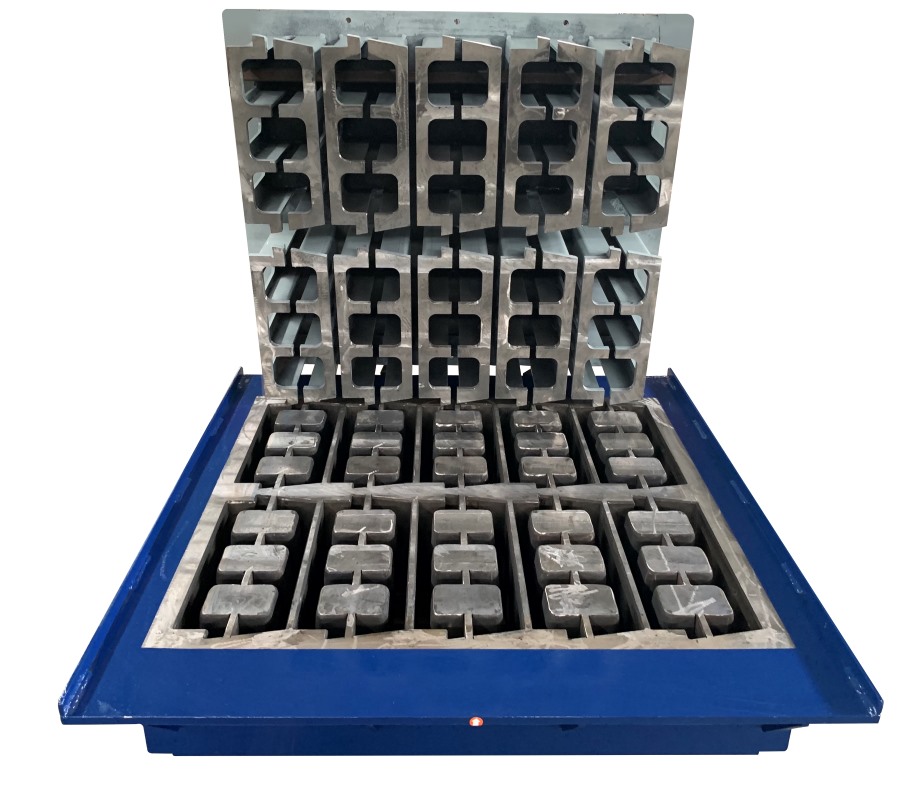
Hollow block mould reference: identify the complete tooling set before discussing repair scope.
Separate tooling condition from concrete process variation
Before assigning every product defect to wear, review the production context. Material condition, pallet support, machine setup, cleaning and handling can affect the observed concrete unit. The plant should use its established quality and maintenance procedures to identify which factors need checking.
Do not compensate for an uncertain tooling condition by making several unrecorded setting changes. A controlled review preserves a clearer record. When measurements or further inspection are needed, agree the method with the responsible technical personnel rather than estimating the significance of wear from a photograph.
Compare the full scope of repair and replacement
A repair proposal should state the components involved, the intended technical result and how the work will be verified. Ask whether associated components also need assessment and whether the revised assembly remains suitable for its documented application. An attractive component price may not represent the full cost if transport, inspection and additional work remain unresolved.
| Decision factor | Question to resolve |
|---|
| Technical scope | Which parts require work and what evidence supports the proposed remedy? |
| Production interruption | How will inspection, transport and workshop time affect the schedule? |
| Product programme | Does the existing design still match future orders? |
| Verification | Which checks determine whether the completed tool can return to use? |
A replacement proposal should use the same product and machine basis so the alternatives remain comparable. Confirm which parts are supplied as a matched set and whether an existing component is expected to be retained. Avoid assuming that a new component can be combined with an older assembly without a compatibility review.

Paver mould reference: compare alternatives against the same approved product requirements.
One useful quotation-review observation is whether the proposed remedy names an acceptance condition. A proposal that only says rework completed leaves the buyer uncertain about what has been restored. Ask for the relevant checks to be identified before authorizing the work.
Define installation and first-product checks after the work
Keep the updated tooling identity and records with the completed work. Before installation, review the delivered condition and any revised technical information. Installation and servicing must follow the supplied instructions and the plant's applicable procedures.
Use the normal first-product approval process after the tool returns. Record the product, materials, setup and observations, and compare results with the agreed requirements. A completed workshop operation is not itself proof of finished-product conformity under every operating condition.

Kerbstone mould reference: keep tooling records available for subsequent production checks. Images do not show diagnosed damage or an actual repair.
FAQ
Can repairability be decided from one photograph? Usually more information is needed, including tooling identity, drawings and an appropriate technical inspection.
Should a single worn part always be replaced alone? Assess its relationship with the matched assembly before deciding the scope.
What makes the alternatives comparable? Use the same product requirements and include inspection, transport, downtime and verification in each option.
Conclusion
Choose mould repair or replacement through documented condition assessment and a clear technical scope. Buyers should compare complete costs and schedule implications, then agree how the finished work will be checked. That provides a stronger decision basis than choosing the lowest initial price.




 Tel: +86-13905968794
 Email: export@hwmachines.com
 MP/WhatsApp: +86-13905968794
 Manufacturer Address:Nanan,Quanzhou City,Fujian Province,China