AAC Blocks vs Concrete Blocks: How Material Choice Changes the Production Line is a practical topic for buyers and plant managers who want a more stable block making machine workflow. The goal is not only to explain the issue, but to give a clear method that supports better output, cleaner operation, and stronger customer confidence.
In a professional concrete products factory, the block machine, material system, mold, pallet circulation, control system, and operator routine must work as one process. A good solution therefore looks at the whole line before changing one visible setting.
A vibration press produces conventional concrete units; AAC requires a different plant process.
1. Define AAC and conventional concrete blocks
AAC means autoclaved aerated concrete. It is a lightweight cementitious masonry material made with a pore-forming process and hardened under controlled autoclave conditions. Conventional concrete masonry units are generally produced from a stiff or very low-slump mix that is compacted in a mold by vibration and pressure. The names sound similar, but the fresh-state behavior, shaping sequence, curing route, and plant equipment are fundamentally different.
A buyer should first identify the product actually required: unreinforced AAC masonry units, reinforced AAC panels, hollow concrete blocks, solid concrete units, or concrete brick. Their standards, dimensions, installation methods, and structural design provisions are not interchangeable. The phrase lightweight block is not a specification. CMHA FAQ CMU-FAQ-014 and its TEK 01-04 glossary help distinguish common block terminology. Ask for the applicable product standard, declared properties, intended application, drawings, and local code references before comparing proposals or asking a supplier to recommend machinery.
2. Compare the manufacturing routes
A dry-cast concrete block line batches aggregates and cement, mixes a low-moisture concrete, feeds a mold, compacts the material, and demolds green units onto production boards. Those units then follow a curing and handling plan appropriate to the mix and local requirements. Output depends on the product, mold cavity layout, feed consistency, compaction, curing, and downstream pallet flow. The production sequence is short, but every stage must deliver repeatable green geometry.
AAC manufacture uses a slurry-based recipe and gas-forming reaction to create a cellular mass. After a pre-curing stage, the material is cut to size and autoclaved; reinforced products also require reinforcement preparation and placement. The plant therefore includes process vessels, molds, cutting equipment, and steam-pressure curing infrastructure that a conventional vibration press does not provide. In North America, ASTM C1691 covers unreinforced AAC units and ASTM C1692 addresses their construction and testing; reinforced panels have separate guidance, including ACI PRC-526-19. A concrete block making machine cannot be converted into an AAC line by changing its mold or control settings.
Compare equipment against the material process and product specification, not the word block alone.
3. Compare performance by the project requirement
AAC units are often selected where lower unit mass or thermal characteristics are important, but performance depends on density class, strength, moisture condition, wall build-up, finishes, and the governing design standard. A light unit is not automatically the best unit for every wall. The designer must check structural demands, fixings, exposure, fire provisions, acoustic goals, and thermal targets at the assembly level rather than relying on a material label or a single brochure value.
Concrete masonry offers a broad range of hollow, solid, lightweight-aggregate, and architectural units. Its cores can support reinforcement or grout where the design calls for them, while unit weight, strength, absorption, and thermal behavior vary with geometry and mix. CMHA guidance treats concrete masonry properties in the context of the assembly and intended application. Do not transfer AAC test values to CMU or assume that a heavier unit is stronger without reviewing the exact product data.
4. Match the product to the local market and construction practice
Start a market review with the building systems customers already specify. Confirm whether architects and contractors are familiar with AAC thin-bed installation, compatible mortar or adhesive, cutting tools, anchors, plaster systems, and handling procedures. For conventional concrete blocks, review demand for hollow and solid units, nominal dimensions, strength classes, local aggregate availability, and how reinforcement and services are incorporated. Distribution, breakage in transport, storage, and installer training can matter as much as factory output.
Ask prospective customers for written specifications and recent order patterns instead of relying on broad claims that one material is growing faster. Separate residential partitions from load-bearing walls and panels from masonry units. Review which tests and certifications buyers require, what samples they accept, and how product complaints are handled. A factory should not invest in a process simply because a product appears attractive in an online comparison; the buyer must be able to sell, deliver, and support the exact product.
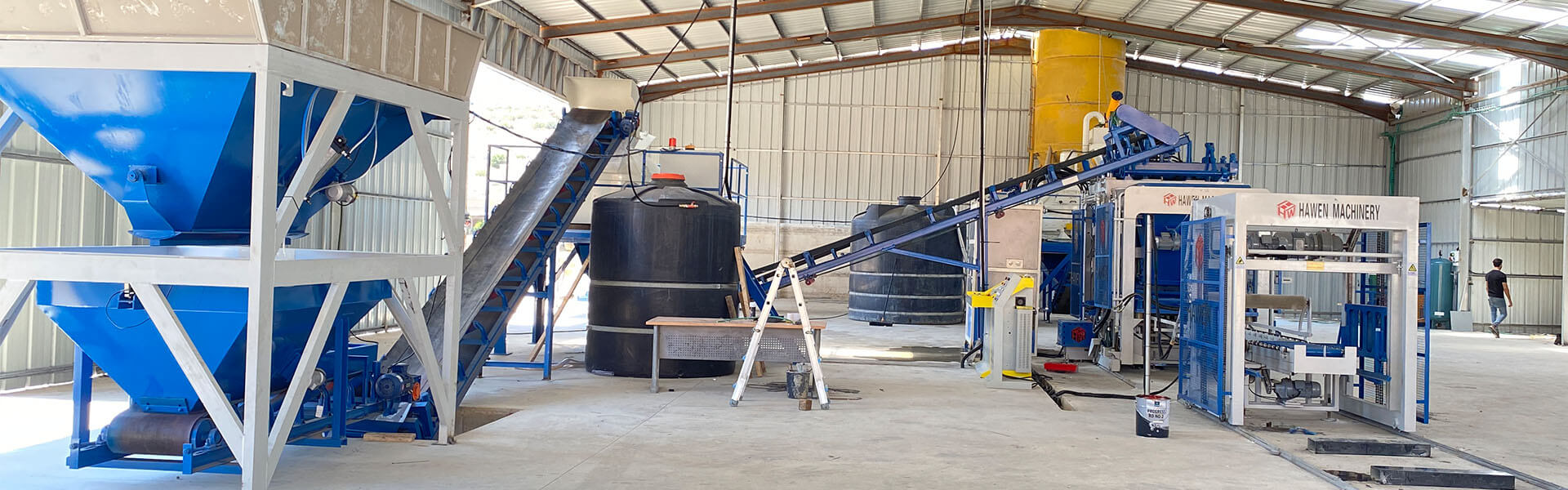
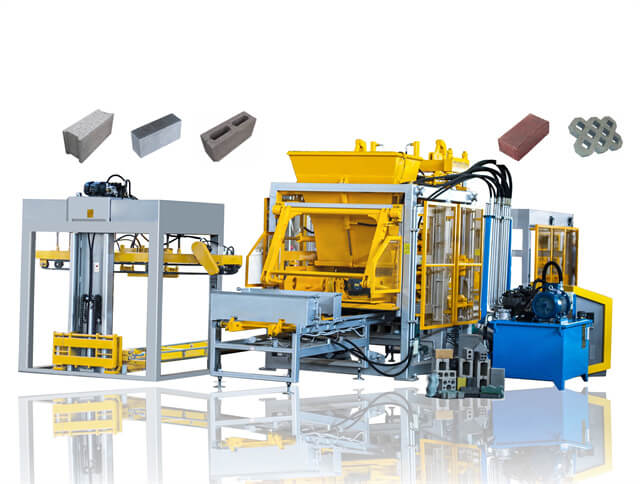
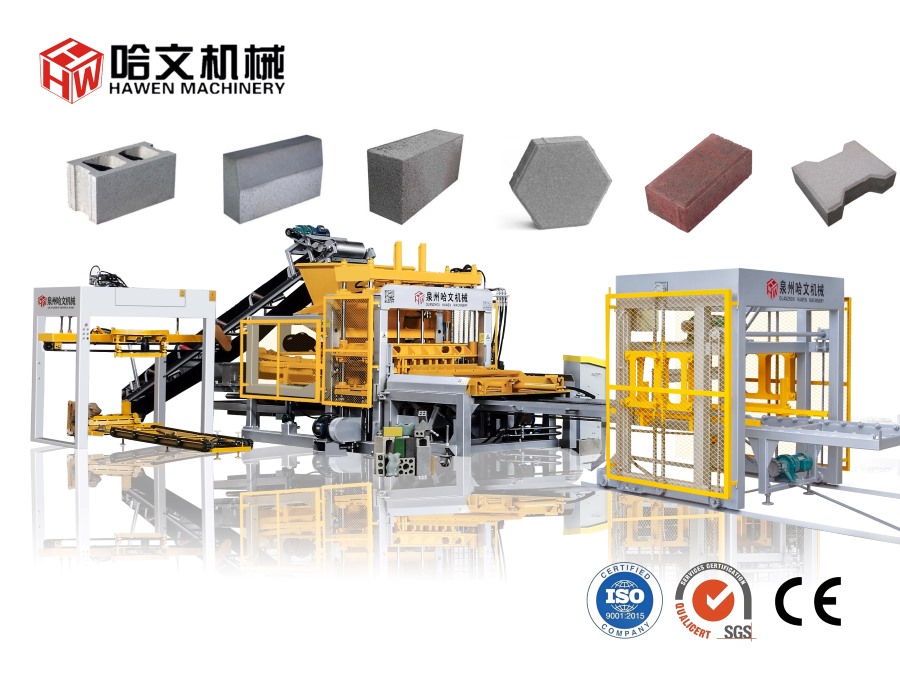
The catalog helps buyers review concrete-product equipment configurations and compatible applications.
5. Build the quality plan around the material
For dry-cast concrete products, establish incoming-material checks, batch and moisture records, dimensional sampling by mold cavity, green-product stability, curing controls, and finished-unit testing under the applicable product standard. Keep mold identification and machine settings linked to each production lot. If a test fails, confirm the sample, conditioning, test method, and lot before changing the mix or press parameters. One result should start an investigation, not an unsupported change to the entire production recipe.
For AAC, the quality plan follows different process variables, such as slurry preparation, expansion behavior, pre-curing, cutting accuracy, autoclave cycle records, and product conditioning. Reinforced panels also require controls for reinforcement placement and corrosion protection specified by the system. Use the standards and acceptance documents applicable in the target country. A concrete masonry test method cannot be assumed valid for AAC, and an AAC plant's process sheet does not replace product certification or structural design review.
6. Compare investment scope without false equivalence
Prepare separate equipment scopes for the two routes. A concrete-products line may include batching, mixing, a block machine, molds, production boards, conveyors, curing, and pallet handling. An AAC project may require proportioning and slurry equipment, mold circulation, cutting, autoclaves, steam generation, reinforcement handling for panels, and specialized utilities. Compare what is included, site works, operator training, utilities, spares, commissioning, and service capability. Do not compare only the press price with the total installed cost of an AAC plant.
Operational readiness also differs. Check access to suitable aggregates and cementitious materials for dry-cast products; for AAC, confirm the recipe inputs, process expertise, steam and pressure systems, and safe operation of specialized equipment. Estimate saleable output after quality checks and planned changeovers rather than using a nominal cycle figure. Working capital, product storage, packaging, transport limits, and the local availability of maintenance skills should be included in the decision record.
7. Evaluate Hawen equipment for conventional concrete units
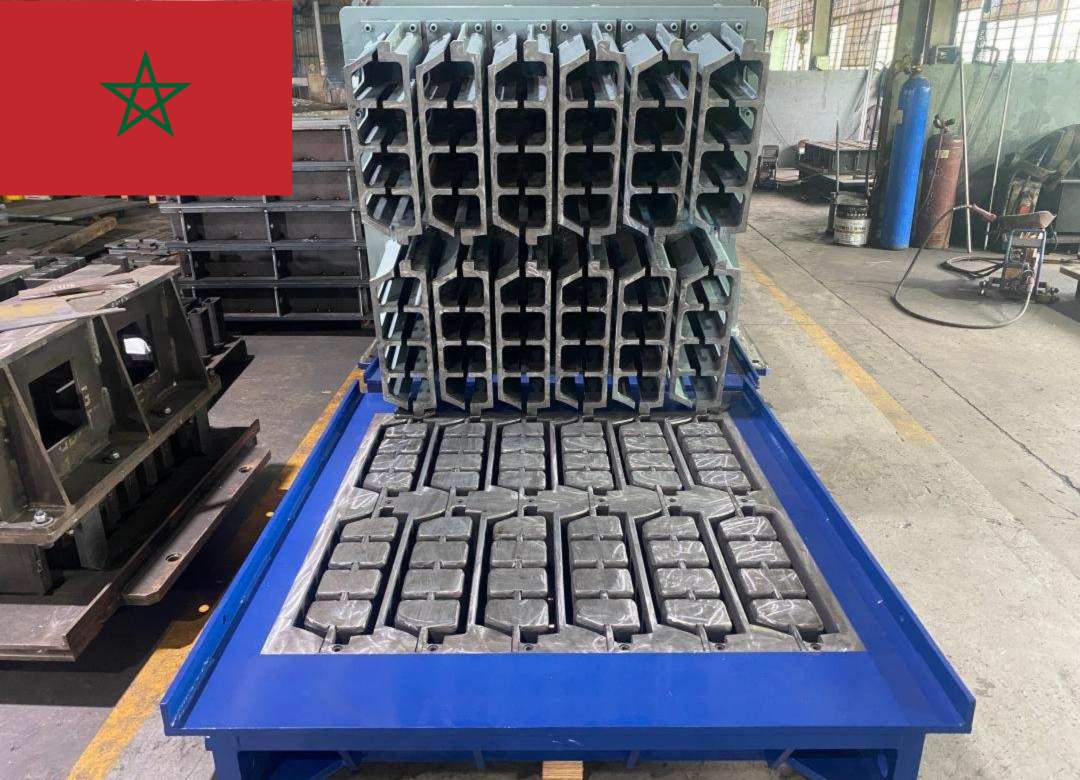
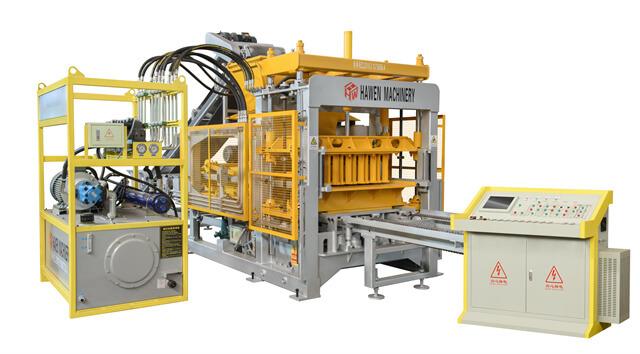
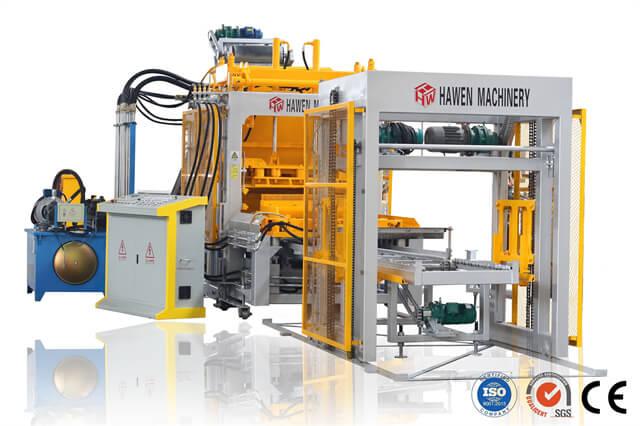
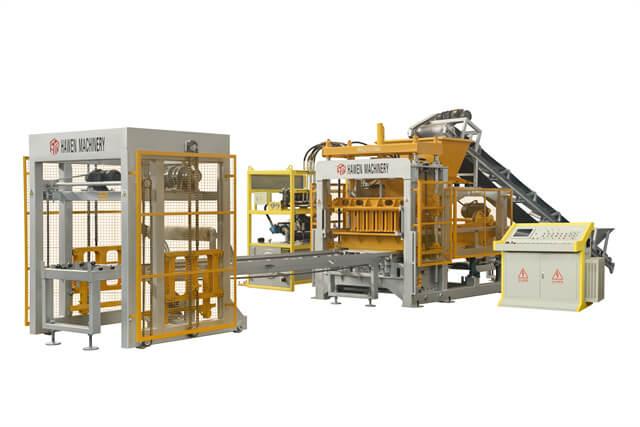
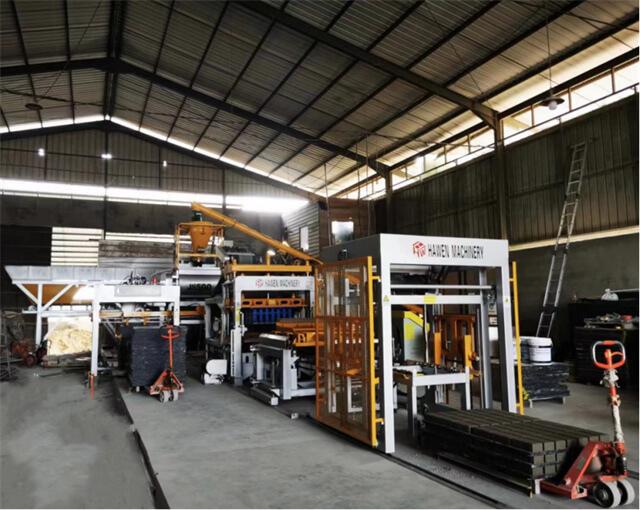
Hawen's four-shaft vibration-box arrangement places eccentric weights outside the housing, reducing internal resistance and helping distribute compaction across the mold. This supports uniform forming and can improve material-use efficiency when the mix and settings are properly controlled. A SIEMENS S7-200 PLC, touch-panel operation, and remote monitoring help operators review running status and production parameters. These are concrete-products capabilities, not a substitute for AAC's slurry, cutting, and autoclave processes.
8. Use a decision matrix before ordering
Score each route against the same project questions: product specification, customer demand, production process, required capital scope, utility availability, skills, testing, storage, transport, and service support. Mark an item unknown when the supplier or customer has not supplied evidence. This prevents assumptions from appearing as facts in an investment spreadsheet. Have the design professional or product technical representative confirm the intended wall use and acceptance requirements before choosing a plant configuration.
A useful supplier inquiry includes target product drawings, local standards, annual and peak demand, available site and utilities, material sources, automation preference, required curing or storage, installation location, and support expectations. Ask the supplier to state exclusions and clarify whether the proposal covers molds, boards, mixing, conveying, curing, stacking, commissioning, and training. When the intended product is AAC, request a dedicated AAC plant proposal; when it is dry-cast CMU, request a concrete block machine designed for that process.
Action checklist
Identify the exact product type and governing standard before comparing equipment quotations.
Separate dry-cast vibration pressing from AAC slurry, pre-curing, cutting, and autoclave production.
Compare finished assembly requirements rather than relying on generic claims about weight, strength, or insulation.
Confirm local demand, installation practice, material supply, testing, transport, and technical support.
Compare complete plant scope, site utilities, commissioning, training, spares, and operating readiness.
Ask for a process-specific proposal and document exclusions before approving capital expenditure.
AAC and conventional concrete blocks serve different manufacturing systems, even when both are sold as masonry units. The sound investment is the one tied to a defined product, a documented market, an applicable standard, and a plant that genuinely matches the process. Make that distinction early, and equipment selection becomes an engineering decision rather than a guess based on familiar terminology.
FAQ
Can a concrete block machine make AAC blocks? No. A conventional vibration press forms stiff concrete units; AAC requires a separate slurry, expansion, cutting, and autoclave process.
Are AAC blocks always better insulated than concrete blocks? Compare declared product properties and the complete wall assembly. Density, thickness, finishes, climate, and code requirements affect performance.
Are AAC units and AAC panels made on the same line? They may share parts of the process, but reinforced panels require additional reinforcement preparation, placement, and product-specific controls.
Which standard should be used to compare AAC and CMU? Use the applicable local product and design standards for each material; their test methods and acceptance requirements are not interchangeable.
What should a buyer include in an AAC plant quotation request? Specify product types, capacity basis, recipe inputs, cutting and autoclave scope, utilities, reinforcement needs, site conditions, and service requirements.
What concrete block products can a dry-cast line produce? The output depends on the machine, mold, mix, pallet, and approved product requirements; common configurations include hollow or solid units and pavers.
Does a lower unit weight guarantee a lower-cost wall? No. Compare the designed wall system, installation method, finishes, reinforcement, logistics, and required performance on an equivalent basis.






 Tel: +86-13905968794
 Email: export@hwmachines.com
 MP/WhatsApp: +86-13905968794
 Manufacturer Address:Nanan,Quanzhou City,Fujian Province,China