How to Use Concrete Masonry EPDs in Low-Carbon Project Bids is a practical topic for buyers and plant managers who want a more stable block making machine workflow. The goal is not only to explain the issue, but to give a clear method that supports better output, cleaner operation, and stronger customer confidence.
In a professional concrete products factory, the block machine, material system, mold, pallet circulation, control system, and operator routine must work as one process. A good solution therefore looks at the whole line before changing one visible setting.
A product declaration is meaningful only when its scope and representative product match the bid.
1. Understand what an EPD does and does not say
An Environmental Product Declaration reports environmental impacts for a defined product under stated rules. It is not a general sustainability certificate, a guarantee of low impact, or proof that one block is better for every project. For a concrete masonry bid, first identify the exact unit family, production region, declared unit, life-cycle stages, and program rules described in the declaration.
An industry-average EPD represents a defined group of manufacturers and products; a product-specific declaration describes a narrower product and data set. Neither label alone tells a buyer whether the product fits the specification. Check the declared products, geography, manufacturing period, verification status, and any exclusions before using the document in a submittal or whole-building assessment.
Environmental results should be read alongside technical performance. Compressive strength, dimensions, durability, fire and acoustic requirements, installation method, and service life still govern product selection. A carbon comparison that ignores required performance can favor a product that cannot serve the same function. Keep the project's functional requirements fixed before comparing environmental declarations.
2. Match the declaration scope to the bid requirement
Read the cover and general information before comparing impact tables. Confirm the product category rules, declared unit, reference service assumptions, manufacturing geography, reporting period, and life-cycle modules. Many product-stage declarations report a cradle-to-gate boundary, often described as A1 to A3. That boundary does not automatically include delivery, installation, use, maintenance, or end-of-life stages.
Check whether the bid asks for a product-stage value, a full life-cycle assessment, or information formatted for a building-level calculator. A cradle-to-gate value cannot be presented as a whole-life result without the additional modules and assumptions. If two declarations use different boundaries, put them in separate comparison groups or ask the project sustainability lead how to harmonize the data.
The declared unit matters as well. A declaration may report impacts by mass, area, or a specified product unit. Convert only when the required dimensions, density, and function are known, and show the conversion. A lighter unit may appear favorable per piece while the project requires more units, grout, reinforcement, or a different wall assembly. Compare the quantity needed to deliver the same design function.
Material and plant data should be traceable to the products covered by environmental reporting.
3. Compare EPDs on a like-for-like basis
Create a comparison sheet with product family, declared unit, thickness or density class, functional performance, PCR version, geography, data year, verification, modules, and impact categories. This makes incompatible declarations visible before a bid team copies values into a spreadsheet. Where one EPD is industry-average and another is product-specific, note that distinction rather than implying equal representativeness.
Use the same global warming potential indicator and method when the project requests carbon comparisons. Follow the EPD's stated units and rounding; avoid recalculating values with a different characterization method unless the assessor instructs you to. Review biogenic carbon, carbonation, recycled content, and end-of-life assumptions carefully. These items may be disclosed in different places and should not be added twice.
Do not rank suppliers from a single number when the product function or scope differs. Ask whether the unit meets the same dimensions, compressive class, density, durability, and exposure requirements. If not, request a comparison based on the actual wall design or follow the project's life-cycle method. The owner or design team's sustainability professional should approve any normalization approach.
4. Prepare reliable manufacturing data
Manufacturers preparing an EPD or supporting data request need consistent records for cementitious materials, aggregates, admixtures, pigments, water, energy, process scrap, packaging, and applicable inbound transport. Define the facility boundary and collection period. Reconcile purchasing records with production volumes, stock changes, and waste logs so that the inventory reflects material actually used to make the declared products.
Separate product recipes and plant locations when they differ materially. A factory that produces several sizes or density classes should establish a defensible allocation method for shared energy and equipment. Keep the method documented and consistent with the applicable product category rules. Do not divide plant energy by a convenient production count if the declaration program requires another basis.
Record data owners, source systems, units, conversion factors, meter coverage, and estimates. Flag missing measurements instead of silently filling gaps with assumptions. If an emission factor or secondary database is used, record its source and date for the verifier. A transparent uncertainty note is more useful than a precise-looking value unsupported by the available evidence.
Manufacturing records support transparent data collection but do not establish an EPD on their own.
5. Interpret the impact drivers without overclaiming
Cementitious binder is often an important contributor to concrete product impacts, but the share depends on mix design, raw materials, energy, allocation, and the declared boundary. Review the contribution analysis in the specific EPD before deciding where improvement work belongs. A general statement about one material cannot substitute for a facility or product assessment.
Potential changes such as alternative cementitious materials, aggregate sourcing, mix optimization, reduced rejected product, renewable electricity, and transport planning need to be assessed in the actual production context. Each option has technical, supply, cost, and quality constraints. Validate strength, absorption, dimensional stability, curing response, and durability under the relevant standard before claiming an environmental benefit.
Concrete masonry may also carbonate during service, and some declarations disclose this separately or within a defined life-cycle module. Use only the method and timing allowed by the applicable rules. Do not subtract a sequestration estimate from a product-stage value unless the EPD and project accounting method clearly permit that treatment. Preserve the reporting boundary when summarizing a result for customers.
6. Build a clear procurement submittal
Submit the EPD with a short index identifying which listed product corresponds to the project unit. Add the product drawing, dimensions, density or strength class, manufacturing plant, and applicable specification references. If the declaration covers a family, point to the table or description that includes the proposed unit. This helps reviewers avoid rejecting a complete document simply because the product mapping is unclear.
Confirm that the EPD is current for the bid and accepted by the project. Record program operator, verification statement, publication and expiry information where shown, and the declared products. If the project requires a third-party verified declaration, an internal carbon worksheet is not an equivalent substitute. Ask the project team early whether an industry-average EPD is acceptable for the specified product.
When no matching declaration exists, be explicit. Provide available product data and explain what is missing, but do not relabel a generic estimate as a verified EPD. A qualified LCA practitioner can help prepare a product-specific assessment under the correct rules. Save the submitted version, reviewer questions, revisions, and final acceptance in a controlled project record.
7. Connect equipment data with product reporting
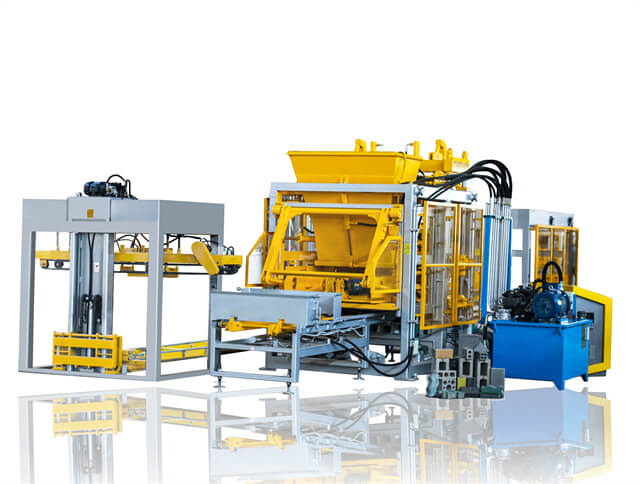
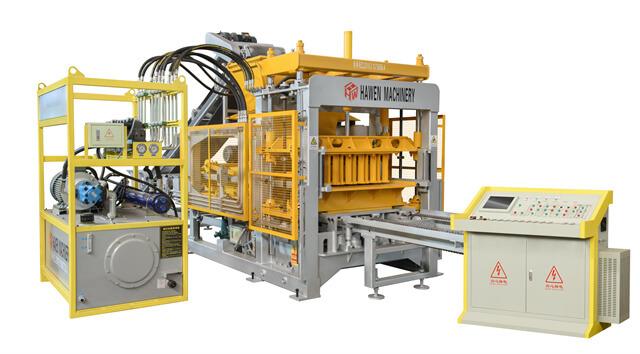
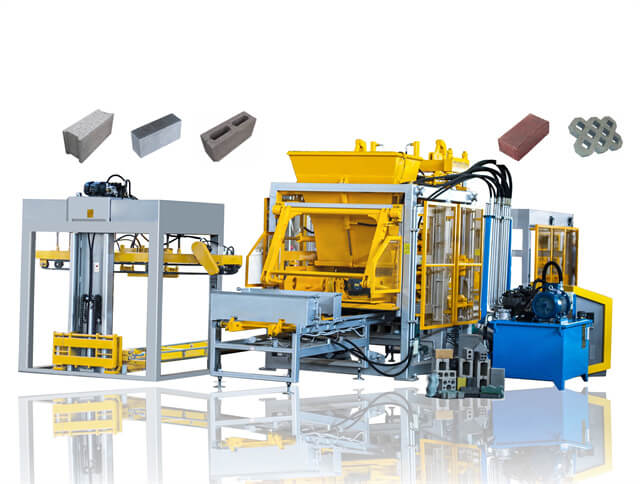
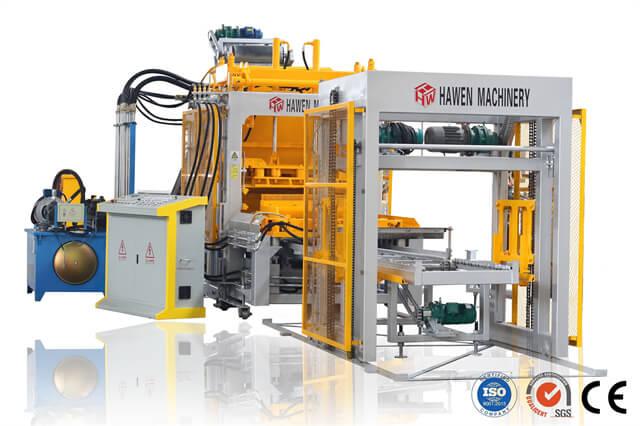
A block machine is one part of the manufacturing inventory. Its electricity use, operating time, idle periods, maintenance, and production rate may inform plant data collection, but equipment brochure values do not define a product's carbon footprint. Measure energy at a meaningful boundary and allocate it consistently across products according to the applicable rules.
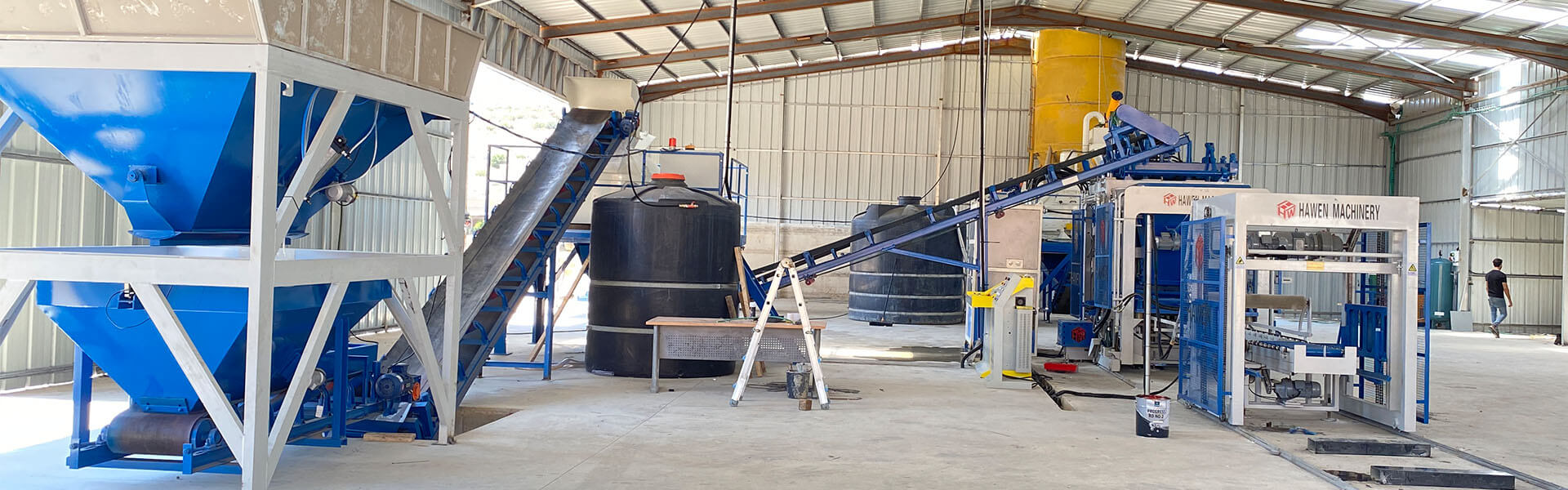
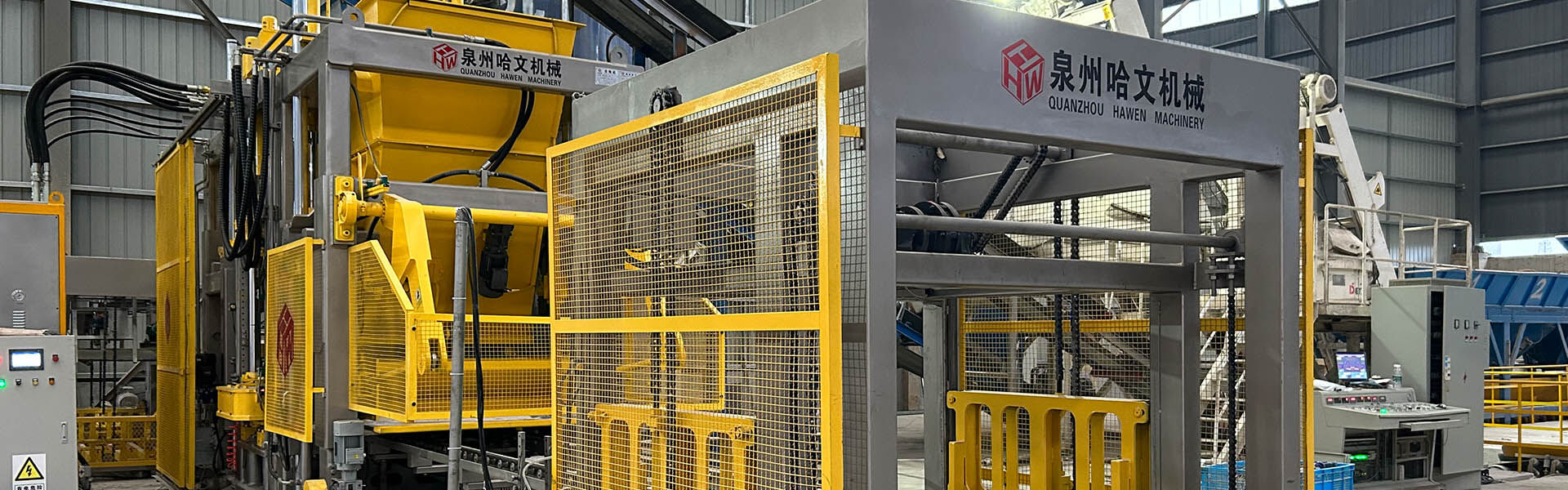
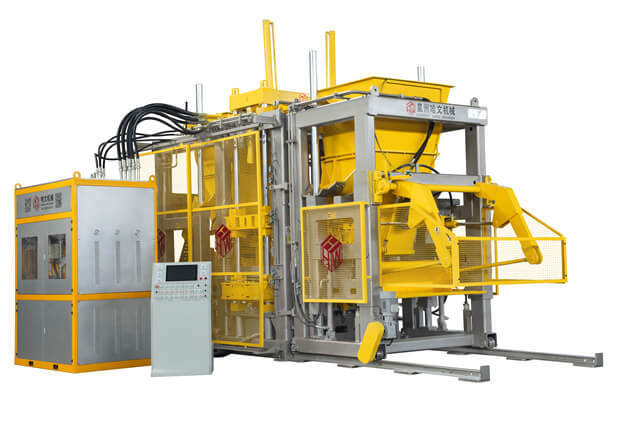
Hawen Machinery can help a producer discuss line configuration, batching, mixing, forming, curing, pallet circulation, and product changeovers when planning a new plant. The SIEMENS S7-200 PLC and touch-panel system with remote monitoring can support operating-status visibility and parameter assistance. Buyers should treat those features as process-management capabilities, not as a verified carbon-reduction claim.
8. Turn EPD review into a credible improvement cycle
After a bid, record reviewer feedback and identify recurring data gaps. Improve metering, recipe traceability, waste accounting, and production allocation before the next declaration cycle. If a new material or process is introduced, evaluate its technical performance first and preserve a controlled baseline so environmental and quality results can be compared on equivalent products.
Use a simple internal dashboard to track declared-unit production, rejected product, energy, water, and key material inputs. Explain whether each number is metered, calculated, or estimated. Keep the dashboard separate from externally verified EPD values unless the verifier and program rules approve an update. This prevents an operational estimate from being mistaken for a published environmental declaration.
CMHA's sustainability resources describe concrete masonry EPDs and the importance of defined product and regional coverage. For every bid, return to the actual declaration and the project's rules. Transparent scope, traceable data, and honest limitations will build more buyer confidence than a broad 'green block' claim that cannot be audited.
Action checklist
Match the EPD's declared products, region, period, unit, PCR, verification, and life-cycle boundary to the bid.
Compare products only when function, dimensions, performance, modules, and impact methods are compatible.
Trace plant inputs to purchasing, meter, production, inventory, and waste records; document allocation methods.
Separate verified EPD results from internal estimates and avoid unsupported carbon-reduction claims.
Submit a product mapping with the EPD and maintain version control through bid review and acceptance.
Validate technical performance before changing materials, recipes, or equipment settings for impact goals.
An EPD earns its place in a project bid through clarity, not a slogan. Match its scope to the specified product, compare equivalent functions, and keep every manufacturing input traceable to the plant and period it represents. When producers improve the quality of their data alongside product performance, low-carbon procurement becomes a practical engineering conversation rather than a contest of unverified numbers.
FAQ
Does an EPD prove that a concrete block is low carbon? No. It reports impacts for a defined product and scope. Whether the result is favorable depends on the comparison basis and project requirements.
Can an industry-average EPD be used for a specific manufacturer's product? Only if the product and manufacturing coverage fit the declaration and the project accepts that EPD type.
What does A1-A3 usually represent? It commonly refers to product-stage modules from raw-material supply through manufacturing, but check the EPD's exact boundary and rules.
Can I compare EPD values reported per kilogram and per block? Not directly. Normalize only with reliable product mass, function, and matching scope, and document the method approved by the project team.
Does a machine's energy specification establish product carbon impact? No. Product impacts require measured or properly allocated plant data and an assessment under applicable product rules.
What should a block producer do if no matching EPD exists? Disclose the gap and seek an LCA practitioner or program operator to determine the appropriate declaration pathway.
Can a mix change be claimed as a carbon improvement immediately? First verify the change under the applicable LCA rules and confirm that product strength, durability, and other specified properties remain acceptable.






 Tel: +86-13905968794
 Email: export@hwmachines.com
 MP/WhatsApp: +86-13905968794
 Manufacturer Address:Nanan,Quanzhou City,Fujian Province,China