How to Improve Sound Insulation in Concrete Block Walls is a practical topic for buyers and plant managers who want a more stable block making machine workflow. The goal is not only to explain the issue, but to give a clear method that supports better output, cleaner operation, and stronger customer confidence.
In a professional concrete products factory, the block machine, material system, mold, pallet circulation, control system, and operator routine must work as one process. A good solution therefore looks at the whole line before changing one visible setting.
Consistent unit mass and geometry help designers evaluate the wall product selected for an acoustic assembly.
1. Identify the sound problem before choosing a wall
Describe what people hear and where. Is the concern speech between apartments, outside traffic, footsteps, equipment, or reverberation inside a room? These are different problems. Airborne sound through a wall requires a different response from vibration transmitted through a slab, pipe, or rigid connection.
Map the room, source, receiver, and separating construction. Record whether the noise is continuous or intermittent, the operating schedule, adjacent room use, and any obvious flanking route. A noisy corridor door or an unsealed service opening may dominate perception even when the masonry field performs well. Ask the acoustical consultant to define the target metric and test or prediction method before selecting block geometry.
A block making machine can manufacture units for different applications, but it cannot determine the acoustic requirement. The designer must specify the wall assembly, while the factory supplies products that match the required dimensions and composition. Clear ownership avoids the common mistake of treating a block label, a wall thickness, or a brochure number as a substitute for a project-specific acoustic design.
2. Distinguish transmission loss from room absorption
Sound Transmission Class, or STC, is a rating used to describe airborne sound transmission through a building separation under a defined method. It helps compare wall assemblies, but it is not a promise that every listener will experience the same quietness. Real performance can be affected by construction quality, sound frequency, source level, room conditions, and paths around the tested specimen.
The Noise Reduction Coefficient, or NRC, addresses sound absorption at a surface and the reduction of reflections within a room. A surface can absorb room sound without providing strong isolation from a neighboring space, and a heavy wall can block transmission while reflecting sound back into the room. Confirm whether the complaint is about transfer between spaces or reverberation within one space before specifying a finish.
For comparisons, use the metric required by the consultant and code. CMHA guidance treats STC for masonry walls separately from sound absorption. Do not compare an STC value with an NRC value as though they measured the same behavior. Ask for the test method and assembly behind any stated value.
Wall performance depends on the complete construction, including joints, finishes, and penetrations.
3. Evaluate wall mass and configuration
Wall mass is an important factor in airborne sound isolation, and heavier masonry walls generally provide more sound blocking than lighter walls. However, mass alone is not a complete design calculation. Unit density, actual wall thickness, cavity configuration, grout, mortar, coatings, and any independent lining can change the finished assembly. Use project-specific tested or calculated data rather than assuming a simple thickness-to-performance conversion.
Hollow units can be suitable components of acoustic walls when their complete assembly is properly designed. Record the unit type, core orientation, nominal and actual dimensions, density classification, mortar joints, and whether cores are empty or filled. A change in unit source, cavity pattern, or grout condition can make a referenced test report a poor match for the proposed construction.
If more performance is required, compare practical options with the design team: a heavier assembly, a separate lining, resilient channels, cavity insulation where appropriate, or improved perimeter details. Each option affects floor area, structural load, cost, and installation sequence. Specify the exact attachment strategy; an unintended rigid bridge between layers can bypass the benefit of a decoupled lining.
4. Find flanking paths around the masonry field
Sound can travel through ceilings, floors, facades, corridor doors, glazing, ducts, and connected framing. This flanking transmission may limit the benefit of improving the block wall alone. Inspect the junctions at the head, base, and ends of the wall, as well as intersections with exterior walls and suspended ceilings. The acoustic design should show how the assembly connects to adjoining construction.
Treat doors, access panels, outlets, pipe sleeves, cable trays, and ventilation openings as design details rather than late-stage holes. A gap around a service can become a direct leakage path. Use tested or specified acoustic seals and fire-stopping systems as required, and ensure the two requirements are compatible. Do not fill an opening with an improvised material that has no approved performance evidence.
Look for rigid contacts in any secondary lining. Screws that are too long, continuous battens, back-to-back outlets, or unsealed perimeter tracks may connect the finish to the masonry and transmit vibration. A consultant can review a detail drawing or test results when the consequence of failure is high. Site teams should photograph concealed work before closing cavities and retain inspection records.
A clear product identification and quality record make acoustic submittals easier to verify.
5. Specify the evidence and compare like with like
Request an assembly report that identifies the wall layers, unit type, dimensions, surface finishes, mortar, grouting, supports, and penetrations represented in the test. Verify the measured rating, laboratory method, report date, and scope. A number without its assembly description cannot be responsibly applied to another wall, even if that wall looks similar in a photograph.
When test evidence is not available for the exact project configuration, ask the acoustical consultant whether a recognized prediction method is suitable. State the assumptions and limits. Avoid extrapolating a value from a thicker wall to a thinner one, or from fully grouted construction to hollow units, without an accepted technical basis. Code minimums may also differ by occupancy, jurisdiction, and room use.
During construction, inspect workmanship against the submitted detail. Check mortar continuity, perimeter sealant, resilient components, cavity insulation placement, service penetrations, and junctions. If a field test is required, agree on the test locations, room conditions, background noise, and corrective process before the wall is closed. A commissioning plan turns an abstract target into observable acceptance criteria.
6. Connect manufacturing quality with acoustic submittals
For a block producer, useful acoustic documentation begins with controlled product identity. Keep the approved drawing, aggregate and density description, production date, mold identification, dimensional checks, and any laboratory reports linked to the supplied lot. These records help the project team determine whether the units match the assembly used in a calculation or test. They do not replace the wall test or design review.
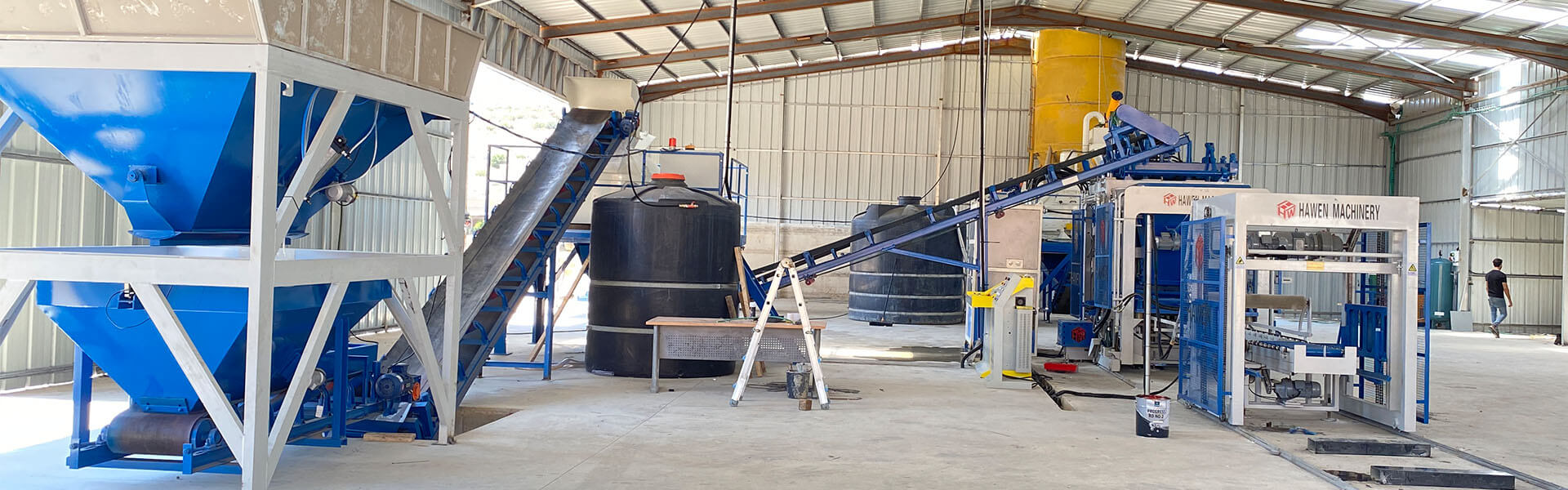
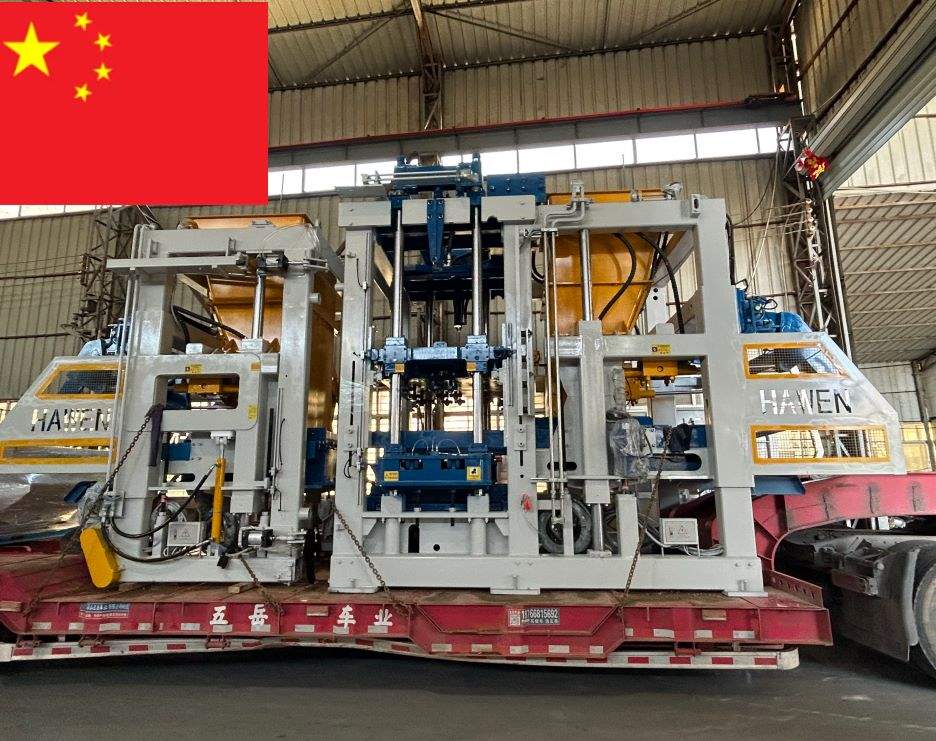
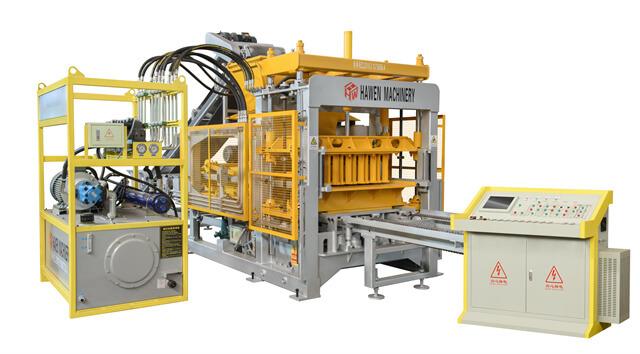
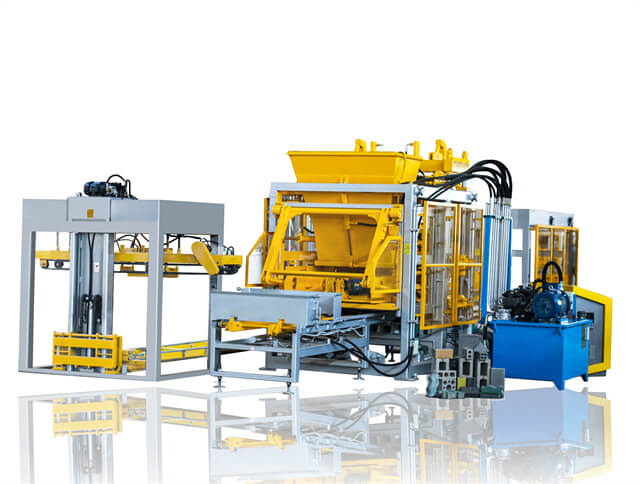
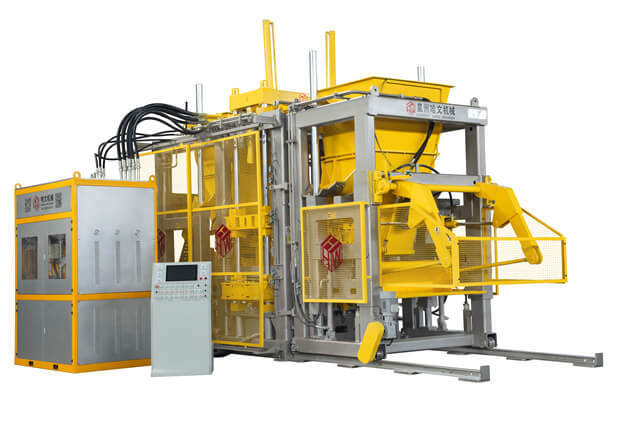
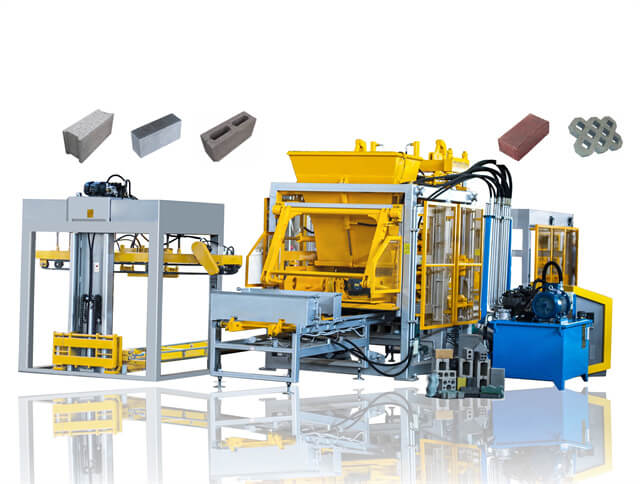
A brick machine or block machine should produce units with repeatable geometry and stable compaction. Hawen Machinery uses a four-shaft vibration box with eccentric blocks positioned outside the housing to reduce internal resistance and support uniform compaction. The product recipe and settings still require validation, and the plant should avoid claiming that a machine feature by itself produces a particular STC or sound insulation result.
Hawen Machinery integrates a SIEMENS S7-200 PLC, touch-panel operation, and remote monitoring for production status and parameter support. Consistent settings, controlled mold wear, and traceable batches help maintain dimensional and mass characteristics. When acoustic performance is critical, share product data with the responsible designer so it can be considered within the complete wall assembly rather than used as an isolated equipment claim.
7. Diagnose poor sound isolation systematically
If occupants report speech leakage, first map the apparent path and compare it with the wall and junction details. Check door seals, ceiling voids, service penetrations, back-to-back boxes, and cracks at perimeters. Do not immediately add mass to the entire wall; a small discontinuity can govern the result. Where needed, use an acoustical professional to perform a field survey or controlled measurement.
If the wall was built differently from the report, document the deviation and assess its significance. Common issues include missing resilient components, rigid fasteners, incomplete perimeter seals, unfilled joints, and openings that were moved after approval. Correct the specific pathway with a compatible system, then repeat the agreed inspection or measurement. Record product names and installation steps so the repair can be reviewed.
If room reverberation is the complaint, evaluate the room's reflective surfaces, volume, occupancy, and existing absorptive finishes. Adding an absorptive treatment can reduce echo without materially changing sound transmission through the block wall. Conversely, increasing wall mass may not solve a reverberant room. Keep the diagnosis tied to the metric that describes the actual problem.
8. Coordinate product selection with Hawen Machinery
Hawen Machinery can help buyers review block dimensions, molds, production capacity, batching, mixing, curing, pallet circulation, and automation for a defined product range. Share the target market, required unit drawing, annual product mix, material information, factory utilities, and any project specification. Those inputs support a more relevant line proposal than a broad request for the highest-output machine.
A strong acoustic outcome requires coordination among the designer, consultant, builder, and supplier. Select an assembly for the real noise path, verify its evidence, control the supplied unit, and inspect junctions. Occupants experience the completed wall, not the block in isolation.
Action checklist
Identify airborne, impact, structure-borne, or reverberation concerns and select the matching metric.
Compare STC or other transmission evidence only for assemblies with clearly stated construction details.
Review wall mass, unit geometry, finishes, grout, lining attachment, and structural connections.
Control product identity and inspect workmanship against the approved assembly report.
Use field measurement or specialist diagnosis when the constructed wall does not meet expectations.
Good sound insulation is rarely the result of one impressive block or one thicker wall. It comes from choosing a measured assembly for the actual noise path, closing weak junctions, and verifying the details that connect rooms. When designers, builders, and manufacturers work from the same evidence, concrete masonry can serve demanding spaces with dependable performance and fewer costly surprises.
FAQ
Is STC the same as NRC? No. STC relates to airborne sound transmission through a construction; NRC describes sound absorption at a surface and is relevant to room reverberation.
Does a thicker concrete block wall always solve noise complaints? Not necessarily. Flanking paths, doors, penetrations, rigid connections, and room reverberation can control the outcome.
Can hollow concrete blocks be used in an acoustic wall? They can be part of an acoustic assembly, but use evidence that matches the unit, grout condition, joints, finishes, and wall connections.
What should I check first when speech passes between rooms? Inspect doors, perimeter joints, ceilings, service openings, and back-to-back outlets before assuming the masonry field is the only path.
Do acoustic wall finishes change sound isolation? Finishes may affect both the tested assembly and room absorption. Their role depends on the specified construction and metric.
Can a block machine manufacturer certify the STC of my wall? The complete assembly must be tested or evaluated through an accepted method. Equipment and unit consistency alone do not establish a wall rating.
When is a field acoustic test useful? Use it when the contract requires verification, when symptoms persist, or when construction details differ from the supporting report.








 Tel: +86-13905968794
 Email: export@hwmachines.com
 MP/WhatsApp: +86-13905968794
 Manufacturer Address:Nanan,Quanzhou City,Fujian Province,China