Why Does the Hydraulic Pressure Fluctuate During Block Machine Production? Hydraulic pressure fluctuation is an important issue to check when an automatic block making machine shows unstable movement, inconsistent pressing, or changes in the forming cycle. A hydraulic system does not work under one constant load throughout the entire production cycle, so some pressure changes are normal. However, repeated or abnormal fluctuations may indicate problems with oil temperature, the pump, valves, pressure settings, or hydraulic load.
Overview
The hydraulic system controls important movements in an automatic block making machine, including pressing and mould movement. During different stages of the forming cycle, the hydraulic system can experience different loads and pressure requirements.
For this reason, the pressure shown on the hydraulic system should be evaluated together with machine movement and production conditions. A pressure change that happens at a specific stage of the cycle may be part of normal operation, while irregular pressure changes accompanied by slow or unstable movement should be investigated.
Process note: Before changing the pressure setting, first identify when the fluctuation occurs. Check whether it happens during pressing, mould lifting, demoulding, or another hydraulic action.

Hydraulic Oil and Temperature
Hydraulic oil condition has a direct relationship with hydraulic system performance. During continuous production, hydraulic components generate heat as the system works. If the oil temperature becomes too high, oil viscosity and system response can change.
The hydraulic oil level should also be checked according to the machine manufacturer's requirements. An incorrect oil level, contaminated oil, or a restricted oil path can affect hydraulic system stability.
For continuous production, operators should monitor oil temperature and inspect the cooling condition regularly. If pressure fluctuation appears only after the machine has been running for a long period, temperature should be one of the first factors to investigate.
Pump and Valve Condition
The hydraulic pump supplies the flow required by the system, while hydraulic valves control the direction, pressure, and movement of different hydraulic actions. If the pump cannot provide stable flow or a valve does not respond correctly, the hydraulic pressure and machine movement may become unstable.
Filters and hydraulic lines should also be inspected according to the maintenance schedule. Contamination or restrictions in the hydraulic circuit can affect oil flow and system response.
When troubleshooting, operators should observe both the pressure reading and the physical movement of the machine. A pressure fluctuation accompanied by unusual noise, slow movement, or repeated stopping provides more useful information than the pressure reading alone.

Pressure Setting and Machine Load
Hydraulic pressure changes according to the load applied to the system. During concrete block forming, the load can change when the pressing head contacts the material, when the mould moves, or when the machine enters another stage of the production cycle.
Therefore, operators should not assume that the highest possible pressure is the best setting. Excessive pressure can increase hydraulic load without providing a useful improvement in product quality, while insufficient pressure may affect forming performance.
The pressure setting should be matched with the product, mould, material condition, and machine design. When a new mould or product is introduced, trial production can help confirm the appropriate forming conditions.
If the pressure fluctuates only during one specific hydraulic movement, inspect that movement and its related valve, cylinder, hose, and mechanical load. If the fluctuation occurs throughout the complete cycle, the hydraulic power unit and oil condition should be checked more broadly.
Hawen Machinery Note
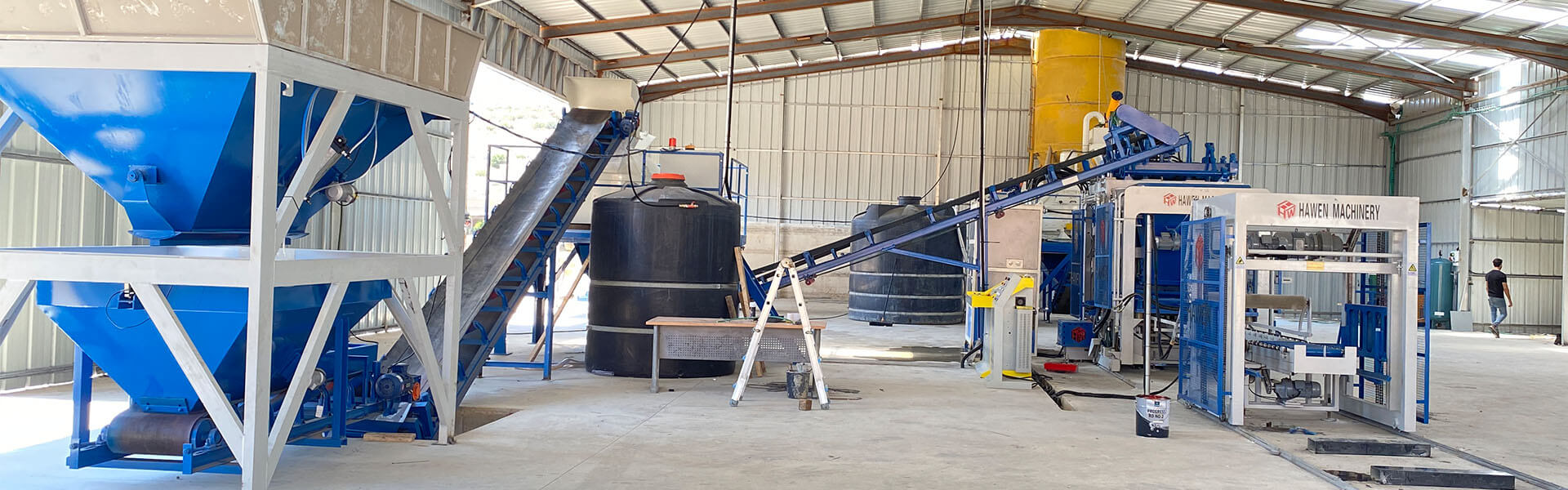
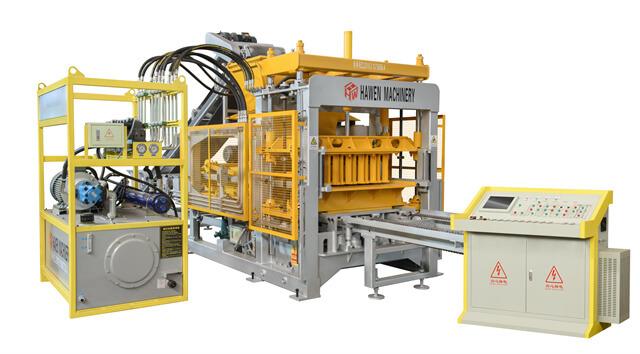
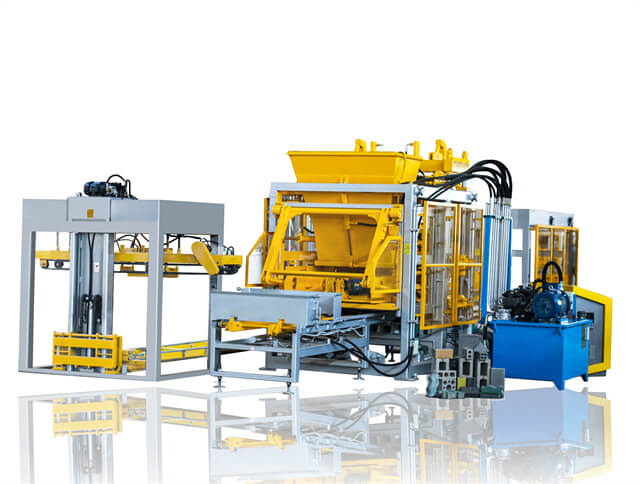
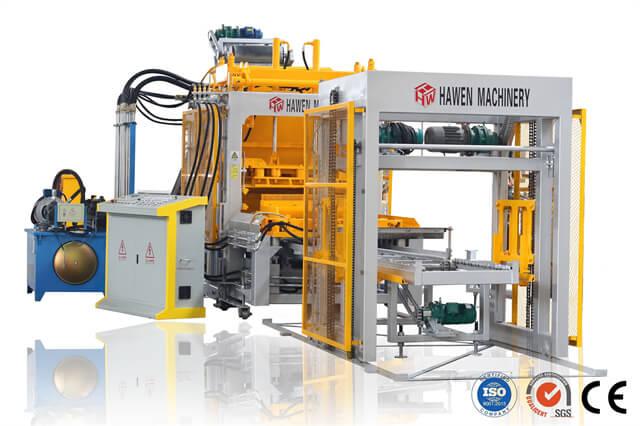
Hawen Machinery automatic block making machines use hydraulic systems designed for controlled pressing and mould movement. The hydraulic station uses YUKEN proportional and directional valves together with an ALBERT hydraulic pump.
The proportional valve system allows hydraulic actions to be controlled according to the forming sequence. This is important because pressing, mould movement, and demoulding do not require exactly the same hydraulic response throughout the production cycle.
During machine commissioning and maintenance, hydraulic pressure, oil temperature, movement speed, and machine response should be observed together. This helps technicians distinguish a normal pressure change caused by different working stages from a genuine hydraulic system problem.

Production Checklist
- Record when the pressure fluctuation occurs during the production cycle.
- Check hydraulic oil level and oil condition.
- Monitor hydraulic oil temperature during continuous operation.
- Inspect the hydraulic pump, valves, filters, and hydraulic lines.
- Check for abnormal noise, leakage, slow movement, or vibration.
- Confirm that the pressure setting matches the product and forming requirements.
- Check the related cylinder and mechanical load if the fluctuation occurs during one specific movement.
- Do not change multiple hydraulic parameters at the same time during troubleshooting.
Hydraulic pressure should always be evaluated together with machine movement and production conditions. A stable hydraulic system is not simply a system with one fixed pressure value; it is a system that responds consistently to the different loads required during each stage of the forming cycle.
FAQ
Is hydraulic pressure fluctuation always a problem?
No. Hydraulic pressure can change naturally when the machine moves through different working stages and experiences different loads. Abnormal or repeated fluctuations accompanied by unstable movement should be investigated.
Can high hydraulic oil temperature cause pressure problems?
Yes. Excessive oil temperature can affect oil viscosity and hydraulic system response, especially during long periods of continuous production.
What should be checked first when hydraulic pressure fluctuates?
First identify when the fluctuation occurs. Then check oil condition, temperature, pump operation, valves, filters, hydraulic lines, and the mechanical load related to that movement.
Should hydraulic pressure always be increased if the block is not strong enough?
No. Block quality also depends on material moisture, material distribution, vibration, mould filling, and pressing conditions. Increasing hydraulic pressure alone may not solve the problem.
Can a hydraulic valve affect machine movement?
Yes. Hydraulic valves control oil flow and pressure for different machine actions. If a valve does not respond correctly, the related movement may become slow, unstable, or inconsistent.
Why does pressure become unstable after several hours of production?
One possible reason is increasing hydraulic oil temperature during continuous operation. Oil condition, cooling, pump performance, and other hydraulic components should also be checked.




 Tel: +86-13905968794
 Email: export@hwmachines.com
 MP/WhatsApp: +86-13905968794
 Manufacturer Address:Nanan,Quanzhou City,Fujian Province,China