A concrete block production project is more than simply installing a block making machine.
A reliable production system requires suitable equipment, proper integration, stable material
handling, and efficient block transfer throughout the production process.
The following project shows a HAWEN automatic concrete block production system installed
and operating in a customer's factory. The production area integrates the block making
machine with material feeding, conveying, and automatic handling equipment to create a
continuous production workflow.
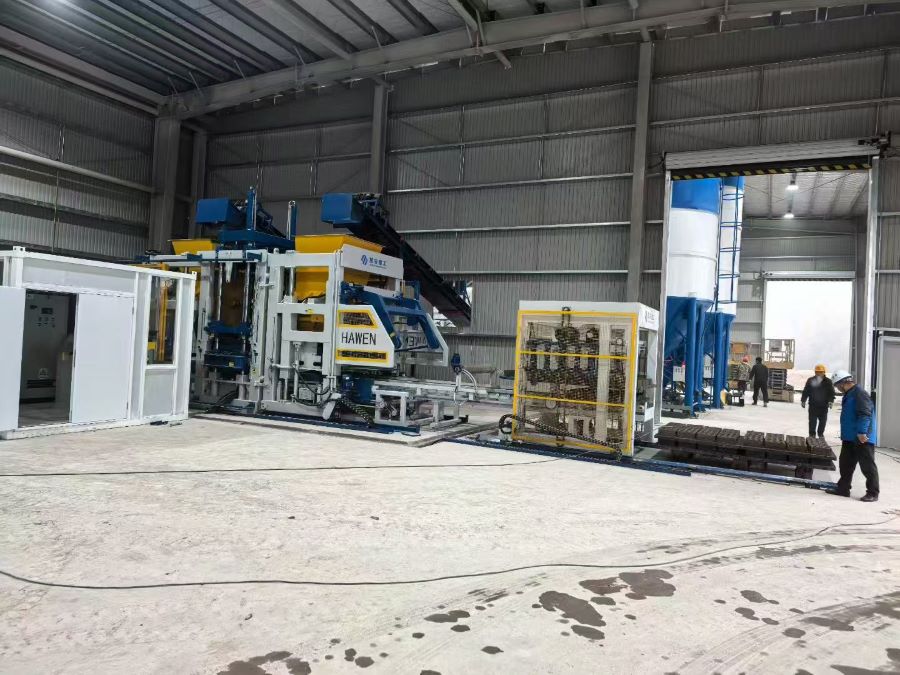
HAWEN automatic concrete block making system installed in a customer's production facility.
A Complete Production System for Concrete Blocks
In modern concrete product manufacturing, production efficiency depends not only on the
performance of the main block making machine, but also on how different parts of the
production system work together.
In this project, the HAWEN block making machine is integrated into an organized production
area with material handling and block transfer equipment. The system is designed to support
continuous production, from concrete material feeding and block forming to the transfer of
freshly produced blocks.
The factory layout also provides sufficient working space around the equipment, allowing
operators to monitor the production process and carry out daily operation and maintenance.
Production concept:
A well-integrated concrete block production line can help manufacturers improve production
organization, reduce unnecessary manual handling, and maintain a more stable manufacturing
process.
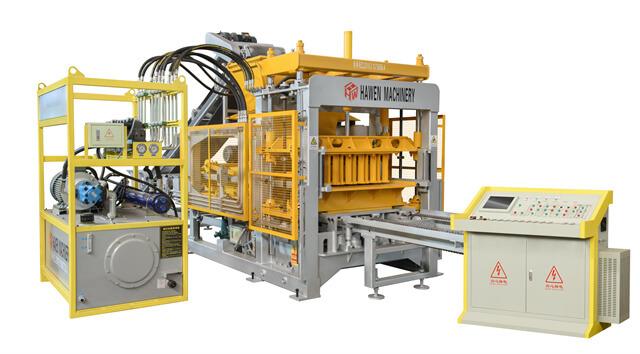
HAWEN Automatic Block Making Machine at the Production Site
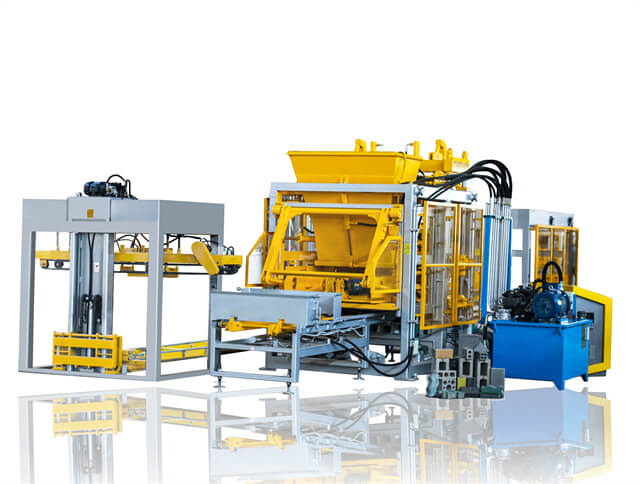
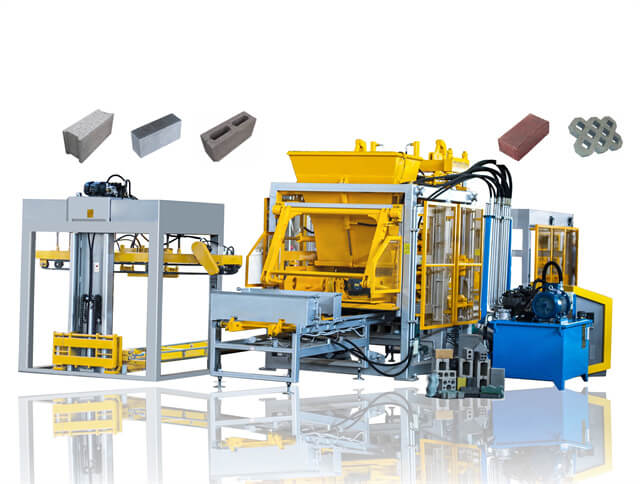
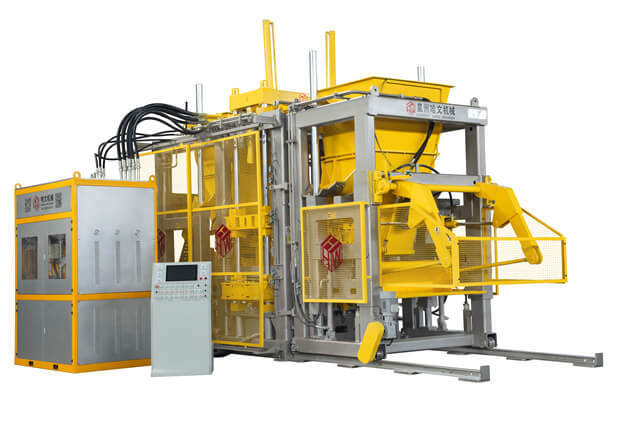
At the center of the production system is the HAWEN automatic block making machine.
The machine is designed for automatic concrete product forming and works together with
the upstream and downstream equipment installed around it.
The image also shows the material storage and feeding equipment positioned behind the main
machine. This arrangement allows concrete materials to be supplied to the production system
while keeping the main production area organized.
At the output side of the machine, freshly produced concrete blocks can be transferred for
further handling and curing. This arrangement is particularly useful for manufacturers
looking to establish a more efficient and systematic block production process.
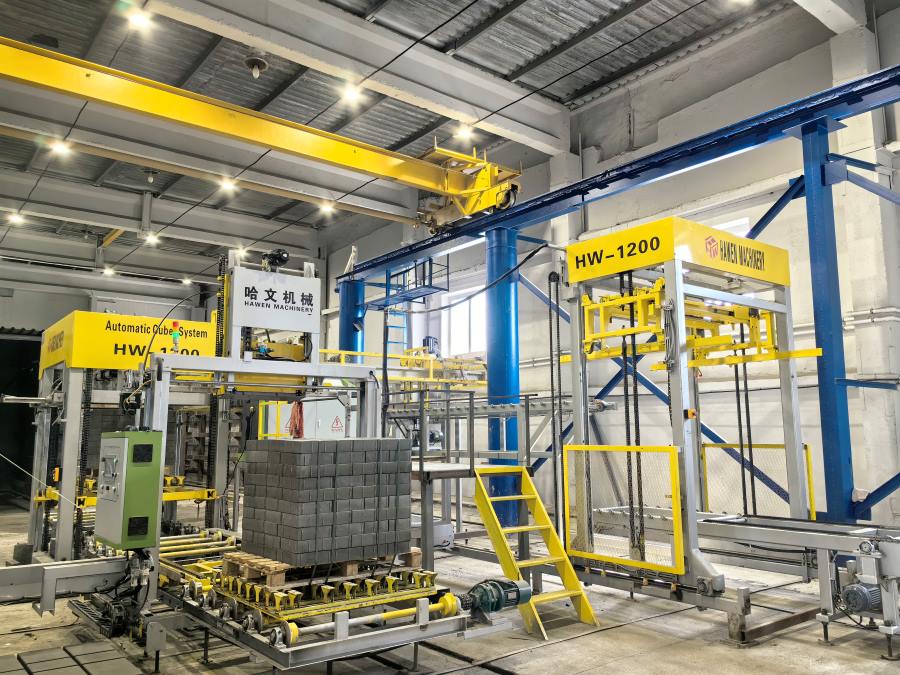
Automatic Handling After Block Forming
After the concrete products are formed, efficient handling becomes an important part of
the production process. The following image shows freshly produced concrete blocks being
transferred and arranged into multiple layers after forming.
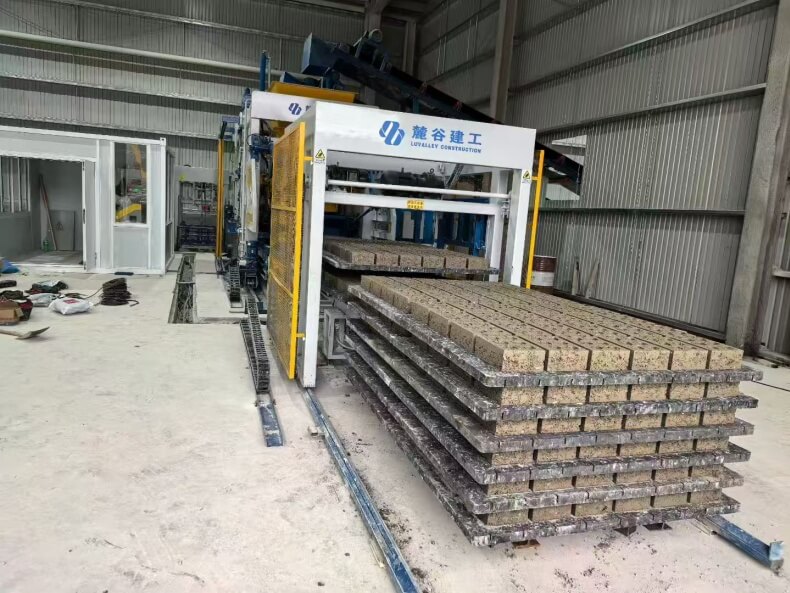
Freshly formed concrete blocks being transferred and arranged for the next production stage.
The automatic handling equipment works together with the block making machine to reduce
unnecessary manual movement of fresh products. The blocks can be transferred in an
organized manner, helping maintain a continuous workflow between forming and subsequent
curing or handling operations.
For manufacturers producing concrete blocks on a regular basis, this type of automated
handling system can improve production organization and make better use of the available
factory space.
Integrated Equipment for a More Efficient Production Workflow
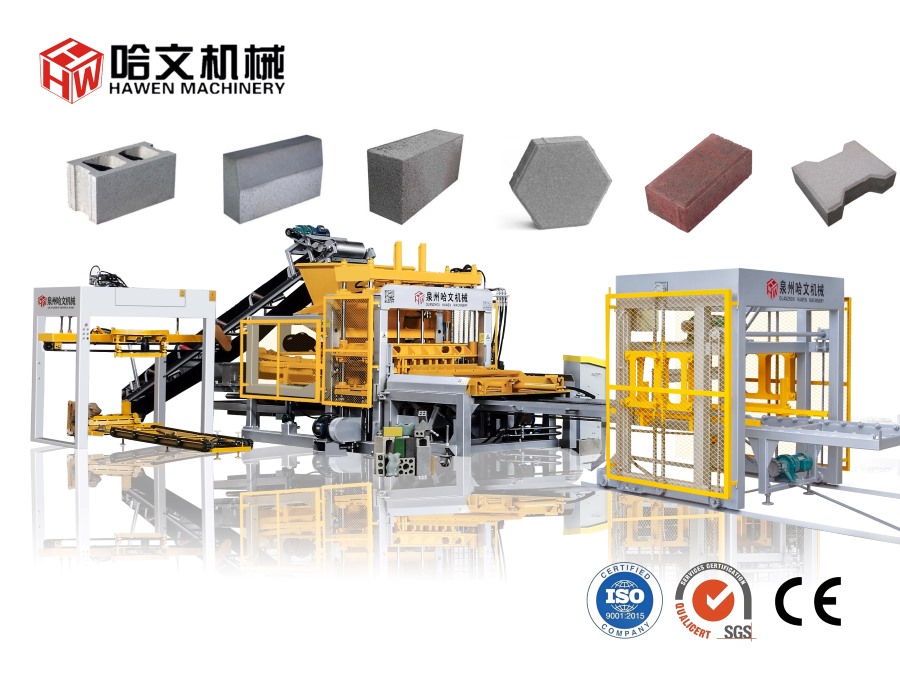
A modern concrete block production line usually consists of several interconnected
machines rather than a single block making machine. The equipment needs to work together
smoothly to maintain a continuous production cycle.
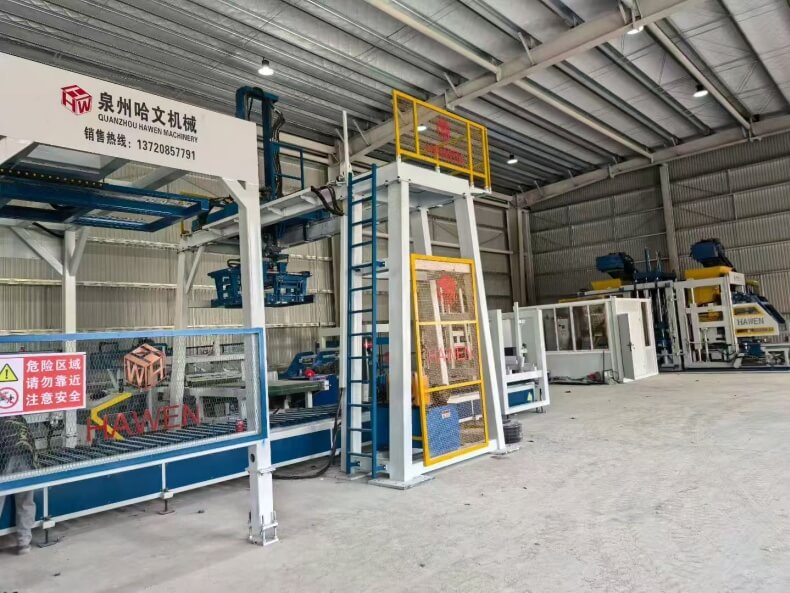
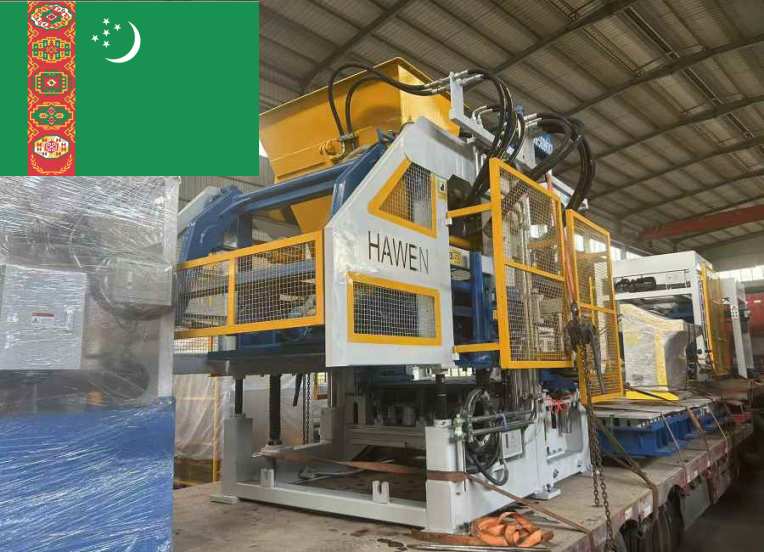
Integrated HAWEN concrete block production equipment installed inside the customer's factory.
This project demonstrates how different sections of a production system can be arranged
within one factory. The production area includes the block making equipment together with
conveying and automatic handling systems, creating a connected workflow from block forming
to product transfer.
The equipment layout also leaves clear working areas around the production line. This
provides operators with convenient access for daily monitoring, inspection, cleaning,
and maintenance.
From Concrete Mixing to Finished Block Handling
The production process can be understood as a series of connected stages. Concrete
materials are first prepared and supplied to the production system. The block making
machine then forms the concrete products according to the selected mould and production
requirements.
Once the blocks are formed, the handling equipment transfers the fresh products to the
following stage. Automated movement and stacking help reduce manual transportation and
keep the production process organized.
Typical production workflow:
Material Preparation → Concrete Mixing → Block Forming → Automatic Transfer →
Curing → Finished Block Handling
The actual production configuration can be adjusted according to the customer's factory
layout, required automation level, block types, and production requirements.
Factory Layout and Equipment Integration
Proper factory layout is an important part of building an efficient concrete block
production line. The position of the main machine, conveyors, handling equipment,
material feeding system, and finished product area needs to be considered together.
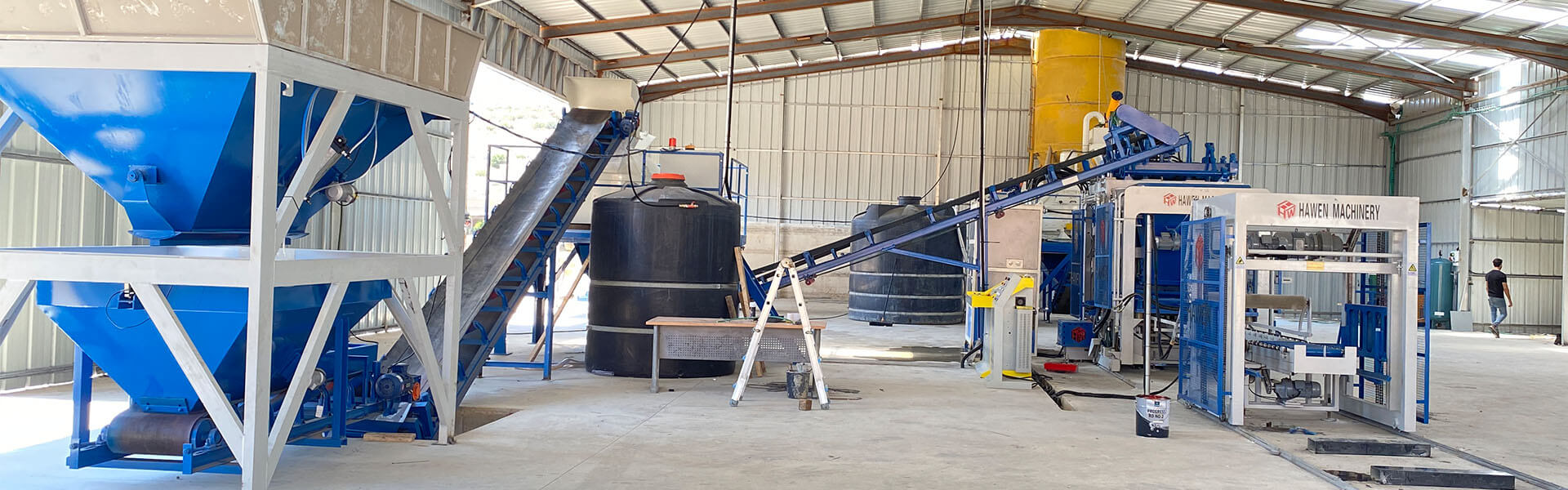
In the project shown above, the production equipment is arranged in a spacious industrial
workshop. The connected equipment forms a clear production route while maintaining
sufficient space for operators and material movement.
A well-planned layout can also make future operation and maintenance easier. Operators
can clearly identify each production section and monitor the movement of pallets and
concrete products throughout the line.
HAWEN Machinery: Complete Concrete Block Production Solutions
HAWEN Machinery provides concrete block making machines and supporting equipment for
manufacturers looking to establish or upgrade their concrete product production lines.
Instead of focusing only on the main block making machine, HAWEN considers the complete
production workflow, including material feeding, block forming, conveying, transfer,
stacking, and other supporting systems required by the customer's project.
The equipment configuration can be developed according to the customer's products,
production requirements, available factory space, and desired level of automation.
Why Choose an Integrated Block Production Line?
- Continuous Production Workflow: Connected equipment helps reduce interruptions between different production stages.
- Reduced Manual Handling: Automatic conveying and handling equipment can reduce unnecessary movement of freshly
produced concrete blocks.
- Better Factory Organization: A planned production layout creates a clearer flow of materials, pallets, and finished
products.
- Flexible Production Solutions: Equipment configuration can be adjusted according to different products, factory
layouts, and automation requirements.
- Professional Technical Support: HAWEN can assist customers in selecting and integrating suitable equipment for their
concrete product production projects.
Conclusion
The production site shown in these images demonstrates how a HAWEN automatic concrete
block making system can be integrated with material handling and transfer equipment to
create an organized production workflow.
From concrete material preparation and block forming to automatic transfer and stacking,
each stage plays an important role in achieving efficient concrete product manufacturing.
For customers planning a new concrete block production project or upgrading an existing
production line, HAWEN Machinery can provide suitable equipment configurations based on
actual production requirements and factory conditions.
Looking for a concrete block production solution?
Contact HAWEN Machinery to discuss your block types, production capacity, factory layout,
and automation requirements.





 Tel: +86-13905968794
 Email: export@hwmachines.com
 MP/WhatsApp: +86-13905968794
 Manufacturer Address:Nanan,Quanzhou City,Fujian Province,China