Choosing between a QT8-15 and a QT10-15 concrete block making plant is not only a question of buying a larger machine. The decision usually depends on mold output, curing yard capacity, pallet circulation, local aggregate quality, labor arrangement, and the buyer's daily sales rhythm. Both machine types belong to the automatic concrete block machine category and can be configured with batching, mixing, block forming, pallet supply, block conveying, stacker, and optional offline cuber systems. The practical difference is how much production pressure the complete line can handle without creating bottlenecks after the host machine.
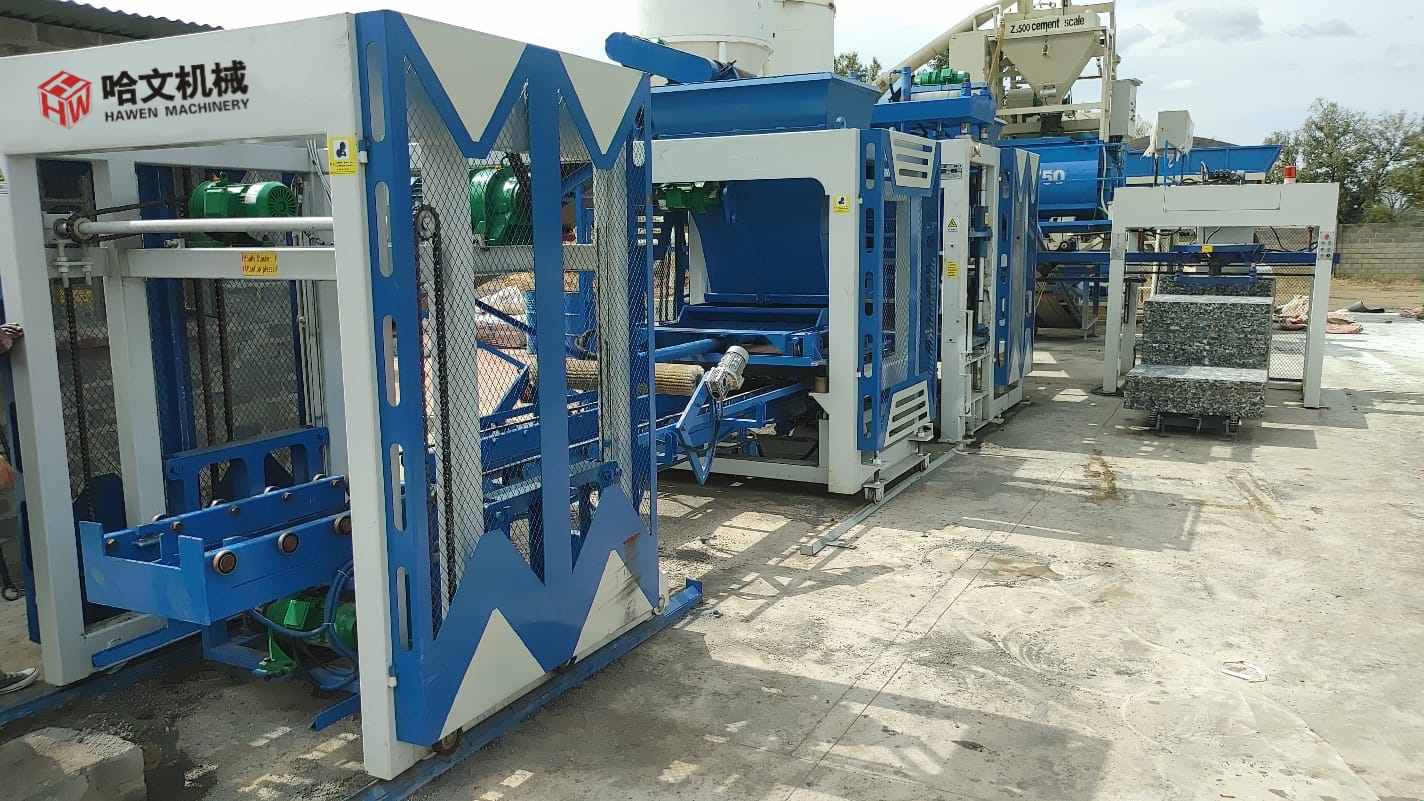
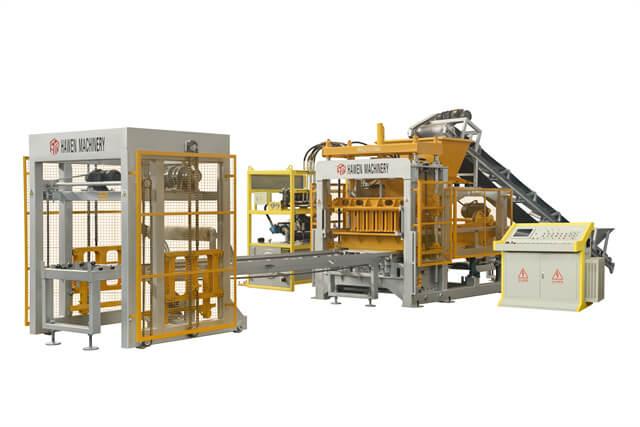
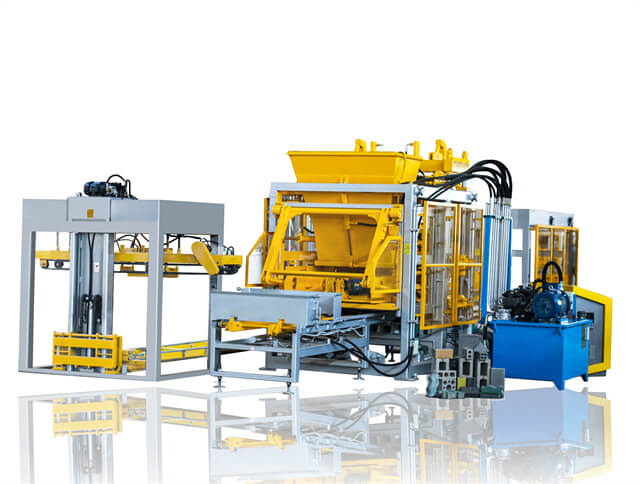
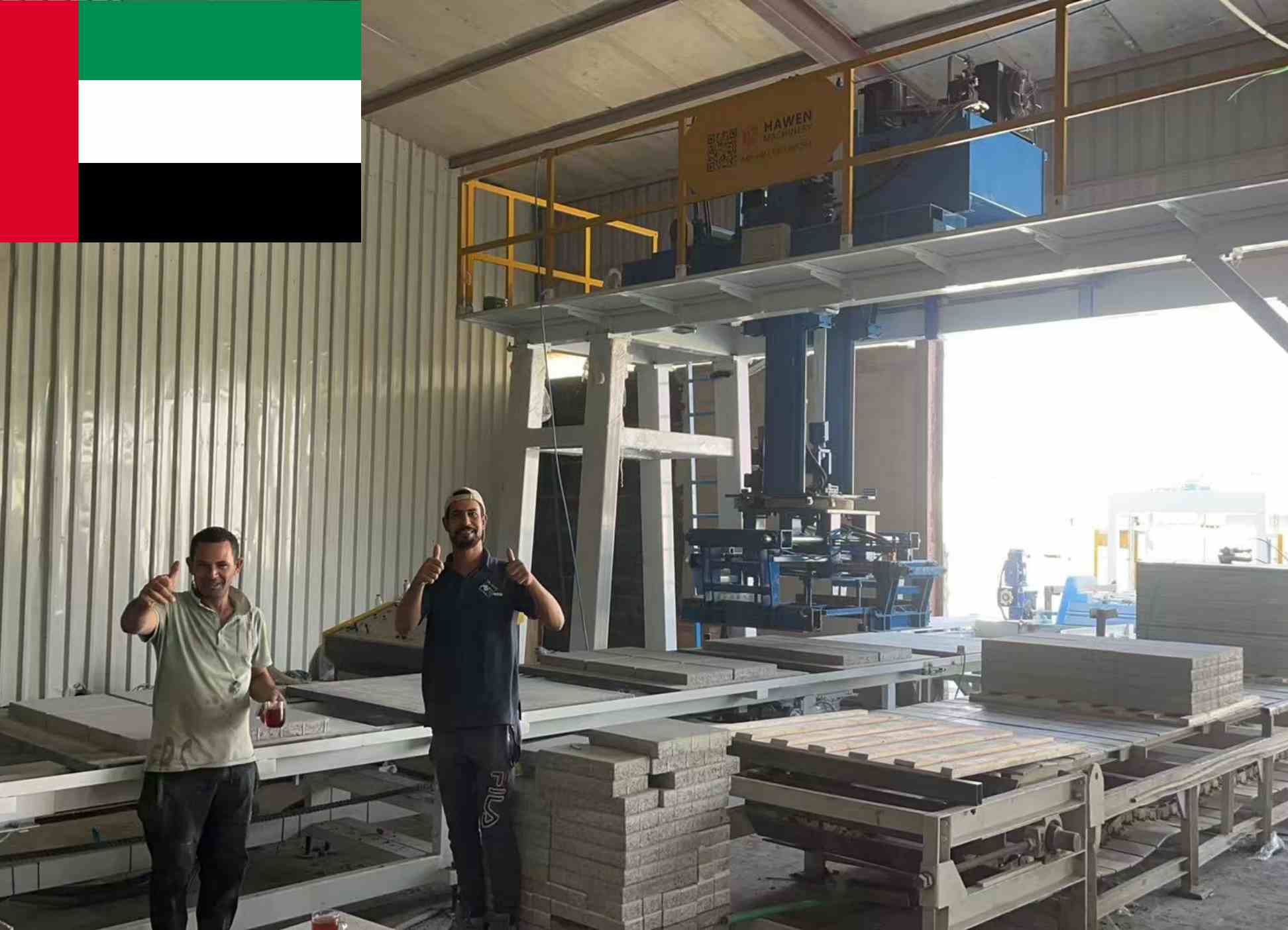
The two field photos show different production scenarios. The first photo presents an outdoor QT8-15 block making plant with batching and mixing equipment behind the main forming machine. The second photo shows a QT10-15 style complete line installed inside a workshop, where the host machine, pallet supply, block conveyor, stacker, and material handling areas are arranged in a more protected environment. These visual differences are useful for buyers because they reveal that model selection should be linked with site conditions, not only with rated capacity on a quotation sheet.
QT8-15 and QT10-15 model positioning for block plant planning
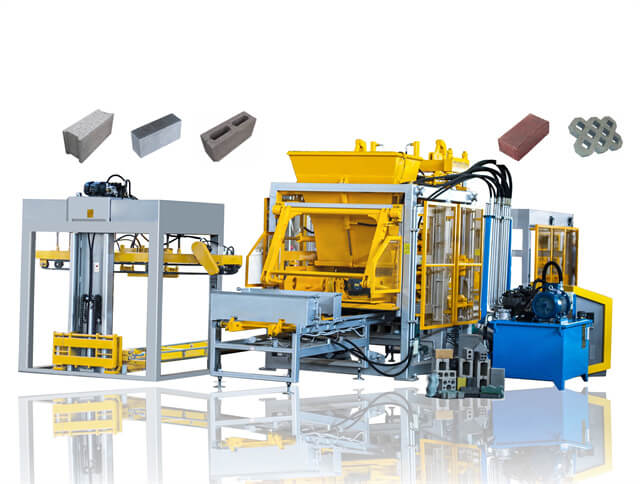
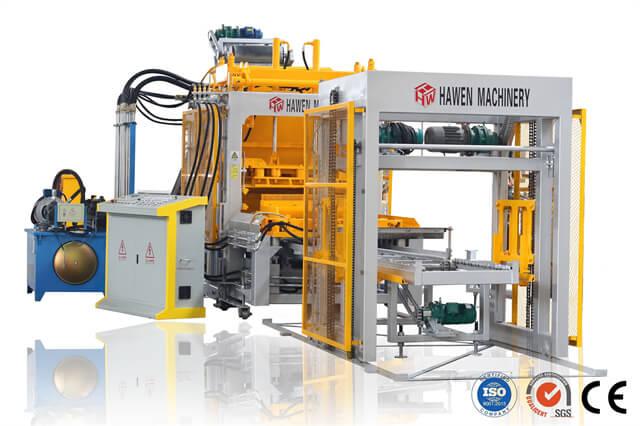
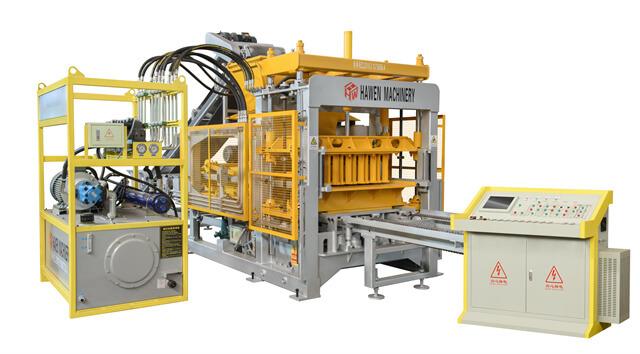
In Hawen Machinery's product language, machines such as QT8 and QT10 are normally discussed as automatic concrete block making machines or automatic concrete brick making machines, while a full installation with material batching, mixer, conveyors, pallet supply, stacker, and cuber may be described as a concrete block making plant. This distinction matters. A buyer is not only purchasing a host machine; the buyer is approving a production system that must turn cement, sand, crushed stone, fly ash, and water into stable blocks under repeatable operating conditions.
The QT8-15 level is often suitable for producers who want a strong automatic line but still need balanced investment, manageable curing yard demand, and moderate daily production targets. It is commonly considered when the buyer produces hollow blocks, solid blocks, interlocking pavers, kerbstones, or porous bricks for local construction material supply. The QT10-15 level is usually considered when the buyer expects higher output, a continuous sales channel, or a larger downstream handling system.
The model name should not be read as a complete guarantee of actual daily production. Real output depends on mold design, block size, raw material moisture, mixer discharge time, pallet size, curing method, and whether the stacker or cuber can keep pace. A serious buyer should ask the supplier to explain output by product type, not only by the host machine model.
Capacity logic behind eight-mould and ten-mould machines
The basic capacity difference between an eight-type and a ten-type block machine comes from the effective forming area, mold layout, vibration capacity, and the handling system designed around the host machine. In simple terms, the QT10-15 class machine can normally carry a larger mold arrangement than the QT8-15 class machine. This allows more standard blocks or pavers to be formed per cycle when the same product size is used. However, the production line must also supply enough mixed material, clean pallets, and transfer space for this advantage to become real output.
For a buyer comparing both models, the first calculation should be daily saleable output, not theoretical maximum cycles. If the local market sells 8-inch hollow blocks, the buyer can request a mold layout drawing showing how many pieces are formed per pallet. If the market sells pavers, the buyer should check whether the color feeding device, surface material feeding, and curing arrangement match the expected product finish.
Concrete block forming relies on pressure and vibration to compact semi-dry concrete inside the mold. A higher model usually has stronger frame structure and more production potential, but the raw material recipe still decides whether blocks come out with sharp edges, stable height, and acceptable strength after curing. This is why the automatic batching and mixing system should be reviewed together with the host machine.
When discussing a QT8 automatic concrete paver fly ash brick making machine, the buyer should also ask how the same supplier would configure the line if the project moves toward QT10-15 capacity. The answer can show whether the supplier is thinking about the complete plant, including mixer size, belt conveyor width, pallet quantity, stacker height, and cuber method, rather than offering a host machine in isolation.
Batching, mixing, and pallet flow in a complete automatic line
A complete automatic concrete block production line normally starts from aggregate batching. Sand, stone powder, crushed stone, cement, fly ash, and water must enter the mixer in a controlled sequence. The first photo shows the batching and mixing area behind the QT8-15 host machine, which is a useful reminder that the main machine depends on upstream accuracy. If the mixer cycle is slower than the forming cycle, the machine waits. If the aggregate moisture changes too much, block height and surface texture become unstable.
After mixing, the concrete is transferred to the main machine hopper and distributed into the mold box. The automatic forming system then completes material feeding, vibration, pressing, demolding, pallet transfer, and block discharge. A stable pallet supply system is essential because the green blocks are carried on pallets immediately after forming. GMT pallets, PVC pallets, bamboo pallets, or steel pallets may be selected according to budget, service life, weight, and local maintenance conditions. The buyer should not treat pallets as a small accessory; insufficient pallet quantity can stop production even when the main machine is ready.
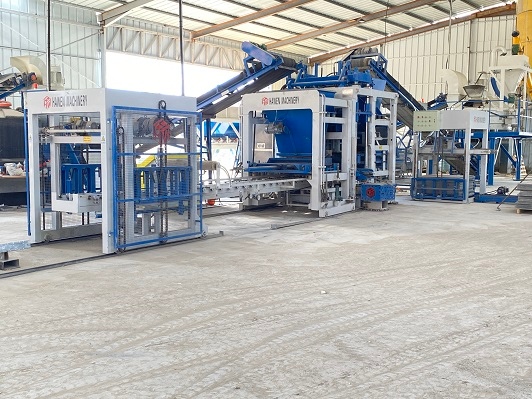
Downstream flow also shapes the correct model choice. A QT10-15 plant may need a stronger stacker, larger curing space, and more organized forklift routes than a QT8-15 plant. If an offline cuber system is included, the buyer should review how cured blocks return from the curing area, how pallets are separated, and how finished blocks are stacked for shipment.
Layout checks for South Africa and Israel style installations
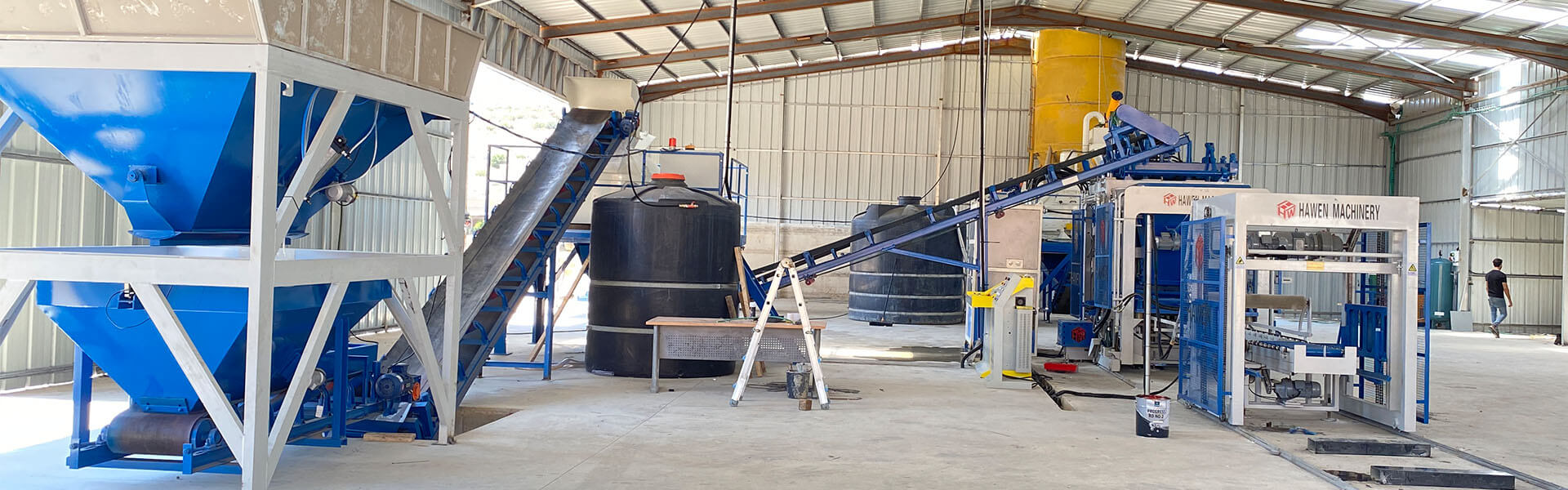
The outdoor installation in the first photo and the indoor workshop installation in the second photo represent two common planning directions. Outdoor lines may reduce building cost and allow easier forklift movement, but they require better attention to dust, rain protection, control cabinet safety, and material storage. Indoor lines offer more stable working conditions, but the building must allow enough height for the cement silo, mixer platform, conveyors, stacker, and maintenance access around the machine.
A practical layout audit should start with truck entry, aggregate storage, cement delivery, production flow, curing yard, finished block loading, and operator sightlines. The batching area should not interfere with forklift routes. The control cabinet should be placed where the operator can see the host machine and block discharge area. The stacker should have clear space for pallet movement. If the project uses a cement silo, the buyer should confirm foundation design, wind load consideration, and screw conveyor angle before installation.
One real business observation from installation acceptance is that many capacity problems are not caused by the host machine. They are caused by cramped curing yards, insufficient pallet return routes, or unclear forklift circulation. During acceptance, it is useful to run the line at a realistic product mix and observe whether operators can remove green blocks, return empty pallets, and feed raw materials without crossing dangerous movement paths. A layout that looks acceptable on a drawing may become slow when a loader, forklift, cement truck, and operators work at the same time.
Model comparison table for buyer review
The following table is not a replacement for an official technical quotation. It is a buyer review framework for comparing QT8-15 and QT10-15 plant planning. The exact figures should be confirmed by mold drawing, mixer model, pallet size, and product type.
| Review item | QT8-15 planning focus | QT10-15 planning focus |
|---|
| Production target | Balanced output for local block, paver, and kerbstone supply with moderate curing yard pressure. | Higher daily output for buyers with stronger sales channels and more organized downstream handling. |
| Mold and product range | Good for common hollow blocks, solid blocks, pavers, and customized molds when output demand is controlled. | Better when larger forming area and higher repeated production volume are required. |
| Batching and mixing | Mixer and aggregate batching must match the host cycle without excessive waiting time. | Upstream feeding capacity becomes more important because the host machine consumes material faster. |
| Pallet circulation | Pallet quantity and return route should support stable one-shift operation. | More pallets, stronger stacker planning, and clearer forklift routes are usually needed. |
| Installation site | Can fit many outdoor or semi-open sites if electrical and weather protection are handled well. | More suitable for buyers who can provide larger workshop space or a carefully planned plant layout. |
Acceptance points before confirming the machine model
Before confirming QT8-15 or QT10-15, the buyer should ask for a configuration list that separates the host machine from the complete plant. The list should include batching machine, cement silo, screw conveyor, mixer, belt conveyor, main machine, hydraulic station, control system, pallet feeder, block conveyor, stacker, pallet quantity, molds, spare parts, and optional cuber. This prevents misunderstandings where two quotations use the same model name but include different equipment.
Sample video review is also useful. Instead of only watching a promotional running video, the buyer can request videos showing material feeding, demolding, block height, edge condition, pallet transfer, stacking, and mold change area. If the buyer plans to make pavers, surface feeding and color material handling should be checked. If the buyer plans to make hollow blocks, web thickness and demolding stability should be observed.
For factory acceptance or pre-shipment testing, the buyer should confirm electrical voltage, control interface language, hydraulic leakage inspection, sensor position, vibration motor condition, mold fastening, spare parts package, and packing method. For installation acceptance, the buyer should check foundation level, mixer discharge alignment, conveyor belt tracking, pallet feeder movement, emergency stop positions, and operator training.
Cost review should include more than the machine price. A larger model may require more cement storage, more pallets, a larger curing yard, more forklifts, stronger electrical capacity, and higher daily raw material purchasing. If the sales market is ready, those extra costs may be reasonable. If the market is still being tested, the QT8-15 level may offer a more controlled path. The correct answer is the model that matches the buyer's verified production target, not necessarily the largest machine available.
FAQ
Is QT10-15 always better than QT8-15?
No. QT10-15 usually has higher production potential, but it also asks more from the batching system, pallet circulation, curing yard, labor organization, and sales volume. If the buyer cannot use the extra output, the larger model may create idle capacity instead of better profit.
Can both machines produce hollow blocks and pavers?
Yes, both machine classes can be configured for hollow blocks, solid blocks, interlocking pavers, kerbstones, and related concrete products by changing molds and, when needed, adding surface material feeding equipment. The buyer should confirm the mold drawing and product size before comparing capacity.
What should be checked first in a quotation?
Check whether the quotation is for the host machine only or for a complete concrete block making plant. A complete line normally includes batching, mixing, conveying, forming, pallet supply, stacking, molds, and sometimes cubing. Two quotations with similar model names may be very different in actual scope.
How many pallets should be prepared?
The answer depends on output, curing time, pallet size, block type, and whether pallets are returned manually or automatically. Buyers should calculate pallet quantity from one full production cycle, not from the host machine alone. Too few pallets can stop production even when every other machine is working.
Should the machine be installed indoors or outdoors?
Both arrangements are possible. Outdoor installation needs stronger attention to weather protection, control cabinet safety, and material storage. Indoor installation gives better operating stability, but the building must have enough height and space for conveyors, mixer platform, stacker, forklift routes, and maintenance access.
Conclusion
QT8-15 and QT10-15 concrete block making plants should be compared as complete production systems, not as isolated host machines. The QT8-15 level is often practical for buyers who want automatic production with balanced investment and manageable site pressure. The QT10-15 level is more suitable when the buyer has stronger daily demand, enough curing space, stable raw material supply, and a downstream handling plan that can keep pace with higher output.
The next step is to verify the product list, mold drawings, expected daily output, pallet circulation, curing yard plan, and full configuration scope. A buyer can then compare quotations by real production conditions: batching accuracy, mixer capacity, forming area, stacker design, cuber option, spare parts, installation support, and operator training. This method gives a clearer decision than choosing by model name alone and makes acceptance easier after the equipment arrives at the site.





 Tel: +86-13905968794
 Email: export@hwmachines.com
 MP/WhatsApp: +86-13905968794
 Manufacturer Address:Nanan,Quanzhou City,Fujian Province,China