Hot climate regions create special challenges for concrete block production. High temperature, dry wind, strong sun, and dusty yards can make moisture control difficult. Fresh blocks may lose water too quickly. Hydraulic oil can run warmer. Electrical cabinets need better protection. Operators may also need a safer work routine. A concrete block machine plant for hot areas should be configured as a complete production environment, not only as a machine frame.
This guide explains how to plan a brick machine plant for tropical, desert, and high-temperature regions while keeping product quality, machine stability, and daily output under control.
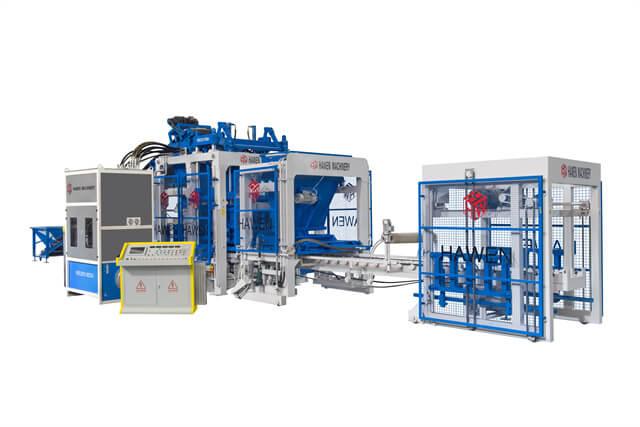
Hot climate production challenges
The biggest technical challenge is rapid moisture loss. Dry-cast concrete already contains limited water. In hot weather, aggregate can become very dry, water can evaporate faster, and fresh products can lose surface moisture before curing is organized. The result may be rough faces, weak edges, color variation, early surface cracks, and lower handling strength.
High temperature also affects equipment. Belts, seals, hoses, sensors, hydraulic oil, and control cabinets may work under heavier thermal stress. Dust can enter moving parts if the plant layout is open and poorly maintained. A hot-region brick machine line should therefore be designed with material protection, airflow, cleaning access, and stable electrical layout in mind.
Production note: hot weather is not solved by adding water blindly. Extra water may improve short-term workability but can also cause sticking, deformation, and unstable height. The better solution is controlled material storage, measured water correction, rapid curing protection, and steady machine parameters.
Raw material and water control
Aggregate should be stored in a way that reduces extreme temperature and moisture variation. Covered storage is helpful where strong sun dries fine aggregate quickly. The loader should feed the batching machine from a consistent zone of the stockpile. If one batch uses very dry sand and the next uses shaded material, the mix will change even when the formula is the same.
The water system should be easy to adjust, but not casual. Operators should check the first boards of each shift, then make small corrections based on surface texture, demoulding behavior, and height stability. A cement silo should be protected from dust and moisture intrusion, and the screw conveyor should discharge smoothly without interruption.
A concrete mixer must distribute water evenly through a low-slump mix. A planetary concrete mixer may be selected for careful mixing and paver face quality. A twin-shaft mixer may be chosen where strong mixing action and faster discharge are priorities. The choice should match the product range and block making machine cycle.
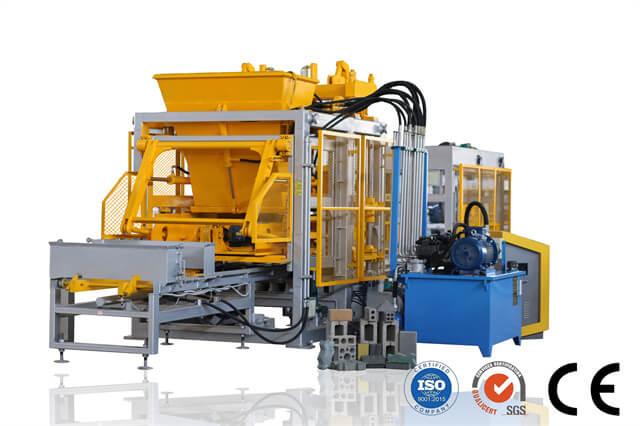
In hot regions, the time between mixing and forming should be kept short and consistent. If mixed concrete waits too long in an exposed hopper, it can lose moisture and become harder to compact. Conveyor covers, shaded transfer points, and disciplined batch timing can help protect material behavior before it enters the mold.
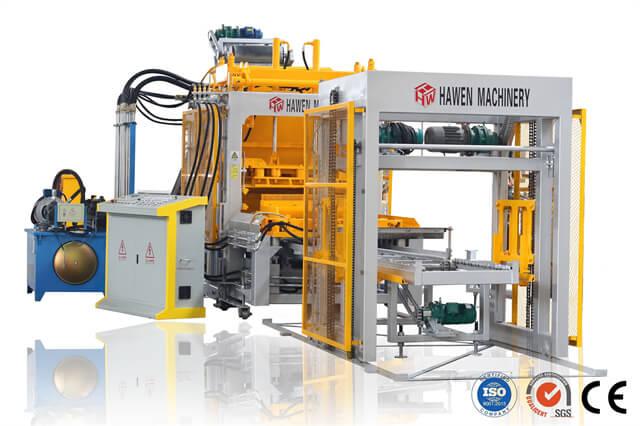
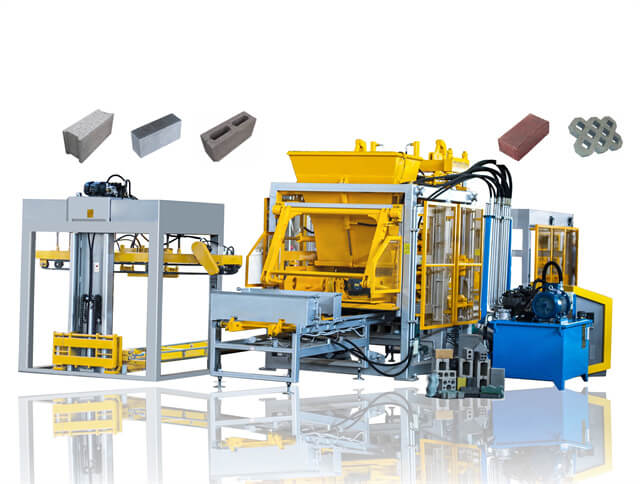
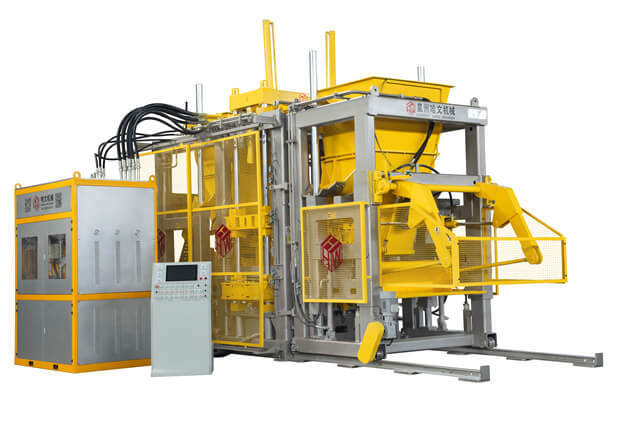
The vibration system should compact the mix uniformly without forcing operators to use excessive water. Hawen Machinery adopts a four-shaft vibration box design with eccentric blocks arranged outside the housing. This reduces vibration resistance, supports uniform compaction, and helps lower cement consumption while improving overall efficiency.
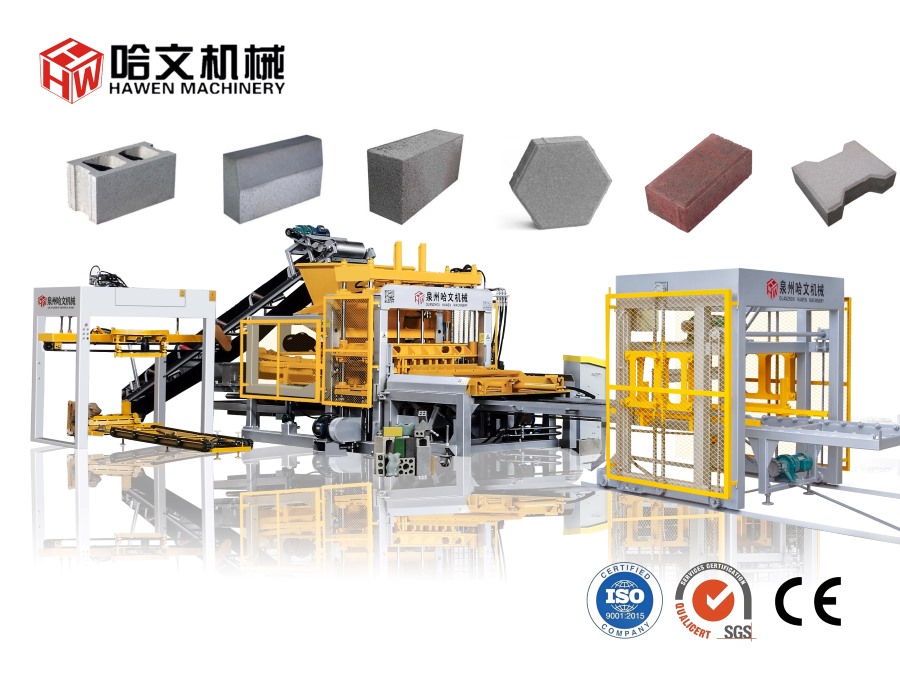
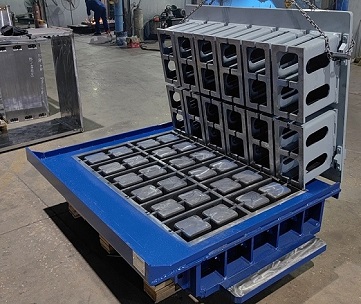
Molds must release cleanly even when the mix changes with temperature. Hawen Machinery designs molds compatible with Masa, Hess, Zenith, Poyatos, Besser, Tiger, Columbia, Quadra, Omag, and other recognized machine platforms. These molds follow original specifications, are heat-treated for wear resistance, and are checked at HRC59-61 hardness. A precise hollow block mould or interlocking paver mould helps protect edges under demanding production conditions.
Curing yard and pallet flow
Hot weather makes curing organization more important. Fresh blocks should not be left under direct sun and dry wind without protection. Controlled moisture retention, shaded curing zones, and careful movement can reduce early drying. The goal is to keep the product strong enough for handling while avoiding surface damage.
Pallet flow must also be stable. A flat GMT pallet supports fresh products during forming and early curing. If the plant does not have enough pallets, operators may move green products too early, increasing cracking or chipping. An automatic pallet provider helps keep the brick making machine supplied with pallets at a steady rhythm.
For high-output plants, an automatic offline palletizing system can reduce manual handling after curing. This is useful in hot regions because operators may work more slowly during the hottest hours, and automation helps maintain consistent stacking without unnecessary impact.
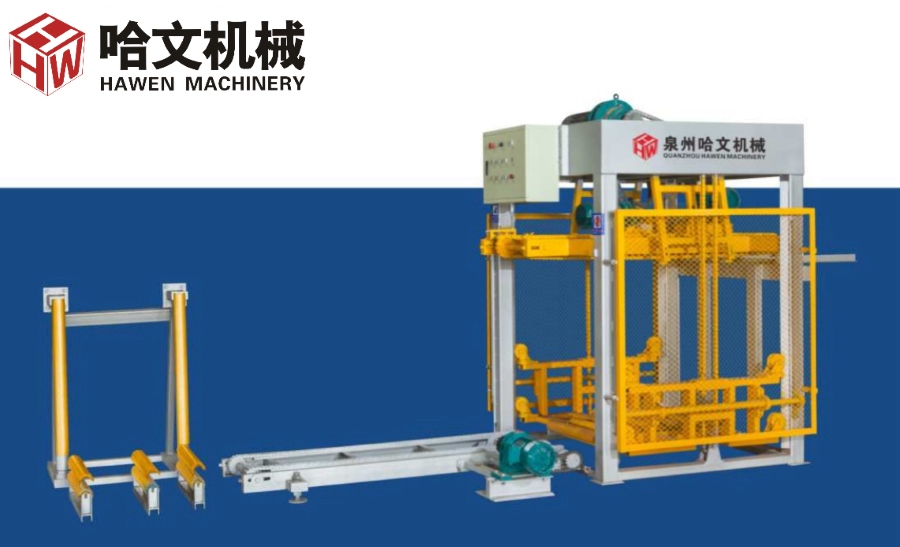
Hydraulic, electrical, and operator protection
Hydraulic and electrical sections should be protected from heat, dust, and poor ventilation. The hydraulic station should have enough access for inspection and cleaning. Oil level, filter condition, hose condition, and cooling environment should be checked regularly. Electrical cabinets should be positioned where dust and direct heat are controlled as much as possible.
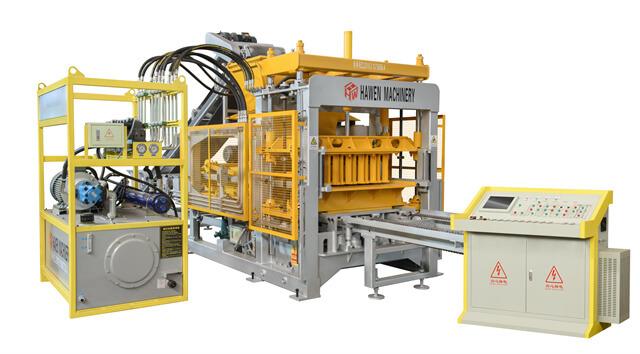
Hawen block machines use Japanese YUKEN proportional and directional valve components together with an American ALBERT hydraulic pump. This supports precise movement control and reliable load response. In hot-region production, stable hydraulic movement is especially important because operators should not compensate for process problems with rough or excessive pressure adjustments.
Operator protection is part of plant productivity. Work areas should provide drinking water, shaded rest points, and reasonable shift organization according to local safety requirements. Heat stress can reduce attention, and lower attention can lead to wrong parameter changes, unsafe forklift movement, and careless maintenance.
Hawen Machinery configuration advice
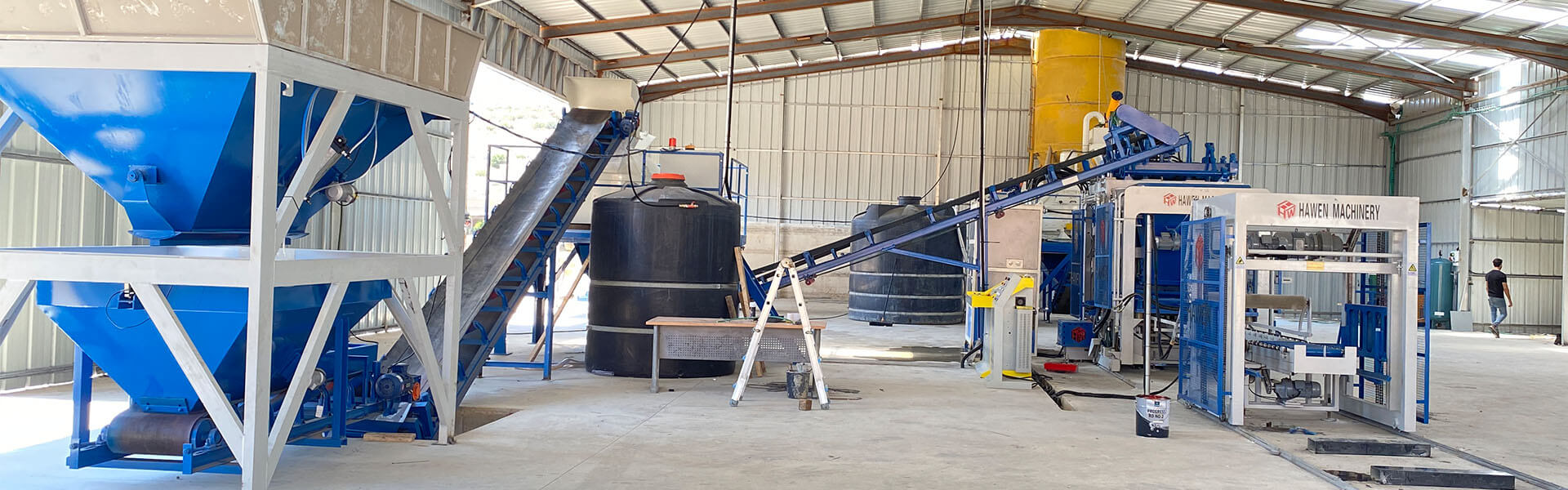
Hawen Machinery can help customers configure a hot-climate block machine plant by reviewing product type, raw material storage, local temperature, dust level, plant roof design, curing method, automation level, and power supply. The recommended configuration may include covered material feeding, stable mixing, suitable vibration, reliable hydraulic control, pallet supply, and downstream palletizing.
The SIEMENS S7-200 PLC, touch panel, and remote monitoring capability help track machine status and review parameters when operating conditions change. This is useful for factories where temperature, aggregate moisture, and production rhythm vary during the day.
A hot climate does not have to mean unstable block production. With protected materials, measured water control, disciplined curing, durable hydraulic components, and a plant layout designed around the local environment, a block making machine line can turn difficult weather into a managed condition. The factory becomes stronger because the process is stronger.
FAQ
Should I add more water when producing blocks in hot weather?
Only after checking aggregate moisture and fresh block behavior. Too much water can cause sticking, deformation, and unstable height.
How can I prevent fresh blocks from drying too fast?
Use shaded curing zones, controlled moisture retention, shorter transfer routes, and organized pallet movement. Avoid leaving green products exposed to strong sun and dry wind.
Does hot weather affect hydraulic systems?
Yes. Higher ambient temperature can increase thermal stress. Check oil level, filters, hoses, ventilation, and cooling conditions regularly.
What equipment is most important for hot-region plants?
Material storage, batching, mixing, forming, pallet flow, curing protection, and electrical cabinet placement all matter. The line should be planned as one system.
Can automation help in hot climates?
Yes. Automatic pallet supply and palletizing reduce heavy manual work and help maintain a steadier production rhythm during difficult working conditions.
Can Hawen Machinery design a plant for desert or tropical regions?
Yes. Hawen can adjust the block machine line configuration according to local climate, dust, raw materials, product type, and automation needs.





 Tel: +86-13905968794
 Email: export@hwmachines.com
 MP/WhatsApp: +86-13905968794
 Manufacturer Address:Nanan,Quanzhou City,Fujian Province,China