Aggregate is the largest volume component in most dry-cast concrete blocks, yet many factories control it only by general labels such as sand, stone dust, crushed stone, or recycled aggregate. For products with hollow cores, narrow webs, chamfers, and multiple cavities, the maximum particle size and the complete particle-size distribution have a direct influence on mould filling, vibration response, density, surface texture, edge integrity, material consumption, and mould wear.
A block machine cannot force an unsuitable coarse particle through a narrow product section without consequences. At the same time, reducing every particle to fine powder is not a solution, because excessive fines increase surface area, water demand, paste demand, shrinkage, and sticking risk. The practical objective is a stable grading that can move through the smallest functional section of the product and compact into a dense skeleton under the available vibration energy.
Why Maximum Aggregate Size Matters in Block Production
Maximum aggregate size is commonly understood as the largest particle permitted in the mixture, but production control should distinguish between a specified sieve limit and an occasional oversized particle. A stockpile may meet a general description while still containing a small number of elongated or oversized pieces capable of blocking a narrow mould section. Screening efficiency and contamination control are therefore as important as the nominal size.
In a solid block with a broad cross-section, relatively coarse particles may have enough space to rearrange during vibration. In a hollow block, material must pass between core boxes and cavity walls to form thin face shells and webs. If particles are too large relative to these spaces, they can bridge across an opening, interrupt material flow, and leave a hidden void below the blockage.
The relevant dimension is not only the external block size. It is the narrowest section that fresh material must enter and compact within, after accounting for core geometry, draft, chamfers, and the movement of the feed drawer. A 400 mm long block may still contain a web only a small fraction of that dimension. Product drawings and actual mould geometry should guide aggregate trials.
Particle shape also matters. A rounded particle may move differently from an angular or flaky particle of the same sieve size. Crushed aggregate can interlock effectively, but angularity increases internal friction and may require a different fine fraction, moisture level, or vibration program. The factory should evaluate size and shape together instead of relying on sieve results alone.
Relationship Between Particle Size and Hollow Block Geometry
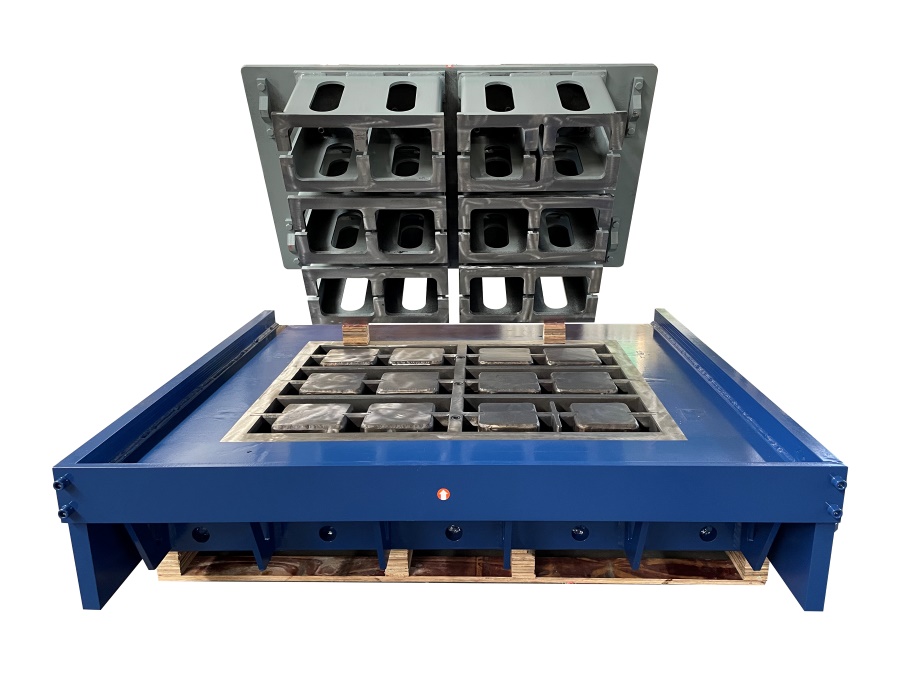
Hollow blocks are sensitive to the relationship between maximum particle dimension and minimum wall or web thickness. When several large particles arrive at a narrow section simultaneously, they can form an arch that prevents smaller material from filling below. The top may appear full while the lower web remains porous or incomplete. Pressure from the tamper head cannot reliably repair a section that was never filled.
Core corners and tapered zones deserve attention because flow direction changes around them. Material may accumulate on the feeding side and leave a lower-density shadow on the opposite side. If the same weak web or corner repeats in the same cavity, compare aggregate size with mould geometry and observe feed direction before increasing cement or hydraulic pressure.
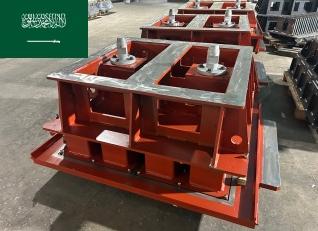
A correctly engineered hollow block mould provides suitable cavity geometry, core support, draft, and clearance, but the supplier should know the planned aggregate type and maximum size. This information is especially important for thin-wall blocks, lightweight aggregates, recycled materials, and products with complex internal cavities.
Increasing wall thickness may improve filling but changes unit weight, material cost, hollow ratio, thermal behavior, and market acceptance. It should not be used as an informal correction without reviewing the product standard and commercial requirement. The preferred solution is to coordinate product geometry, aggregate grading, mould design, and machine settings.
Aggregate Grading, Packing, and Paste Demand
Maximum size is only one point on the grading curve. A well-graded blend contains particle fractions that fill spaces between larger particles. This reduces total void volume and allows the cementitious paste to coat and bind a stable skeleton. A gap-graded mixture may contain acceptable maximum particles but still compact poorly because an intermediate fraction is missing.
Too much coarse material can produce open texture, rough faces, weak corners, and inconsistent mass. Too many fines can make the mixture sticky and increase water demand. Very fine dust may coat aggregate surfaces, interfere with paste bonding, or cause rapid moisture changes. The useful fine fraction depends on mineral type, shape, cement content, admixture, and product surface requirement.
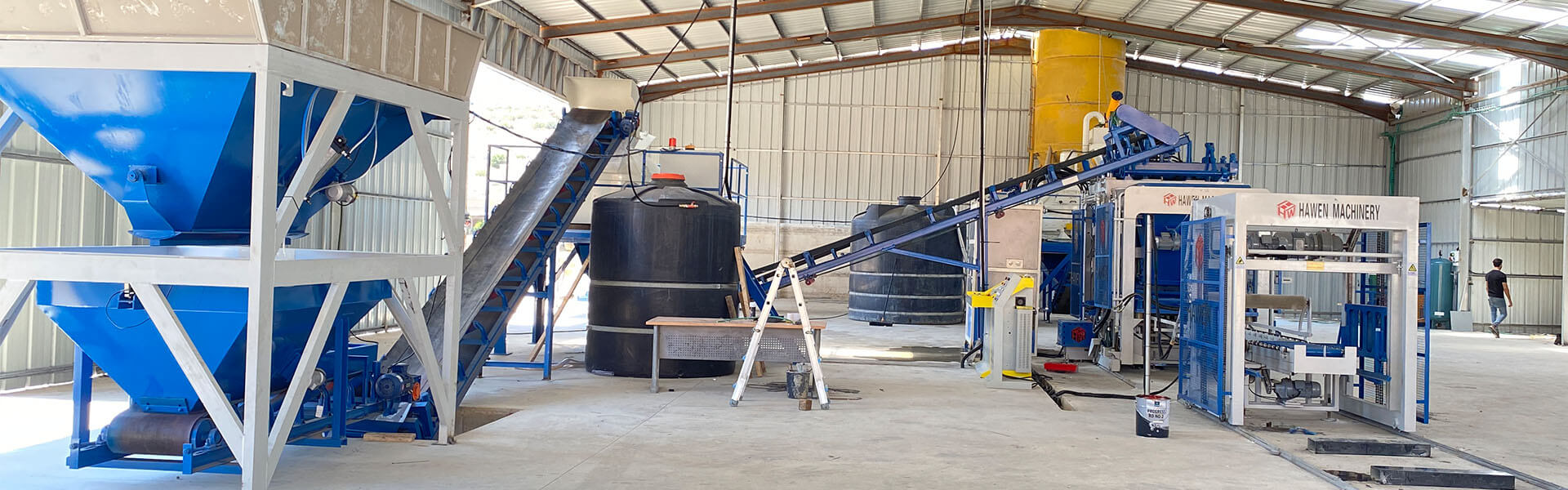
Batching accuracy matters because small grading changes can be amplified over repeated cycles. A suitable concrete batching machine separates aggregate fractions and measures them repeatably, but bins, gates, belts, and weighing systems must be maintained. Segregation inside stockpiles or bins can still change the actual blend entering the mixer.
Moisture correction is necessary when comparing grading trials. Wet fine aggregate can bulk, clump, or carry more surface water, while porous coarse aggregate may absorb water. If grading and moisture change at the same time, the plant may incorrectly attribute a compaction difference to particle size alone.
Effects on Feeding, Vibration, and Compaction
After mixing, the feed drawer must distribute material across every cavity before main compaction. Coarse or irregular particles can segregate during conveyor transport, hopper discharge, and repeated drawer movement. Fines may settle differently from larger particles, creating different mixtures at the center and edges of the mould even when the original batch was correct.
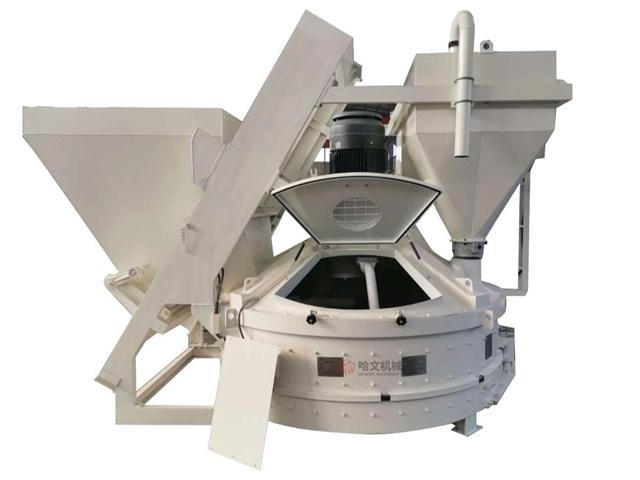
A planetary concrete mixer can support uniform distribution of cement, water, fines, and aggregates, but mixing cannot permanently prevent segregation caused by unsuitable transport or excessive waiting. Discharge height, hopper shape, belt speed, and feed timing should be reviewed when product density varies by mould position.
During vibration, smaller particles should move into spaces while larger particles form a stable load-carrying skeleton. If the largest particles cannot pass through narrow sections, stronger vibration may only move the blockage or increase abrasion against mould surfaces. If the mixture contains excessive fines and water, longer vibration may encourage paste migration and adhesion.
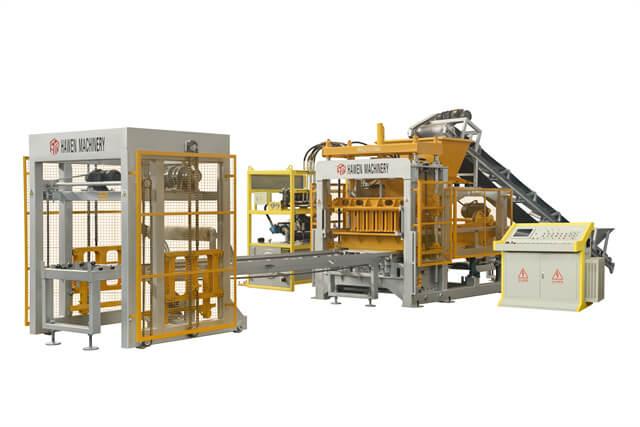
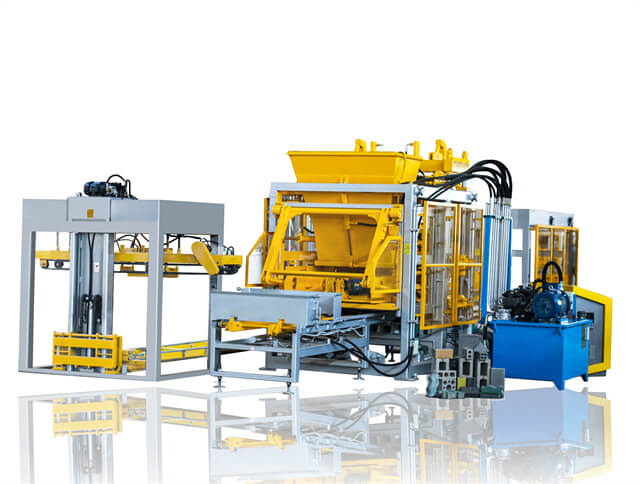
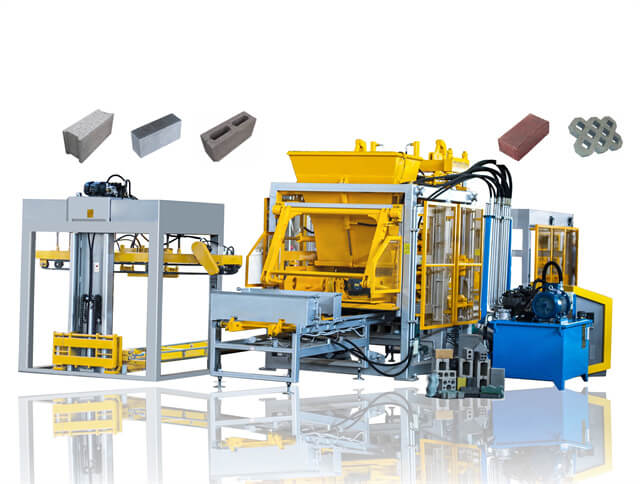
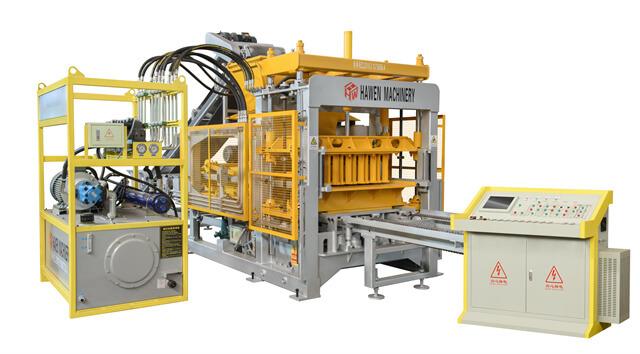
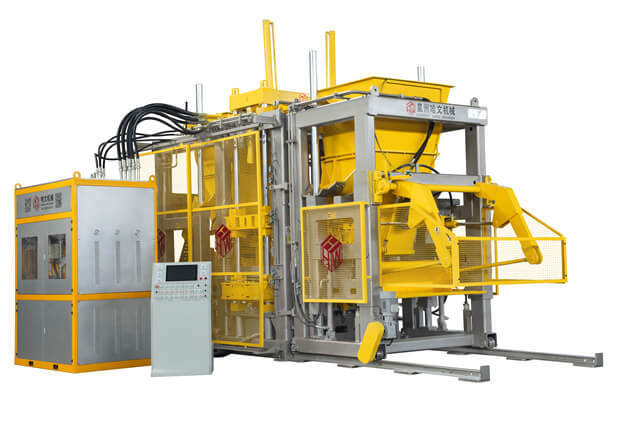
The vibration program must match the material. Pre-vibration during feeding can help fill difficult sections, while main vibration under the tamper head develops final density. Frequency, amplitude, duration, synchronization, mould seating, and pallet support all influence energy transfer. An automatic block making machine should provide repeatable recipe control, but the correct recipe must be established through product-specific trials.
Cycle time should not be shortened until cavity filling is stable. A fast machine producing incomplete webs creates lower saleable output than a slightly longer verified cycle. Cavity-by-cavity block mass is a useful production indicator because systematic low mass can identify poor filling before cured strength results become available.
Effects on Surface Quality, Strength, and Mould Wear
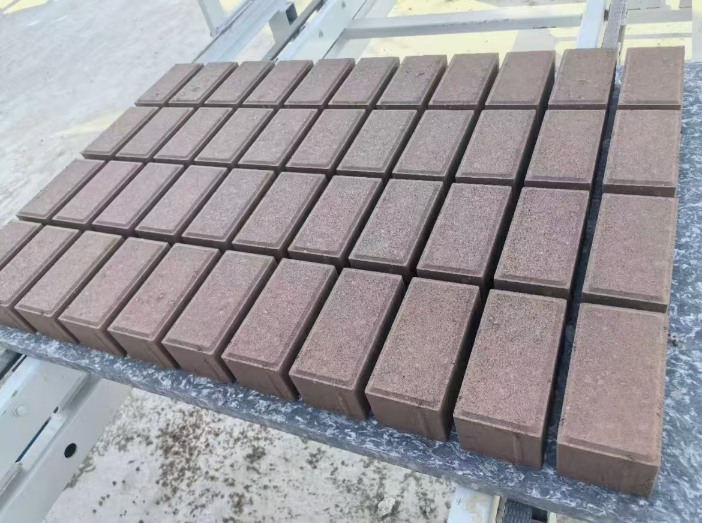
Coarse particles near a visible face can create drag marks, exposed stone, open corners, or localized roughness. For architectural pavers and face-mix products, the surface layer normally requires a grading selected for texture and color uniformity. The base mix may use a different grading, but the two layers must bond and compact within the cycle.
Strength is influenced through density and paste bonding. Large voids and incomplete webs create stress concentrations. However, simply reducing maximum size does not guarantee higher strength. If the resulting fine mixture requires more water or cement paste and is not redesigned, hardened porosity or shrinkage may increase. Strength should be verified together with density, absorption, dimensions, and appearance.
Abrasive particles wear cavity liners, cores, tamper shoes, feed components, and mixer parts. Large angular pieces can concentrate contact stress on narrow edges and core corners. Fine quartz-rich dust can also be highly abrasive. Wear depends on mineral hardness, shape, quantity, vibration, pressure, cleaning, and total cycles rather than particle size alone.
When a plant specifies a new or replacement mould, it should provide aggregate information as part of the technical package. The broader concrete block mould selection should consider steel, heat treatment, replaceable wear parts, product geometry, and the expected abrasiveness of local materials. This allows service-life discussions to be based on operating conditions instead of a universal cycle claim.
How to Establish a Practical Particle-Size Window
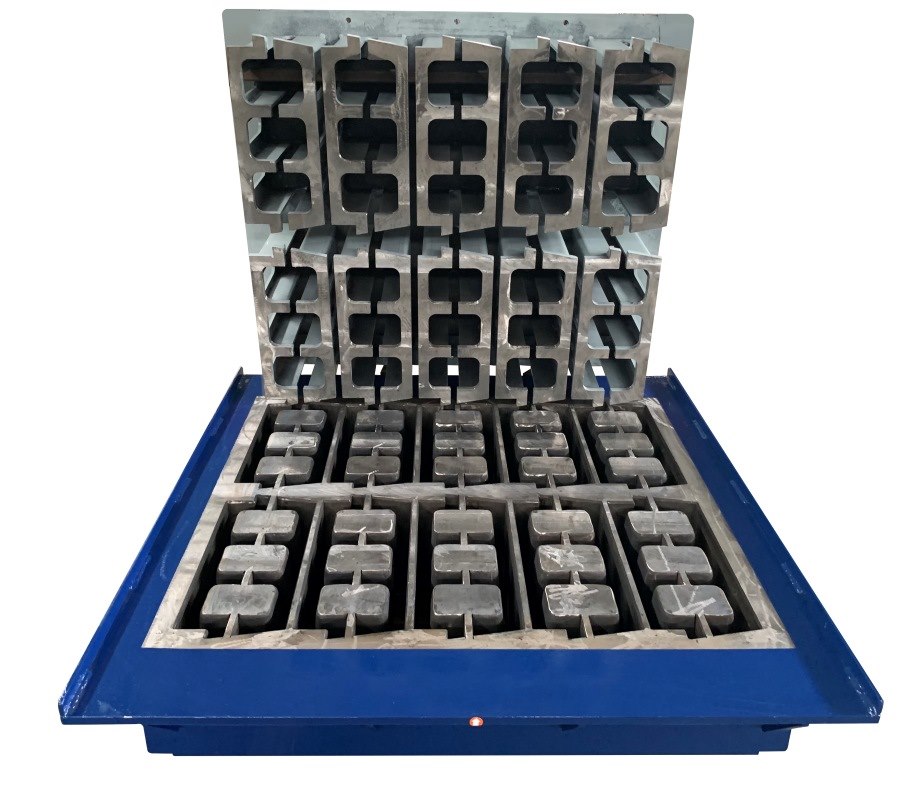
Begin with the product drawing and identify the minimum wall, web, corner, and flow passage. Review the aggregate source through representative sampling and sieve analysis. Visual inspection should also identify flaky particles, clay lumps, soft pieces, and contamination that a simple maximum-size label may not describe.
Develop controlled trial blends rather than changing the crusher or screen based on one defective pallet. Keep cement, added water, batch size, mixing sequence, machine settings, mould, and curing condition as stable as practical. Record actual aggregate moisture and the mass of each fraction.
During production, observe hopper flow, feed-drawer behavior, mould filling, vibration response, tamper movement, demoulding, and residue. Weigh products by cavity and measure height at consistent positions. Cut or break selected green or cured samples only under a defined safe procedure to inspect web continuity and internal void patterns.
After curing, test representative samples for required strength and absorption. Compare defect rate, cycle time, cement demand, cleaning frequency, and mould wear indicators. The best grading is not necessarily the blend with the highest isolated strength; it is the one that repeatedly meets product requirements at a practical production cost.
Once confirmed, define an acceptance window for each aggregate fraction and establish sampling frequency. Recheck when the quarry face, crusher setting, recycled-material source, season, or supplier changes. A recipe cannot remain stable if the physical material entering it changes.
Factory Diagnosis and Buyer Checklist
| Observed symptom | Particle-size-related possibility | First verification |
|---|
| Incomplete thin webs | Oversized or flaky particles bridge narrow passages | Sieve retained material and inspect repeating cavity positions |
| Rough faces and open corners | Excess coarse fraction or missing intermediate sizes | Compare grading curve, block mass, and fresh-mix cohesion |
| Sticky mould and smeared surfaces | Excess fines combined with high effective moisture | Measure fines and moisture before changing vibration |
| Different mass across one pallet | Segregation during transport or uneven feeder distribution | Sample material at several feed locations and map cavity mass |
| Rapid local mould wear | Hard angular aggregate repeatedly contacts one flow zone | Map wear direction, mineral hardness, feeder alignment, and clearance |
Equipment buyers should send aggregate samples or reliable grading data when requesting trials. They should also provide the exact block drawing, wall thickness, target weight, pallet size, and expected output. A demonstration using the supplier's ideal aggregate does not guarantee identical performance with a buyer's local crushed stone or recycled material.
Frequently Asked Questions
Is smaller aggregate always better for hollow blocks?
No. Smaller particles may enter thin sections more easily, but excessive fines increase surface area, water demand, paste demand, and sticking risk. The complete grading must balance filling and packing.
Can stronger vibration solve oversized aggregate bridging?
Not reliably. Additional vibration may move some particles, but it cannot guarantee flow through a passage that is too narrow. It may also increase mould abrasion and cycle time.
Why does the same grading behave differently after rain?
Surface moisture changes flow, clumping, effective water, and fine-particle behavior. Sampling and water correction are needed before comparing production performance.
Should recycled aggregate use the same grading as natural aggregate?
Not automatically. Recycled particles may have different shape, absorption, strength, adhered mortar, and contamination. They require material testing and controlled production trials.
What data should be recorded during a grading trial?
Record sieve results, aggregate moisture, batch weights, water addition, mixing time, feed and vibration settings, cavity mass, dimensions, defects, curing condition, strength, absorption, and cycle time.
Conclusion
Maximum aggregate size influences whether dry-cast concrete can enter narrow hollow-block walls, move around cores, compact under vibration, and release with complete edges. The full grading curve, particle shape, moisture, mineral hardness, mixing, feeding, mould geometry, and vibration program are equally important.
A stable factory defines particle-size limits from the actual product geometry and validates them through controlled trials. By connecting aggregate data with cavity-level mass, surface quality, density, strength, absorption, and wear, producers can solve filling problems without blindly adding water, cement, pressure, or vibration. This approach protects both block quality and mould service life while creating a repeatable basis for local raw-material control.





 Tel: +86-13905968794
 Email: export@hwmachines.com
 MP/WhatsApp: +86-13905968794
 Manufacturer Address:Nanan,Quanzhou City,Fujian Province,China