Why Concrete Blocks Crack and How to Prevent It
Author:HAWEN Block MachineFROM:Brick Production Machine Manufacturer
TIME:2026-05-09
Cracking is one of the most persistent and economically damaging problems in concrete block production. Whether the products are manufactured by a small brick machine or a fully automated block making machine, cracks directly undermine structural reliability, visual quality, and customer confidence.
For manufacturers, cracked blocks are not merely defective products. They represent wasted cement, lost labor, interrupted production schedules, and declining market credibility.
What makes the issue particularly challenging is that cracks rarely originate from a single cause. Instead, they emerge from a complex interaction between raw materials, moisture balance, curing conditions, machine performance, vibration efficiency, and operational discipline.
Understanding these underlying mechanisms is therefore essential for any factory seeking long-term production stability.
1. Improper Moisture Content Is a Major Cause
Water content plays a decisive role in concrete block formation.
When the mixture contains excessive moisture, the block may initially appear well compacted. However, as evaporation occurs during curing, internal shrinkage stress develops. This often leads to surface cracks or edge fractures.
Conversely, insufficient moisture prevents proper cement hydration and reduces internal cohesion. Blocks produced under such conditions become brittle and prone to cracking during handling or stacking.
In many factories operating a block machine or brick making machine, moisture inconsistency remains one of the most underestimated production variables.
Note:
Concrete block production does not require highly fluid concrete. Properly controlled semi-dry mixtures usually produce better dimensional stability and lower shrinkage risk.
2. Poor Raw Material Gradation Weakens Structural Integrity
Aggregate quality significantly influences crack resistance.
If particle distribution is excessively uneven, internal voids increase within the block structure. These voids weaken stress distribution and create localized fracture points.
Similarly, contaminated sand or excessive clay content can interfere with cement bonding performance.
Even a technologically advanced block making machine cannot compensate for fundamentally unstable raw materials.
Factories that consistently achieve low defect rates usually maintain strict control over:
Aggregate grading
Moisture fluctuation
Cement proportion
Material cleanliness
Production stability begins with material discipline rather than machine speed alone.
3. Insufficient Vibration Leads to Internal Weakness
Compaction quality directly determines block density.
If vibration energy is insufficient or unevenly distributed, internal air pockets remain trapped inside the concrete matrix. These voids reduce compressive strength and increase crack susceptibility under load or during curing.
Modern block machine engineering increasingly focuses on vibration optimization for this reason.
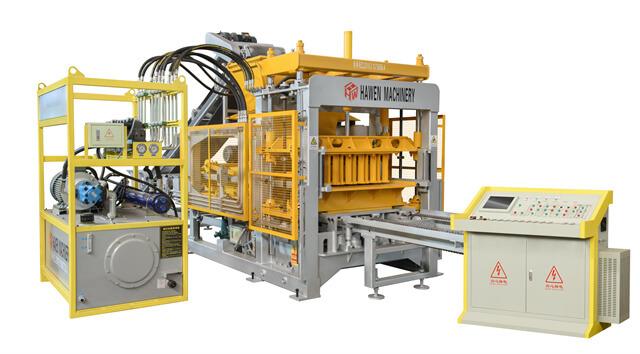
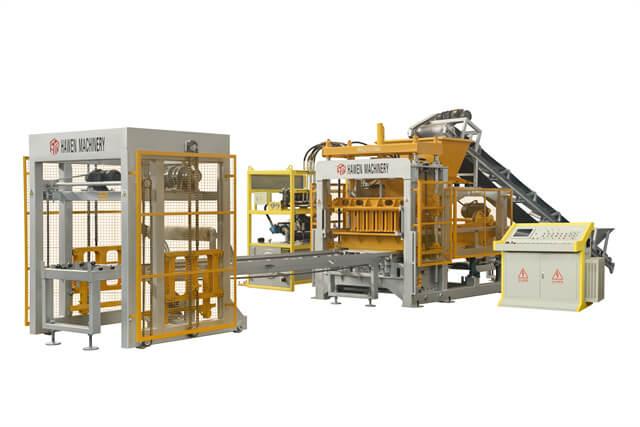
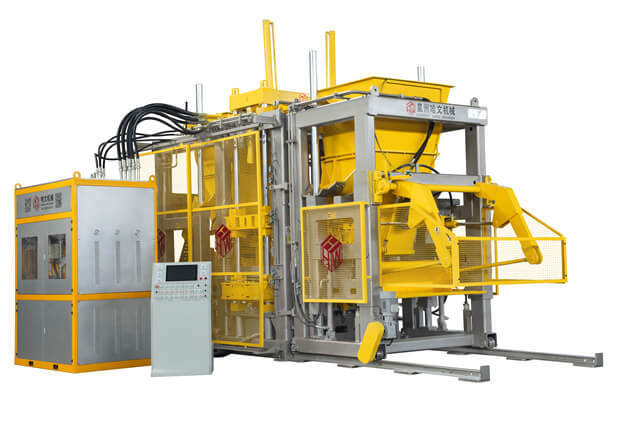
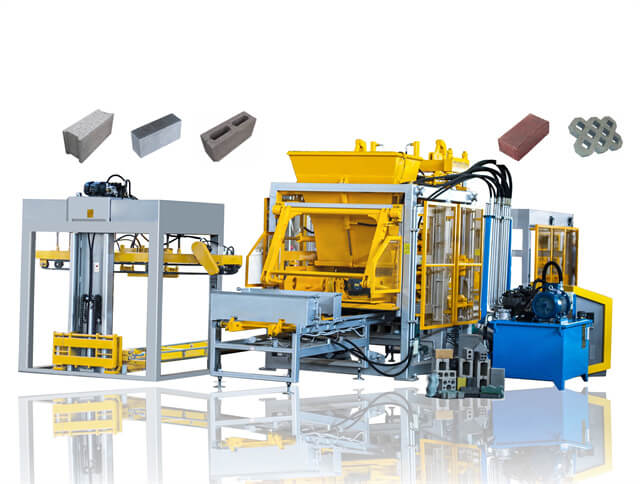
Hawen Machinery adopts a four-shaft vibration box structure with eccentric blocks positioned externally to the housing. This configuration reduces mechanical resistance during vibration transmission, improves compaction uniformity, and enhances concrete density consistency throughout the mold cavity.
The result is stronger blocks with lower cracking probability and improved material efficiency.
4. Improper Curing Accelerates Crack Formation
Many manufacturers focus heavily on production speed while neglecting curing management.
This is a serious mistake.
Concrete strength development depends on controlled hydration over time. If newly formed blocks are exposed to excessive sunlight, strong wind, or rapid moisture loss, surface shrinkage occurs faster than internal hydration development.
This differential stress often causes cracking.
Proper curing requires:
Stable humidity
Controlled temperature
Adequate curing duration
Protection from rapid dehydration
In hot climates especially, curing management becomes just as important as machine performance.
5. Mold Wear Can Cause Structural Stress Concentration
Worn molds do not merely affect appearance. They can also generate uneven compaction and dimensional irregularities that increase internal stress concentration within the block.
Over time, such inconsistencies contribute to cracking during transportation or installation.
High-precision molds are therefore essential for stable block quality.
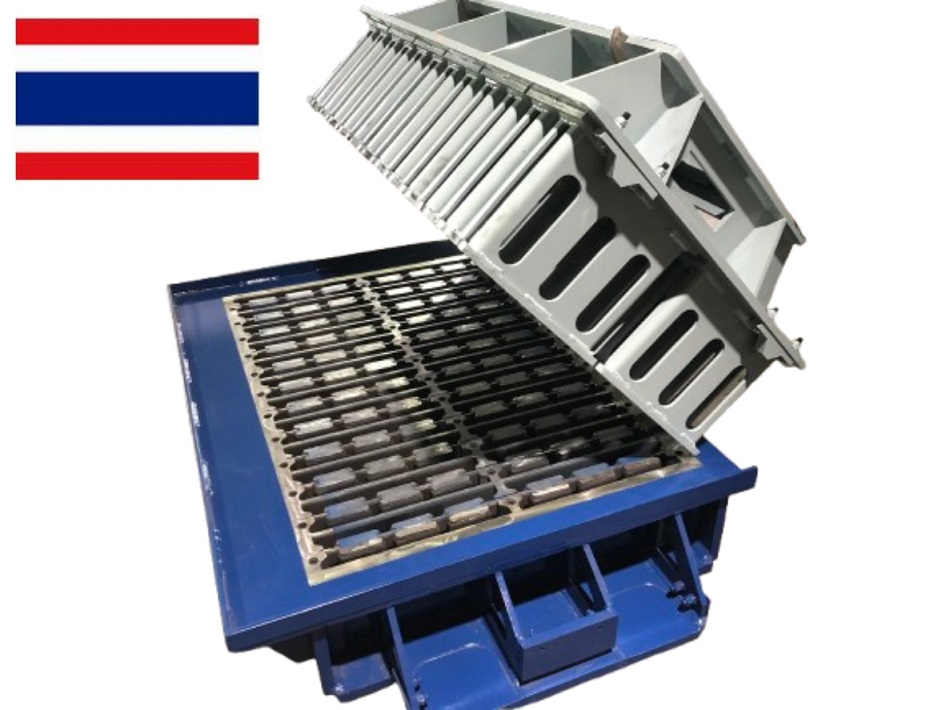
Hawen Machinery designs molds compatible with internationally recognized brands including MASA, HESS, ZENITH, POYATOS, BESSER, and TIGER. By following original technical specifications, these molds maintain dimensional precision and stable operational alignment.
Additionally, all molds undergo professional heat treatment processes and hardness testing within the HRC 60–62 range to improve wear resistance under continuous industrial production.
6. Hydraulic System Instability Affects Compaction Consistency
In automated brick machine production, hydraulic performance directly influences pressure stability during forming cycles.
Pressure fluctuation may cause inconsistent block density across different production batches. Some blocks become overly compacted while others remain structurally weak.
This inconsistency increases cracking risk significantly.
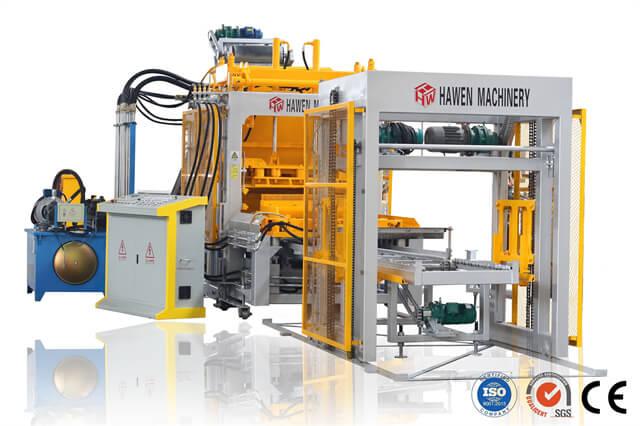
At Hawen Machinery, hydraulic stations integrate Japanese YUKEN proportional and directional valves together with durable American ALBERT hydraulic pumps. This configuration supports precise pressure regulation, rapid response stability, and long-term operational reliability under continuous production conditions.
For high-temperature operating environments, oil cooling systems are often integrated into the hydraulic circuit to maintain viscosity stability and prevent overheating-related pressure fluctuation.
7. Premature Handling and Stacking Damage Green Blocks
Freshly formed concrete blocks remain structurally vulnerable during early curing stages.
If blocks are transported, stacked, or palletized prematurely, microcracks may develop before full strength formation occurs. These microcracks are sometimes invisible initially but gradually expand during storage or transportation.
Efficient factories therefore balance production speed with proper curing intervals rather than prioritizing immediate output alone.
8. Poor Operational Management Creates Hidden Risks
Even advanced automation systems require disciplined operational management.
Improper parameter settings, neglected maintenance, or untrained operators can gradually destabilize the entire production process.
Modern automation increasingly depends on intelligent monitoring systems to reduce human error.
Hawen Machinery integrates SIEMENS S7-200 PLC systems with touchscreen interfaces and remote monitoring functionality. Through real-time operational analysis, technicians can remotely optimize production parameters, monitor equipment conditions, and maintain consistent block quality throughout continuous operation.
FAQ: Concrete Block Cracking Problems
1. Why do concrete blocks crack after curing?
The most common reasons include improper moisture content, insufficient curing, weak compaction, and unstable raw materials.
2. Can mold condition affect cracking?
Yes. Worn molds may cause uneven density distribution and dimensional stress concentration, which increases crack risk.
3. Does vibration quality influence block strength?
Absolutely. Proper vibration improves compaction density, reduces internal voids, and significantly enhances crack resistance.
Final Thoughts
Concrete block cracking is not simply a cosmetic defect. It is often the visible symptom of deeper process imbalance within the entire production system.
A modern block machine, brick machine, block making machine, or brick making machine operates at the intersection of materials science, hydraulic engineering, vibration mechanics, curing control, and operational discipline. When even one variable falls outside acceptable limits, structural defects begin to emerge.
Factories that consistently produce durable, crack-resistant blocks understand a fundamental industrial truth:
quality is not created by a single machine cycle, but by the continuous coordination of every stage in the manufacturing process.
And ultimately, the most competitive manufacturers are not those producing blocks at the highest speed alone, but those capable of producing stability, reliability, and engineering confidence on a daily basis.





 Tel: +86-13905968794
 Email: export@hwmachines.com
 MP/WhatsApp: +86-13905968794
 Manufacturer Address:Nanan,Quanzhou City,Fujian Province,China