What Equipment Is Needed for Small-Scale Block Production
Author:HAWEN Block MachineFROM:Brick Production Machine Manufacturer
TIME:2026-04-29
A practical overview of the essential equipment for small-scale block production, explaining how each system contributes to stable output, efficient operation, and low-investment manufacturing setup.
Introduction: Small-Scale Does Not Mean Simple
Small-scale block production is often misunderstood as a simplified version of industrial manufacturing. In reality, it is a condensed system that still requires the same engineering logic as large-scale plants.
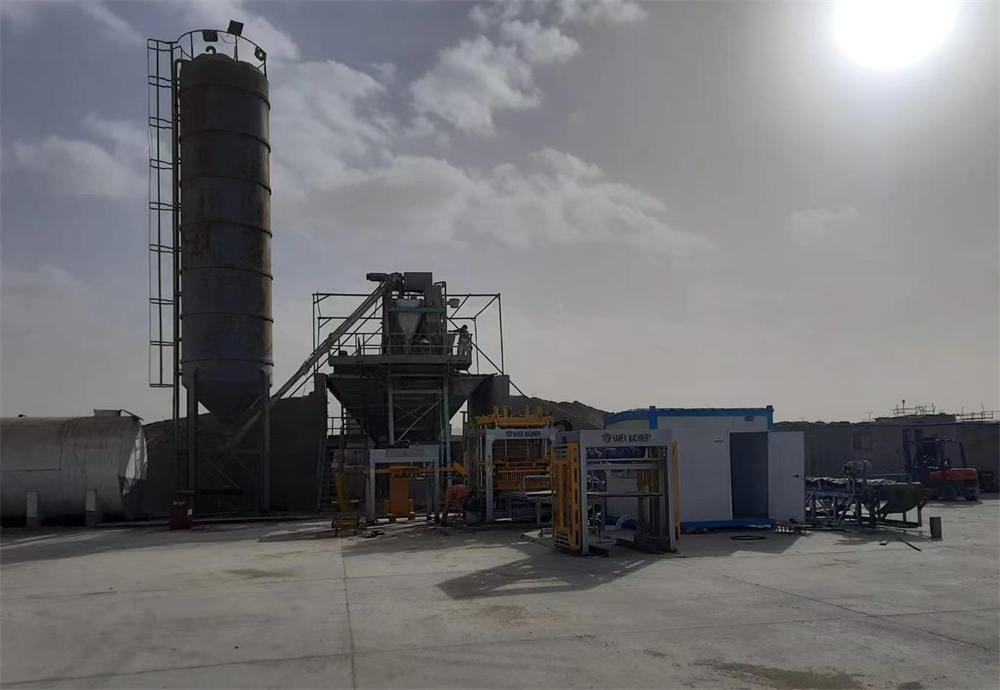
The key difference lies not in process structure, but in capacity, modularity, and investment level. Even a compact production line must integrate batching, mixing, forming, and control into a coherent workflow.
1. Batching System: Where Consistency Begins
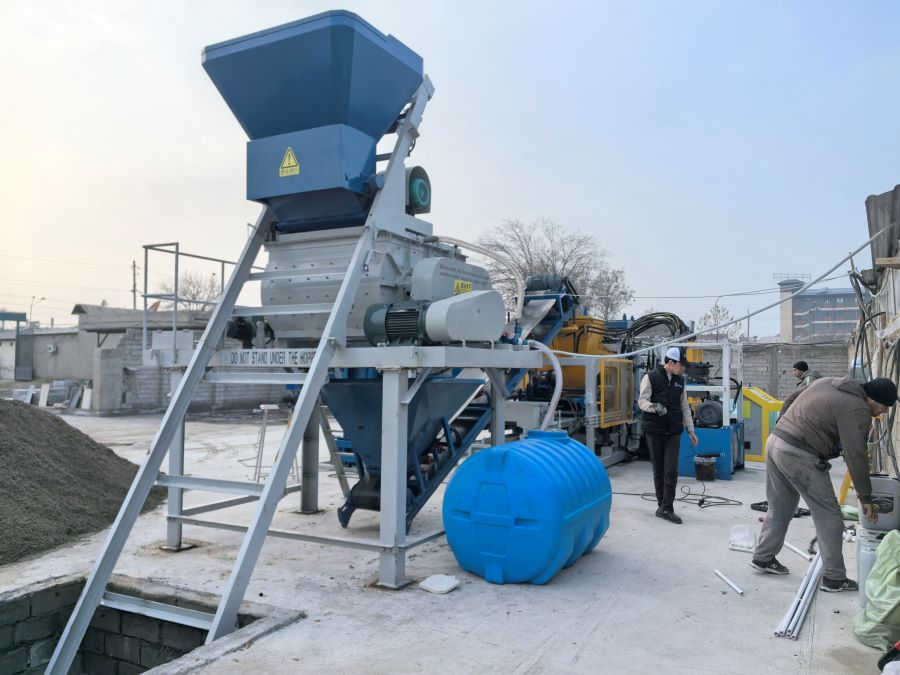
Every concrete block begins with accurate material proportioning. The batching system is responsible for measuring and delivering raw materials in controlled ratios before mixing.
A basic setup typically includes storage hoppers, weighing units, and discharge conveyors. Although structurally simple, this system has a disproportionate impact on final product quality.
Inconsistent batching leads to unstable strength and unpredictable block performance. For small-scale operations, precision is more important than speed.
2. Mixing System: Achieving Material Homogeneity
After batching, materials must be thoroughly mixed to ensure uniformity. This stage determines whether the concrete behaves as a stable composite or a weak, inconsistent mixture.
Small production setups commonly use pan mixers or compact twin-shaft mixers. Their role is to:
Distribute cement evenly across aggregates
Stabilize moisture content
Prevent material segregation
A well-controlled mixing process directly improves forming stability and reduces defects in finished blocks.
3. Block Making Machine: Core of the Entire System
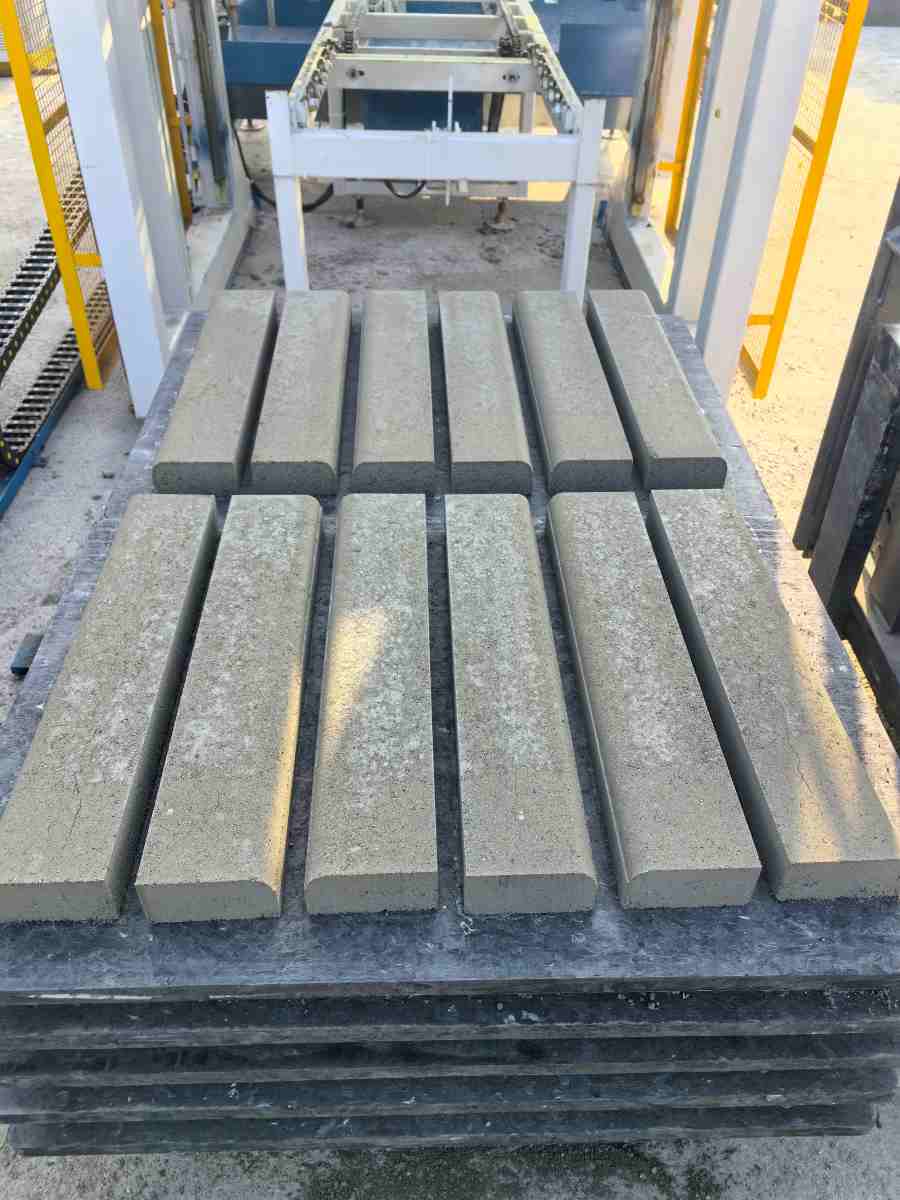
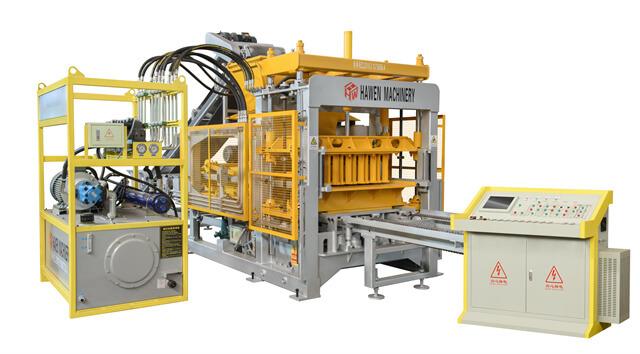
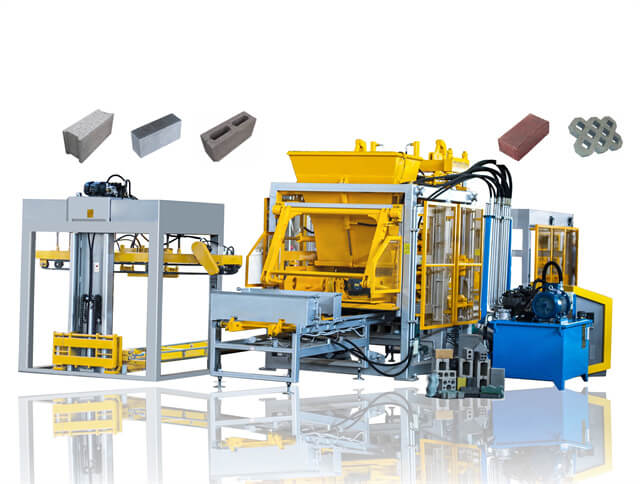
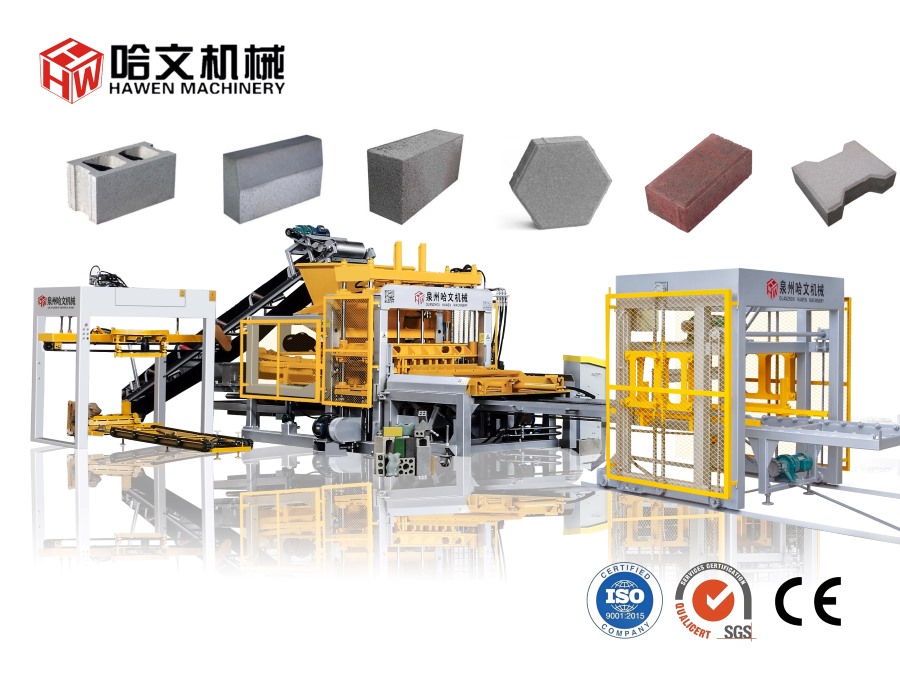
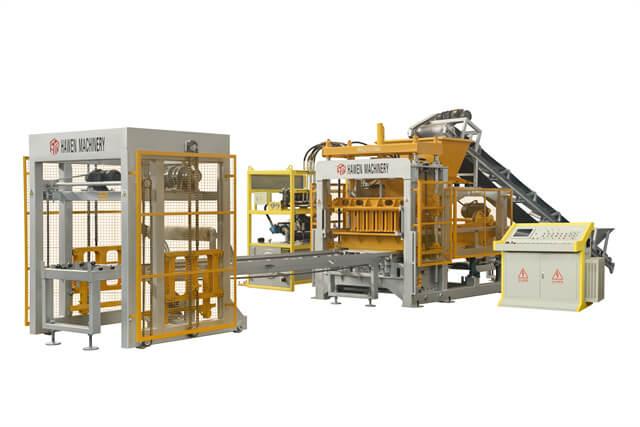
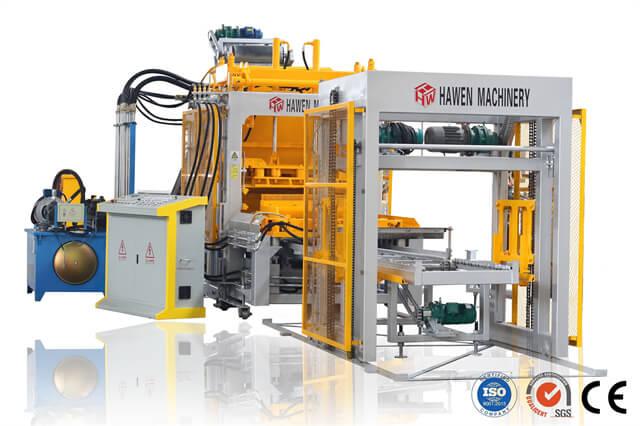
The block making machine is the central unit in any production line. It determines output capacity, shape accuracy, and compaction quality.
In modern systems, hydraulic stability is essential for consistent forming. At Hawen Machinery, the hydraulic system is engineered with precision-controlled components and a high-efficiency pump configuration, ensuring stable pressure output during repeated forming cycles. This reduces fluctuation and improves block density consistency.
A stable forming process is especially important in small-scale production, where operational conditions may vary.
4. Vibration System: Controlling Density and Strength
Compaction is not achieved by pressure alone. Vibration plays a critical role in eliminating air gaps and improving internal structure density.
At Hawen Machinery, the vibration system adopts a four-shaft configuration with externally positioned eccentric blocks. This reduces internal resistance and improves vibration energy transmission efficiency into the mould cavity.
The result is more uniform compaction, higher block density, and reduced cement waste.
5. Control System: Reducing Operator Dependency
In small-scale factories, operator skill levels can vary significantly. A stable control system helps standardize production and reduce human error.
Hawen Machinery integrates a PLC-based control system with a user-friendly interface. Operators can adjust key parameters such as vibration time, pressure, and cycle duration with precision.
This improves process repeatability and ensures consistent output quality even under non-industrial working conditions.
6. Mould System: Precision Defines the Final Product
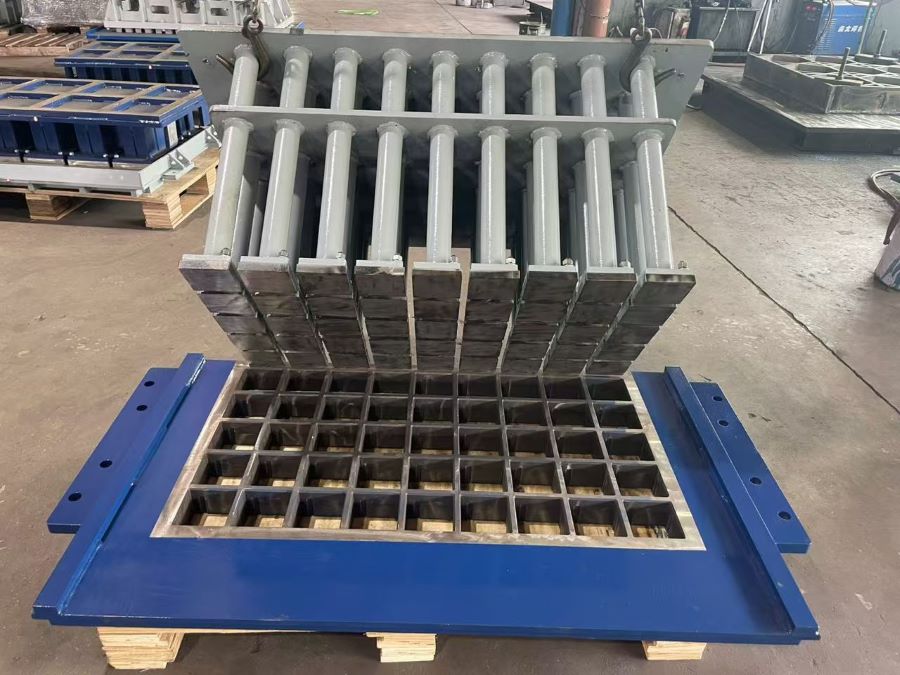
Moulds determine the final geometry and surface quality of concrete blocks. Even small deviations in mould precision can affect product acceptance.
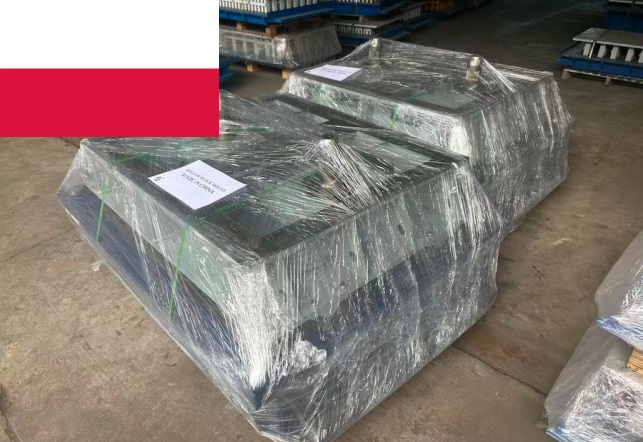
Hawen Machinery designs moulds compatible with globally recognized block machine systems, including MASA, HESS, ZENITH, POYATOS, BESSER, TIGER, and others. Each mould is manufactured according to original technical specifications and undergoes heat treatment to improve hardness and wear resistance.
This ensures long-term dimensional stability under continuous production.
7. Auxiliary Equipment: Supporting Workflow Stability
In addition to core machinery, auxiliary systems help maintain smooth production flow:
Material conveying systems
Simple curing racks or stacking units
Pallet handling tools
Maintenance and spare part kits
While not directly involved in forming, these components reduce downtime and improve operational efficiency.
FAQ: Small-Scale Block Production Equipment
1. What is the minimum equipment needed to start production?
A basic setup includes batching equipment, a mixer, a block making machine, and moulds. Auxiliary systems can be added depending on production needs.
2. Can small-scale systems produce high-quality concrete blocks?
Yes. Quality depends on process control—especially mixing, compaction, and curing—not just factory size.
3. Is automation necessary for small block production?
Not mandatory, but PLC control systems significantly improve stability and reduce operator-related inconsistencies.
4. How important is equipment selection in small factories?
Very important. Equipment stability directly affects production efficiency, defect rate, and long-term profitability.
Conclusion: Engineering Logic Matters More Than Scale
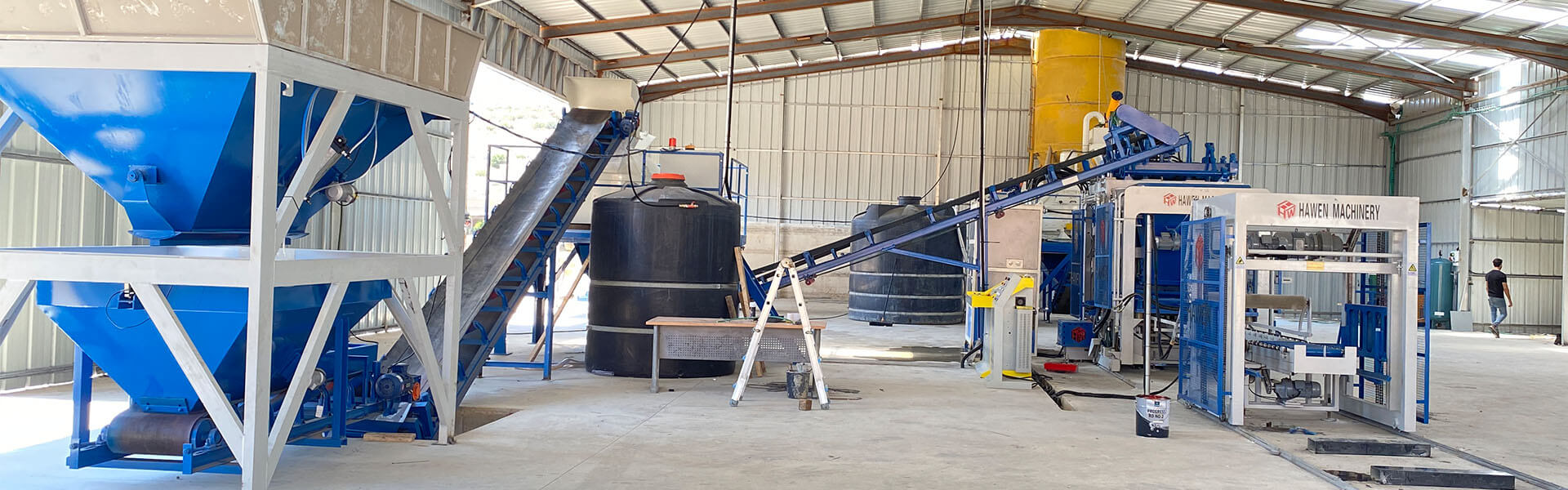
Small-scale block production is not a simplified version of industrial manufacturing, but a condensed engineering system that must maintain structural discipline across every stage.
When batching accuracy, mixing uniformity, forming stability, and control precision are properly integrated, even a compact setup can achieve consistent and commercially viable output.
Ultimately, efficiency is not determined by scale, but by system coherence. In block manufacturing, the real difference is not how big the plant is—but how intelligently it is designed.




 Tel: +86-13905968794
 Email: export@hwmachines.com
 MP/WhatsApp: +86-13905968794
 Manufacturer Address:Nanan,Quanzhou City,Fujian Province,China