How to Maintain a Block Machine for Long-Term Performance
Author:HAWEN Block MachineFROM:Brick Production Machine Manufacturer
TIME:2026-04-14
In modern concrete production, a block machine is not merely a piece of equipment; it is a capital-intensive asset whose longevity directly determines return on investment. While advanced engineering ensures high initial performance, only systematic maintenance can preserve stability over time. Without disciplined upkeep, even the most sophisticated system will gradually suffer from efficiency loss, quality deviation, and unexpected downtime.
This article outlines a structured, practical approach to maintaining a block machine for sustained, high-level performance.
1. Establish a Preventive Maintenance Framework
Reactive repairs are costly and disruptive. A preventive maintenance regime, by contrast, minimizes operational risks and extends equipment lifespan.
A well-designed schedule should include:
Daily checks: lubrication points, loose fasteners, abnormal noise
Weekly inspections: vibration system condition, hydraulic leakage, mold wear
Monthly servicing: calibration of sensors, alignment of moving components
Quarterly overhaul: hydraulic oil replacement, electrical system diagnostics
Note: Preventive maintenance is not an expense—it is a cost-control strategy that stabilizes long-term production efficiency.
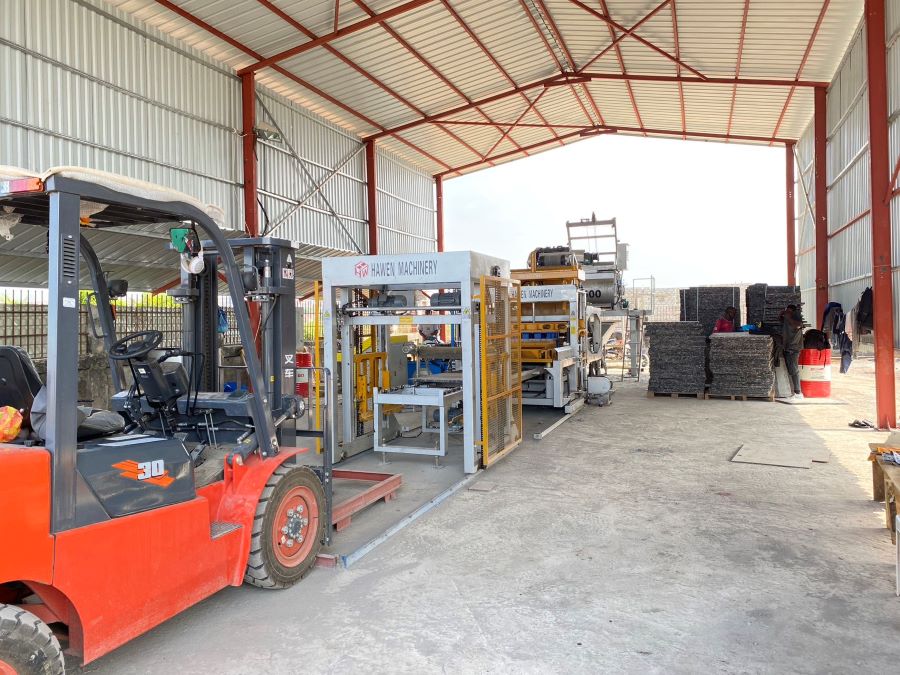
2. Maintain the Hydraulic System with Precision
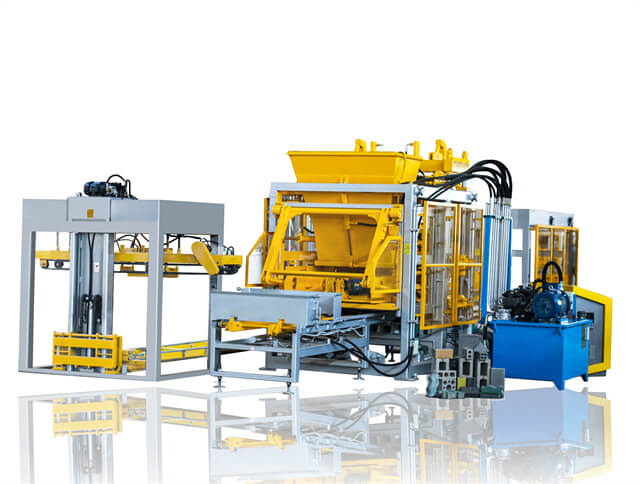
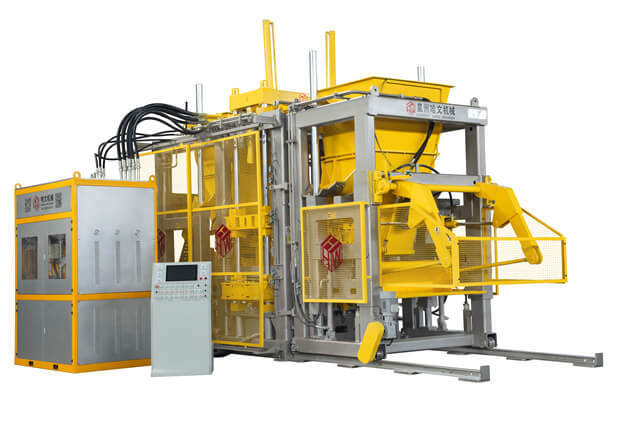
The hydraulic station functions as the dynamic backbone of a block machine. Any fluctuation in pressure or flow directly affects compaction quality and cycle stability.
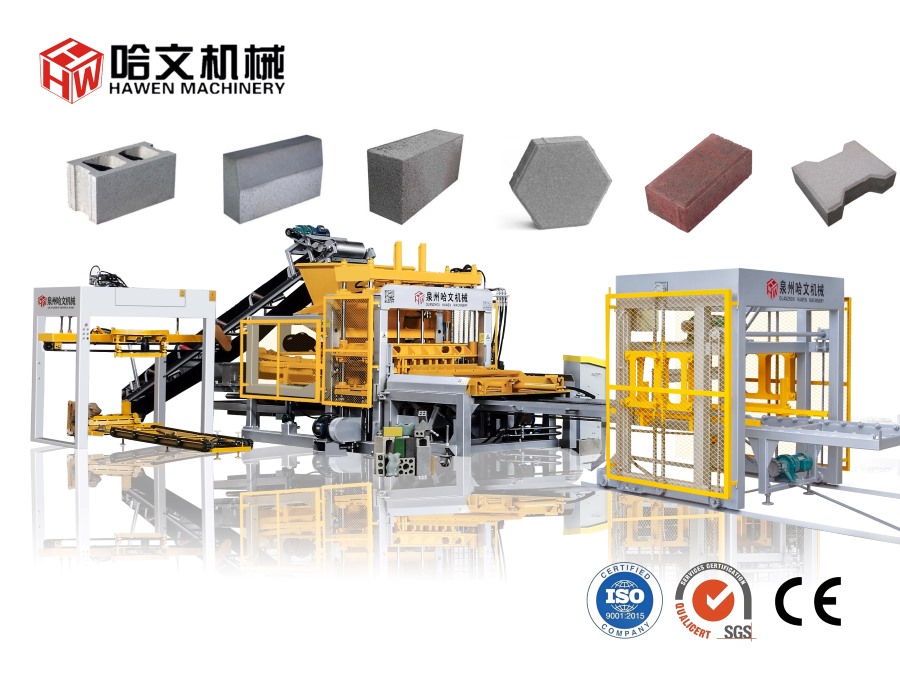
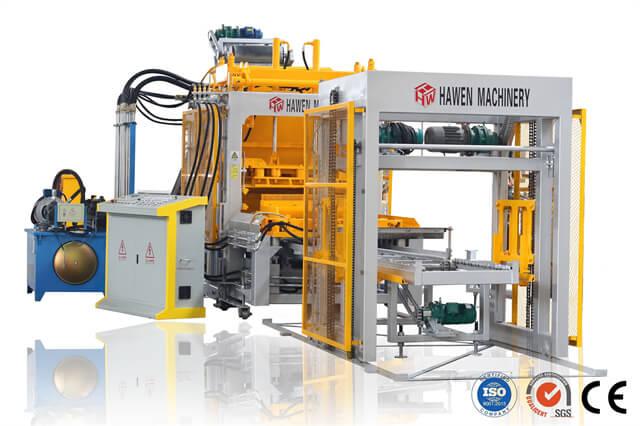
At Hawen Machinery, hydraulic configurations integrate high-grade proportional and directional control valves sourced from Japan, combined with robust American-engineered pump systems. This architecture delivers refined flow modulation, high load tolerance, and long service life.
For maintenance:
Monitor oil cleanliness and replace filters regularly
Check pressure consistency during full production cycles
Inspect feeding cart movement, ensuring it remains smooth and synchronized
Particularly, the movement of the feeding cart should be governed by a servo-controlled hydraulic valve system. This ensures accurate material distribution and eliminates inconsistencies caused by mechanical lag or uneven feeding.
3. Preserve Vibration System Efficiency
Compaction quality is fundamentally determined by vibration performance. Even minor inefficiencies can lead to internal voids, reduced strength, and surface defects.
Hawen Machinery adopts a four-shaft vibration box design, positioning eccentric blocks outside the housing. This reduces resistance during vibration, ensures uniform compaction, and lowers cement consumption while improving overall efficiency.
To maintain optimal performance:
Regularly check bearing condition and lubrication
Ensure eccentric blocks remain securely positioned
Monitor vibration frequency stability
Annotation: A decline in vibration efficiency often manifests first as subtle density variation rather than visible defects—making early detection essential.
4. Ensure Control System Reliability
A modern block machine relies heavily on its control architecture. Any instability in the control system can result in inconsistent cycle times and unpredictable product quality.
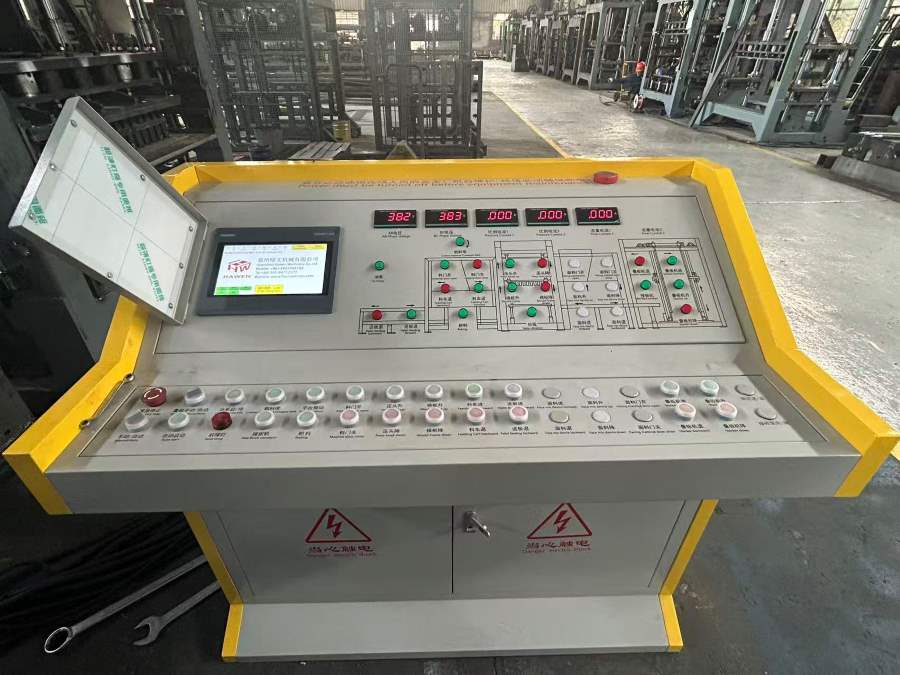
Hawen Machinery integrates a SIEMENS S7-200 PLC with an intuitive touch panel and remote monitoring capabilities. Through this system, real-time operational data can be analyzed, enabling remote optimization and rapid troubleshooting.
Maintenance priorities include:
Routine software backups and parameter verification
Inspection of sensor accuracy and wiring integrity
Monitoring system logs for early fault indicators
A stable control system transforms maintenance from reactive troubleshooting into proactive optimization.
5. Extend Mold Life Through Proper Handling
Molds directly influence dimensional accuracy, surface finish, and product consistency. Poor mold maintenance leads to cumulative quality degradation.
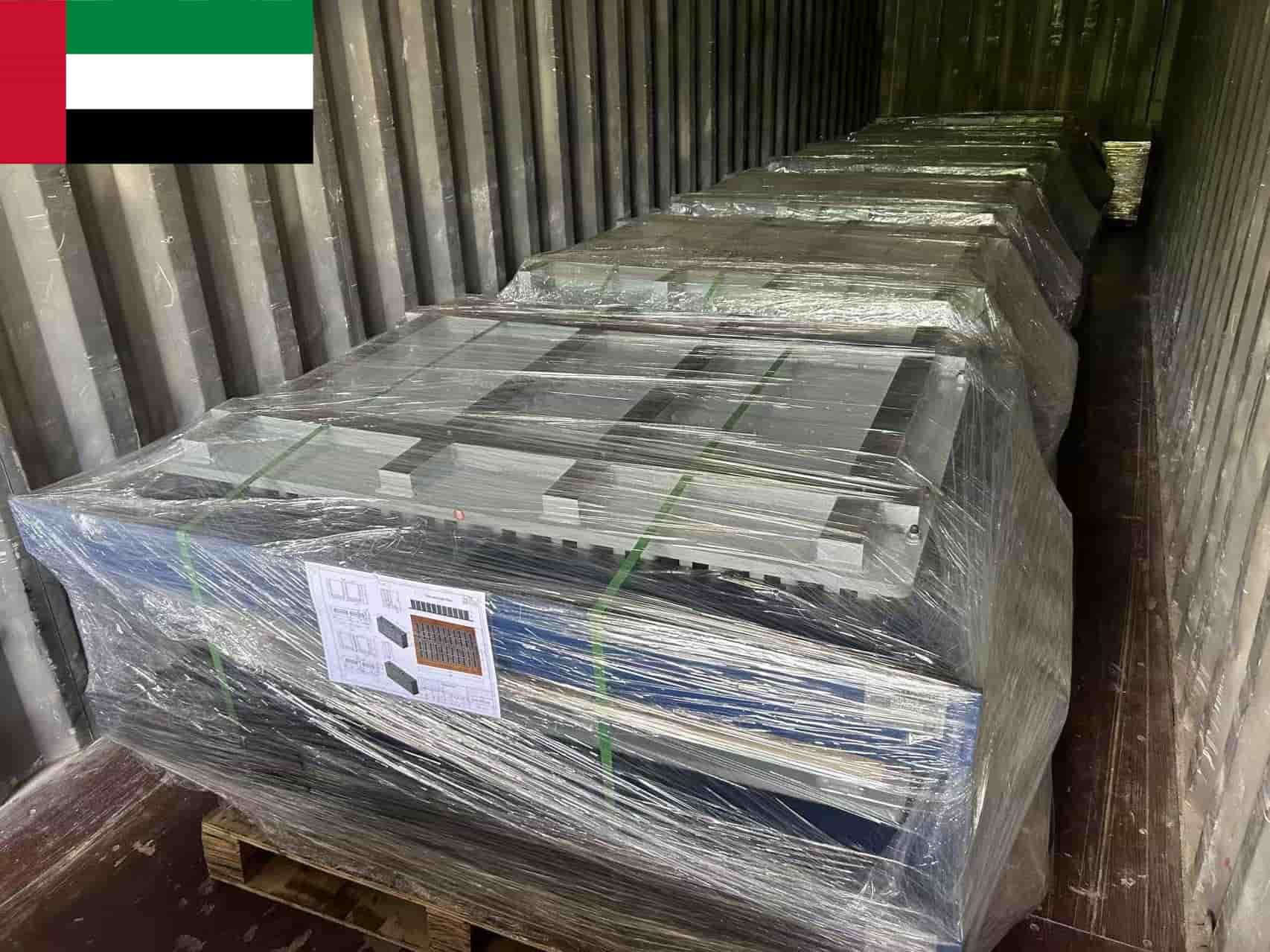
Hawen Machinery designs molds compatible with leading block machine brands, including MASA, HESS, ZENITH, POYATOS, BESSER, TIGER, and others. Manufactured according to original specifications and subjected to heat treatment, these molds ensure durability, precision fit, and cross-platform reliability.
Best practices include:
Cleaning molds after each production shift
Avoiding dry friction operation without adequate material feed
Periodically checking wear on edges and cavities
6. Optimize Material Flow and Mechanical Coordination
Beyond individual components, overall machine performance depends on system coordination.
Key focus areas:
Smooth pallet transfer alignment
Consistent material feeding rhythm
Balanced cycle timing across all stations
Even a minor delay in one segment can create a cascading inefficiency across the entire production line.
7. Train Operators as Part of the Maintenance System
Human factors are often underestimated. Skilled operators act as the first line of defense against machine deterioration.
Effective training should emphasize:
Early identification of abnormal signals
Correct parameter adjustment procedures
Standardized startup and shutdown protocols
A well-trained operator can prevent issues before they escalate into costly failures.
Conclusion: Maintenance as a Strategic Advantage
Long-term performance is not determined solely by machine design, but by how that design is sustained in real-world operation. Maintenance, when executed systematically, becomes a strategic lever—enhancing efficiency, ensuring product consistency, and reducing lifecycle costs.
Hawen Machinery combines advanced engineering with practical durability, yet even the most refined systems depend on disciplined care. In an increasingly competitive construction materials market, those who master maintenance will not only protect their investment—they will redefine operational excellence.
FAQ
1. How often should hydraulic oil be replaced in a block machine?
Typically every 2,000–3,000 working hours, depending on operating conditions and oil quality. Regular testing is recommended.
2. What is the first sign of vibration system problems?
Subtle inconsistencies in block density or strength, even before visible defects appear.
3. How can I extend mold service life?
Maintain proper lubrication, avoid dry runs, and clean molds after each shift. Heat-treated molds already offer enhanced durability, but correct usage is equally important.
4. Does operator skill really impact machine lifespan?
Yes. Skilled operators reduce improper handling, detect early issues, and ensure stable long-term operation.
5. Is preventive maintenance necessary for new machines?
Absolutely. Early-stage maintenance establishes optimal operating conditions and prevents premature wear.





 Tel: +86-13905968794
 Email: export@hwmachines.com
 MP/WhatsApp: +86-13905968794
 Manufacturer Address:Nanan,Quanzhou City,Fujian Province,China