How Cement and Aggregate Ratios Influence Concrete Block Quality
Author:HAWEN Block MachineFROM:Brick Production Machine Manufacturer
TIME:2026-04-09
Introduction: The Backbone of Every Block
In concrete block production, the final quality hinges on the ratios of cement and aggregate. While machinery ensures efficiency, the mix proportions determine compressive strength, density, durability, and surface finish. Even slight deviations can lead to cracks, uneven curing, or weak blocks. Understanding and controlling these ratios is critical for producing consistent, high-quality blocks without increasing material costs.
1. The Role of Cement and Aggregate
Each component in a concrete block serves a specific function:
Cement binds the ingredients together, forming a hard, durable matrix after hydration.
Aggregate provides structural stability, fills voids, and contributes to overall block density.
Excess cement can increase cost and shrinkage risk, while poorly proportioned aggregate may create weak zones prone to cracking. Achieving optimal particle packing is more effective than merely adding more cement—it enhances strength while minimizing material consumption.
2. Ratios and Strength
Compressive strength, the most critical property, is highly sensitive to cement and aggregate ratios. Higher cement content improves bonding up to a point, but excessive cement leads to cost inefficiency without meaningful gains.
Properly proportioned aggregate ensures minimal voids, uniform compaction, and stronger inter-particle adhesion. Poor ratios produce blocks with internal weaknesses, reduced density, and variable quality.
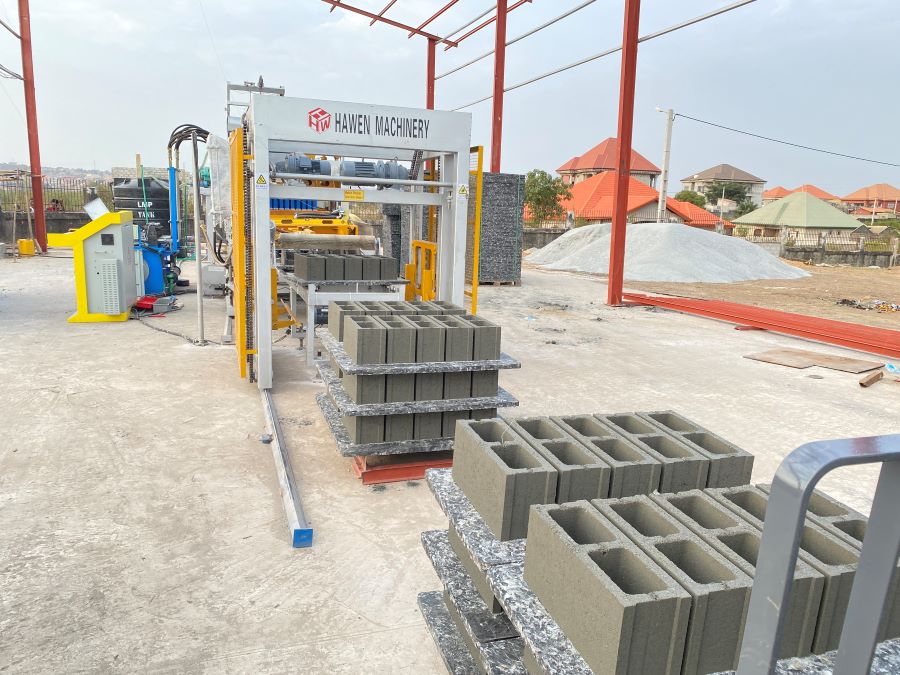
Annotation: Empirical testing of local aggregates and cement is essential for achieving consistent block performance.
3. Workability vs. Strength
A workable mix facilitates molding, but too much water reduces density and strength due to porosity. Optimized ratios maintain sufficient fluidity for production while keeping water content low to enhance compressive strength.
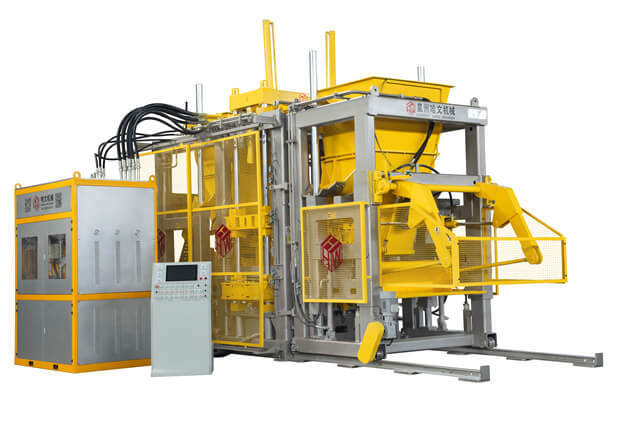
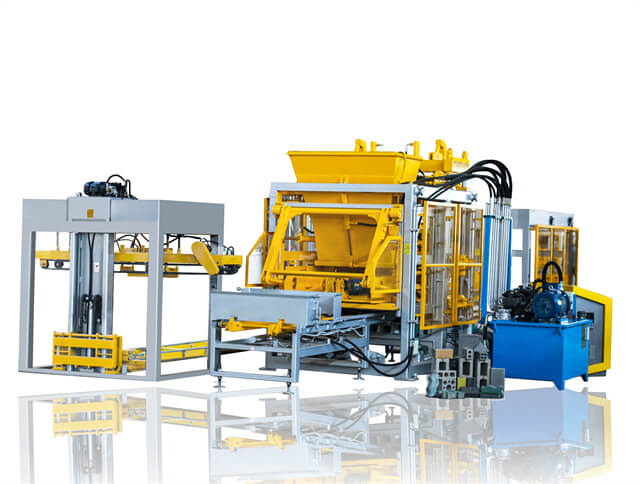
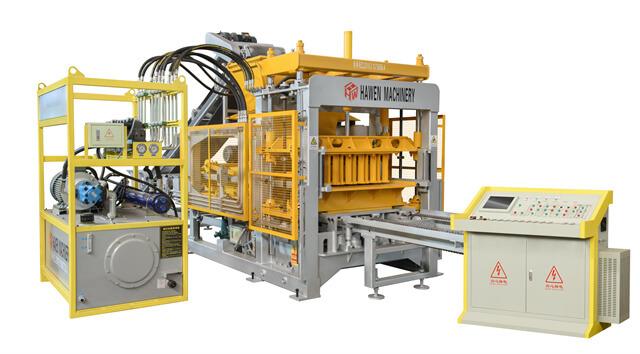
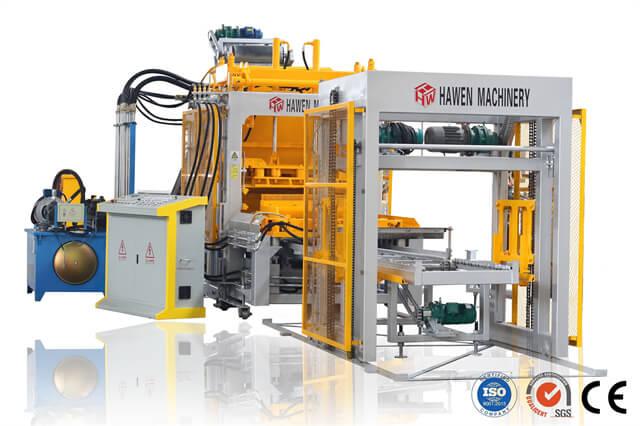
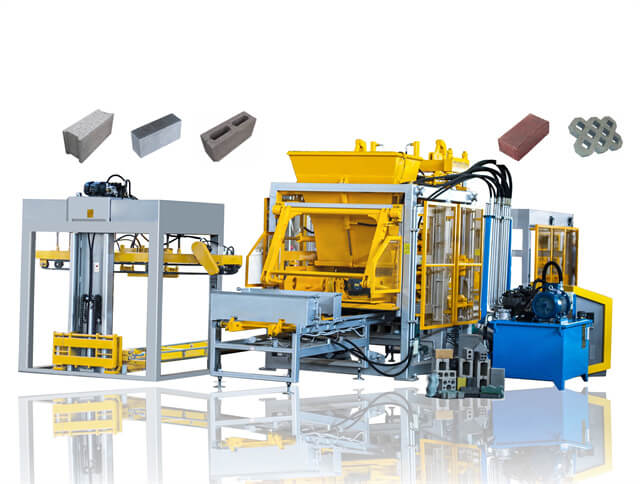
Hawen Machinery’s four-shaft vibration box design positions eccentric blocks outside the housing, reducing resistance during vibration. This ensures uniform compaction, higher density, lower cement usage, and improved production efficiency.
4. Consistency in Production
Fluctuating ratios compromise block dimensions and curing. Automation can stabilize outcomes.
Hawen Machinery integrates a SIEMENS S7-200 PLC system with an intuitive touch panel and remote monitoring, allowing operators to track real-time performance, adjust parameters remotely, and maintain consistent quality across batches.
5. Hydraulic Precision
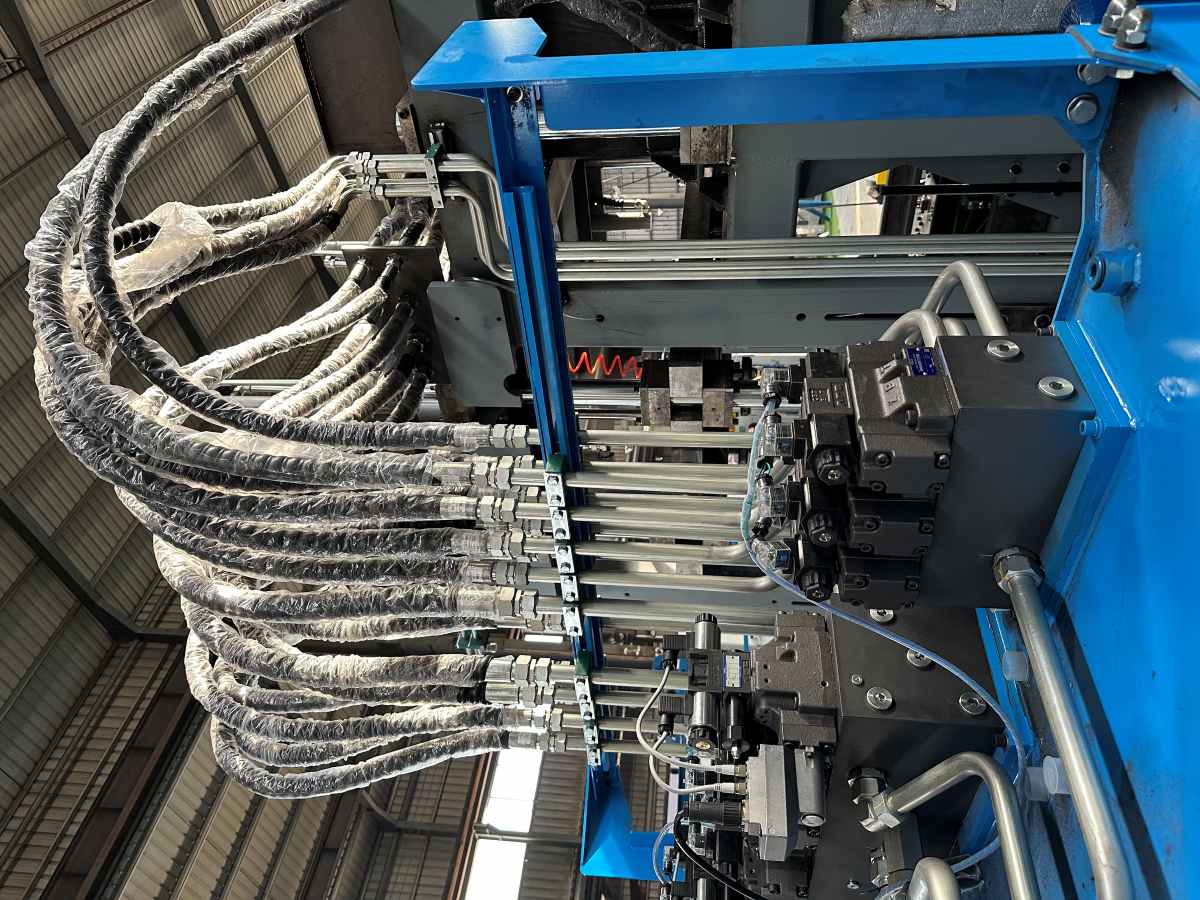
Even optimal ratios fail without precise feeding. Hawen Machinery’s hydraulic station combines Japanese YUKEN proportional and directional valves with American ALBERT pumps, ensuring accurate material flow. This prevents segregation and maintains homogeneity for every block.
6. Mold Design and Quality
The mold defines block shape, finish, and accuracy. Hawen Machinery designs molds compatible with MASA, HESS, ZENITH, POYATOS, BESSER, and TIGER. Heat-treated and precisely engineered, these molds guarantee consistent block size, smooth surfaces, and long-term durability.
7. Cost-Effective Quality Through Mix Optimization
By refining cement and aggregate ratios, manufacturers can reduce material costs while enhancing strength. Improved particle packing and advanced compaction techniques allow consistent, high-quality output with lower cement consumption.
Conclusion: Excellence Starts with Ratios
Concrete block quality stems not only from machinery but from material science. The interplay between cement and aggregate defines strength, durability, and consistency.
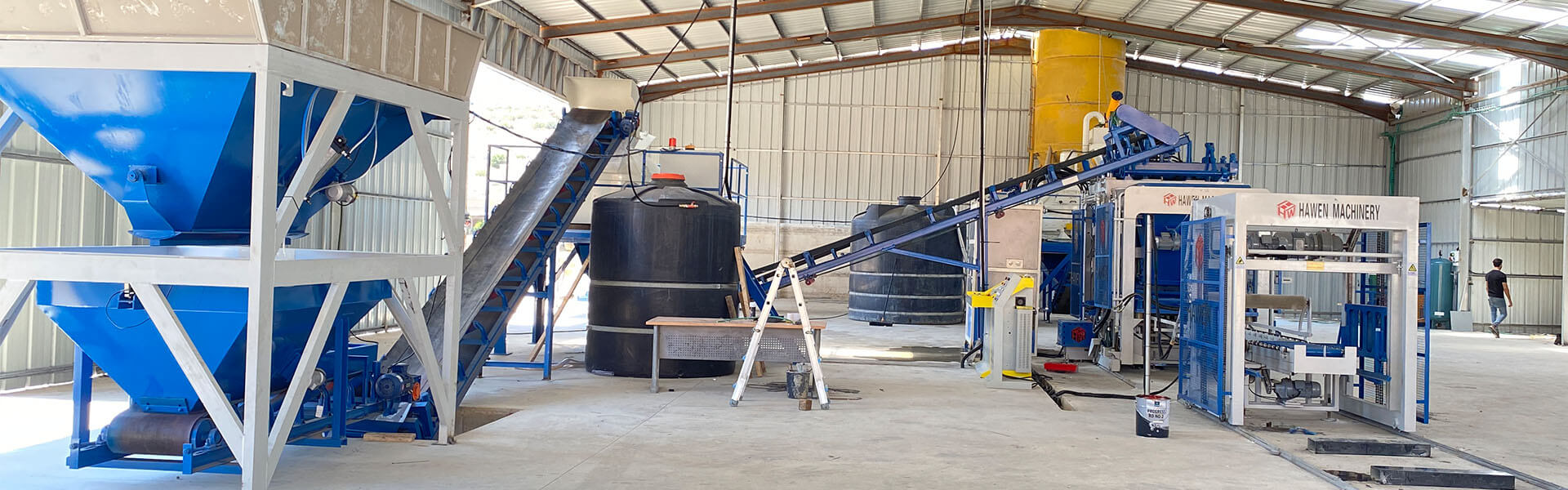
When material optimization is combined with Hawen Machinery’s advanced equipment—precision hydraulics, intelligent control systems, and four-shaft vibration compaction—producers achieve efficiency, sustainability, and excellence. Mastering cement and aggregate ratios is the cornerstone for competitive, high-quality block production.
FAQ
1. What is the ideal cement-to-aggregate ratio for strong blocks?
The ratio depends on raw material properties and target strength. Focus on particle packing rather than excessive cement content.
2. Can cement be reduced without compromising quality?
Yes. Proper aggregate proportion and effective compaction allow reduced cement usage while maintaining density and compressive strength.
3. How does machinery affect mix ratio efficiency?
Precise hydraulic control, vibration efficiency, and automated monitoring ensure that designed ratios translate into consistent block performance, preventing segregation and weak blocks.





 Tel: +86-13905968794
 Email: export@hwmachines.com
 MP/WhatsApp: +86-13905968794
 Manufacturer Address:Nanan,Quanzhou City,Fujian Province,China