Understanding Block Machine Specifications for Manufacturer
Author:HAWEN Block MachineFROM:Brick Production Machine Manufacturer
TIME:2026-03-16
Understanding Block Machine Specifications for Manufacturer
In the modern construction industry, technical specifications are far more than a collection of numbers on a datasheet. For manufacturers and investors alike, they function as a blueprint of performance, revealing how efficiently a block machine will operate, how stable the production process will be, and ultimately how profitable the production line can become.
However, interpreting these specifications requires more than a superficial glance at capacity figures or cycle times. A comprehensive understanding involves examining mechanical structure, hydraulic control, vibration dynamics, automation architecture, and mold engineering as an integrated system. Only by analyzing these elements collectively can manufacturers determine whether a block machine is capable of delivering consistent quality, long-term reliability, and optimal resource efficiency.
1. Production Capacity: Beyond the Numbers
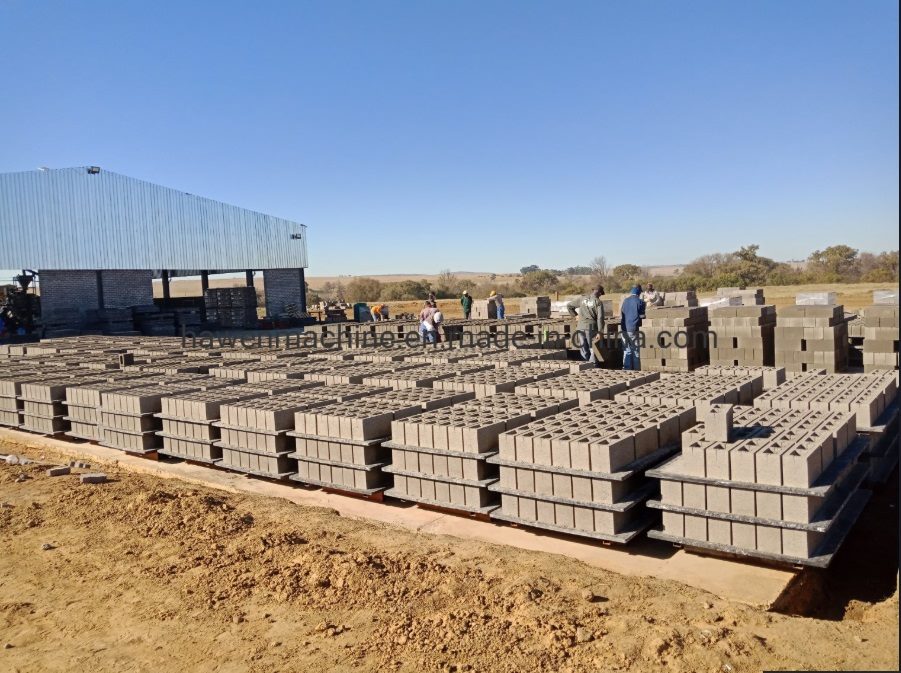
One of the most visible parameters in block machine specifications is production capacity, usually expressed as blocks per hour or blocks per shift. Yet experienced manufacturers understand that capacity figures can be misleading when interpreted in isolation.
A machine might claim a theoretical cycle time of 15 seconds, but real-world productivity depends on several variables, including:
Material feeding efficiency
Vibration compaction stability
Mold precision
Automation synchronization
In other words, nominal output and effective output are rarely identical. Manufacturers should therefore assess whether the machine’s structural design and control system can sustain stable cycles under continuous operation.
Note: Industry practitioners often distinguish between theoretical capacity and practical capacity, with the latter typically being 10–20% lower under standard working conditions.
2. Structural Engineering: The Foundation of Durability
The structural framework of a block machine determines its mechanical stability and service life. High-quality machines usually employ heavy-duty steel structures with precision machining and stress-relief treatment to minimize deformation during long-term vibration.
A robust frame not only supports the vibration system but also maintains alignment accuracy between the mold, tamper head, and pallet system. Even minor misalignment can lead to uneven compaction, mold wear, or block defects.
From an engineering perspective, the frame acts as the load-bearing backbone of the entire production system. Manufacturers evaluating equipment should therefore examine:
Steel thickness and welding quality
Machining precision of key surfaces
Structural reinforcement around vibration zones
These factors often determine whether a machine remains stable after years of intensive production cycles.
3. Hydraulic System: Precision Meets Power
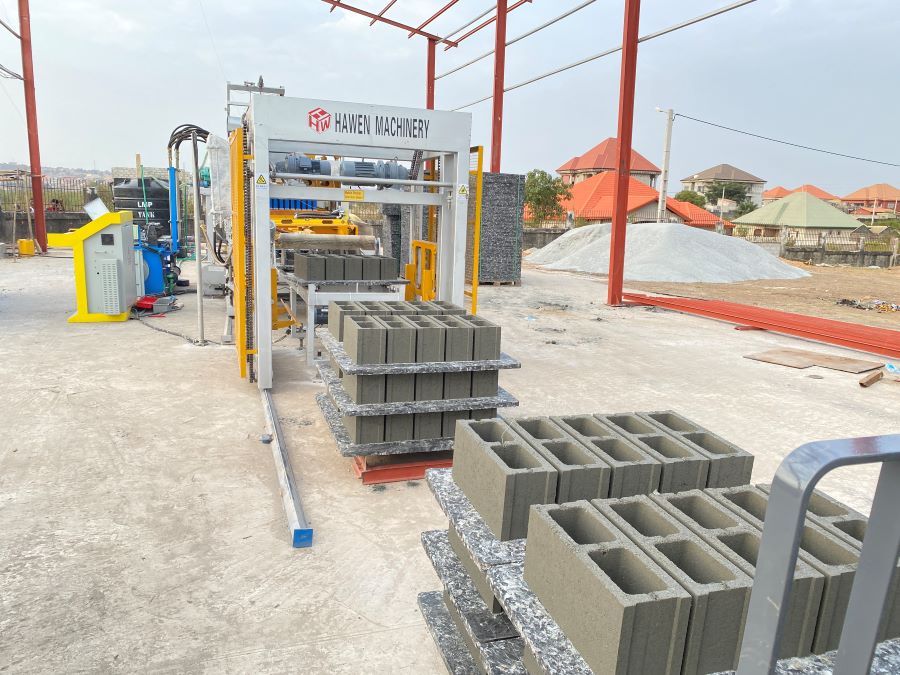
Hydraulic technology plays a central role in block forming, mold lifting, and pallet positioning. The responsiveness and stability of the hydraulic station directly influence the consistency of the molding cycle.
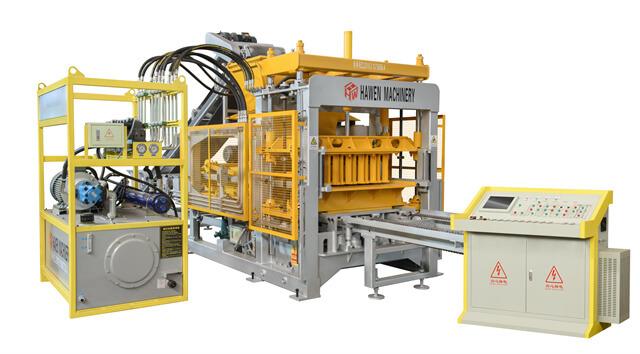
At Hawen Machinery, the hydraulic station integrates Japanese YUKEN proportional and directional valves together with an American ALBERT hydraulic pump, forming a system designed for accurate flow regulation, strong load-bearing capability, and dependable long-term operation. This configuration enables precise control of pressure and movement while maintaining stability under continuous production.
Such a design ensures that key operations—such as mold lifting, feeding control, and demolding—occur smoothly and predictably, reducing mechanical shock and extending component lifespan.
4. Vibration Technology: The Science of Compaction
In block manufacturing, vibration is not merely a mechanical action; it is a scientifically controlled compaction process that determines the density and strength of the finished blocks.
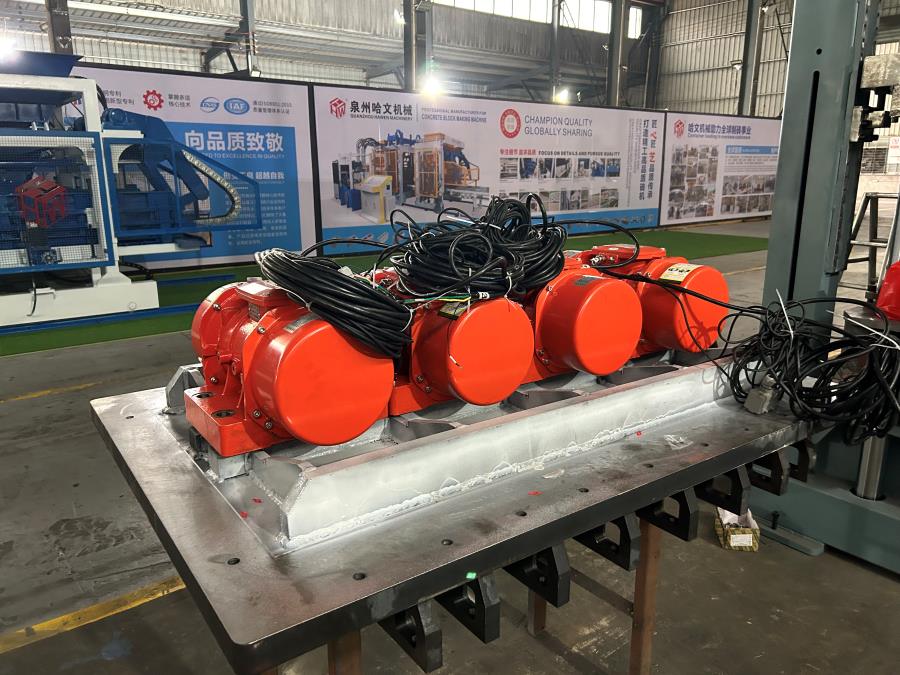
Hawen Machinery adopts a four-shaft vibration box design with eccentric blocks positioned outside the housing. This structural arrangement significantly decreases internal resistance during operation. As a result, vibration energy is transmitted more efficiently into the concrete mixture.
The benefits of this approach include:
More uniform material compaction
Reduced cement consumption
Improved block strength and dimensional accuracy
Higher production efficiency
Technical note: Proper vibration distribution is essential for achieving consistent density across the entire block surface, especially in hollow block production.
5. Intelligent Control Systems: The Brain of the Production Line
Modern block machines increasingly rely on automation and digital control to optimize productivity. A sophisticated control architecture allows manufacturers to maintain stable operations even in high-capacity production environments.
Hawen Machinery integrates a SIEMENS S7-200 PLC system combined with an intuitive touch panel and remote monitoring functionality. Through this platform, operational data can be observed in real time, enabling engineers to monitor machine performance, adjust parameters remotely, and maintain consistent production quality.
This level of automation offers several advantages:
Real-time equipment diagnostics
Reduced downtime through early fault detection
Remote technical support and parameter optimization
In an era increasingly defined by industrial digitalization, such intelligent systems represent a decisive competitive advantage.
6. Mold Engineering: Precision Determines Product Quality
The mold is arguably the most critical component in determining block shape, dimensional accuracy, and surface quality. Even the most advanced machine cannot produce high-quality blocks without a precisely engineered mold.
Hawen Machinery manufactures molds compatible with internationally recognized block machine brands, including MASA, HESS, ZENITH, POYATOS, BESSER, and TIGER. By adhering to original design standards, these molds ensure seamless installation, stable operation, and reliable block consistency across different machine platforms.
Moreover, all molds undergo professional heat treatment processes to enhance hardness and wear resistance. This treatment significantly extends mold lifespan, particularly in large-scale production environments where molds are subjected to thousands of vibration cycles every day.
Industry insight: Heat-treated molds typically demonstrate significantly higher resistance to abrasion and deformation, making them essential for long-term cost efficiency.
7. Material Efficiency and Sustainability
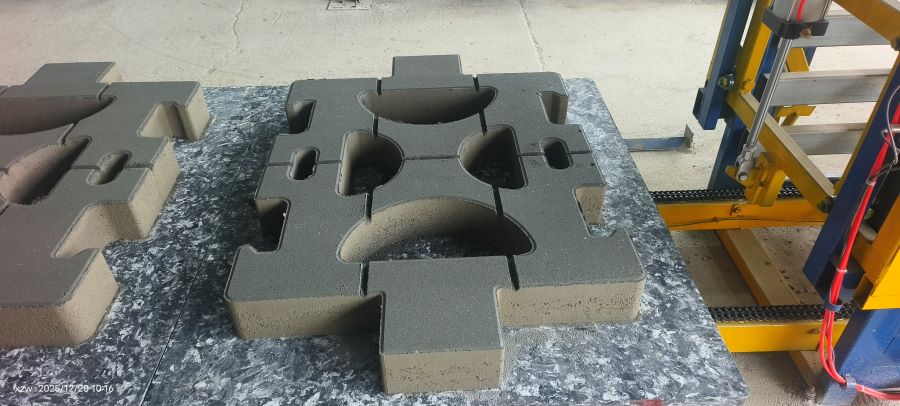
Beyond productivity, modern block machine specifications increasingly reflect environmental and economic considerations. Efficient compaction systems and optimized vibration designs can reduce cement usage while maintaining block strength.
Lower cement consumption not only decreases production costs but also contributes to reducing the carbon footprint of construction materials—a growing priority in global infrastructure development.
Thus, evaluating a block machine’s specifications also involves assessing its resource efficiency and sustainability potential.
Conclusion: From Specifications to Strategic Investment
Understanding block machine specifications is ultimately about seeing the entire system rather than isolated parameters. Production capacity, structural stability, hydraulic precision, vibration technology, automation intelligence, and mold engineering must function as a coordinated whole.
Manufacturers who interpret these specifications with a strategic perspective are better positioned to select equipment that delivers long-term reliability, consistent product quality, and sustainable operational efficiency.
At its highest level, the evaluation of machinery specifications transcends engineering—it becomes a strategic decision about the future of manufacturing capability. The right block machine is not merely a piece of equipment; it is the technological cornerstone upon which modern construction production is built.
FAQ
1. Why are block machine specifications important for manufacturers?
Specifications provide critical insight into the machine’s performance, efficiency, and durability. They help manufacturers determine whether the equipment can maintain stable production, minimize downtime, and produce blocks with consistent quality.
2. What is the most important specification when choosing a block machine?
There is no single decisive parameter. Instead, manufacturers should evaluate the interaction between capacity, vibration technology, hydraulic control, and mold precision, as these elements collectively determine production performance.
3. How do molds influence the quality of concrete blocks?
Molds define the shape, dimensions, and surface finish of the block. High-precision molds that undergo proper heat treatment can maintain dimensional accuracy over long production cycles, ensuring uniform block quality and reducing maintenance costs.





 Tel: +86-13905968794
 Email: export@hwmachines.com
 MP/WhatsApp: +86-13905968794
 Manufacturer Address:Nanan,Quanzhou City,Fujian Province,China