How Block Machines Achieve High-Density Concrete Compaction
Author:HAWEN Block MachineFROM:Brick Production Machine Manufacturer
TIME:2026-01-26
How Block Machines Achieve High-Density Concrete Compaction
High-density concrete compaction is a decisive factor in determining the mechanical strength, dimensional accuracy, and long-term durability of concrete blocks. Modern block machines achieve this outcome not through a single mechanism, but through a carefully engineered convergence of vibration dynamics, pressure transmission, material flow control, and system stability. Understanding this process reveals why advanced equipment consistently outperforms conventional solutions.
1. The Fundamental Objective of Concrete Compaction
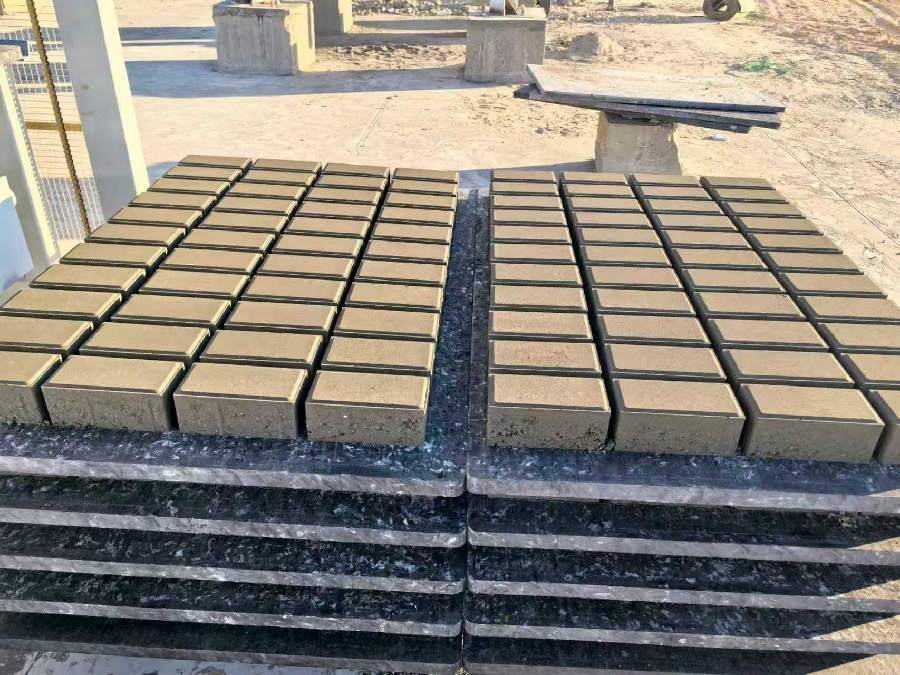
Concrete compaction aims to expel entrapped air and eliminate internal voids while ensuring uniform particle distribution. Inadequate compaction leads to porous structures, reduced compressive strength, and premature deterioration. By contrast, high-density compaction produces a refined internal matrix, where aggregates interlock tightly and cement paste coats particles evenly, forming a robust load-bearing structure.
 2. Optimized Vibration as the Core Driving Force
High-frequency, high-amplitude vibration is the primary catalyst for effective compaction. Modern block machines employ synchronized vibration systems that generate controlled oscillations, allowing concrete particles to rearrange rapidly into their most stable configuration. This process reduces inter-particle friction and enables aggregates to settle densely under gravity and pressure.
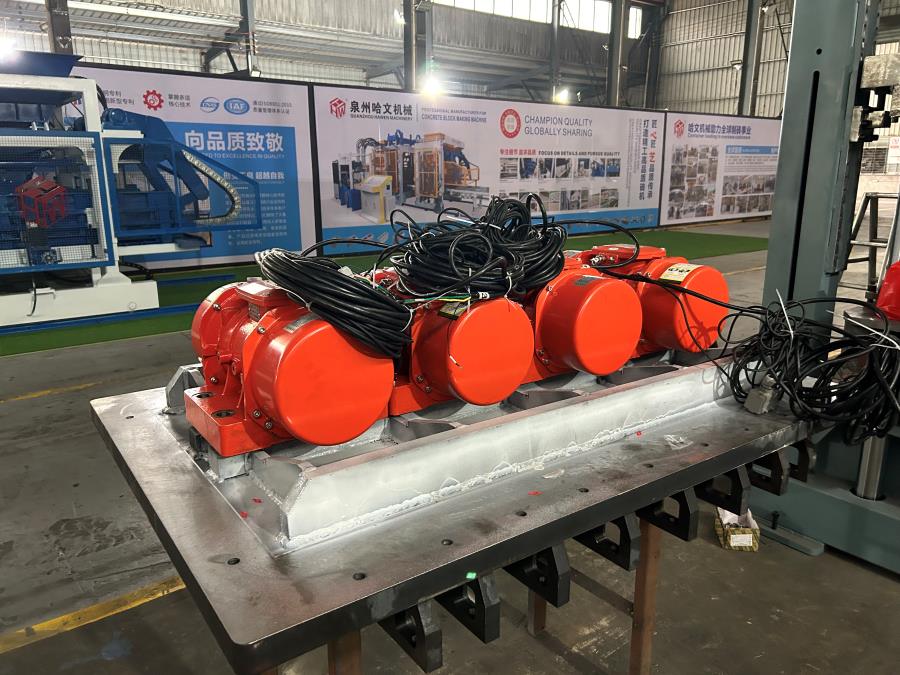
Advanced vibration box designs—such as multi-shaft configurations—ensure that energy is distributed uniformly across the mold cavity. This uniformity prevents density gradients within the block, a common flaw in less sophisticated machines.To sustain such uniform vibration over prolonged production cycles, structural design becomes equally critical.
Hawen Machinery employs a four-axis vibration box in which the eccentric blocks are positioned outside the vibration box housing. This configuration significantly reduces operational resistance during vibration, minimizing mechanical load and energy loss. More importantly, it prevents excessive heat buildup in the hydraulic oil caused by continuous vibration. Stable oil temperatures reduce thermal stress on sealing components, mitigating seal degradation and effectively preventing oil leakage. By maintaining consistent vibration parameters over time, the system ensures that high-density compaction is not only achieved, but reliably repeated throughout long-term operation.
2. Optimized Vibration as the Core Driving Force
High-frequency, high-amplitude vibration is the primary catalyst for effective compaction. Modern block machines employ synchronized vibration systems that generate controlled oscillations, allowing concrete particles to rearrange rapidly into their most stable configuration. This process reduces inter-particle friction and enables aggregates to settle densely under gravity and pressure.
Advanced vibration box designs—such as multi-shaft configurations—ensure that energy is distributed uniformly across the mold cavity. This uniformity prevents density gradients within the block, a common flaw in less sophisticated machines.To sustain such uniform vibration over prolonged production cycles, structural design becomes equally critical.
Hawen Machinery employs a four-axis vibration box in which the eccentric blocks are positioned outside the vibration box housing. This configuration significantly reduces operational resistance during vibration, minimizing mechanical load and energy loss. More importantly, it prevents excessive heat buildup in the hydraulic oil caused by continuous vibration. Stable oil temperatures reduce thermal stress on sealing components, mitigating seal degradation and effectively preventing oil leakage. By maintaining consistent vibration parameters over time, the system ensures that high-density compaction is not only achieved, but reliably repeated throughout long-term operation.
 3. Mechanical Pressure and Mold Confinement
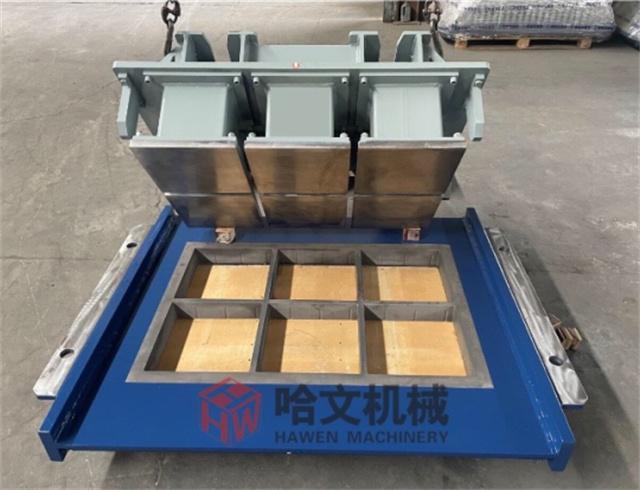
Vibration alone is insufficient without adequate mechanical pressure. During forming, the press head applies vertical force that works in tandem with vibration, accelerating particle rearrangement and air release. Meanwhile, rigid mold structures provide lateral confinement, forcing the concrete mass to compact inward rather than disperse outward.
The precision of mold machining directly affects compaction quality. Tight tolerances minimize material leakage and ensure consistent block geometry, which is essential for achieving repeatable, high-density results.
4. Material Consistency and Mixing Quality
High-density compaction is fundamentally constrained by material preparation. Even the most advanced machine cannot compensate for poorly mixed concrete. Uniform moisture distribution, controlled water–cement ratios, and consistent aggregate grading are critical. Planetary or high-efficiency mixers play a decisive role here, producing homogeneous mixes that respond predictably to vibration and pressure during forming.
5. System Stability and Automation Control
Modern block machines rely heavily on automated control systems to maintain stable operating parameters. Programmable logic controllers (PLCs) regulate vibration frequency, forming time, and pressure cycles with high repeatability. This level of control minimizes human error and ensures that each production cycle replicates the optimal compaction conditions identified through testing and experience.
3. Mechanical Pressure and Mold Confinement
Vibration alone is insufficient without adequate mechanical pressure. During forming, the press head applies vertical force that works in tandem with vibration, accelerating particle rearrangement and air release. Meanwhile, rigid mold structures provide lateral confinement, forcing the concrete mass to compact inward rather than disperse outward.
The precision of mold machining directly affects compaction quality. Tight tolerances minimize material leakage and ensure consistent block geometry, which is essential for achieving repeatable, high-density results.
4. Material Consistency and Mixing Quality
High-density compaction is fundamentally constrained by material preparation. Even the most advanced machine cannot compensate for poorly mixed concrete. Uniform moisture distribution, controlled water–cement ratios, and consistent aggregate grading are critical. Planetary or high-efficiency mixers play a decisive role here, producing homogeneous mixes that respond predictably to vibration and pressure during forming.
5. System Stability and Automation Control
Modern block machines rely heavily on automated control systems to maintain stable operating parameters. Programmable logic controllers (PLCs) regulate vibration frequency, forming time, and pressure cycles with high repeatability. This level of control minimizes human error and ensures that each production cycle replicates the optimal compaction conditions identified through testing and experience.
 Hawen Machinery's Engineering Approach
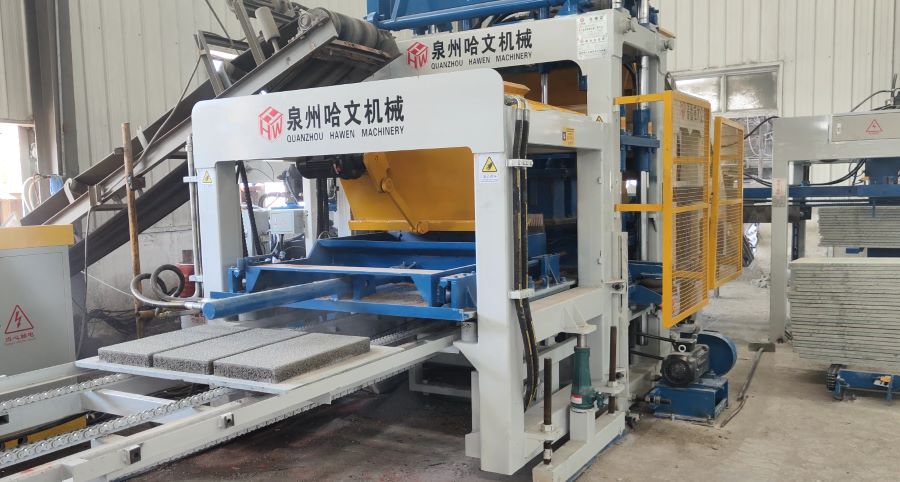
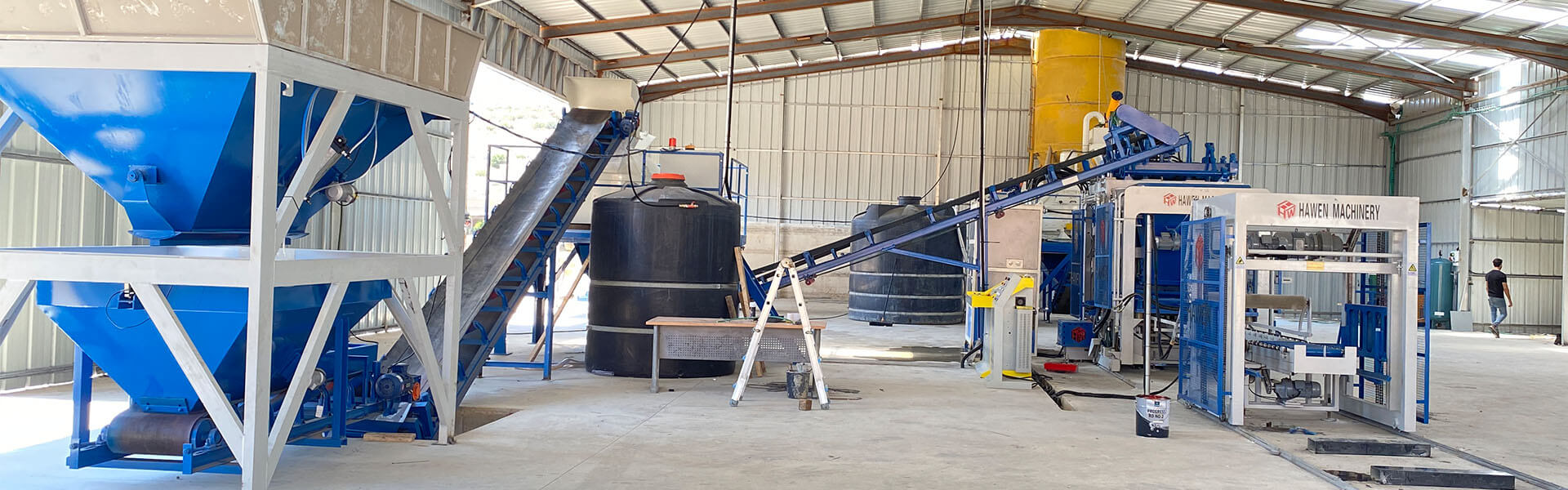
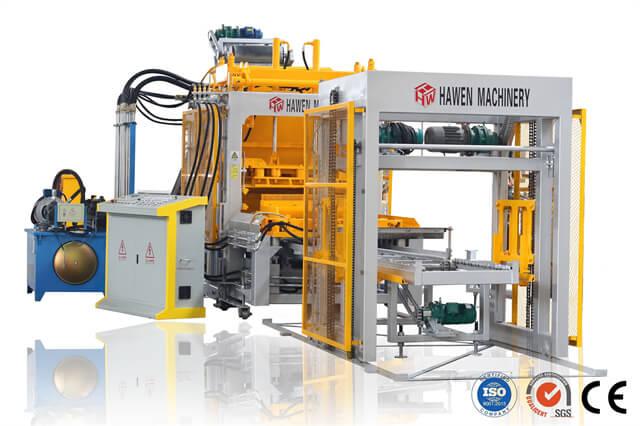
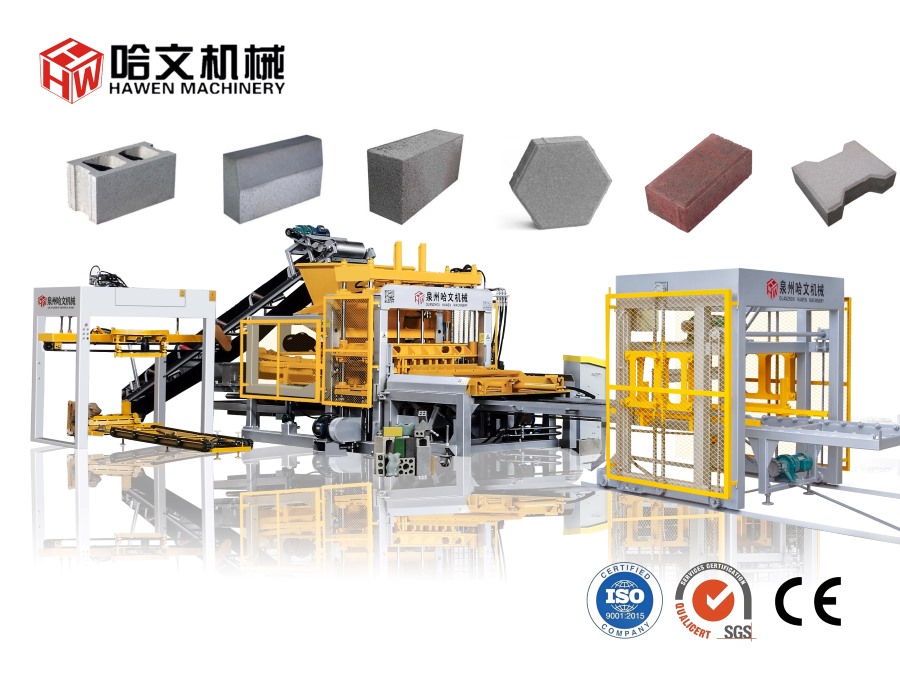
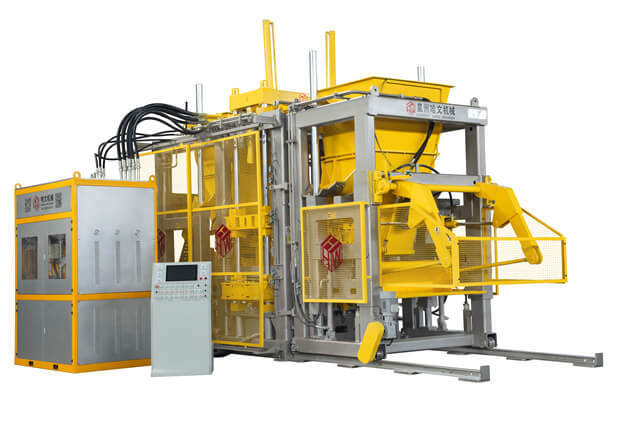
Hawen Machinery integrates these principles into a cohesive engineering philosophy. By combining high-rigidity machine frames, advanced multi-axis vibration systems, and precision hydraulic control, Hawen block machines are designed to maximize compaction efficiency while reducing energy consumption. The result is a production process that delivers dense, uniform blocks with consistent performance, even under continuous industrial operation.
Conclusion: From Process Control to Structural Excellence
High-density concrete compaction is not an isolated feature but the outcome of disciplined engineering and systemic optimization. When vibration, pressure, material preparation, and automation operate in harmony, block machines transcend basic forming and become instruments of structural reliability. In this sense, superior compaction is not merely a technical achievement—it is the foundation upon which durability, efficiency, and long-term value are built.
Hawen Machinery's Engineering Approach
Hawen Machinery integrates these principles into a cohesive engineering philosophy. By combining high-rigidity machine frames, advanced multi-axis vibration systems, and precision hydraulic control, Hawen block machines are designed to maximize compaction efficiency while reducing energy consumption. The result is a production process that delivers dense, uniform blocks with consistent performance, even under continuous industrial operation.
Conclusion: From Process Control to Structural Excellence
High-density concrete compaction is not an isolated feature but the outcome of disciplined engineering and systemic optimization. When vibration, pressure, material preparation, and automation operate in harmony, block machines transcend basic forming and become instruments of structural reliability. In this sense, superior compaction is not merely a technical achievement—it is the foundation upon which durability, efficiency, and long-term value are built.




 Tel: +86-13905968794
 Email: export@hwmachines.com
 MP/WhatsApp: +86-13905968794
 Manufacturer Address:Nanan,Quanzhou City,Fujian Province,China