A decorative paver mould enquiry should describe more than an attractive paving photograph. The tooling manufacturer needs to understand the individual units, their arrangement in the installed surface and the production equipment that will make them. A clear design brief connects those requirements before the buyer approves manufacture.
Hawen Machinery publicly lists concrete moulds and interlocking paver moulds among its products. This guide explains how buyers can prepare a decorative-paver project for technical discussion. It does not claim that every photographed texture, profile or product can be manufactured on any block machine. Suitability must be reviewed for the actual design and equipment.
Define the installed paving pattern and unit family
Start with the intended paving arrangement. Identify whether the pattern uses one unit or several shapes and sizes. Give each unit a separate reference and explain how it relates to the overall pattern. A supplier cannot reliably infer all necessary dimensions from a photograph taken at an angle.
Clarify whether edge, corner or complementary units are part of the scope. A visually complete installed pattern may require products beyond the main paver. Distinguish the tools being ordered now from possible future additions so the quotation does not imply a broader supply than the buyer intends.

Paver mould reference: define individual products as well as the intended paving arrangement.
Separate dimensions, edge profiles and decorative appearance
Provide dimensioned drawings for the unit geometry and use labelled photographs or samples to explain appearance. Identify which requirements are fixed and which remain open to technical discussion. Terms such as natural, textured or premium describe an intention but do not establish an inspection criterion.
Surface appearance can depend on materials and production processes as well as tooling. Ask the supplier which features relate to the proposed mould and which require other equipment or process stages. Avoid assuming that a finished pavement photograph documents the direct output of a mould alone.
| Design input | Question it should answer |
|---|
| Unit drawing | What exact geometry is being requested? |
| Pattern plan | How do the different units work together? |
| Appearance reference | Which visible features need discussion and approval? |
| Machine information | What equipment and interface constrain the tooling proposal? |
Keep color and finish decisions traceable. If the buyer changes the appearance reference during drawing review, identify what changed and whether it affects the production method. This prevents a later dispute in which the geometry is approved but the parties are referring to different surface samples.
Review cavity arrangement against the production programme
Supply the machine model, production-pallet information and available connection drawings. Ask for a project-specific review of the proposed layout rather than assuming that nominal board size establishes compatibility. Several small units and one large slab can impose different tooling and handling considerations.
For mixed-size patterns, explain the sales proportions required. A layout that produces equal quantities of several units may not match the quantities consumed by the paving pattern. Review expected demand and resulting inventory before approving the tooling arrangement.
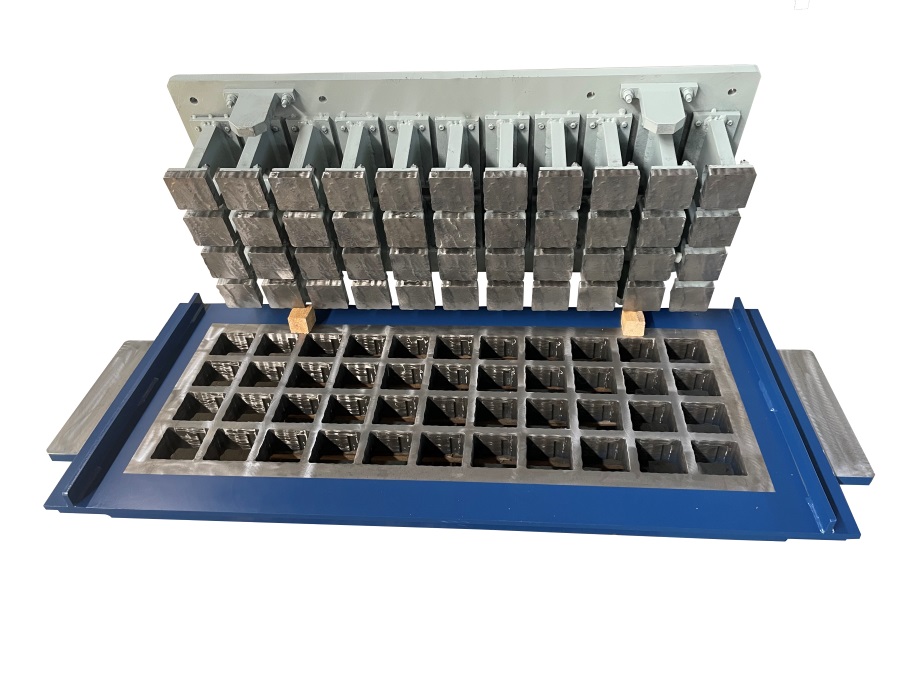
Permeable-paver mould reference: product-specific features need their own drawing and layout review.
A useful quotation-review observation is whether the proposal identifies the actual unit family. A generic description such as decorative mould can hide missing complementary products or an unresolved pattern. Assign each quoted mould a reference connected to the corresponding product drawing.
Agree first-product and appearance checks before manufacture
Define the evidence needed for approval. Depending on the project, this may include the drawing, tooling inspection and a representative product trial under agreed conditions. State who reviews each item and how revisions are accepted. A sample's visual appeal does not replace the relevant dimensional or performance requirements.
Evaluate finished appearance at the appropriate stage. Materials, curing and any subsequent treatment can influence what the buyer sees. Keep the conditions of a demonstration visible so its result is not represented as a universal outcome for every local material source.
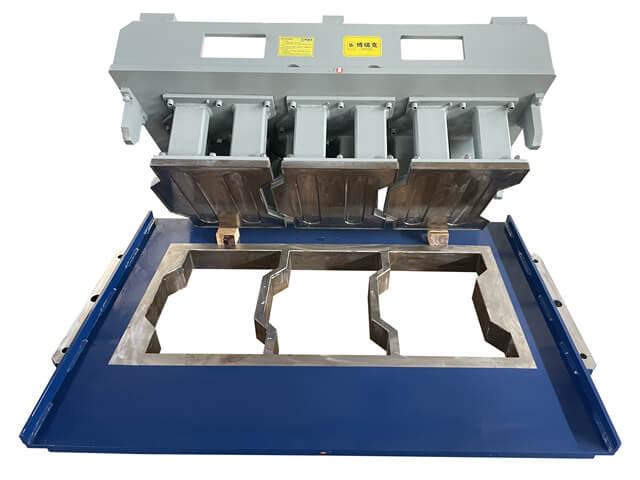
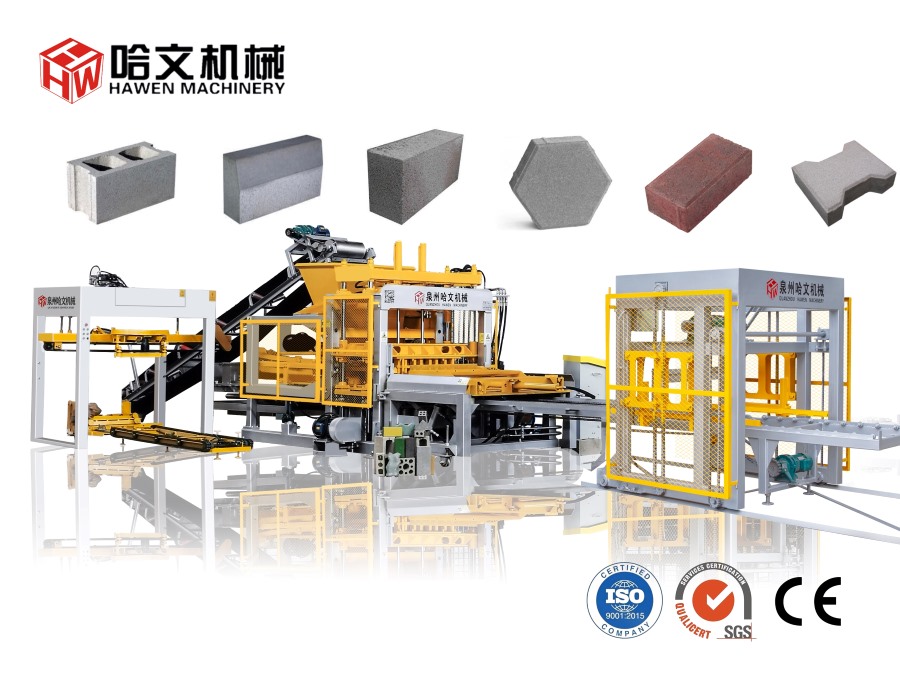
Interlocking-paver mould reference: link approval to the agreed product and test conditions. Images illustrate mould categories, not a specific decorative design guarantee.
FAQ
Is a paving photograph enough for a final mould order? It is useful background, but dimensioned product and machine information are normally needed for technical confirmation.
Why discuss the installation pattern? It identifies the unit family and quantity proportions the plant needs to produce.
Does a mould determine every aspect of the surface finish? No. Review materials and any additional production or finishing stages as well.
Conclusion
Prepare a decorative paver mould brief around the pattern, unit geometry, appearance references and actual machine interface. Review production proportions and agree approval evidence before ordering. This gives the manufacturer a concrete basis for a custom proposal and gives the buyer clearer criteria for acceptance.




 Tel: +86-13905968794
 Email: export@hwmachines.com
 MP/WhatsApp: +86-13905968794
 Manufacturer Address:Nanan,Quanzhou City,Fujian Province,China