A split-face concrete block does not get its texture from a coating or a decorative mold surface. The characteristic fracture is created by forming two units face-to-face as a larger piece, curing the piece to the specified release condition, and then splitting it mechanically. This adds a downstream operation to ordinary block production, so the mold, green-unit strength, curing route, splitter, and inspection plan must be considered together.
CMHA unit-shape guidance describes split-face units as paired units that are mechanically separated after curing. The exact timing and acceptance criteria belong to the product specification and equipment supplier. This guide follows the process from the twin mold through splitting, then shows where a block making machine and its tooling influence the final face.
The paired-unit geometry begins in the forming mold, not at the splitter.
1. Understand the split-face production sequence
The process starts with a block machine molding two units together, commonly with their finished faces placed toward one another around a planned separation plane. The fresh assembly is consolidated and demolded as a stable green piece. It is transferred and cured under the product-specific process. A separate splitter then applies force along the intended plane, exposing a fractured aggregate texture. The final products are inspected, sorted, and packed. Each step changes the condition of the piece that reaches the next station.
This sequence differs from a standard single-unit cycle in three practical ways. The mold must create a paired geometry that can be handled before separation. The green piece needs enough integrity to move without twisting or cracking unintentionally. Finally, the splitting station must be sized and set for the cured piece and its intended profile. Planning only the press cycle can leave a bottleneck at curing or splitting, even when the main brick machine appears to have spare capacity.
2. Define the product and splitting plane first
Start with the finished block drawing: overall dimensions, face texture, exposed sides, cores, webs, and the intended fracture line. Confirm whether the pair is symmetrical or whether one unit has a different end or corner profile. The splitting plane should produce the required finished dimensions without cutting through a core or leaving an unusable edge. A sample can communicate texture, but it does not replace a drawing that identifies dimensions and acceptance points.
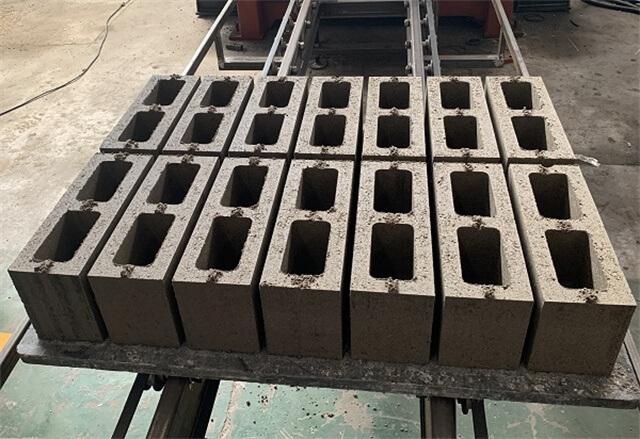
The mold must hold the paired pieces in the correct relationship and allow reliable filling, compaction, stripping, and transfer. Check the separator or central feature, face-to-face alignment, cavity depth, and the support points used by the pallet or handling system. If the mold varies from the finished-unit drawing, the splitter may expose inconsistent faces or create unequal halves. Keep the product revision, mold identification, trial sample, and splitter setup tied to one controlled approval record.
The mold drawing must define the twin unit and intended splitting plane.
3. Control material filling and green strength
A paired piece can be more vulnerable to uneven filling than a conventional unit because its mass and support geometry are different. Observe material distribution along both halves, the divider area, face shells, and any cores. Compare cavities and pallets rather than averaging away a local defect. If one side is underfilled, check feed-box travel, material distribution, mix consistency, and mold buildup before extending cycle time. A systematic trial should change one relevant variable at a time and record the result.
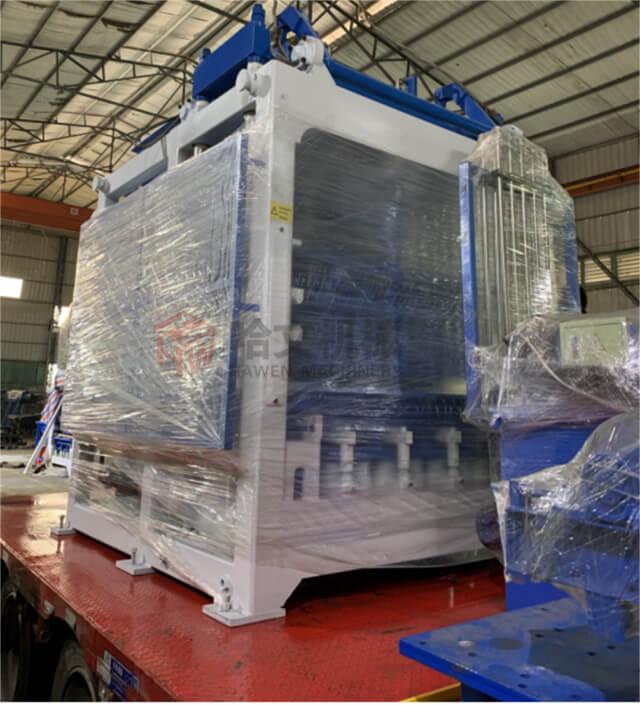
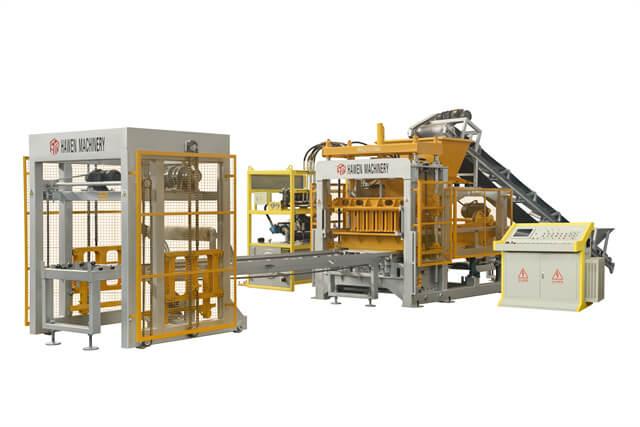
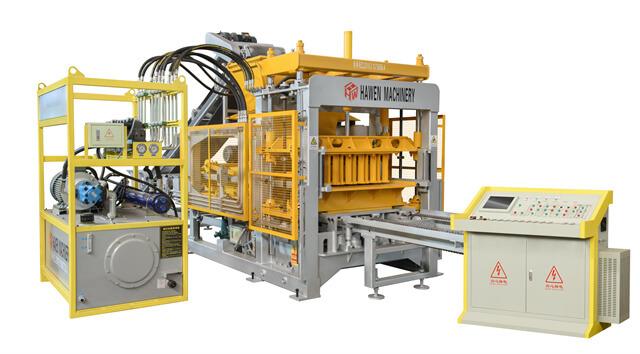
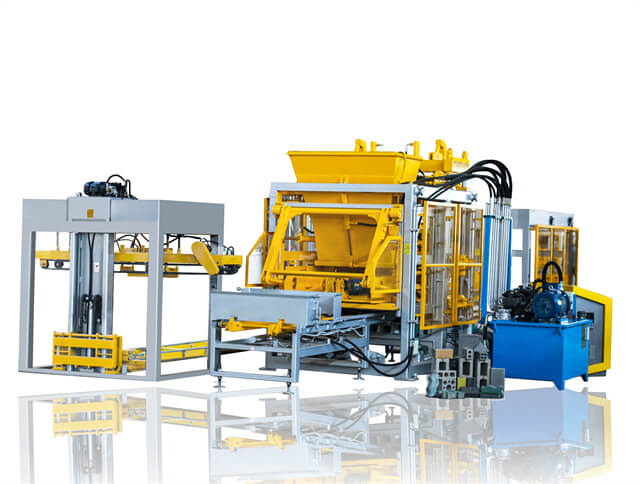
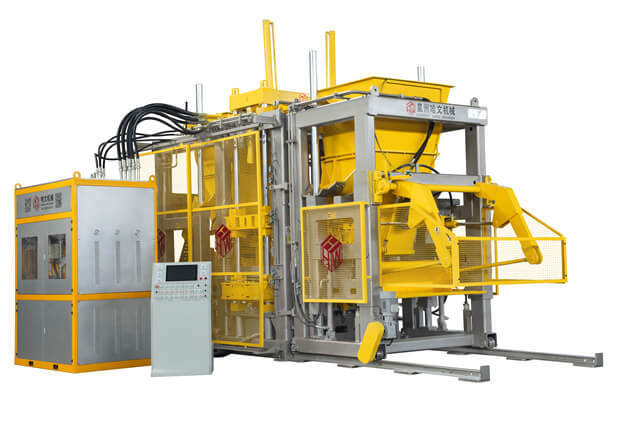
Hawen Machinery uses a four-shaft vibration-box layout with eccentric weights located outside the housing. The arrangement is intended to reduce internal resistance and support even compaction; the actual paired product still requires validation. Review the green assembly at release and after transfer for separation cracks, distorted ends, and weak corners. If damage appears only after a particular handoff, inspect support and acceleration at that stage instead of assuming that higher forming pressure is the answer.
4. Define a product-specific curing and release condition
Curing has two jobs here: develop the properties required by the finished unit and leave the paired piece suitable for controlled splitting. Splitting too early can cause crumbling, uncontrolled breaks, or distorted faces. Waiting longer than necessary may tie up inventory and floor space. There is no universal age that fits every mix, climate, unit geometry, or splitter. The manufacturer should establish the release condition through trials and the project specification, using evidence from representative pieces rather than a calendar rule alone.
Keep the process record linked to batch identity, mold, production time, curing conditions, and split result. Sample pieces from different production positions and compare fracture appearance, dimensional stability, and damage. If curing is uneven, a splitter may produce both clean and poor faces from the same run. Before moving the line to continuous production, define where pieces are held, how they are rotated or fed, how rejected pairs are isolated, and who approves changes to the release point.
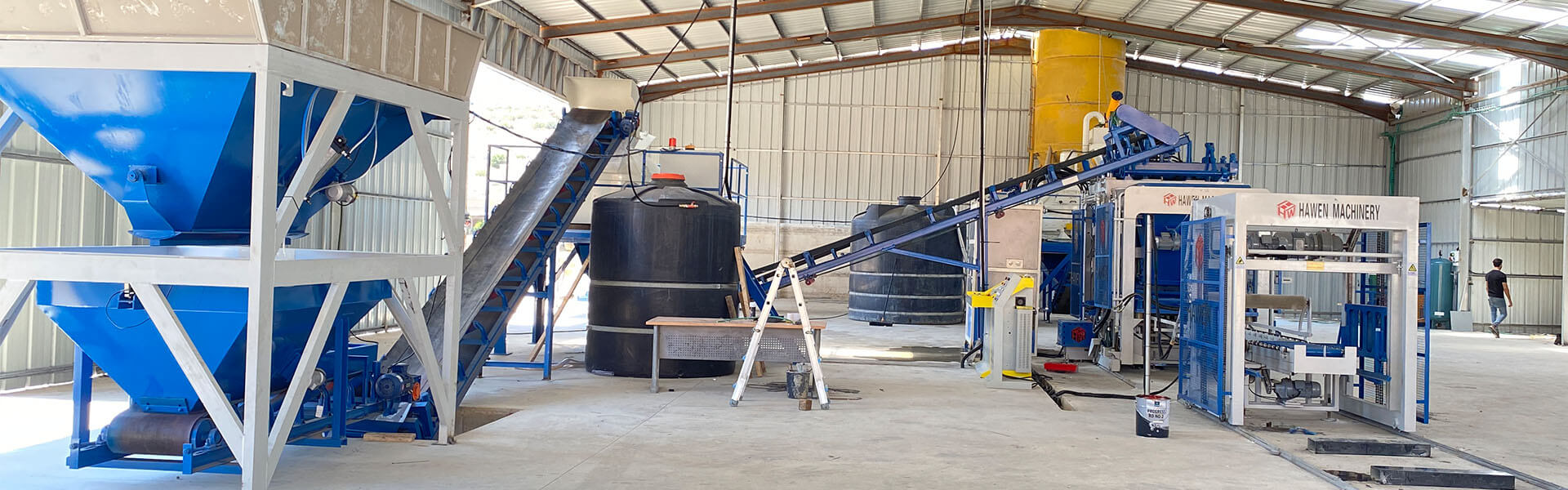
Forming, curing and downstream splitting need a coordinated plant plan.
5. Match the splitter to the cured unit
The downstream splitter must accommodate the piece dimensions, weight, orientation, required split faces, and planned production rhythm. Blade arrangement and travel should follow the product geometry. Check that the feed supports the unit before force is applied and that the outfeed does not strike the newly exposed face. Manual, semi-automatic, and integrated systems have different staffing, guarding, floor-space, and buffer requirements. Confirm these details with the splitter supplier; do not infer its capacity from the block press cycle alone.
Decide whether the splitting stage will run inline or as a separate operation. Inline processing reduces intermediate moves but makes the full line dependent on downstream availability. Offline splitting allows buffer inventory and scheduling flexibility, but needs extra storage, identification, and handling controls. Provide safe access for inspection, blade change, cleaning, and maintenance. A layout should also show rejected material, finished-unit stacking, forklift crossings, and clear routes around guarded equipment.
6. Inspect both the fracture and the finished unit
A split face is intentionally irregular, so inspection must distinguish an acceptable fractured texture from damage. Approve reference samples that show the expected aggregate exposure, fracture direction, edge condition, and allowable variation. Check the finished dimensions and bearing surfaces at the locations specified by the governing product standard. Keep the visible face comparison separate from measurements that determine fit. Use consistent lighting and orientation when comparing samples so that shadows do not look like color or texture changes.
When results drift, sort observations by mold cavity, batch, curing position, splitter blade set, and operator adjustment. A repeated straight fracture may point to the splitting plane or support; ragged breakouts can indicate unsuitable release condition, geometry, or force application. Record the change and preserve representative samples. Do not adjust mix, vibration, curing, and blade settings at once. That makes it difficult to identify what corrected the problem and whether the improvement will repeat on the next product lot.
7. Plan the press, mold, and downstream equipment as one system
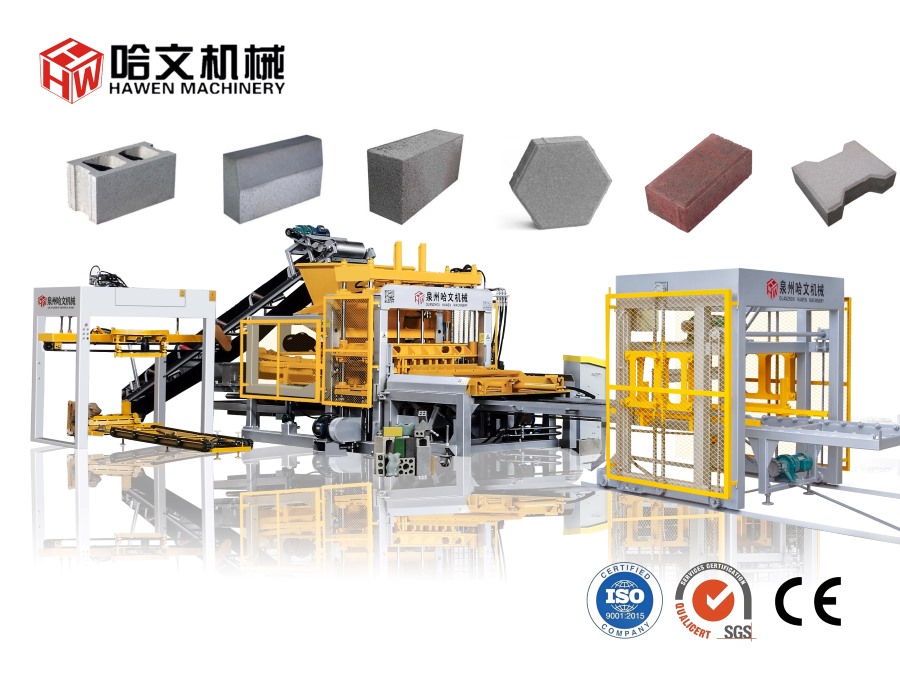
Hawen molds are designed for compatibility with platforms such as Masa, Hess, Zenith, Poyatos, Besser, Tiger, Columbia, Quadra, and Omag. Heat treatment improves wear resistance, with hardness tested at HRC 59-61. If the line uses automated controls, the configured SIEMENS S7-200 PLC and touch panel can support machine-status monitoring and parameter management. These features do not replace coordination with a separate splitting-equipment supplier. Include a palletizing system or machine catalog only after confirming the full line interfaces and product route.
Action checklist
Approve a dimensioned drawing that identifies the twin piece, cores, exposed faces, and intended split plane.
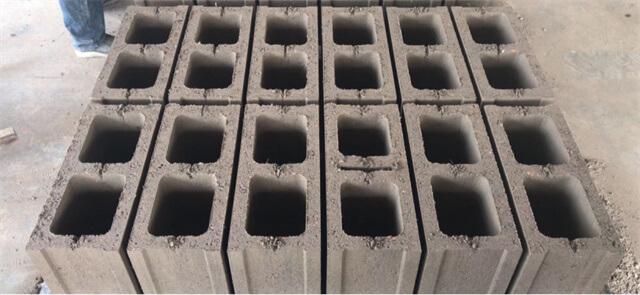
Trial the mold for even filling, stable demolding, and safe transfer of the paired green unit.
Set curing and splitting release criteria from representative product trials and governing requirements.
Approve visual reference samples and separately record dimensional and appearance inspection results.
Coordinate press, mold, pallets, curing space, splitter, and packing capacity before confirming line output.
The split-face finish is created by a chain of controlled decisions, not by the splitter alone. A well-defined paired mold, a stable green piece, a validated curing condition, and a matched splitting station turn an intentional fracture into a repeatable product. When those steps are designed together, the finished surface can carry both the character of natural stone and the discipline of industrial manufacturing.
FAQ
How are split-face concrete blocks made? Two units are formed face-to-face as a larger piece, cured to a defined release condition, and mechanically split along a planned plane.
Are split-face blocks split immediately after molding? Usually the paired piece is cured before splitting. The exact release condition depends on the product, materials, equipment, and specification.
Does a block making machine perform the splitting step? The press forms the paired unit. A separate splitting machine or station creates the fractured face downstream.
What should a twin mold drawing show? It should identify finished dimensions, the paired arrangement, cores and webs, exposed faces, the split plane, and any asymmetric features.
Why do split faces vary from one block to another? Variation can come from mold filling, material condition, curing, support, splitter setup, or handling. Track samples by each process stage.
Can split-face production run inline with a block machine? It can be integrated or operated offline. The choice depends on buffers, floor plan, handling, staffing, and how the plant manages interruptions.
Can any hollow-block mold produce a split-face unit? No. The paired geometry and separation plane require a mold designed for the specified product and compatible handling sequence.





 Tel: +86-13905968794
 Email: export@hwmachines.com
 MP/WhatsApp: +86-13905968794
 Manufacturer Address:Nanan,Quanzhou City,Fujian Province,China