Why Concrete Masonry Units Fail Compressive Strength Tests and How to Find the Cause is a practical topic for buyers and plant managers who want a more stable block making machine workflow. The goal is not only to explain the issue, but to give a clear method that supports better output, cleaner operation, and stronger customer confidence.
In a professional concrete products factory, the block machine, material system, mold, pallet circulation, control system, and operator routine must work as one process. A good solution therefore looks at the whole line before changing one visible setting.
Reliable strength investigation connects each loaded specimen to its constituent batch, forming settings, and hydration history.
Define the failure before changing the manufacturing line
A reported low value alone cannot prove that the mix is weak or that the block machine lacks pressure. First identify the governing specification, required age, loading method, and whether acceptance uses individual readings, an average, or both. Hold the affected batch while this information is confirmed.
Separate a true strength failure from a reporting error. Check measurement conversion, decimal placement, sample identity, loading date, and whether the reported area was gross area, net area, or another defined basis. Different masonry shapes use different preparation and calculation provisions, so the correct annex matters.
Build a short failure statement that can be challenged with evidence. For example: specimens from an identified shift were below the specified compressive value at the required age, while the previous shift passed. This is more useful than saying the brick machine made weak blocks. Precise wording narrows the search to selection, load preparation, constituents, forming, or early hydration.
Audit sampling, conditioning, and specimen identity
Strength data is only as representative as the sample. Review where the pieces came from, how they were selected, and whether they covered the batch instead of a convenient carrier. Showcase pieces and visibly damaged rejects both create bias. Record manufacture time, recipe, stone delivery, tooling set, cavity position, chamber location, and cube number before samples leave the factory.
Confirm the required water condition and preparation sequence with the current applicable standard and qualified testing facility. ASTM C140/C140M provides general procedures and type-specific annexes for concrete masonry and related articles. Read it with the governing specification. A procedure borrowed from cylinders, cubes, or clay brick can misrepresent a manufactured piece.
Protect specimens during transport. Cracked webs, chipped bearing faces, or impacts from loose stacking can reduce measured capacity. Keep identified companion pieces from the same batch so a questionable reading can be investigated without substituting later output.
Uniform feeding and repeatable compaction reduce the process variation that can appear later as scattered compression results.
Check bearing surfaces, capping, net area, and machine alignment
A compression load must enter through properly prepared, plane, and level bearing surfaces. Irregular contact can concentrate stress at a corner and initiate an early split. A CMHA technical note explains that ASTM C140/C140M refers to ASTM C1552 for capping manufactured concrete masonry products. The qualified technician should select and control the permitted preparation method.
Review platen cleanliness, spherical-seat movement, specimen centering, frame capacity, calibration, and loading control. Dust, hardened paste, a tilted cap, or off-center placement can make a sound piece appear weak. Preparation is an integral part of the compression procedure rather than cosmetic work.
Verify every dimension used to calculate net area or another reporting basis. Hollow geometry needs careful measurement because small errors can materially change calculated stress. Keep raw dimensions, maximum load, the calculation sheet, and preparation photographs. A value that cannot be reconstructed from original observations should never trigger an expensive change to the brick making machine.
Read the failure pattern and the spread of results
Examine individual readings before focusing on the average. A uniformly low group suggests a common constituent, density, or hydration problem. An isolated low value may point toward damage, preparation, geometry, or a local cavity defect. Wide dispersion directs the investigation toward weighing consistency, water correction, feeder distribution, cavity position, handling, or sample identity.
Photograph each break immediately after loading. Note whether cracking began at a bearing corner, passed through a face shell, concentrated around a web, or followed a visible segregation zone. These observations require engineering interpretation, yet they help distinguish global weakness from local stress concentration. Compare the pattern with piece mass, dimensions, density, and texture from the same position.
Map failed specimens back to the pallet supply and individual cavities. A repeated corner position can indicate board deflection, an uneven tamper shoe, or poor feed at a side. Random fractures across all positions point elsewhere. Combine break appearance with loading records and factory evidence before choosing a controlled trial.
Tooling condition, tamper alignment, and cavity filling should be reviewed together when failures cluster by unit position.
Trace constituents, water correction, weighing, and mixing backward
Start with changes near the failed batch. Check cement delivery and storage, stone source and grading, fines, contamination, recycled fraction, pigment or admixture dose, and actual water correction. Review scale records from the batching system. A screen recipe cannot prove that the intended wet masses entered the mixer.
Compare mixing sequence and discharge condition. Dry pockets, cement balls, excessive carryover, or nonuniform moisture can create weak zones even when the total recipe is correct. Inspect the twin-shaft mixer or planetary mixer for worn blades, buildup, incomplete discharge, and inconsistent charging. Change one factor at a time so the trial can identify cause rather than coincidence.
Avoid adding cement or reducing water from a single failed report. Dry-cast concrete needs enough measured liquid for coating, filling, compaction, and green cohesion. A drier-looking mixture may feed poorly and trap larger voids. Use retained inputs, wetness measurements, piece mass, fresh appearance, and repeated loading to decide whether correction belongs in the recipe or later in the sequence.
Inspect feeding, mold condition, vibration, and hydraulics
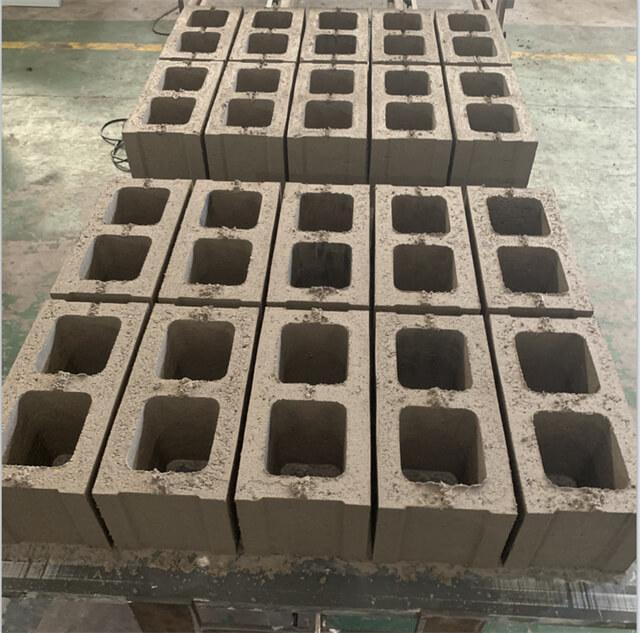
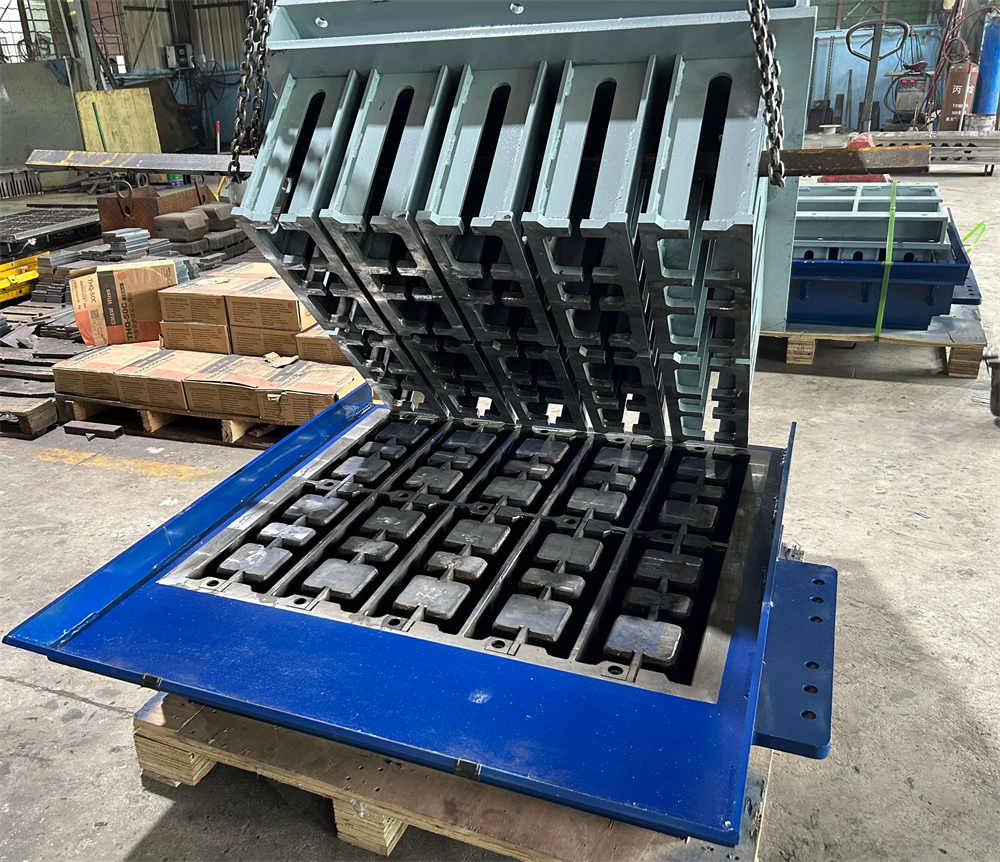
Observe filling across the complete tooling box. Compare cavity mass and green height when the method permits. Bridging, feeder timing, segregated discharge, or a worn scraper can leave one side underfilled. Check the hollow block mould, tamper shoes, guides, stops, and board support for wear or misalignment before increasing oscillation time.
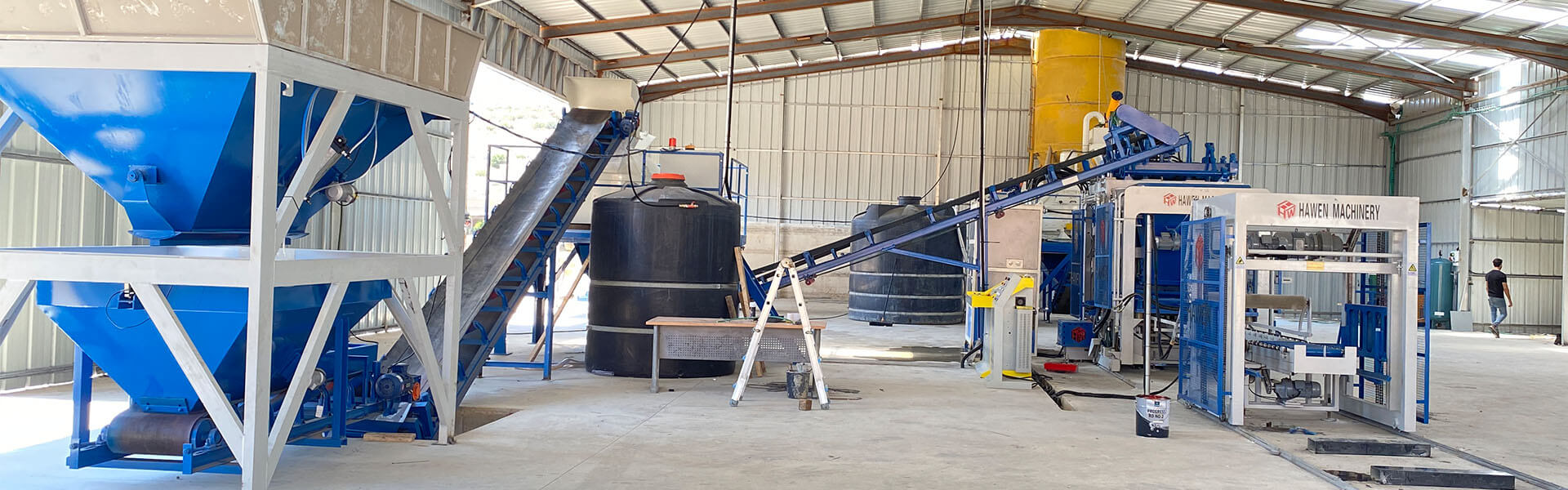
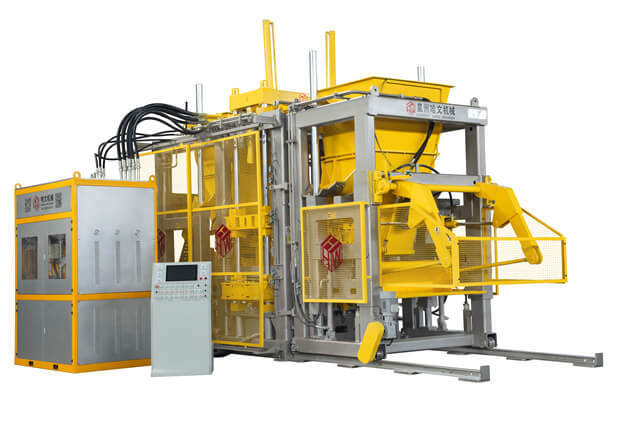
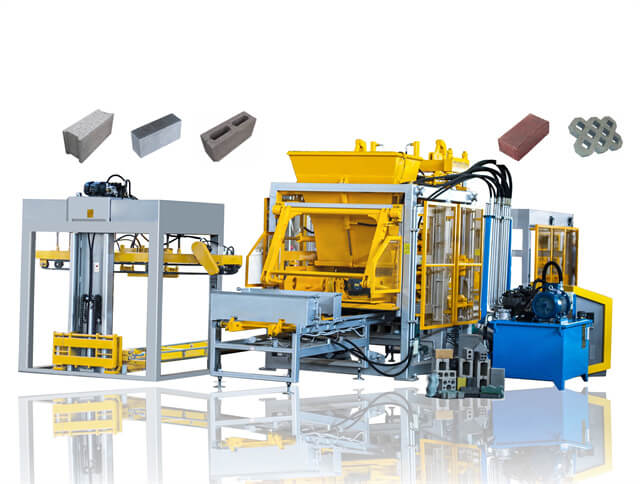
Hawen Machinery uses a four-shaft vibration box with eccentric blocks positioned outside the housing. This arrangement reduces internal resistance and supports even compaction across the cavity field while helping the producer use cement efficiently. The benefit depends on controlled feeding, water content, board support, and synchronized settings. Oscillation cannot compensate for missing concrete or unsuitable grading.
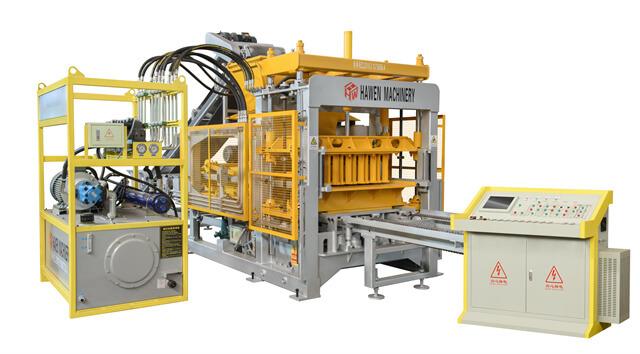
Hydraulic movement should be smooth and repeatable during pressing and demoulding. In Hawen equipment, Japanese YUKEN proportional and directional valves work with an American ALBERT hydraulic pump to provide responsive control, load capacity, and durable operation. Review oil condition, pressure stability, valve response, cylinder synchronization, and mechanical stops before assuming that a higher pressure setting will improve compressive strength.
Verify early conditioning, handling, and test-age traceability
A well-compacted piece can still underperform when early humidity or temperature is unstable. Review time from demoulding to protection, chamber loading, airflow, condensation, drying exposure, and sample position in the enclosure. Compare the affected batch with known passing pieces conditioned at the same time rather than with another season or shape.
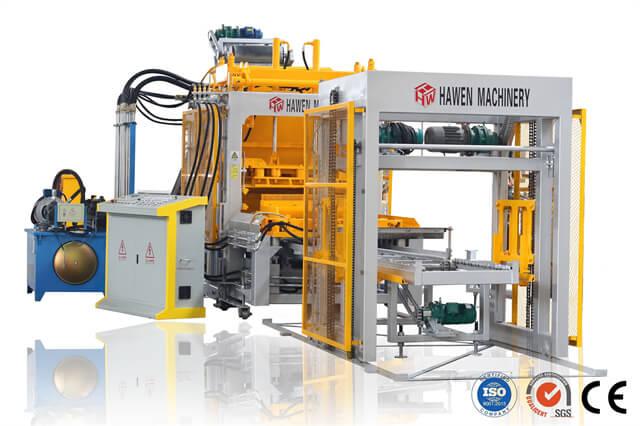
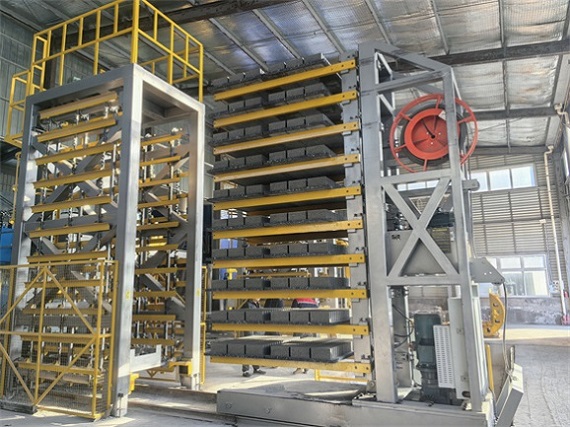
Examine transfer and stacking through the offline palletizing system. Fresh units can develop hidden cracks when pallets jerk, racks are uneven, or handling starts before sufficient green strength develops. Later compression may reveal that damage even though the exterior looks acceptable. Mark suspected handling positions and test them separately from undamaged controls.
Confirm the actual loading age and manufacture timestamp. A label date without a time can hide a meaningful early-age difference. Keep a held batch isolated even when later output passes under different conditions. The investigation must show whether affected pieces comply, need confirmation under the specification, can enter another approved use, or require rejection.
Run a controlled correction and connect it to Hawen data
Select the smallest change supported by evidence. Produce a baseline and a controlled trial while holding other inputs steady. Record wet batch masses, water condition, mixing sequence, feed time, oscillation stages, hydraulic response, green height, piece mass, chamber position, and specimen identity. Repeat across consecutive cycles to show stability rather than a fortunate board.
Hawen integrates a SIEMENS S7-200 PLC with an intuitive touch panel and remote monitoring. Operators can review live equipment status and preserve repeatable sequence parameters, while Hawen engineers can assist with remote optimization. Match that record with load-frame and constituent data. Remote access supports diagnosis but cannot replace calibrated compression work or local inspection.
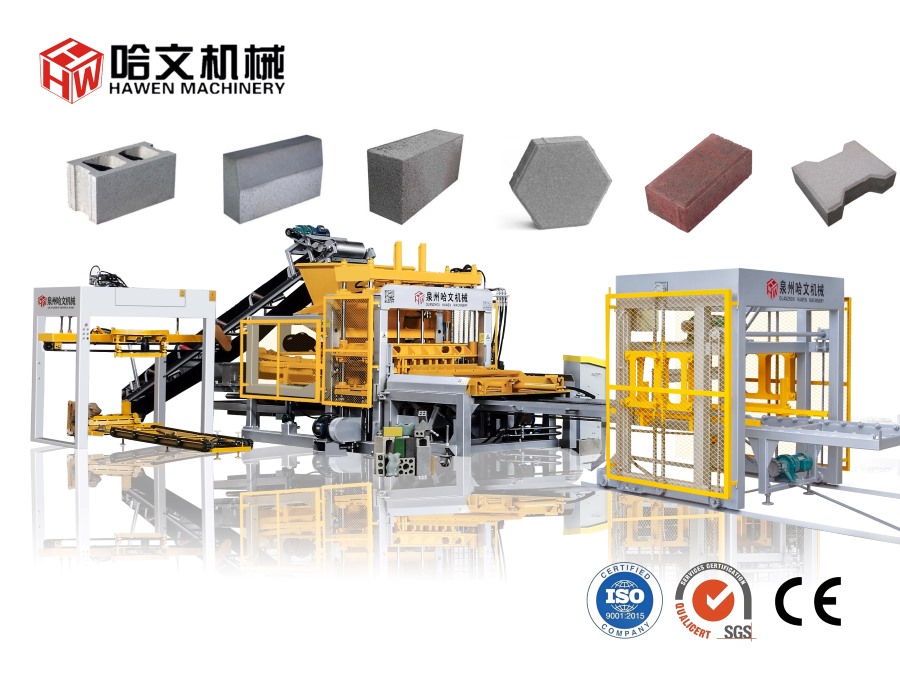
When tooling is part of the evidence, Hawen can manufacture molds compatible with Masa, Hess, Zenith, Poyatos, Besser, Tiger, Columbia, Quadra, Omag, and other established platforms. The molds follow the required interface and product geometry, receive heat treatment for wear resistance, and are hardness-checked around HRC59-61. Correct fit helps remove a major source of dimensional and cavity-to-cavity variation.
Action checklist
Hold the identified batch and confirm the specification, loading age, and acceptance rule.
Audit random selection, transport protection, conditioning, capping, alignment, and calculations.
Compare individual readings, fracture photographs, dimensions, mass, and cavity position.
Trace cement, aggregate, moisture correction, weighing, mixing, forming, curing, and handling records.
Change one supported variable and preserve a baseline for comparison.
Repeat compression on traceable specimens before releasing, redirecting, or rejecting the affected batch.
A compression failure should not begin a contest between the laboratory, the material supplier, and the machine operator. It should begin a traceable investigation in which every mass, setting, specimen, and decision can be reconstructed. When a factory learns to follow evidence from the broken unit back through curing, forming, mixing, and raw materials, quality control becomes more than a final gate. It becomes the operating language that allows every shift to improve the next one and every delivered block to carry a defensible promise of performance.
FAQ
Does a single low block prove the whole batch is weak? No. Apply the selection and acceptance provisions in the governing specification. A low reading requires investigation, while batch disposition depends on the defined sample and acceptance rule.
Can the factory load a hollow block like a concrete cylinder? No. Concrete masonry requires the applicable manufactured-piece procedure, specimen preparation, area calculation, and shape-specific requirements.
Why can poor capping reduce the measured strength? Uneven bearing contact concentrates load and may start cracking before the unit develops its representative capacity.
Should operators increase hydraulic pressure after a failed test? Not automatically. Verify the test and review filling, vibration, moisture, material, mold condition, curing, and hydraulic stability before changing pressure.
What does wide variation between specimens suggest? It can indicate selection error, local damage, inconsistent weighing or water, uneven cavity filling, tooling differences, chamber variation, or load-frame inconsistency.
Can a passing average hide a factory problem? It can hide a low individual value or excessive spread when the specification also controls individual readings. Review every required acceptance criterion.
How does Hawen support a strength investigation? Hawen can help connect PLC status, feeding, vibration, hydraulic response, tooling condition, and handling records with qualified compression evidence.





 Tel: +86-13905968794
 Email: export@hwmachines.com
 MP/WhatsApp: +86-13905968794
 Manufacturer Address:Nanan,Quanzhou City,Fujian Province,China