How to Prevent Aggregate Pop-Outs in Concrete Blocks and Pavers is a practical topic for buyers and plant managers who want a more stable block making machine workflow. The goal is not only to explain the issue, but to give a clear method that supports better output, cleaner operation, and stronger customer confidence.
In a professional concrete products factory, the block machine, material system, mold, pallet circulation, control system, and operator routine must work as one process. A good solution therefore looks at the whole line before changing one visible setting.
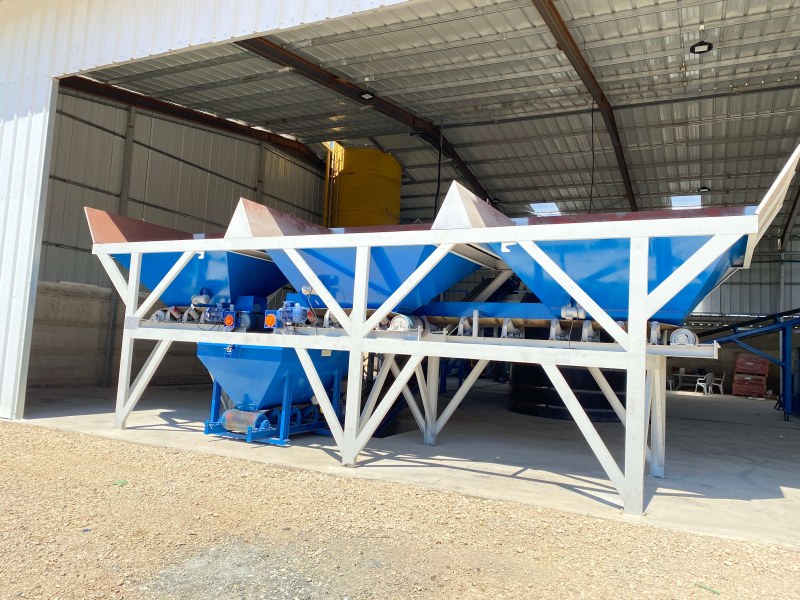
Source separation and clean batching are the first defenses against harmful aggregate particles.
Identify a true aggregate pop-out
A pop-out is a small conical fragment that separates from the surface because a particle close to that surface expands, fractures, or loses stability. The broken particle or its socket is often visible at the bottom of the crater. This shape distinguishes a classic pop-out from random edge chipping, pallet scratches, surface scaling, or a shallow flake of weak mortar.
Record where the defect appears, when it first becomes visible, and whether one aggregate particle sits at the center. Compare fresh units, cured units, stored cubes, and products exposed to wetting or cold conditions. If the marks occur only on one production lot, the investigation should begin with the raw material deliveries used in that lot, not with an immediate setting change on the block machine.
ACI guidance distinguishes pop-outs from popoffs and notes that petrographic examination can identify the mechanism when the cause is uncertain. That distinction matters: an expansive or frost-susceptible particle needs a material solution, while weak surface mortar may point toward mixing, compaction, curing, or exposure.
Trace the harmful particle back to its source
Porous or unsound particles can absorb moisture and create internal pressure during freezing, wetting, drying, or chemical reaction. Depending on the local geology and supply route, suspect material may include weak shale, porous chert, soft particles, coal, lignite, clay lumps, or reactive constituents. A visual name alone is not enough to confirm the mechanism.
Quarantine the active aggregate lot and retain samples from the bin, stockpile, delivered truck, and damaged unit. Check whether the problem follows one quarry bench, one supplier, one recycled-material load, or one loader route. The cement system should also be reviewed for lot traceability, but do not blame cement merely because the crater appears in a cement-bound product.
FHWA petrographic guidance links surface pop-outs with unsound particles located just below the surface and also recognizes reactive aggregate as a possible cause. The practical lesson for a producer is simple: preserve evidence before cleaning everything away. The particle inside the crater may be the most valuable diagnostic sample.
When a suspect aggregate lot is found, the mixer and transfer route should be cleared before approved material returns.
Build an aggregate approval and testing routine
Review the local product standard, customer specification, and the aggregate requirements that apply to the intended exposure. Use an accredited laboratory when soundness, deleterious particles, reactivity, absorption, petrography, or freeze-thaw behavior must be confirmed. Field inspection is useful for screening, but it cannot replace the required test method.
Create an approved-source file that records supplier, material type, grading trend, visual characteristics, service history, and test reports. New sources and visible changes should trigger a controlled review before material enters the brick making machine recipe. A long service record is useful evidence only when the source and processing remain consistent.
Keep retained samples and reference units from important lots. If pop-outs appear later, the factory can compare the failed particle with stored material instead of arguing from memory. This practice also helps separate a supplier change from a production change made on the same day.
Remove the cause from storage, batching, and mixing
Once a suspect lot is confirmed, stop it from moving through the plant. Empty or isolate affected bins as required, remove contamination from loader buckets and transfer points, and inspect the brick machine material route. Screening, washing, air separation, or source rejection may be appropriate, but the chosen method must actually remove the harmful fraction rather than merely redistribute it.
Clean the material handling route before approved aggregate returns. Pay attention to bin corners, belt return material, mixer residue, and recycled spill piles. Do not dilute a rejected material into a larger stockpile unless a qualified mix and materials review has specifically approved that approach.
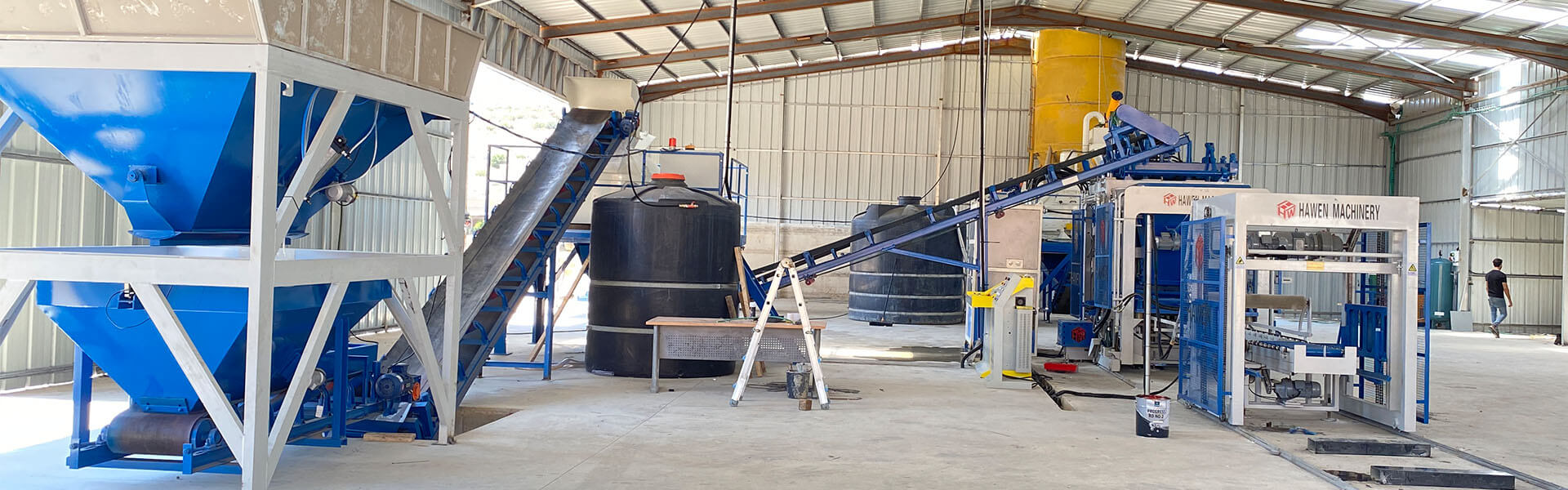
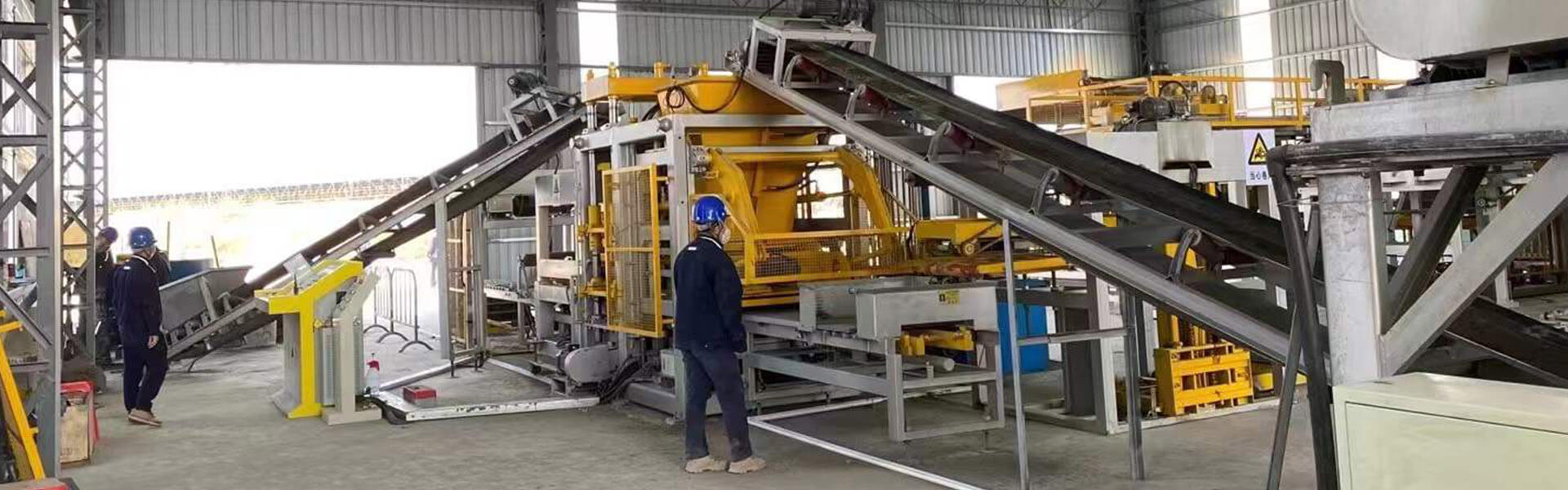
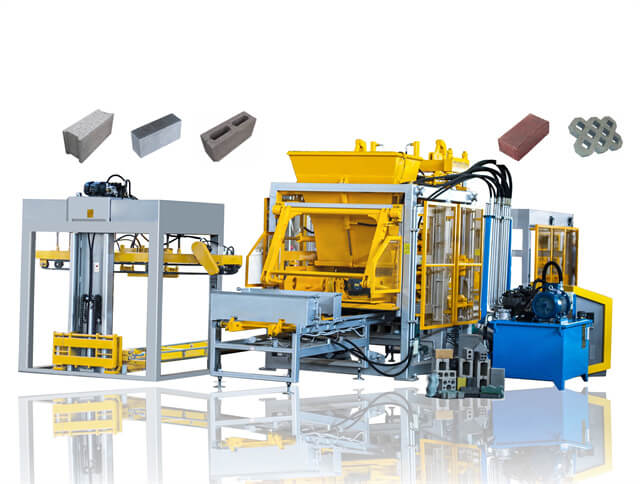
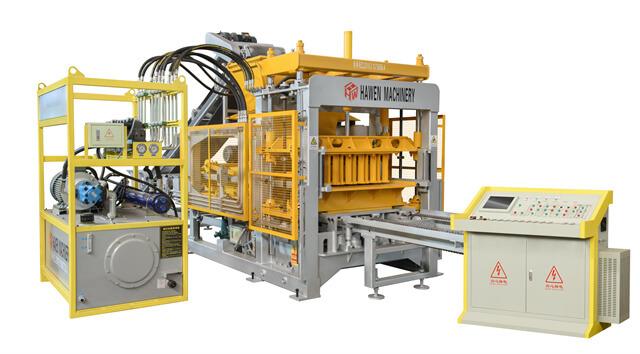
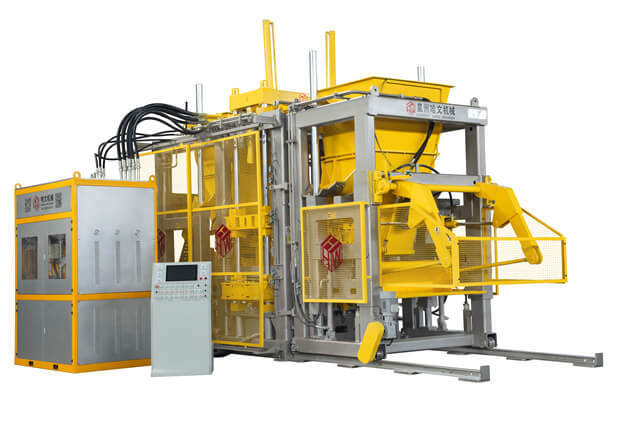
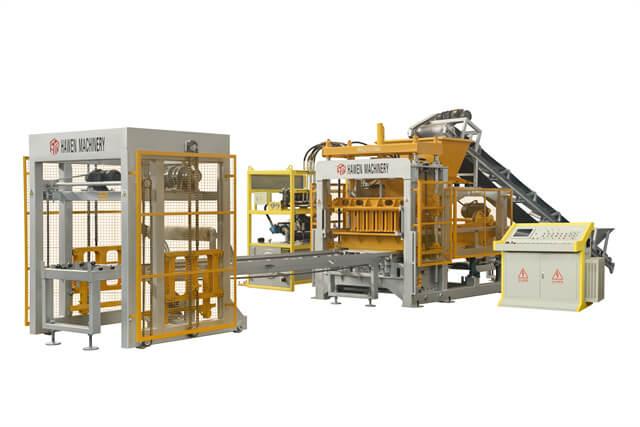
Hawen Machinery uses a four-shaft vibration box with eccentric blocks mounted outside the housing. Reduced internal resistance and balanced excitation support uniform compaction across the forming area. Even compaction improves product consistency, but no vibration system can make an unstable aggregate particle durable. Material acceptance must come first.
Reference pallets should be inspected after curing and exposure because some pop-outs develop later than demoulding defects.
Verify the correction through curing and exposure
Produce a clearly identified trial with approved aggregate and keep it separate from saleable inventory. Check fresh appearance, unit mass, dimensions, corners, and demoulding, then inspect again after the specified curing period. Where climate or customer requirements make later exposure important, use the applicable durability test rather than relying on a short visual check.
Hawen automatic equipment combines a SIEMENS S7-200 PLC, a clear touch interface, and remote monitoring support. The control record can help confirm recipe, cycle state, and shift timing while the material investigation proceeds. Hawen engineers can review operating status and assist with remote parameter optimization, but the aggregate lot identity must still be maintained by the factory.
After acceptance, coordinate labeled pallets through the GMT pallet flow and keep suspect products away from the offline palletizing system. Close the investigation only when the replacement source remains stable across consecutive lots and the corrective record identifies what changed.
Action checklist
Photograph the crater, recover the loose fragment, and keep the particle at the base when possible.
Separate pop-outs from popoffs, scaling, impact chips, scratches, and weak surface mortar.
Quarantine the suspect aggregate lot and preserve samples from the delivery, stockpile, bin, and product.
Use the applicable laboratory tests to evaluate soundness, harmful particles, reactivity, or exposure risk.
Clear contaminated storage and transfer points before approved material returns to production.
Verify the replacement source through curing and any required durability exposure before full release.
A pop-out may be small, but it exposes the strength of the factory's quality system. Plants that preserve evidence, challenge uncertain raw materials, and verify every correction turn a surface defect into better source control. That discipline protects more than appearance; it protects the credibility carried by every block and paver that leaves the yard.
FAQ
What does an aggregate pop-out look like? It commonly leaves a small conical crater with a broken or expanded particle, or its socket, visible near the center or bottom.
Are pop-outs the same as surface scaling? No. Scaling removes a broader thin surface layer. A pop-out is localized around an individual particle, although both defects require proper diagnosis.
Can higher cement content prevent pop-outs? Not reliably. If the cause is an unsound or reactive particle, extra cement does not remove that particle from the product.
Can stronger vibration solve the problem? No. Vibration can improve compaction, but it cannot convert frost-susceptible, porous, weak, or reactive aggregate into a durable material.
Why should the damaged particle be saved? Its mineral type, porosity, reaction rim, fracture, or residue may help a laboratory determine the actual mechanism.
Should the whole stockpile be discarded immediately? Quarantine it first, preserve samples, and follow the supplier, laboratory, and product-standard review. The decision should be evidence-based.
How can Hawen help during a pop-out investigation? Hawen can help review machine records, batching and mixing flow, compaction consistency, lot separation, and trial production while material specialists assess the aggregate.





 Tel: +86-13905968794
 Email: export@hwmachines.com
 MP/WhatsApp: +86-13905968794
 Manufacturer Address:Nanan,Quanzhou City,Fujian Province,China