How to Manage Wastewater and Slurry Around a Concrete Block Machine Plant is a practical topic for buyers and plant managers who want a more stable block making machine workflow. The goal is not only to explain the issue, but to give a clear method that supports better output, cleaner operation, and stronger customer confidence.
In a professional concrete products factory, the block machine, material system, mold, pallet circulation, control system, and operator routine must work as one process. A good solution therefore looks at the whole line before changing one visible setting.
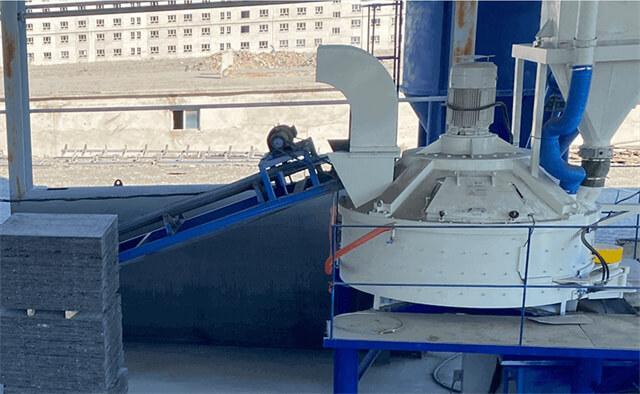
Mixer cleaning water should be managed so slurry does not return to the process by accident.
Why wastewater and slurry control matters
Wastewater and slurry around a concrete block machine plant can create more problems than a dirty floor. If wash water carries cement paste back into sand, pallets, molds, or drainage areas, the factory may face material contamination, slippery routes, clogged channels, and unstable product quality.
A clean block making machine plant separates production material from cleaning waste. That separation helps the team keep batching accurate and keeps the brick machine area safer during long shifts.
Identify where slurry is created
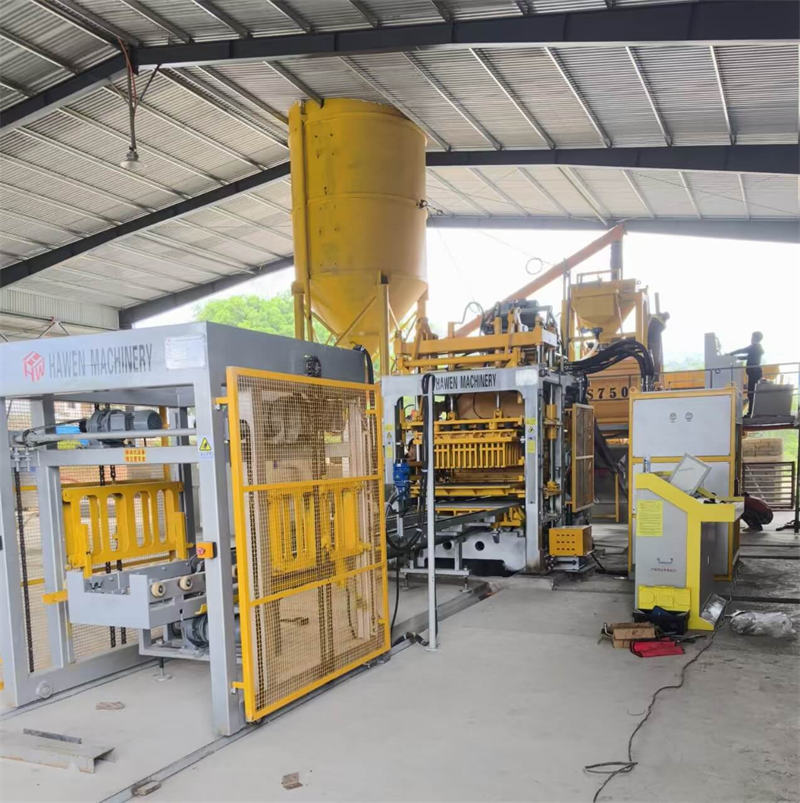
Slurry usually comes from mixer washing, mold cleaning, spilled wet mix, conveyor return points, and floor cleaning around the machine. The concrete mixer, batching machine, feeder area, and mold area should each have a clear cleaning routine.
If the plant uses a cement silo, cement dust and wash water should not meet in uncontrolled areas. Once cement paste hardens in channels or around sensors, maintenance becomes harder and downtime becomes more likely.
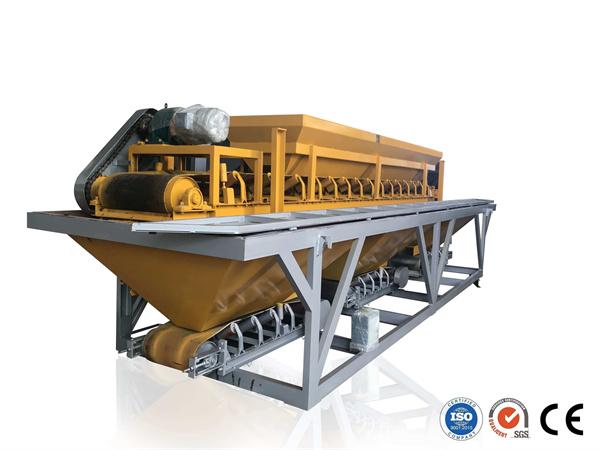
A clean batching area helps protect material accuracy and safe operator movement.
Design a practical handling method
A practical system uses separated wash zones, sediment collection, clear drainage direction, and regular removal of settled solids. The goal is not to create a complicated treatment plant for every factory; the goal is to prevent slurry from entering raw material, machine movement, and operator routes.
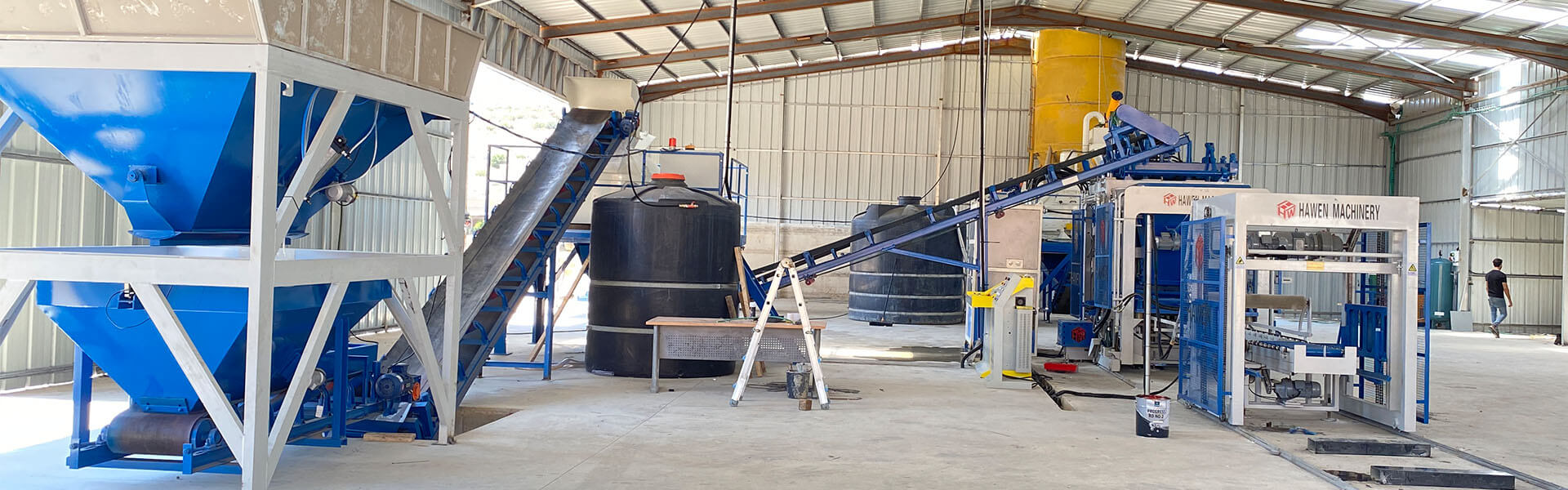
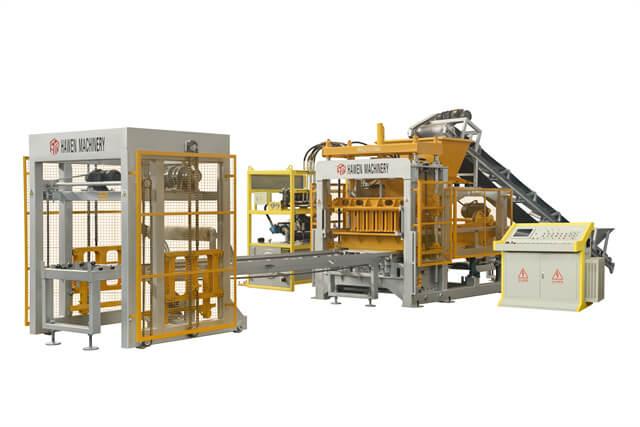
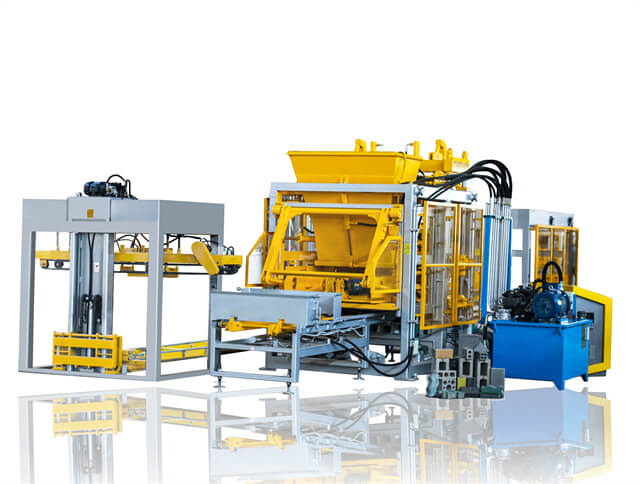
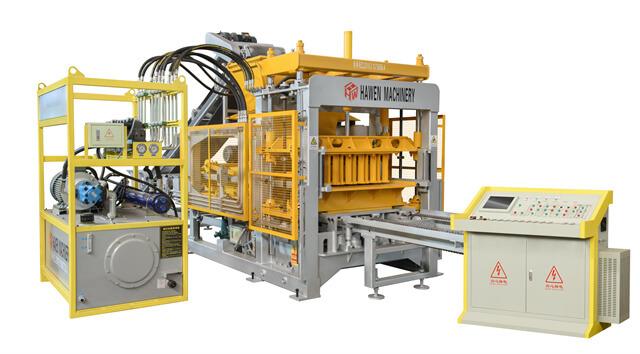
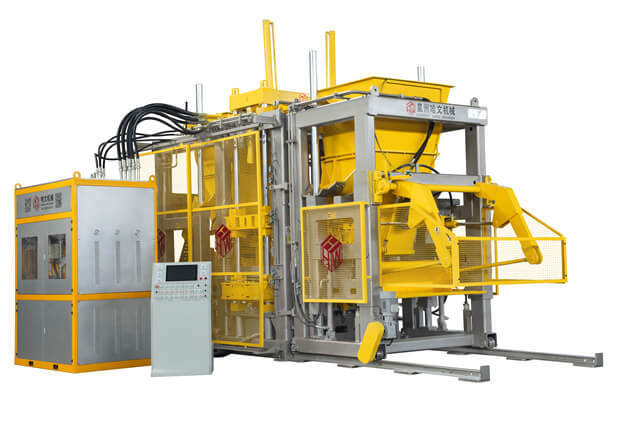
Hawen Machinery reviews the plant as a working system, from material storage and mixing to forming, curing, pallet return, and offline palletizing. Clean movement routes make every part of that system easier to maintain.
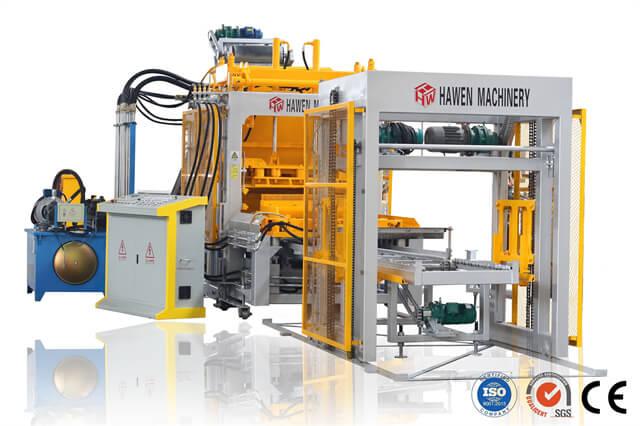
When customers plan a new QT12, QT10, QT8, or QT6 line, Hawen can help review layout details so cleaning does not interrupt production flow.
Good housekeeping around the machine reduces contamination and cleaning delays.
Action checklist
Mark where mixer washing, mold cleaning, and floor cleaning water will go.
Keep slurry away from aggregate storage, pallets, molds, sensors, and electrical cabinets.
Use sediment collection instead of letting cement paste harden in open drains.
Schedule cleaning before buildup becomes a mechanical or safety problem.
Train operators to separate useful production material from cleaning waste.
A clean block plant is not clean for appearance alone. It is clean because every material has a place, every waste stream has a path, and every operator can work without fighting yesterday's residue.
FAQ
Can slurry affect block quality? Yes. If slurry contaminates aggregate, molds, pallets, or fresh products, it can affect surface quality and process stability.
Where does most wastewater come from? Common sources include mixer washing, mold cleaning, floor cleaning, wet mix spills, and material transfer points.
Should wash water return to production? Only if the factory has a controlled and suitable reuse method. Uncontrolled return can damage consistency.
How does slurry increase downtime? It can harden around channels, machine bases, sensors, molds, and moving areas, making cleaning and maintenance slower.
Is wastewater management only an environmental issue? No. It also affects safety, housekeeping, material quality, and daily productivity.
How can Hawen help during layout planning? Hawen can review material flow, machine position, cleaning access, pallet routes, and finished product handling so the plant is easier to operate.





 Tel: +86-13905968794
 Email: export@hwmachines.com
 MP/WhatsApp: +86-13905968794
 Manufacturer Address:Nanan,Quanzhou City,Fujian Province,China