Reducing cement consumption in concrete block production is not the same as simply cutting cement from the mix. A good block machine line controls aggregate grading, moisture, feeding, compaction, mold condition, and curing as one system. When those details are stable, the factory can protect block strength while avoiding the habit of using extra cement to cover process variation.
Why cement consumption rises
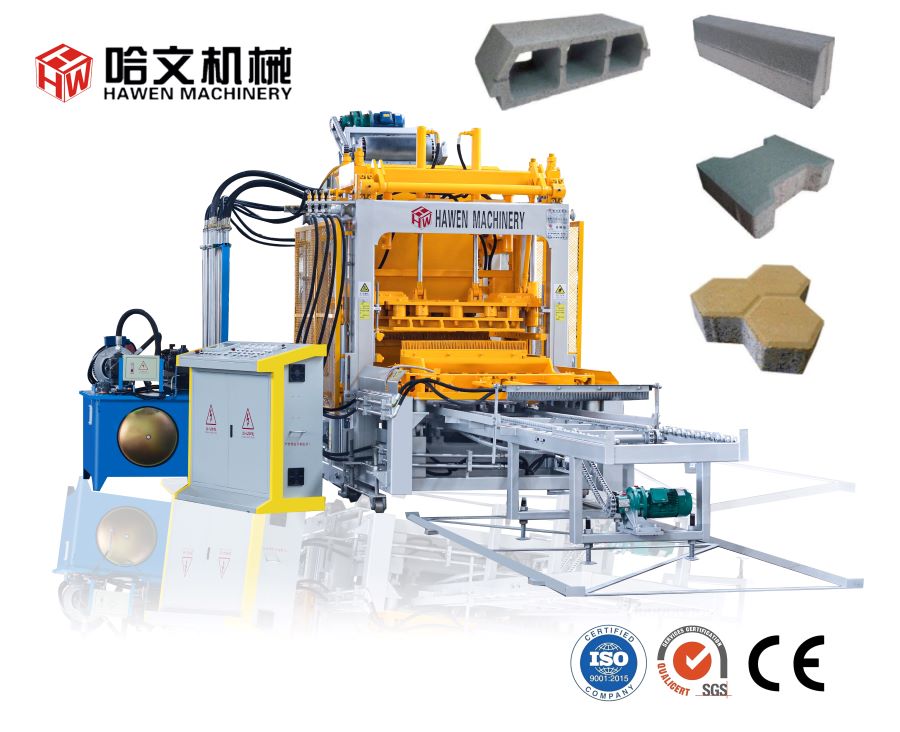
Many factories increase cement because finished blocks show weak corners, rough texture, open pores, or unstable early handling strength. The cause is often not cement quality alone. In a block making machine plant, poor aggregate grading can leave voids, inconsistent moisture can change workability, and uneven feeding can make some cavities denser than others.
Process note: Before changing the formula, compare block density, surface texture, edge sharpness, and demoulding behavior across several pallets. One weak pallet may be a feeding or vibration issue, not a mix design failure.
Material control before the block machine
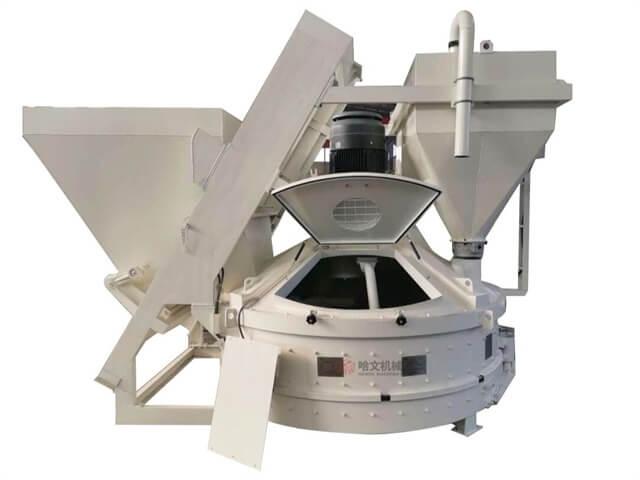
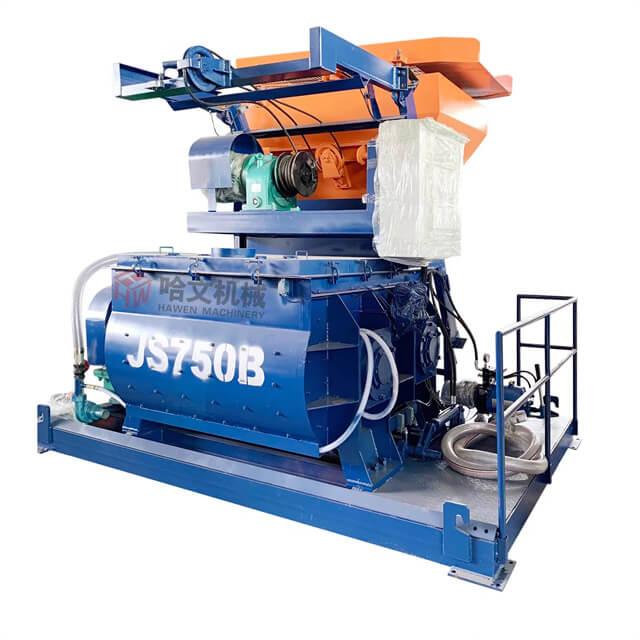
The first solution is to make the mix easier to compact. A stable batching machine helps keep aggregate proportion consistent. A suitable concrete mixer distributes cement paste around the aggregate instead of leaving dry pockets. For dense pavers or high-output brick machine production, the factory may use a planetary concrete mixer or a twin-shaft concrete mixer according to material behavior and plant layout.
Moisture must also be treated as a production parameter. If sand moisture changes during the day, operators may compensate by adding cement or water. That creates a moving target. A better method is to stabilize storage, check moisture more often, and adjust water gradually before the material reaches the mold box.
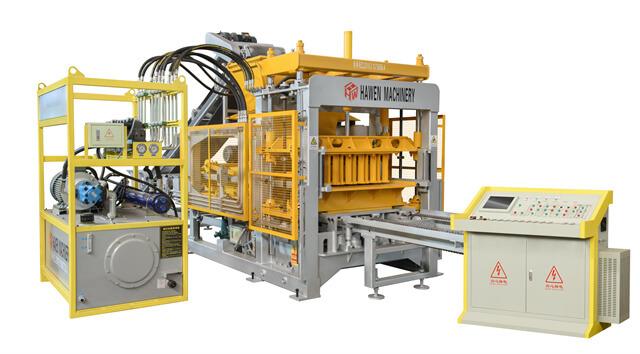
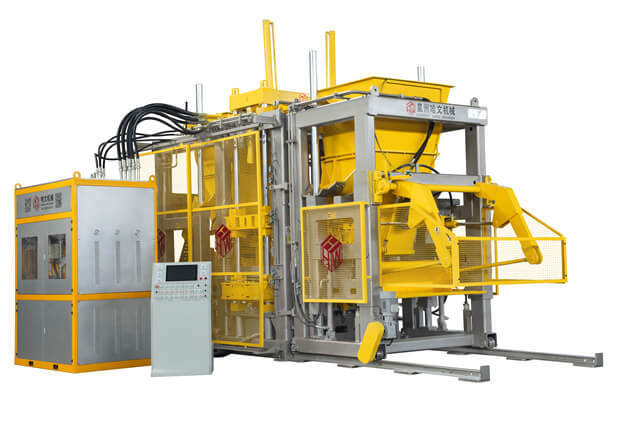
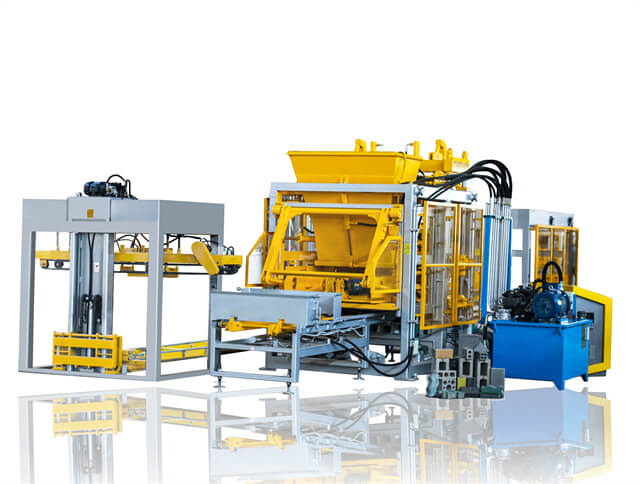
Compaction is where cement saving becomes realistic. Hawen Machinery uses a four-shaft vibration box structure, with eccentric blocks arranged outside the box housing. This layout helps reduce vibration resistance, supports more uniform compaction, and can lower unnecessary cement demand when the mix and machine settings are controlled together.
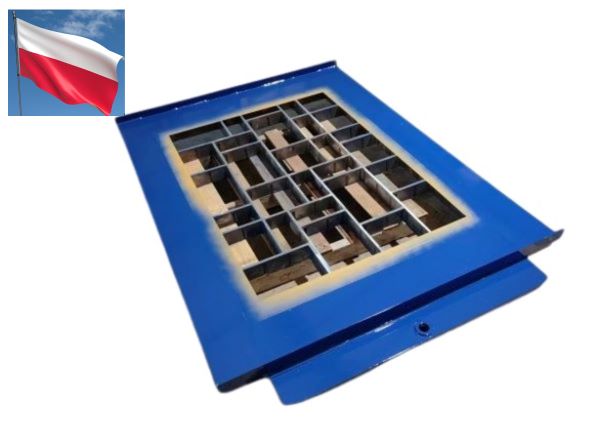
The mold also matters. A worn hollow block mould, loose tamper head, or uneven pallet support can make the operator believe the formula is weak. For paver production, inspect the interlocking paver mould and curb stone mould before adding more cement. Hawen molds are designed to match original specifications for major block machine brands such as Masa, Hess, Zenith, Poyatos, Besser, Tiger, Columbia, Quadra, and Omag. They are heat treated for wear resistance, with hardness typically controlled around HRC59-61.
Hawen Machinery solution note
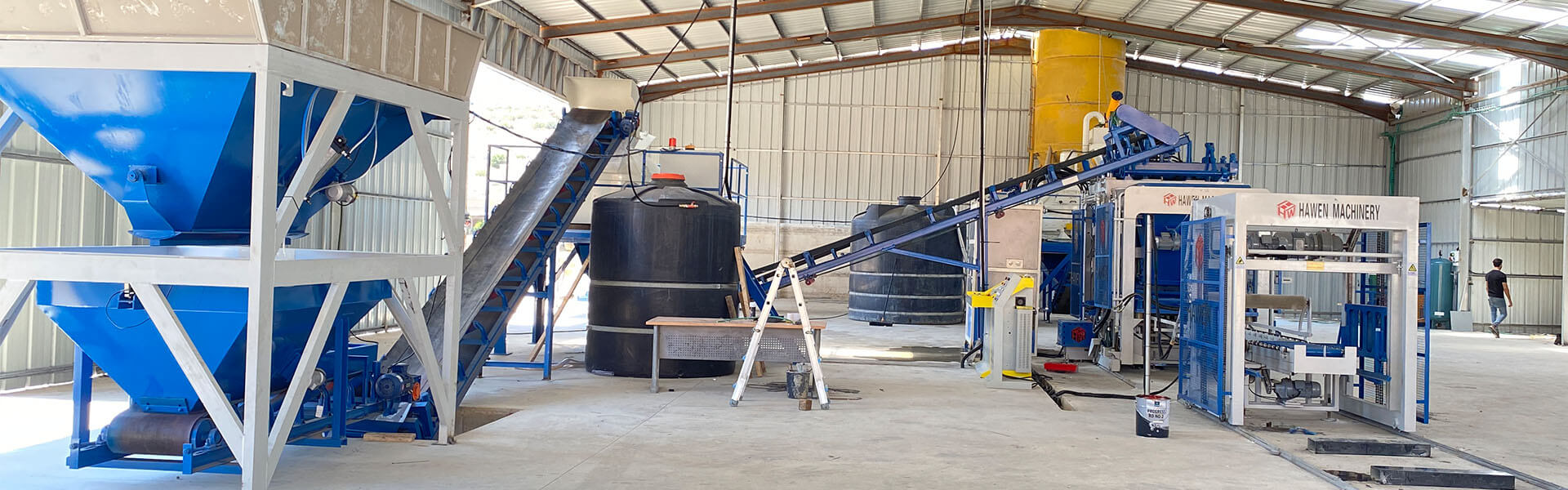
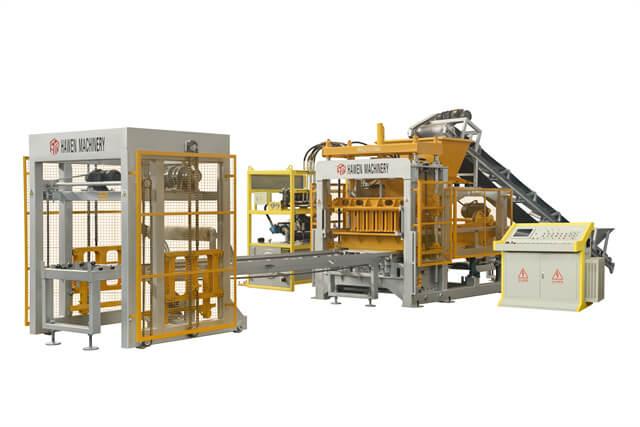
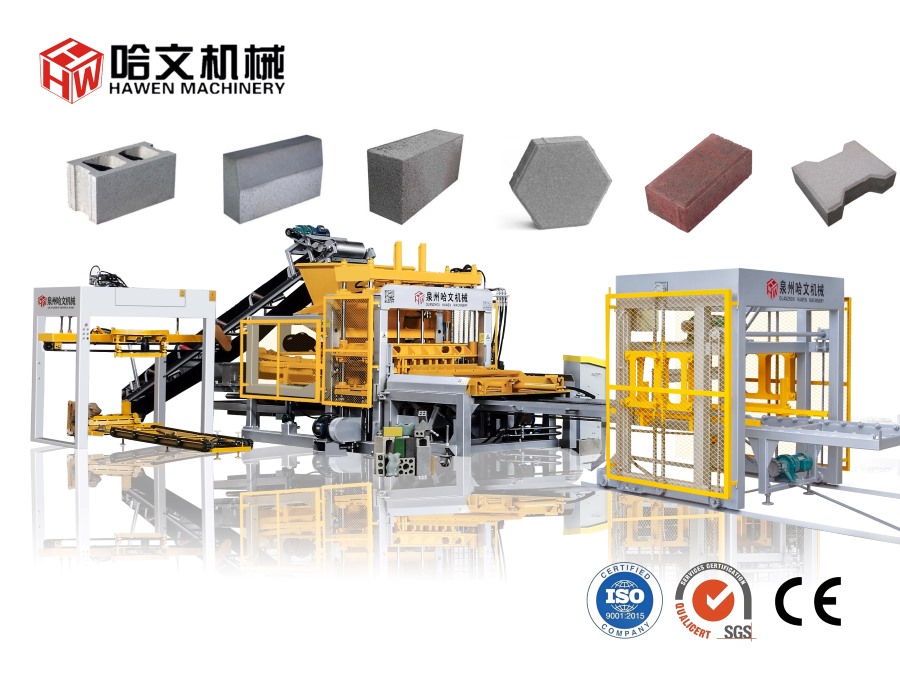
For customers who want a more efficient automatic hydraulic hollow block production line, Hawen Machinery reviews the whole plant instead of only the main brick machine. The recommended configuration may include a cement silo, accurate batching, mixer selection, main machine, GMT pallet, automatic pallet provider, and automatic offline palletizing system.
This system approach is important because cement saving depends on repeatability. When the raw material system, forming system, pallet circulation, and curing routine work together, the factory uses cement for strength, not for hiding process instability.
Shift check before changing the formula
- Check aggregate grading, moisture, and storage condition before production.
- Confirm batching accuracy and mixer cleaning condition.
- Inspect mold wear, tamper head clearance, pallet flatness, and demoulding behavior.
- Adjust feeding and vibration in small steps, then compare several pallets.
- Record the final method so the next shift does not restart from guesswork.
The strongest block plant is not the one that spends the most cement; it is the one that turns material, machine, mold, and operator discipline into a stable rhythm. When each block carries the same density, shape, and surface quality, the factory is no longer buying strength through waste. It is building strength through control, and that control becomes the quiet foundation of long-term customer trust.
FAQ
Can a factory reduce cement without reducing block strength?
Yes, but only after the plant controls grading, moisture, mixing, feeding, compaction, mold condition, and curing. Cement reduction should be the result of stability, not the first adjustment.
Why do blocks look weak even when cement dosage is high?
Uneven feeding, poor compaction, worn molds, or unstable moisture can create weak appearance even with extra cement.
Does vibration help reduce cement waste?
Proper vibration improves compaction. Hawen's four-shaft vibration box is designed to support uniform density and efficient forming when the mix is suitable.
Should operators change water or cement first?
They should first identify the cause. Moisture control and mixing consistency usually need review before changing cement content.
Which equipment affects cement consumption most?
The batching system, mixer, block machine, mold, pallet, and curing process all affect cement efficiency.
How can Hawen help with cement-saving production?
Hawen studies the complete line and recommends equipment and settings that support stable material flow, compaction, and finished block quality.





 Tel: +86-13905968794
 Email: export@hwmachines.com
 MP/WhatsApp: +86-13905968794
 Manufacturer Address:Nanan,Quanzhou City,Fujian Province,China