Why Does the Vibration Time Affect Concrete Block Quality? Vibration time is one of the important parameters in automatic concrete block production. During forming, vibration helps the concrete mix move into the mould cavities and reduces air gaps between aggregate particles. If the vibration time is not properly matched with the concrete mix, mould, and product type, the finished blocks may show differences in density, height, surface appearance, and edge quality.
Overview
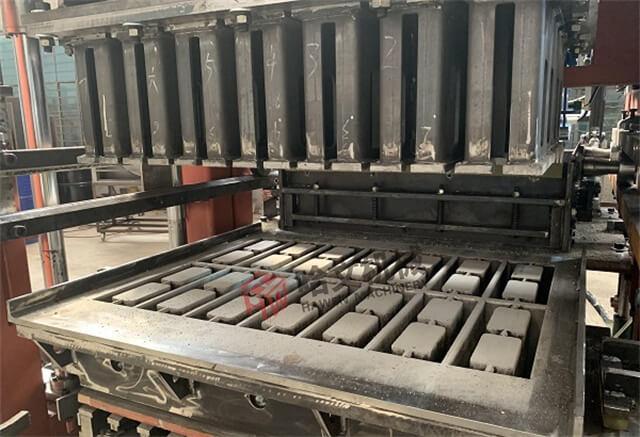
In a block making machine, vibration works together with material feeding, mould filling, pressing, and demoulding. Its purpose is not simply to make the machine vibrate. The vibration process helps distribute and compact the concrete inside the mould before the product is removed.
The suitable vibration time depends on several production conditions, including concrete moisture, aggregate grading, product shape, mould filling, and machine settings. Therefore, there is no single vibration time that is suitable for every type of concrete product.
Process note: Vibration time should be considered together with the concrete mix and forming process. Changing vibration time alone may not solve a quality problem if the material feeding or mould filling is inconsistent.
Why Vibration Time Matters
When the vibration system starts, vibration causes movement inside the concrete mix. Larger aggregates and fine materials gradually rearrange, while trapped air can move toward the surface. This helps the concrete occupy the available space inside the mould more evenly.
If the vibration time is too short, the concrete may not have enough time to reach a stable compacted condition. If the vibration continues for too long, the material may continue to move after the required compaction has already been achieved. Both conditions can affect the consistency of the finished product.
For this reason, vibration time should be adjusted according to the actual product and material condition rather than simply using a fixed value for every production cycle.
When Vibration Time Is Too Short
Insufficient vibration can leave more air inside the concrete and may prevent the material from filling the mould cavities evenly. Depending on the product and concrete mix, this may appear as uneven product height, weak edges, rough surfaces, or differences in density between different mould cavities.
For products with deeper cavities or more complex shapes, insufficient vibration may become more noticeable because the concrete needs enough time to move into all parts of the mould.
Before increasing vibration time, operators should also check the concrete moisture, feeding quantity, and mould filling condition. Poor material distribution cannot always be corrected simply by adding more vibration.
When Vibration Time Is Too Long
Longer vibration does not always mean better compaction. Once the concrete has reached a suitable compacted condition, additional vibration may provide limited benefit and can change the way the material moves inside the mould.
Excessive vibration may also influence production cycle time. In some concrete mixes, continued vibration can cause the fine and coarse materials to rearrange differently, which may affect surface appearance or product consistency.
Therefore, the target is not the longest possible vibration time. The practical target is a vibration period that allows the concrete to fill and compact consistently while maintaining a stable forming cycle.
Hawen Machinery Note
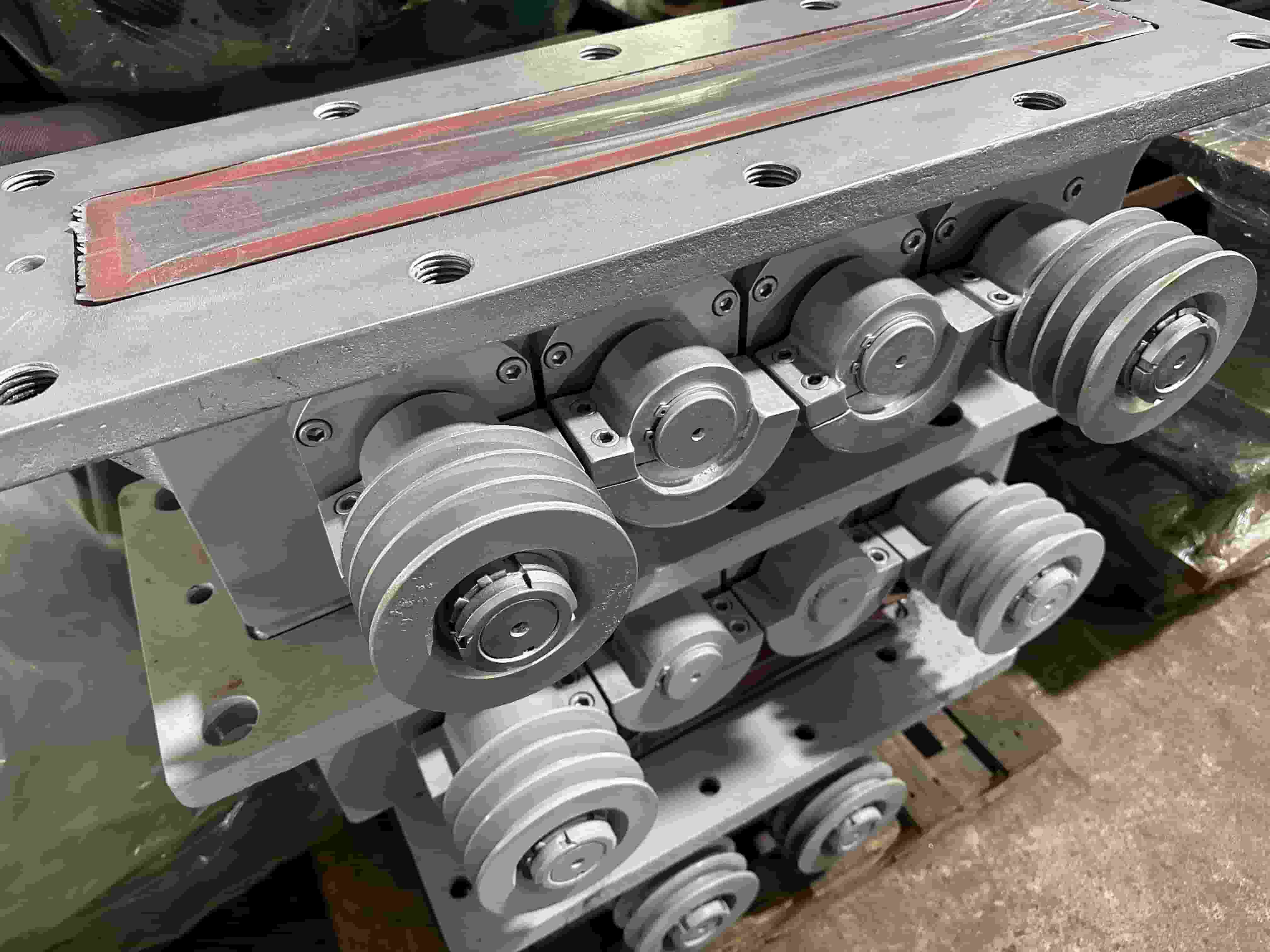
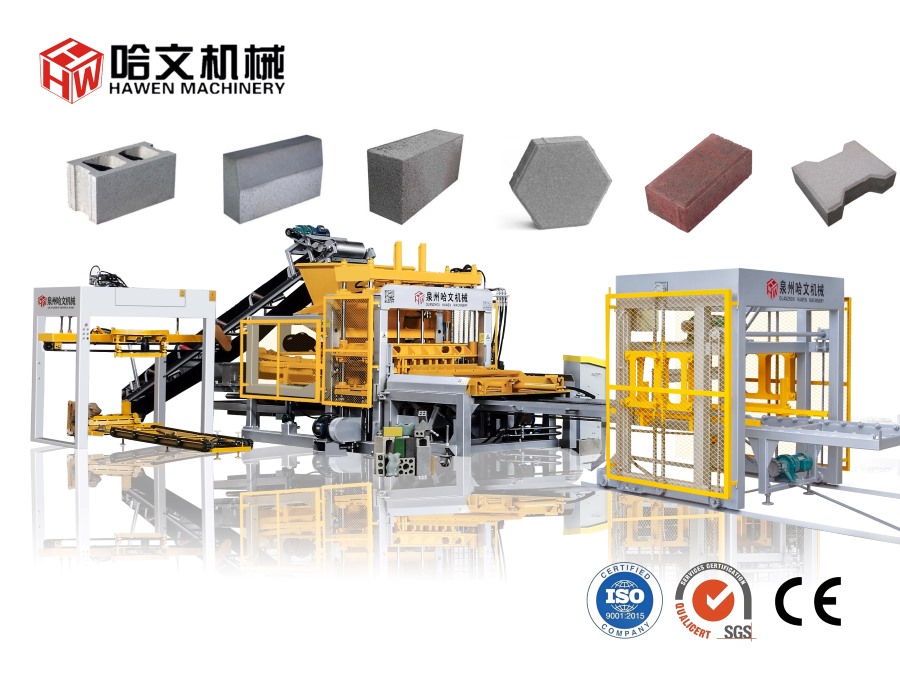
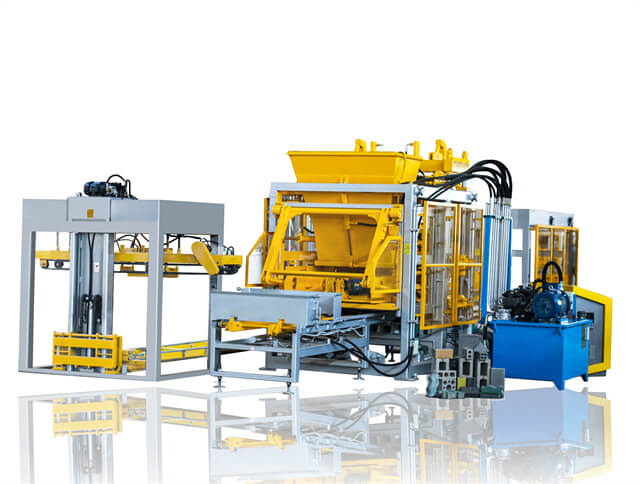
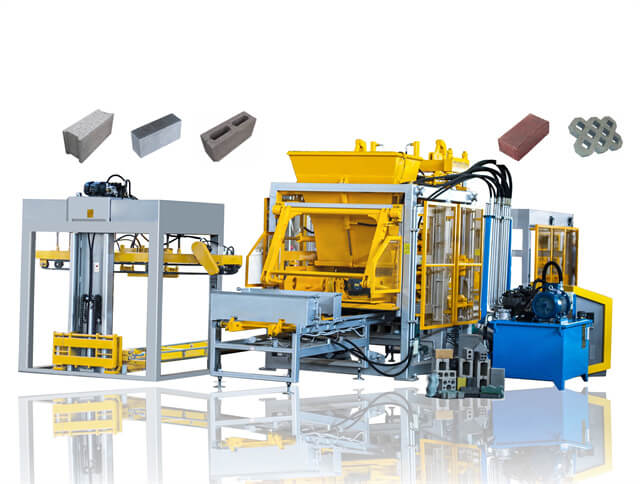
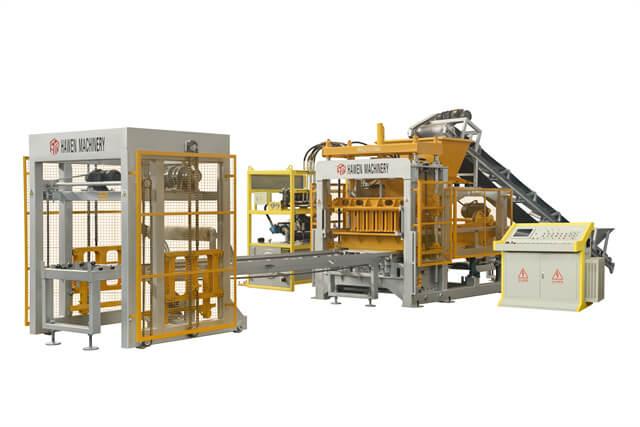
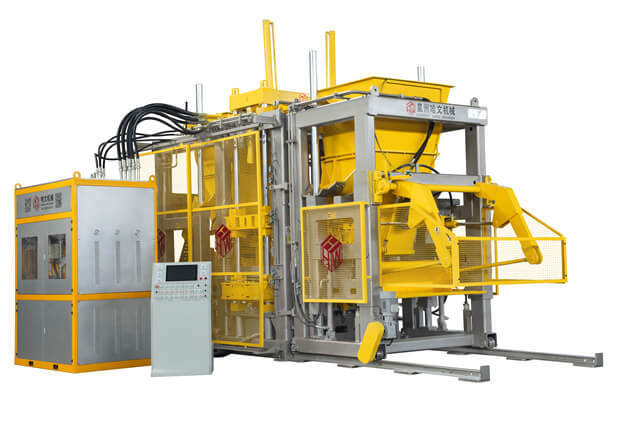
Hawen Machinery block making machines use dedicated vibration systems to support the forming process. Different machine models are equipped with different vibration structures according to their forming capacity and application.
For example, smaller models use a two-shaft vibration structure, while larger models can use a four-shaft or six-shaft configuration. The vibration system works together with the hydraulic pressing and mould filling process to form concrete products with consistent dimensions.
During commissioning, vibration parameters should be matched with the product mould and concrete mix. The appropriate setting is normally determined through trial production by checking product height, surface condition, edge quality, density, and demoulding behavior.
Production Checklist
- Check the concrete moisture and aggregate grading before changing vibration parameters.
- Confirm that the mould is filled evenly before the vibration cycle starts.
- Compare products from different mould cavities for height, edges, and surface condition.
- Adjust vibration time gradually instead of making a large change in one step.
- Record successful vibration settings for the same product and material condition.
A stable vibration process is based on the relationship between the concrete mix, mould filling, vibration, and pressing. The correct vibration time is therefore the time that produces consistent compaction and product quality without unnecessarily extending the production cycle.
FAQ
Does longer vibration always produce stronger concrete blocks?
No. Longer vibration does not automatically mean better compaction. The suitable time depends on the concrete mix, product type, mould, and machine settings.
What happens when the vibration time is too short?
The concrete may not be sufficiently compacted, which can result in uneven height, rough surfaces, weak edges, or inconsistent density.
What should be checked before changing vibration time?
Check concrete moisture, aggregate grading, feeding quantity, mould filling, and the condition of the mould before changing the vibration parameter.
Does every concrete product use the same vibration time?
Usually not. Hollow blocks, solid blocks, pavers, and curb stones have different shapes and forming conditions, so their vibration requirements may be different.
How can the suitable vibration time be determined?
Run trial production and compare product height, surface condition, edge quality, density, and demoulding behavior. Adjust the vibration time gradually until the forming result becomes stable.





 Tel: +86-13905968794
 Email: export@hwmachines.com
 MP/WhatsApp: +86-13905968794
 Manufacturer Address:Nanan,Quanzhou City,Fujian Province,China